
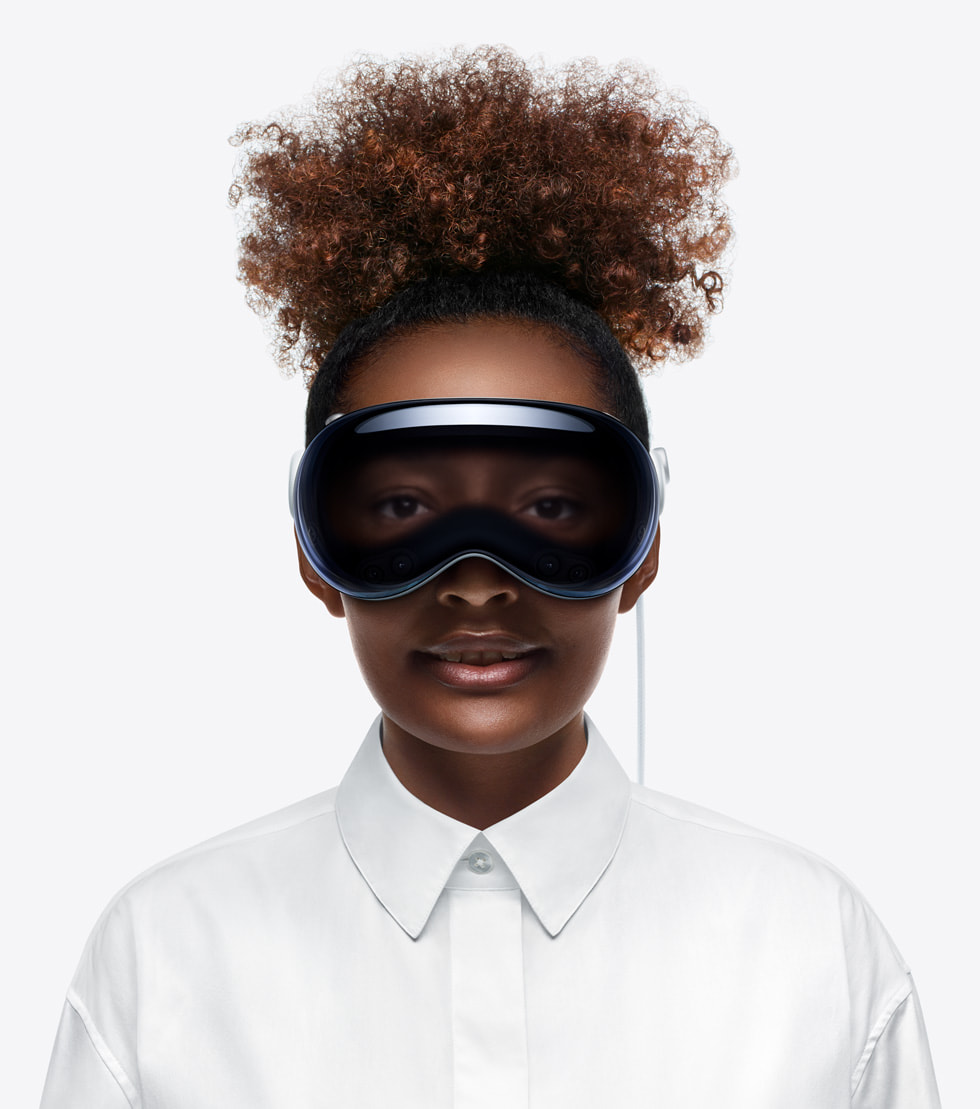
When Apple launched Vision Pro, the consumer reaction was predictable. Amazing technology, incredible display quality, but $3,500 for a headset that doesn't have a killer app? That's a tough sell for most people. But while tech reviewers debated whether Vision Pro was "worth it" for watching movies on a plane, enterprise customers quietly started buying them in volume.
Why $3,500 doesn't matter to businesses
For a consumer, $3,500 is an expensive gadget. For a business, it's a rounding error on an equipment budget. Companies routinely spend more than that on a single monitor setup for CAD workstations. When Vision Pro offers spatial computing capabilities that can replace or enhance existing workflows, the price becomes easy to justify.
Architecture and design firms were among the first enterprise adopters. Being able to walk through a building design at full scale before it's built is transformative for client presentations and design review. Medical training programs are using Vision Pro's high-resolution displays for anatomy visualization and surgical planning. Engineering teams use it for 3D model review and collaborative design sessions.
The display advantage
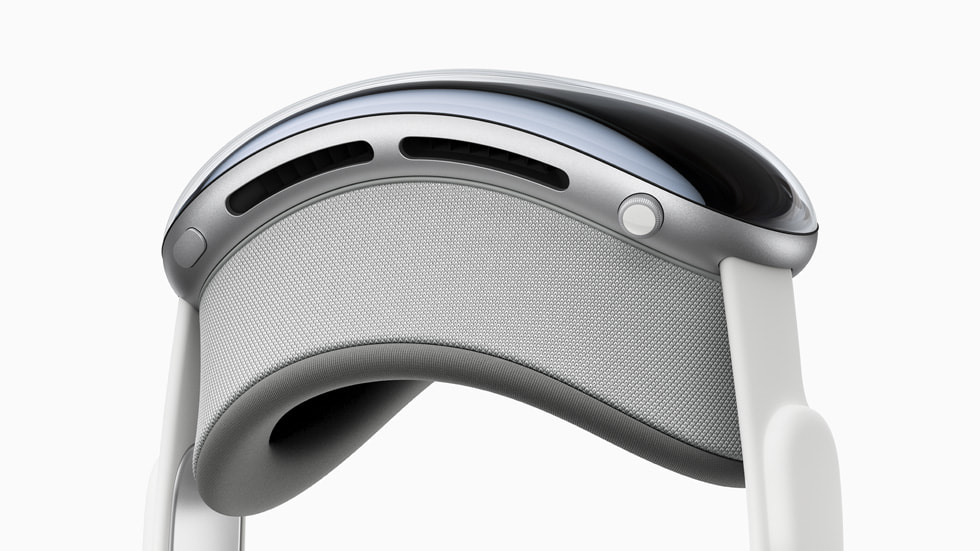
Vision Pro's micro-OLED displays are the highest resolution of any headset on the market. For enterprise use cases where visual clarity matters, like reading fine text, examining detailed 3D models, or reviewing medical imaging, that display quality is a genuine differentiator. You can use Vision Pro as a multi-monitor workspace replacement in a way that lower-resolution headsets can't match.
The productivity angle
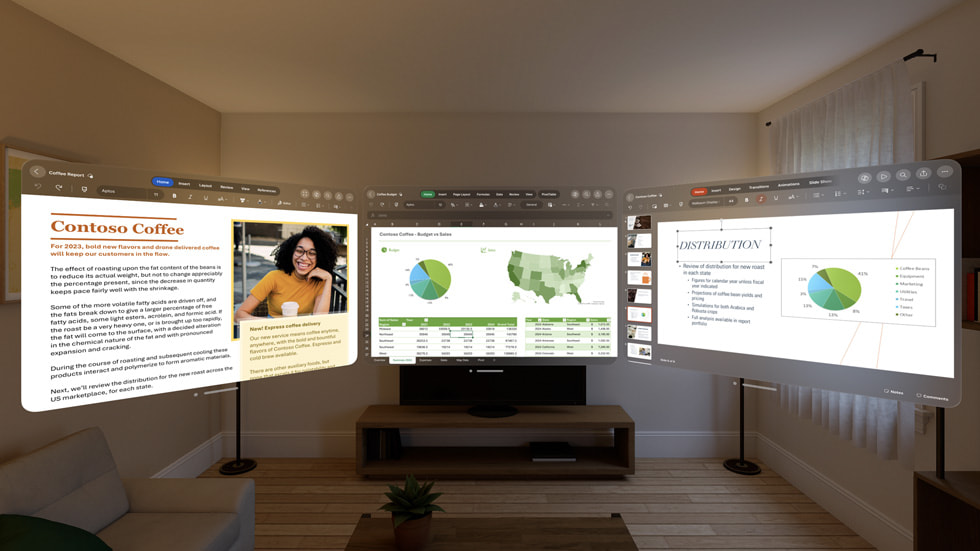
Apple positioned Vision Pro as a spatial computer, not a VR headset, and that framing resonates with enterprise buyers. The ability to have multiple virtual displays arranged in 3D space, interact with standard Mac and iPad apps, and collaborate with remote team members in a shared virtual environment maps directly to how knowledge workers already operate.
The visionOS app ecosystem is still smaller than Quest's, but the quality of productivity and enterprise apps is growing. And because visionOS can run iPad apps natively, there's a large existing catalog of business tools that work on day one.
What Apple needs to do next
The current Vision Pro is too heavy for all-day wear, and the external battery pack is awkward. Reports suggest Apple is working on a lighter, cheaper second generation device. If they can get the weight down significantly and the price below $2,000, the enterprise market could expand dramatically.
The consumer market may eventually come around too, but for now, enterprise is where Vision Pro is proving its value. And that might be exactly what Apple planned all along.