
Best VR Headsets 2026: The Complete Buyer's Guide
Last updated: September 2026
Part of our Best Of 2026 guide collection.
The VR headset market in 2026 is the most competitive it has ever been. Standalone headsets now deliver experiences that rivaled high-end PC VR just two years ago, mixed reality passthrough has become standard, and new headsets run from $349 to well over $3,000. Whether you are a first-time buyer looking for an affordable entry point, a hardcore PC VR gamer chasing the sharpest visuals, or a professional exploring spatial computing, this guide breaks down every major headset available today, with honest recommendations for each use case.
Which VR headset should you buy?
Short answer: if you are new to VR and want the best VR headset to buy in 2026, get the Meta Quest 3 at $599. It is the best all-around VR headset on the market, works standalone or tethered to a gaming PC, and has the largest standalone library in VR. If $599 is out of reach, the Meta Quest 3S at $349 is the best cheap VR headset you can buy. For PS5 owners, the PlayStation VR2 is the clear pick once it is back in stock. PC gamers with a big Steam library should look at Valve's Steam Frame, if they can get through the reservation queue. And if you want the best mixed reality and spatial computing experience money can buy, the Apple Vision Pro has no real competition. The rest of this guide breaks down every major VR headset in detail so you can pick the right one for your specific use case.
Quick Comparison Table
| Headset | Price | Type | Resolution | Best For |
|---|---|---|---|---|
| Meta Quest 3S | $349 | Standalone | 1832 x 1920 per eye | Best budget option |
| Meta Quest 3 | $599 | Standalone / PC VR | 2064 x 2208 per eye | Best all-around |
| PlayStation VR2 | $399 (out of stock in US) | PS5 / PC tethered | 2000 x 2040 per eye | Best for PlayStation gamers |
| Apple Vision Pro | $3,699 | Standalone | About 23 million pixels total | Best spatial computing |
| Valve Steam Frame | From $1,059 (waitlist) | Wireless PC streaming / Standalone | 2160 x 2160 per eye | Best for your Steam library |
| Bigscreen Beyond 2 | $959 | PC VR tethered | 2560 x 2560 per eye | Best for sim racing / flight sim |
Our Top Picks
Meta Quest 3S: Best Budget VR Headset ($349)

The Meta Quest 3S is the most affordable way to get a genuinely great VR experience in 2026. It runs the full Quest software library, supports color mixed-reality passthrough, and delivers smooth standalone performance powered by the Snapdragon XR2 Gen 2 chipset, the same chip found in the more expensive Quest 3. At $349, it has effectively replaced the Quest 2 as Meta's entry-level headset and is the device we recommend for anyone trying VR for the first time.
The trade-offs compared to the Quest 3 are modest: a slightly lower-resolution display (still sharp enough for most games and media) and Fresnel lenses instead of pancake optics, which make the front of the headset bulkier, though it weighs about the same. The color passthrough cameras are the same as the Quest 3's, but the 3S drops the depth sensor that mixed-reality apps use to map your room. For most buyers, these compromises are well worth the $250 savings.
Verdict: If you want to try VR without a big investment, the Quest 3S is the clear choice. It offers 90% of the Quest 3 experience for $250 less, backed by the largest standalone VR game library available.
Meta Quest 3: Best All-Around VR Headset ($599)

The Meta Quest 3 remains the headset we recommend to most people. It strikes the best balance between price, performance, and content library of any VR device on the market. Pancake optics keep the headset slim and comfortable, the display is sharp with minimal screen-door effect, and the color passthrough is good enough for genuine mixed-reality use. You can browse your phone, grab a drink, or play tabletop MR games without removing the headset.
Beyond standalone play, the Quest 3 doubles as a capable PC VR headset via USB-C or Air Link. This means you can play SteamVR titles like Half-Life: Alyx at higher fidelity when connected to a gaming PC, then switch back to standalone for wireless convenience. The Quest Store library continues to grow rapidly, and the headset receives regular software updates that have meaningfully improved performance and features since launch.
Verdict: The Quest 3 is the Swiss Army knife of VR. Standalone convenience, PC VR capability, solid mixed reality, and a massive game library, all for $599. It is the headset we recommend unless you have a specific reason to look elsewhere.
PlayStation VR2: Best for PlayStation Gamers ($399 When in Stock)

The PlayStation VR2 offers one of the best visual experiences in consumer VR. Its OLED displays deliver deep blacks and vibrant colors that LCD-based headsets simply cannot match, and the 2000 x 2040 per-eye resolution is excellent. Eye tracking enables foveated rendering on PS5, meaning the console punches above its weight in VR graphical fidelity. The Sense controllers provide impressive haptic feedback and adaptive triggers that add genuine immersion to supported games. One catch: new US stock has dried up, and it was still unavailable when we checked on October 7. PlayStation Direct still lists it at $399 but marks it out of stock, and PC Guide found Target empty too on September 16, leaving only used and refurbished units at other US retailers. Sony has not said when, or whether, it returns. Sony Group, the parent company, has been recorded transferring head-mounted display patents to Meta, but none of those filings names Sony Interactive Entertainment, so they say nothing direct about PS VR2 supply.
The main limitation is the tethered design. You need a PS5, and you are connected via cable. Sony added PC VR support via an official adapter in 2024, opening up the SteamVR library, though some features like eye tracking and haptics are lost on PC. The PSVR2 game library is smaller than Quest but includes standout exclusives and AAA ports like Gran Turismo 7, Horizon Call of the Mountain, and Resident Evil Village.
Verdict: If you already own a PS5 and want premium VR visuals, the PSVR2 is a compelling choice. The OLED display quality and PS5-exclusive titles make it worth the cable trade-off. PC gamers without a PlayStation should look elsewhere.
Apple Vision Pro: Best Spatial Computing Device ($3,699)

The Apple Vision Pro is less of a VR headset and more of a spatial computer. Its micro-OLED displays are among the sharpest in consumer VR, passthrough quality is the best available by a wide margin, and the eye-and-hand tracking interface is remarkably intuitive. For productivity, media consumption, and spatial computing workflows, nothing else comes close. Watching a movie in the Vision Pro or using it as a multi-monitor replacement is genuinely impressive.
That said, the Vision Pro is not a gaming headset. The visionOS app ecosystem has grown but remains limited compared to Quest or SteamVR. Eyes and hands drive the interface by default, which works well for UI but poorly for fast-paced games; Apple does now support game controllers, including Sony's PS VR2 Sense controllers, but the game catalog is thin. The $3,699 price tag puts it firmly in early-adopter and professional territory. It is also heavier than most headsets, at 750 to 800 grams plus a separate battery pack, though the current model ships with Apple's counterbalanced Dual Knit Band.
Verdict: The Vision Pro is a technological showcase and the best device for spatial computing and media. It is not the best choice for VR gaming. If you want the highest-fidelity mixed reality experience and budget is not a concern, it delivers something no other headset can.
Valve Steam Frame: Best for Your Steam Library (From $1,059)
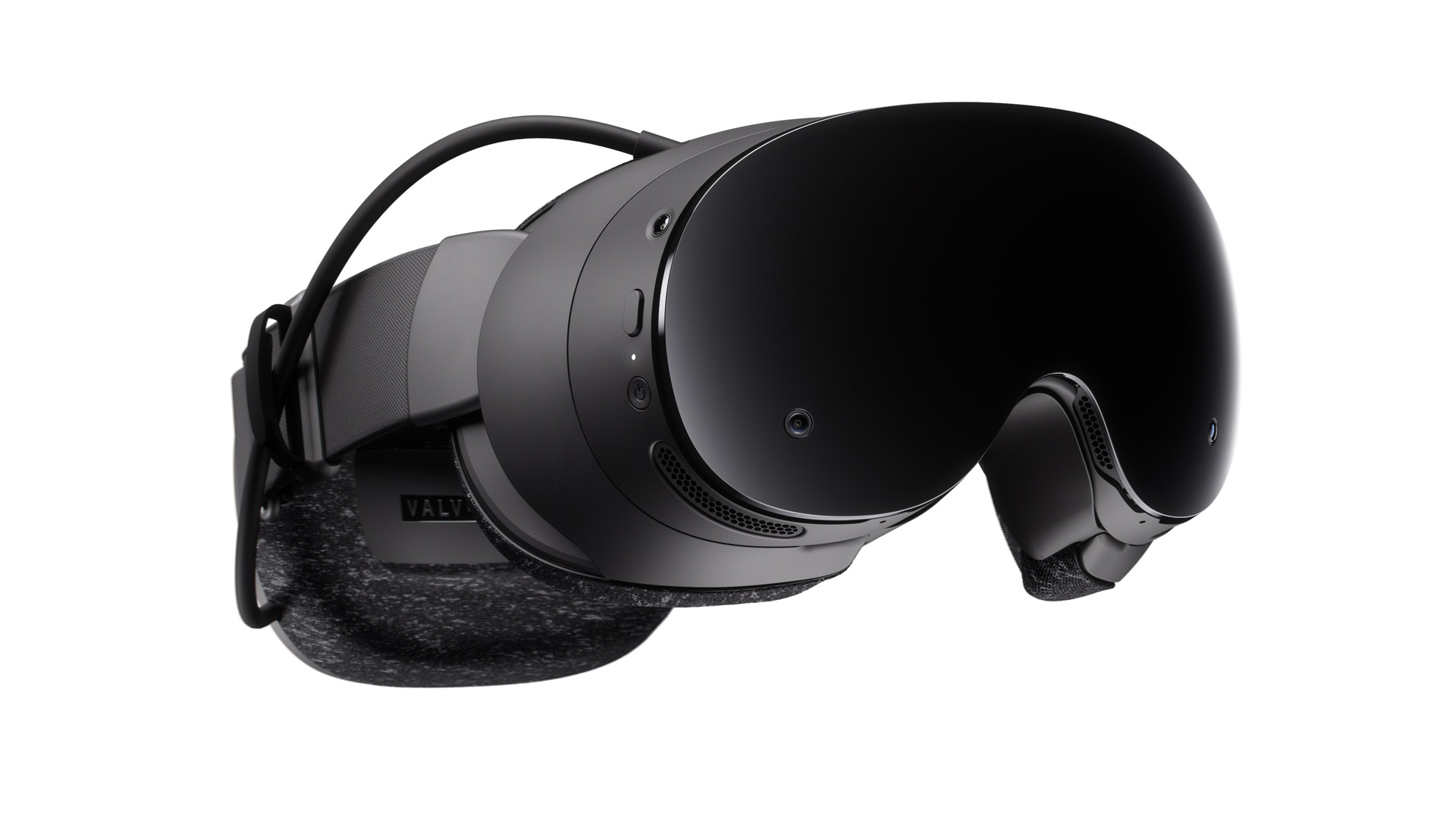
The Steam Frame is Valve's first headset since the Index, and it is built streaming first. It connects to your gaming PC over the included Wi-Fi 6E adapter and uses eye tracking for foveated streaming, spending bandwidth on the part of the image you are actually looking at. It also plays games on its own, running SteamOS on a Snapdragon 8 Gen 3 with 16GB of RAM behind two 2160 x 2160 LCD panels, and Valve's Great on Frame list of games certified to run well standalone passed 175 titles in late September. The $1,059 kit (256GB, or $1,299 for 1TB) includes two controllers, the wireless adapter and Half-Life: Alyx, but not a power supply, which Valve sells for $29.
The trade-offs are real. Passthrough is black and white, so color needs the $149 Arcturus Vision add-on camera. Standalone battery life is short: Road to VR's review measured one to one and a half hours, which is why the Frame is at its best streaming from a PC. And you still cannot just add one to a cart. Valve sells it through a reservation queue, purchase emails have gone out in waves since September 18, and anyone signing up now joins the back of a waitlist with no published timeline. Our Steam Frame hub tracks the queue, specs and every update.
Verdict: If you have a gaming PC and a Steam library, the Frame is the most convenient way to play it in VR, and it is the headset that replaces the Valve Index. Valve stopped making the Index in late 2025; Steam still lists the headset alone at $499, but the full Index VR Kit is out of stock. For most people the Quest 3 remains the better buy, because it is in stock today, has color passthrough, and costs a little over half as much.
Bigscreen Beyond 2: Best for Sim Racing & Flight Sim
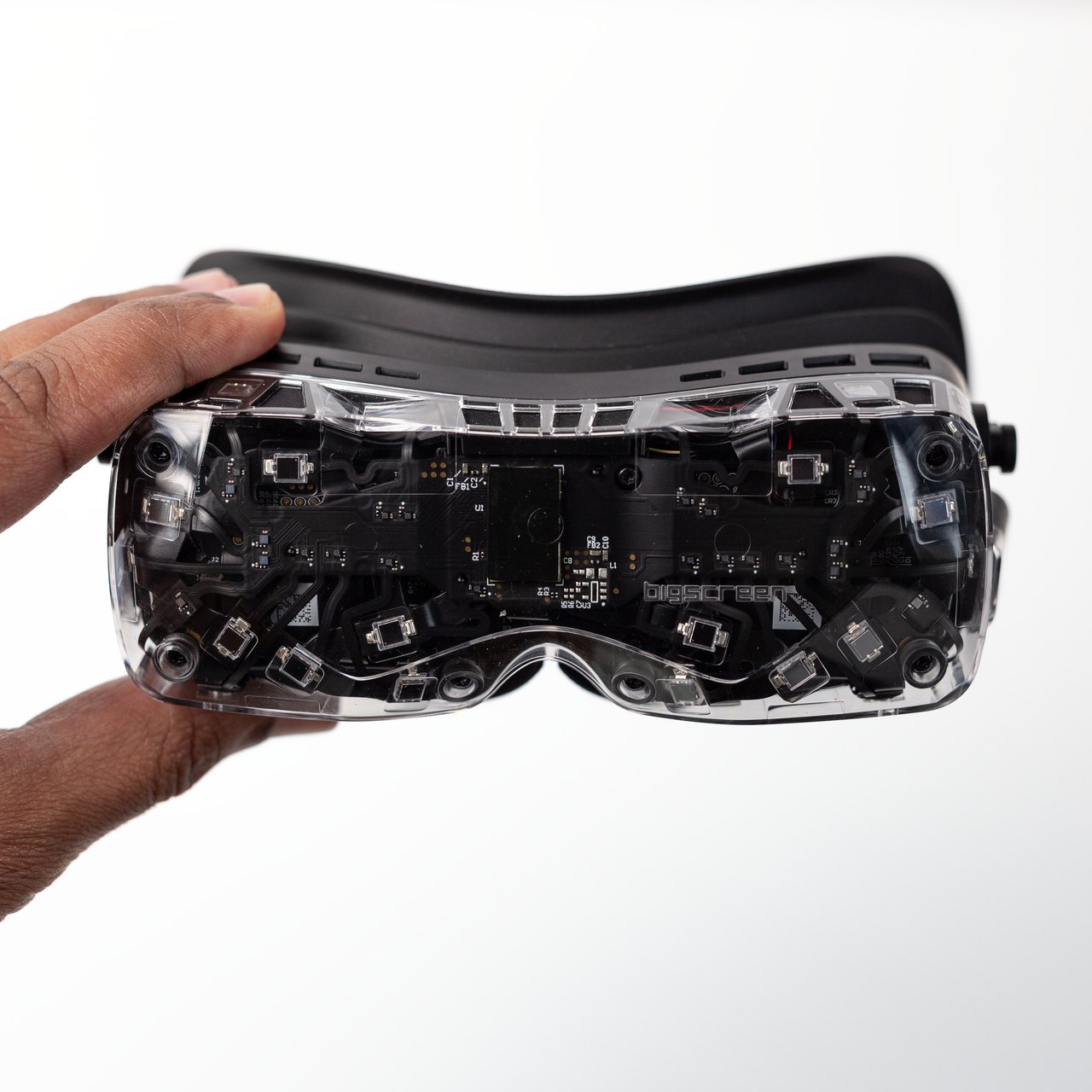
The Bigscreen Beyond 2 took over the sim niche the HP Reverb G2 left behind when Windows Mixed Reality was retired. It weighs 107 grams, runs two micro-OLED panels at 2560 x 2560 per eye with a 116 degree diagonal field of view, and plugs into a PC over a five-meter fiber optic cable. That is the sharpest PC VR image in this list, so cockpit instruments and distant track detail resolve cleanly, and the weight means a three-hour race or a long flight does not end with a sore neck. Our full review goes deeper on the optics.
The trade-offs are the ones every Lighthouse headset carries. Tracking comes from SteamVR base stations you buy and mount yourself, controllers are not included, and there is no standalone mode and no passthrough. It also needs a real gaming PC. For sim use those matter less than they sound, since a wheel or a flight stick replaces the controllers anyway and the base stations only have to see the headset.
Bigscreen cut the entry price to $959 on August 31 by making the $60 universal-fit cushion standard in place of the $120 face-scan cushion, and the eye-tracking Beyond 2e now starts at $1,159. The custom cushion is still sold separately for anyone who wants the molded fit, and buying it no longer holds up the order.
Verdict: The best PC VR headset for sim racing and flight sim in 2026, and the lightest PC VR headset on sale. Budget for base stations and controllers on top of the $959, and skip it if you want anything standalone or wireless.
How to Choose a VR Headset
Standalone vs. PC VR
The biggest decision is whether you want a standalone headset or a PC-tethered one. Standalone headsets like the Quest 3 and Quest 3S run everything onboard with no PC, no wires, no external sensors. You put them on and play. PC VR headsets like the Bigscreen Beyond 2 require a gaming PC (typically with at least an RTX 3070 or equivalent), but they can render far more complex scenes and support graphically demanding titles. Some headsets, including the Quest 3 and the Steam Frame, support both modes.
Display Resolution & Refresh Rate
Higher resolution means sharper visuals and less visible screen-door effect. Most current headsets offer at least 1800 x 1920 per eye, which is sharp enough for comfortable use. Refresh rate affects smoothness. 90Hz is the standard, while 120Hz provides noticeably smoother motion that helps reduce motion sickness. For sim racing and fast-paced games, higher refresh rates make a meaningful difference in comfort and immersion.
Comfort & Fit
Comfort matters more than specs if you plan to use VR for extended sessions. Look for adjustable IPD (interpupillary distance) to match your eye spacing, balanced weight distribution so the headset does not feel front-heavy, and breathable facial interfaces. Pancake optics (found in the Quest 3 and Vision Pro) allow for slimmer, lighter designs compared to older Fresnel lens headsets. Many users also invest in aftermarket head straps and face cushions for improved comfort.
Content Library
The Meta Quest platform has the largest standalone VR library by a wide margin, and since Meta folded App Lab into the main Horizon Store in 2024, it all lives in one storefront. SteamVR offers the deepest PC VR catalog, including flagship titles like Half-Life: Alyx, Boneworks, and modded versions of popular flat-screen games. PlayStation VR2 has a smaller but curated library with exclusive AAA titles. Apple visionOS is still in its early days for gaming but excels in productivity and media apps.
Budget Considerations
The best VR headset is the one that fits your budget and use case. At $349, the Quest 3S gives you access to the full Quest ecosystem with no additional hardware required. At $599, the Quest 3 is the sweet spot for most buyers. The $399-$599 range covers the PSVR2 and the Quest 3, while the Steam Frame starts at $1,059 for anyone who can get through Valve's reservation queue. And at $3,699, the Vision Pro is a premium investment in spatial computing. Remember to budget for accessories too. A good head strap ($50-$80), carrying case ($30-$60), and games add to the total cost of ownership. If you are shopping at the low end, our guide to the best budget VR headset covers the cheapest new and used options under $400 in detail.
What's Coming Next
Valve's hardware lineup has moved from rumor to reality. The $99 Steam Controller sold out within the hour on May 4, the $1,049 Steam Machine shipped June 30, and the Steam Frame, now in our picks above, went on sale through a reservation draw on September 14. The draw closed September 17, purchase emails have gone out in waves since September 18, and anyone signing up now joins the back of a waitlist that Valve has not put a timeline on. Our Steam Frame hub and price breakdown have the full details.
Meta's next headset is not a Quest. At Connect on September 23 it announced Meta VR Glasses, coming in spring 2027 for $1,299.99: about 100 grams on the face, with the processor and battery in a roughly 300-gram puck on a cable, and sharp micro-OLED displays. They are built for movies, live sports and workouts first. The field of view is 70 degrees against about 110 on Quest 3, controllers are sold separately, and Meta rates the battery at up to three hours of media playback, so they are not a replacement for a Quest 3 if games are what you want. They are not on sale yet, which is why they are not in our picks above. Meta announced no new Quest, and reporting puts the gaming-focused Quest 4 in the second half of 2027 at the earliest, so the Quest 3 and Quest 3S remain Meta's current headsets.
Pico's high-end Pico Space Pro slipped: Pico cancelled its September 2 launch event and moved the headset to Q4 2026, with no price yet. The claimed sheet is 4,000 PPI micro-OLED, dual-chip compute at 12ms perception latency, and 270 grams, none of it confirmed outside Pico. Pimax announced the Crystal Pro on October 6, a $1,399 wireless PC VR headset with 2880 by 2880 QLED panels per eye that it says ships in spring 2027. Samsung named its first Android XR glasses Intelligent Eyewear at Galaxy Unpacked on July 22, a display-free model with no price yet. A Samsung official has since told The Korea Herald it launches in November, and eleven frame models cleared the FCC on September 27. Samsung's Galaxy XR headset is already on sale as the Android XR flagship. Our upcoming VR headsets guide tracks all of them.
For games, there is no reason to wait: the current crop of headsets is genuinely excellent, and the Quest 3 at $599 is not going to feel obsolete before the Quest 4 arrives. If you mostly want movies, sports or fitness and can wait until spring, Meta VR Glasses are the one upcoming device worth holding out for.
Frequently Asked Questions
What is the best VR headset for beginners?
The Meta Quest 3S at $349 is the best VR headset for beginners. It requires no PC, no external sensors, and no complicated setup. You charge it, put it on, and start playing. The Quest software library has hundreds of games and apps, and the onboarding experience is well-designed for first-time VR users. If you can stretch to $599, the Quest 3 is an even better long-term investment.
Do I need a gaming PC for VR?
No. Standalone headsets like the Meta Quest 3S, Quest 3, and Apple Vision Pro run entirely on their own hardware with no PC required. You only need a gaming PC if you want to play PC VR titles on SteamVR or use a tethered headset like the Bigscreen Beyond 2. For PC VR, a minimum of an RTX 3070 GPU and a modern CPU is recommended for a smooth experience.
Is VR worth it in 2026?
Yes. VR in 2026 is a significant leap from where it was even two years ago. Display clarity has improved to the point where screen-door effect is nearly gone on modern headsets, standalone performance is strong enough for polished games, and mixed-reality passthrough has opened up entirely new use cases. The game library is deeper than ever, with both AAA titles and a thriving indie scene. At $349 for the Quest 3S, the barrier to entry has never been lower.
Can I wear glasses with a VR headset?
Most modern VR headsets accommodate glasses, though comfort varies. The Quest 3 has a built-in eye relief adjustment that moves the lenses further from your face, the Quest 3S ships with a glasses spacer, and the Vision Pro supports custom Zeiss optical inserts. For the best experience, many glasses-wearing VR users invest in prescription lens inserts ($60-$80 from companies like VR Optician or WidmoVR) that clip directly into the headset, eliminating the need to wear glasses entirely and improving comfort and clarity.
What is the best VR headset overall in 2026?
The Meta Quest 3 at $599 is the best VR headset overall in 2026. It is standalone, has the largest game library in VR, supports color mixed reality, and can connect to a gaming PC for SteamVR. If you want the same core experience for less, the Quest 3S at $349 is the best value, running the same games on the same chip with simpler lenses.
What is the best standalone VR headset?
The Meta Quest 3 ($599) is the best standalone VR headset, with the Quest 3S ($349) the best value. Standalone means the headset runs everything on its own with no PC or console attached. The Apple Vision Pro is the premium standalone option at $3,699, built for media and productivity more than gaming.
What is the best VR headset for PC?
For most people the Meta Quest 3 is the best PC VR headset, because it streams SteamVR wirelessly over Air Link for $599 with no base stations. Enthusiasts who want maximum clarity look to the wired Bigscreen Beyond 2 ($959), or, for sim racing and flight sim, the Pimax Crystal Light ($899).
What is the best VR headset for gaming?
The Meta Quest 3 is the best all-around VR headset for gaming, with the largest library, standalone freedom, and optional PC VR. If you own a PlayStation 5, the PSVR2 ($399, though new US units have been out of stock since mid-September) offers superb console VR with OLED displays. For the deepest catalog and highest fidelity, a PC VR setup is the most powerful option.
Should I wait for Meta VR Glasses or buy a Quest 3?
Buy the Quest 3 if you want to play games now. Meta VR Glasses, announced at Connect on September 23, arrive in spring 2027 for $1,299.99 and weigh about 100 grams on the face, but they are built for movies, live sports and fitness first, with a 70-degree field of view against about 110 on Quest 3, controllers sold separately, and a battery Meta rates at up to three hours of media playback. If a lightweight personal cinema is what you want most and you can wait until spring, they are worth waiting for.