
Apple put out an accessibility press release on Tuesday, May 19, ahead of Global Accessibility Awareness Day on May 21. Most of the coverage led with the iPhone features. The VoiceOver image explorer is genuinely good. The natural-language Voice Control is going to be a quality-of-life win for a lot of people. The expanded captioning across video and the Apple Intelligence summarization features are the kind of cross-device polish Apple is good at. None of those are what I want to write about. The line in the release that mattered most was buried near the bottom of the visionOS section, and it read like this. Vision Pro will support controlling compatible power wheelchair drive systems using its eye tracking, initially supporting Tolt and LUCI alternative drive systems in the United States, with Bluetooth and wired connection options. More systems planned for the future.
Apple Just Made Vision Pro Drive a Power Wheelchair With Your Eyes. It Is the Strongest Use Case They Have Shipped.
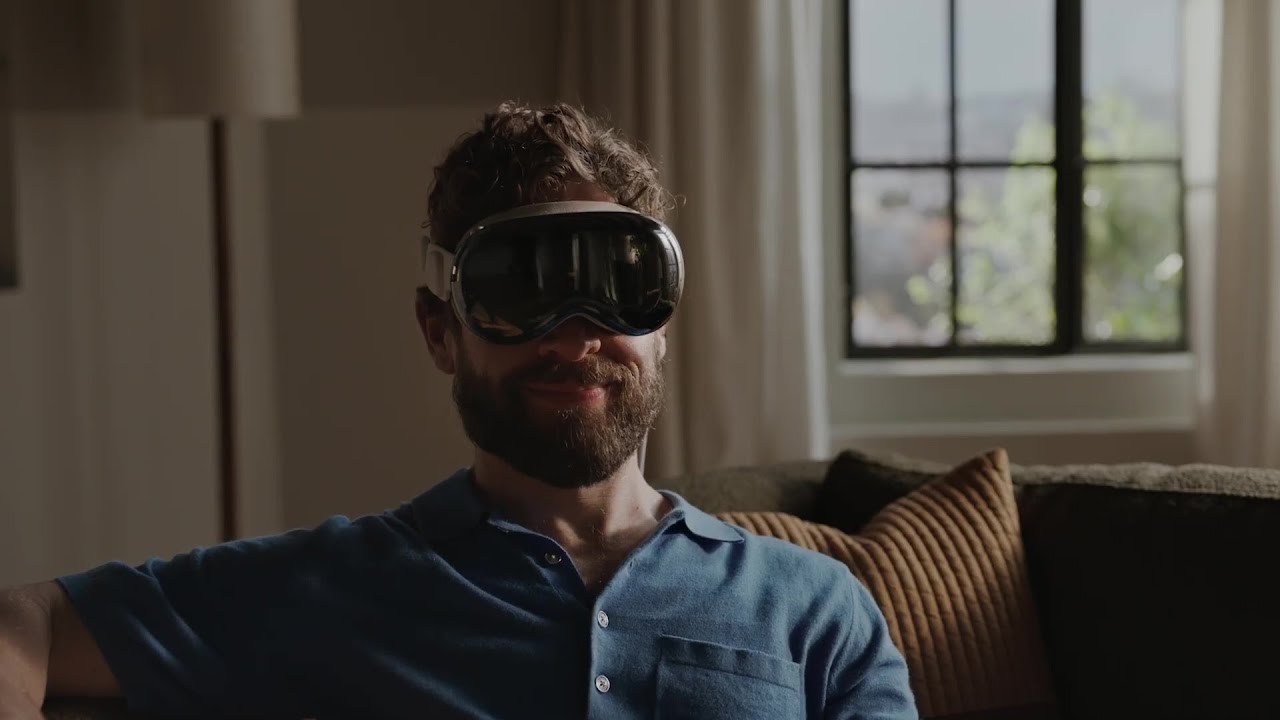
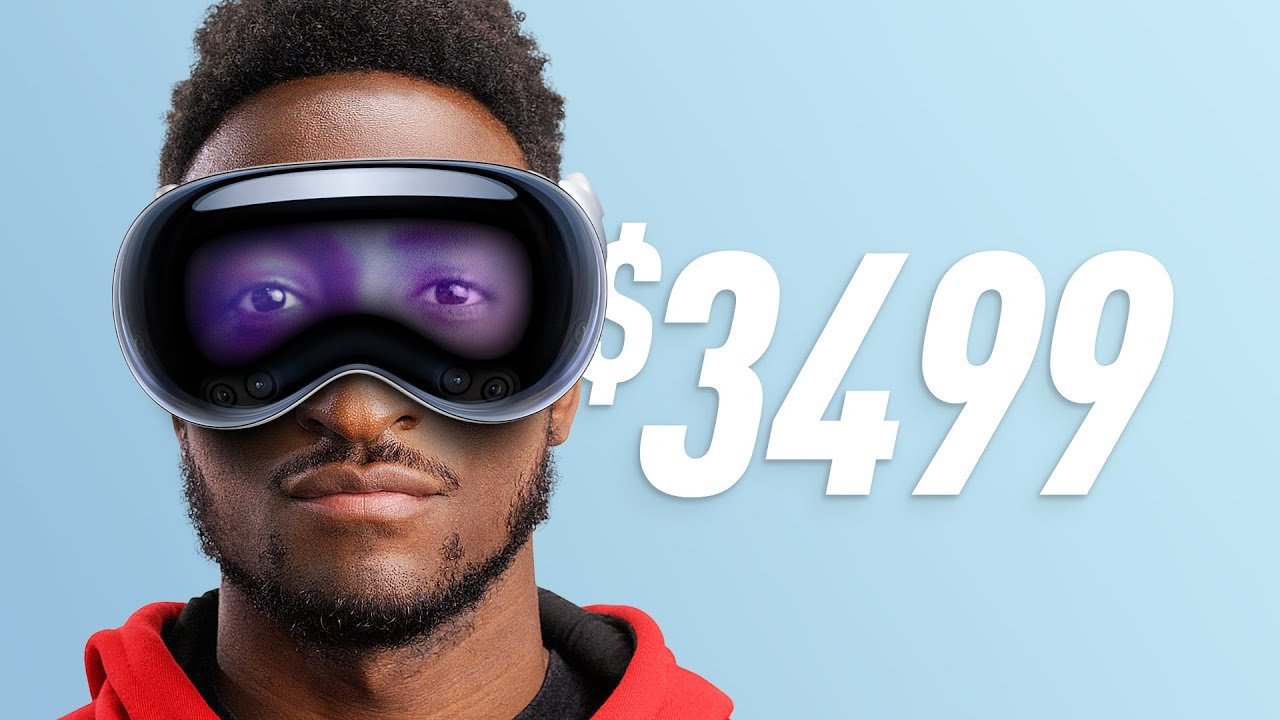
Read that sentence twice. A $3,500 headset that the analyst class spent the entire month writing eulogies for just shipped a feature that lets a person who cannot reliably use a sip-and-puff straw or a chin joystick steer a power wheelchair with their eyes, on standard Bluetooth or wired connections, with two of the established alternative drive vendors in the assistive technology industry. That is not a press release feature. That is the kind of capability that changes someone's day.
What Tolt and LUCI Actually Are
Some context that did not make most of the recap coverage. Tolt and LUCI are not generic accessory brands. They are the two most credible alternative drive system vendors in the power wheelchair market right now, and they are pursued by the people who depend on this technology for very specific reasons.
Tolt is a head-array and sip-and-puff alternative that has been working on eye-driven inputs for power chairs for several years. Their integration story has historically been hardware-first, with proprietary sensor arrays mounted to the chair. LUCI is the autonomy and safety layer for power wheelchairs, the company that adds collision detection, drop-off prevention, and stability assist to existing chairs from Permobil, Quantum, Sunrise, and a handful of others. LUCI does not replace the drive input. It sits between whatever drive input you use and the chair's motor controller, watching for hazards.
The combination of Vision Pro eye tracking as an input, routed through either Tolt's drive system or through a LUCI-equipped chair, gives you a very different posture than the current state of art. Today, an eye-driven chair input means a dedicated eye-tracking sensor mounted to a tray or a frame, which is expensive, fragile, and visually distracting. Tomorrow, if you already own a Vision Pro, the eye tracking is already in the device on your face, calibrated to you, hardware-accelerated, and good enough that the latency for a wheelchair input is well within the safety envelope.
The Eye Tracking on Vision Pro Is Actually That Good
This is the part of the story that does not get talked about because it sounds like a fan-boy claim. The eye tracking on Vision Pro is the best consumer-grade eye tracking that has ever shipped at scale. Not the best lab demo. Not the best in a controlled enterprise deployment. The best in a product you can buy on a Wednesday afternoon and have working in your living room that night. The sub-pixel gaze accuracy, the foveated rendering pipeline that depends on knowing where you are looking with millisecond latency, the per-eye calibration that runs the first time you put the device on, all of that is real engineering and it has been understated since the device shipped.
Meta does not have this. The Quest 3 has no eye tracking at all. The Quest Pro had eye tracking that was good enough for social presence in Horizon Workrooms and not good enough for input. The Galaxy XR has eye tracking, but it is closer in capability to the Quest Pro generation than to Vision Pro. Steam Frame has no eye tracking at the chip level. PSVR2 has eye tracking that is excellent for foveated rendering and not designed as a primary input modality. Pico Project Swan is shipping eye tracking later this year but at a developer-preview stage.
What that means in practice is that the wheelchair control feature is not portable to a different headset. It is not a use case that Meta could ship tomorrow by enabling a setting. It is the specific capability that exists because Apple built the best eye tracking pipeline in consumer XR, and the company is now finding the people for whom that pipeline is genuinely life-changing instead of incrementally useful.
Bluetooth and Wired, US First
Two specifics in the announcement that matter for the deployment story. The first is that the feature supports both Bluetooth and wired connections to the chair. The second is that it is US-first, with more systems planned later. Both choices are deliberate and both tell you something about how Apple is thinking about this.
The Bluetooth path is the easy install path. Pair the headset to the drive system the way you would pair AirPods to a Mac, configure the calibration once, and you are running. The wired path is the safety-critical path. Bluetooth introduces latency variability that is not large but is non-zero, and for a person operating a 350-pound power wheelchair in a kitchen or near stairs, latency variability is the wrong tradeoff. The wired option says Apple worked with the assistive technology community on what the actual safety constraints are, not just on what the demo looks good with.
US-first is the regulatory path. The FDA has class II device requirements for alternative drive systems on power wheelchairs, and the CE-mark equivalents in Europe and the corresponding regulators in Japan, Korea, and Australia all have their own qualification processes. Shipping in the US first with Tolt and LUCI as named partners means Apple has done the regulatory work on those two paths and is being responsible about not over-promising on geographies they have not cleared. More systems planned for the future is Apple talking to its own future product manager about the next markets, not marketing copy.
Why This Matters for the Vision Pro Story
Now the part that runs against the narrative the rest of the press has been carrying for a month. Sam Whitfield wrote two weeks ago that Vision Pro 2 is at least two years away and that Mark Gurman's reporting set a 2028 floor on the next headset. Sam also wrote that visionOS 27 is looking like a maintenance release and that for the small but real Vision Pro enterprise base, that is good news. Both of those pieces are right and both of them describe Apple's posture accurately. The headset is being maintained, not extended, while Apple shifts engineering toward glasses and wearable AI.
What Tuesday's announcement adds to that picture is the specific thing the maintenance release looks like in practice. Apple is not throwing new features at Vision Pro to make it competitive with the Galaxy XR or to answer the Android XR glasses ship date. Apple is shipping features that fit the audience Vision Pro actually has, which is enterprises with concrete use cases and individuals with specific needs that no other consumer hardware can meet. The CAE pilot training program. The SightMD cataract surgery deployment. The SAP collaboration rollout. And now the wheelchair control feature.
None of those are mass-market features. All of them are the kind of feature that justifies the $3,500 price for the person who needs it. That is a different theory of who Vision Pro is for than the consumer-spatial-computing pitch Apple made at the 2023 reveal, but it is the theory the device has actually settled into, and Tuesday's announcement is the cleanest signal yet that Apple's internal product strategy is aligned with where the device has found its real audience.
The Comparison That Nobody Is Going to Run
One last thing. Run this side by side with what Meta has shipped on accessibility for Quest. Quest 3 supports basic accessibility features. Voice command for app launch. Subtitles in some apps, depending on developer support. A few hand-tracking accommodations for users with limited mobility. Galaxy XR is roughly comparable, with some Android-platform accessibility hooks layered on top.
Neither of those products can drive a power wheelchair. Neither of them has the eye tracking to be a credible alternative input device for someone with significant motor impairment. Neither of them has the regulatory partner work to ship into the assistive technology category at all.
That is not a knock on Meta or Samsung. They are building toward a different audience and a different price point. But it is a real distinction in capability, and on the specific question of who Vision Pro is for, the answer Apple is giving is increasingly the answer that the platform's strongest critics have been waiting for someone to give. It is for the people who actually need the thing the hardware does best, and for whom the price is not the most important constraint. That is a small audience. It is also a real one.
What I Will Be Watching
Three things between now and the broader rollout. The first is the Tolt and LUCI integration timeline. Apple's press release was light on dates beyond initially supporting these two systems. The assistive technology purchase cycle is slow and clinical, with PT and OT teams typically involved in setup. If Tolt and LUCI have working integrations in clinics by the end of summer, this rolls out as a meaningful feature in 2026. If it slips into 2027, it becomes a future-promise feature.
The second is whether visionOS 27 at WWDC on June 8 expands the accessibility surface further. The wheelchair control announcement landed two weeks before the keynote, which is unusual for Apple. They typically save anything this concrete for the WWDC stage. The early reveal suggests there is more accessibility news coming at WWDC, and that the wheelchair feature is being tee'd up rather than being the headline. The headline is probably broader.
The third is the international expansion timeline. The US-first framing is the right call regulatorily, but it caps the install base. If Apple has CE mark qualification for the Tolt and LUCI integrations by Q4, the European and UK rollout could happen alongside the visionOS 27 release. If not, this stays a US story through 2026.
The Honest Read
For most of the last six weeks, the Vision Pro story has been written by people watching Apple's roadmap and concluding that the headset is being de-prioritized. That read is correct on the roadmap. It is incomplete on the product. The product itself is finding an audience, and Tuesday's announcement is the clearest example yet of what that audience looks like and what Apple is willing to ship for them.
The $3,500 price tag has always been the wall between Vision Pro and a mass-consumer story. What it has never been is a wall between Vision Pro and the specific people for whom the device's capabilities are uniquely valuable. A person who needs eye-driven wheelchair input is going to find the price calculus on a Vision Pro very different from a consumer evaluating it as a movie-watching device. So is a surgical resident training on a 3D anatomy model. So is a CAE pilot working through certification scenarios. None of these audiences are big. All of them are real.
This is the strongest argument Apple has shipped for Vision Pro since launch. It is not a mass-market argument. It is the argument that the device exists, that it does specific things no other product does as well, and that Apple is going to keep finding the people for whom those things matter. Watch for more of these announcements over the next two years. The headset is not getting replaced. It is getting pointed at the audience it should have been pointed at from the start.
Correction, September 14, 2026: This article said the Steam Frame has no eye tracking at the chip level. That was wrong when it was published. The Steam Frame has built-in eye tracking, which Valve uses for Foveated Streaming, a feature its official product page describes as using "low-latency eye tracking data to steer the best quality pixels only to where you're looking."