
Six weeks out from WWDC, the picture of what Apple plans to show on June 8 has started to firm up. According to 9to5Mac's reporting and Mark Gurman's most recent Power On newsletter, visionOS 27 will be a substantially lighter release than its predecessor. There will be no rebuilt UI shell, no marquee new feature category, and no spatial-computing equivalent of last year's window-to-world demo. The headline software event at WWDC 2026 will be iOS 27, with macOS 27, watchOS 27, and visionOS 27 lined up behind it to deliver parity, performance, and polish.
EnterpriseMay 15, 2026
visionOS 27 Is Looking Like a Maintenance Release. For Vision Pro Enterprise Buyers, That Is Good News.
By Jordan Kuo
Staff Writer, VR.org
Advertisement
For consumers who were hoping Apple would use this WWDC to reset the Vision Pro narrative, that sounds disappointing. For the small but growing pool of enterprises actually deploying Vision Pro into real workflows, it is the best possible outcome.
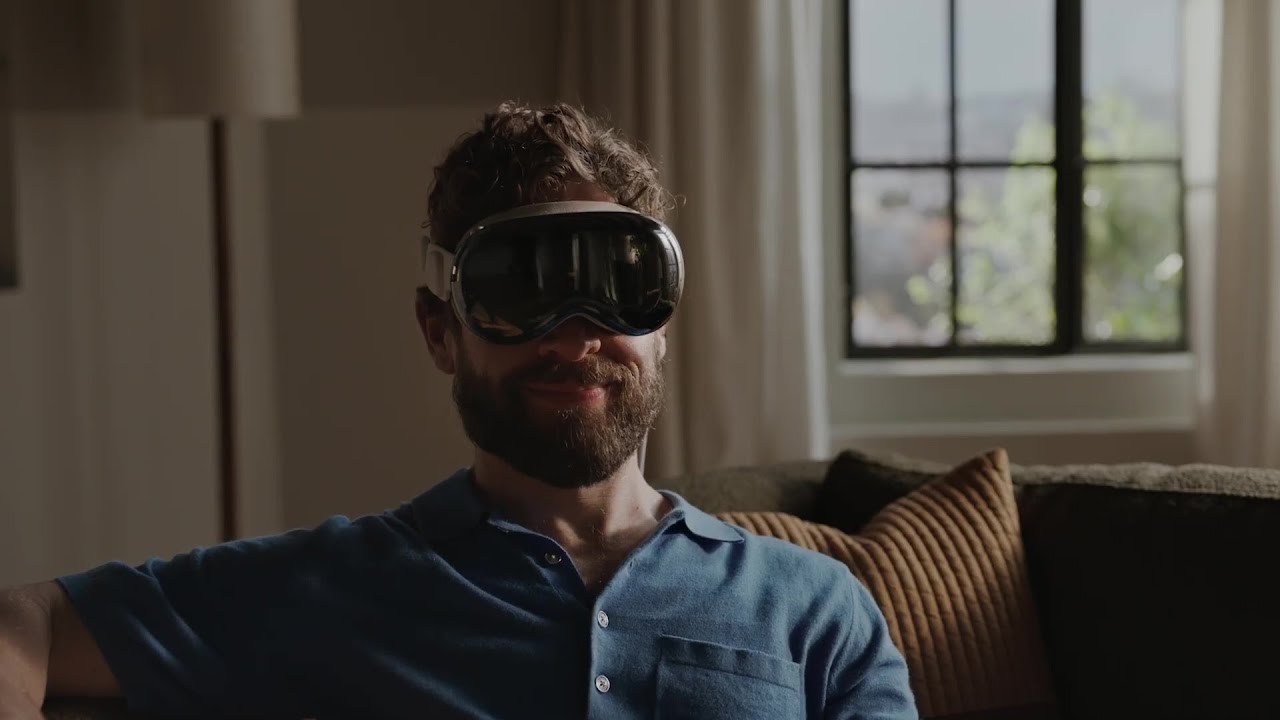
visionOS 26 was the big swing. visionOS 27 needs to land it.
visionOS 26, which Apple shipped last fall, was the most ambitious update the platform has had since launch. It introduced shared spatial experiences, the Protected Content API that gates regulated data by role, persistent windows that survive reboots, the rebuilt Personas pipeline, and the first real enterprise device-sharing system Apple has built outside of education. For enterprise IT teams, it was the release that finally let them stop treating Vision Pro as a personal device that happened to be on the company asset list.
That kind of release also creates a long tail of edge cases. The Protected Content API surfaced inconsistencies in how Vision Pro handled multi-session security tokens. Shared spatial experiences exposed network-state assumptions that did not hold on corporate WiFi. Personas rebuilt the rendering pipeline and quietly broke a handful of third-party SDKs that depended on the older path. None of these were showstoppers, but every one of them was a ticket sitting in some MDM administrator's queue.
A polish release is what fixes those tickets. It is the release that lets a CIO finally sign off on rolling Vision Pro out to a third site without negotiating exceptions with the security team.
What enterprise buyers actually want from visionOS 27
Talk to the people running real Vision Pro pilots and you will hear the same short list every time. They want better device management, deeper MDM hooks, more granular policy controls, longer battery life under sustained spatial workloads, and improved support for guest sessions so that a shared device in a training lab does not require a full provisioning cycle between users. None of that is glamorous, and none of it would make for a good keynote demo.
It is, however, exactly the kind of work that fits a parity release. Apple's own internal framing, according to Bloomberg, is that the "27" generation of operating systems should feel coherent across iOS, macOS, watchOS, and visionOS. That means the new MDM features Apple is reportedly building into iOS 27 should reach visionOS 27 too, which is the kind of thing that does not get its own keynote slide but absolutely matters for enterprises trying to standardize on a single management surface.
Advertisement
The CAE and SAP data points are the real story
The companies actually deploying Vision Pro at scale are a small list, but the use cases are getting more concrete by the quarter. CAE has built its commercial pilot training program around the device, with research showing students completing certification curriculum roughly 24 percent faster than in classroom-only formats. Porsche is using Vision Pro for product design review. SAP has deployed about 100 units across the company for collaboration and operations workflows. Visage Imaging is using it for clinical decision support. And SightMD, which we wrote about earlier this month, is using it as a cataract surgery training platform.
What these deployments share is that they are not waiting on Vision Pro 2. They are buying current hardware, building workflows on top of visionOS 26, and rolling people through training programs that pay for the headset many times over. The 219 percent ROI figure we covered in April is real, and it does not require a faster M-series chip to show up.

The Vision Pro 2 delay actually helps the platform here
This is the counterintuitive part. Mark Gurman's reporting this week confirmed that Vision Pro 2 is at least two years away, and that the Vision Products Group has been thinned out as Apple shifts talent to smart glasses. For consumers waiting for a cheaper, lighter Vision Pro, that is bad news. For an enterprise that has already capitalized 50 units across a training program, it removes a real procurement risk.
Enterprises do not want their hardware refreshed every 18 months. They want a stable platform with a known support window. Apple committing to visionOS 27 and visionOS 28 on the existing M5 Vision Pro, with a refinement-focused roadmap, is exactly the kind of stability story a CFO can sign off on. The companies running CAE-style training programs are not going to swap headsets in 2026 either way. They will keep buying the current device, train more cohorts on it, and start asking harder questions about per-seat licensing for the platforms running on top of it.
What to actually watch for on June 8
A few specific things will tell us whether Apple is taking the enterprise opportunity seriously. First, look for expanded MDM controls and any hint of a managed Apple Business setup that includes Vision Pro provisioning by default. Second, watch for any extension of the Protected Content API into more categories of regulated data. Third, see if Apple addresses guest sessions, which is the single biggest friction point in training-lab deployments today. And fourth, watch for the absence of a price cut. If Apple announces a lower-cost Vision Pro variant alongside visionOS 27, it changes the strategy. If they do not, the enterprise pitch stays exactly where it is.
WWDC 2026 starts June 8. The keynote runs at 10 AM Pacific. For Vision Pro's enterprise story, a quiet, polished, parity-focused release would be a much better outcome than another big swing. The platform does not need more features right now. It needs the features it has to work reliably across a deployed fleet. If that is what visionOS 27 delivers, this WWDC will be a quiet win.
Advertisement