
Virtuix has spent more than a decade trying to convince gamers that the missing piece of virtual reality was their feet. The company's omnidirectional treadmills let a player walk, jog, and turn in place while moving freely inside a game. It is a clever solution to VR's locomotion problem, and it never quite found a mass consumer market large enough to justify the hardware. This week the company found a customer that values exactly what it builds. On May 27, Virtuix announced it had been selected by the U.S. Air Force for Phase I funding under the AFWERX SBIR program to develop a platform it calls Virtual Terrain Walk.
EnterpriseMay 29, 2026
Virtuix Just Won an Air Force Contract. The VR Treadmill Company Found Its Real Customer in Defense.
By Sam Whitfield
Contributing Writer, VR.org
Advertisement

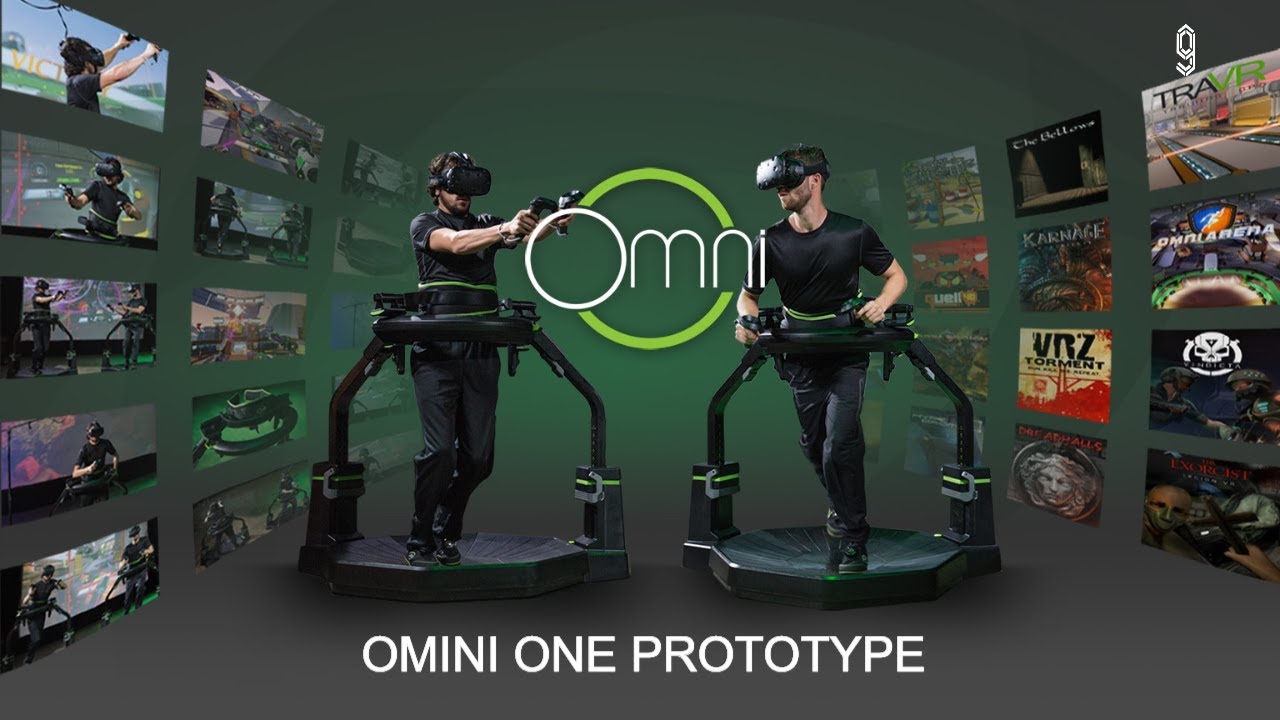
The pitch is straightforward, and it is the kind of thing that reads better to a defense buyer than to a living room. Virtual Terrain Walk uses AI-driven 3D reconstruction to turn camera footage of a real location into a photorealistic virtual replica in a matter of hours. Warfighters then strap into Omni One treadmills and physically walk that terrain before they ever set foot on it. The system is designed for distributed teams of twelve or more, so a squad scattered across different bases can rehearse a mission together, moving through the same geo-specific environment in 360 degrees rather than staring at a static map on a screen.
What a Phase I award actually means
It is worth being precise about the size of this, because press releases rarely are. An AFWERX SBIR Phase I award is a feasibility study. The dollar figures at this stage are small, typically in the low six figures, and the deliverable is a proof of concept, not a fielded system. Phase I exists to answer one question: is this technically and operationally viable enough to fund further. The real money lives in Phase II, where prototypes get built, and Phase III, where a program of record can buy at scale. Virtuix is at the front door, not inside the building.
That said, the front door is the hard part. The SBIR pipeline is competitive, and a Phase I selection signals that someone inside the Air Force training and readiness community looked at omnidirectional treadmills plus AI terrain reconstruction and decided the combination was worth a closer look. For a company Virtuix's size, that validation is the asset. It is a reference customer with the most demanding requirements in the business, and it is a credential the company can carry into every other defense conversation it wants to have.

Defense was always the better fit
Step back and the pivot makes sense. The consumer case for a VR treadmill has always run into the same wall: cost, footprint, and the fact that most players are happy enough with stick locomotion or teleport movement on a headset that costs a fraction of a treadmill setup. The defense case inverts every one of those objections. Budgets are large, floor space on a base is not a constraint, and the specific things a treadmill delivers, physical movement that reduces simulator sickness and builds genuine spatial memory of a place, are precisely what mission rehearsal has always wanted and rarely had.
Advertisement
Virtuix is not starting from zero here either. The Marine Corps has already acquired Omni One systems for warfighter training and mission planning, so the company has a track record of getting its hardware onto a military floor and keeping it there. The Air Force selection extends a story Virtuix has been quietly building rather than launching something out of nowhere. The company has also signaled a broader defense push, including an acquisition strategy aimed at deepening its footprint in the sector.
The bigger pattern
This fits a trend I have been tracking all year. The large platform holders have largely walked away from enterprise and institutional XR hardware, leaving the field to specialists who were built for this kind of work and who treat a procurement cycle as a feature rather than a nuisance. Defense and public-sector training is one of the most durable budget lines in the entire immersive market, far steadier than consumer hardware sales that swing with every holiday quarter. IDC pegs worldwide enterprise AR and VR spending at roughly twelve billion dollars in 2026, and a meaningful slice of that is training and simulation work where the buyer cares about measurable readiness outcomes, not frame rates.
Virtuix is also now a publicly traded company, and a defense narrative is exactly the kind of story that reframes a hardware maker for investors. A consumer gaming peripheral firm has a hard ceiling. A defense and training technology supplier with a government reference customer is a different valuation conversation entirely. None of this is investment advice, and a Phase I award is a long way from recurring revenue, but the strategic logic is clear enough to read off the page.
The honest assessment is measured. One feasibility award does not remake a company, and the gap between Phase I and a program of record has swallowed plenty of promising hardware before. But Virtuix has spent years looking for the customer whose problem its product actually solves, and the U.S. military, with its appetite for realistic rehearsal and its tolerance for hardware that consumers found impractical, looks a lot like that customer. After a decade of selling treadmills to gamers, Virtuix may have finally found the buyer who was always the right fit.
Advertisement