
There are games that are popular, and then there are games that define a platform. Tetris defined the Game Boy. Halo defined the Xbox. Wii Sports defined the Wii. Beat Saber defined VR.
The perfect VR game
Beat Saber succeeds because it understood something fundamental about VR that most games miss: your body is the controller. You're not pressing buttons or moving analog sticks. You're swinging your arms, ducking, dodging, and slashing. The physicality is the game.
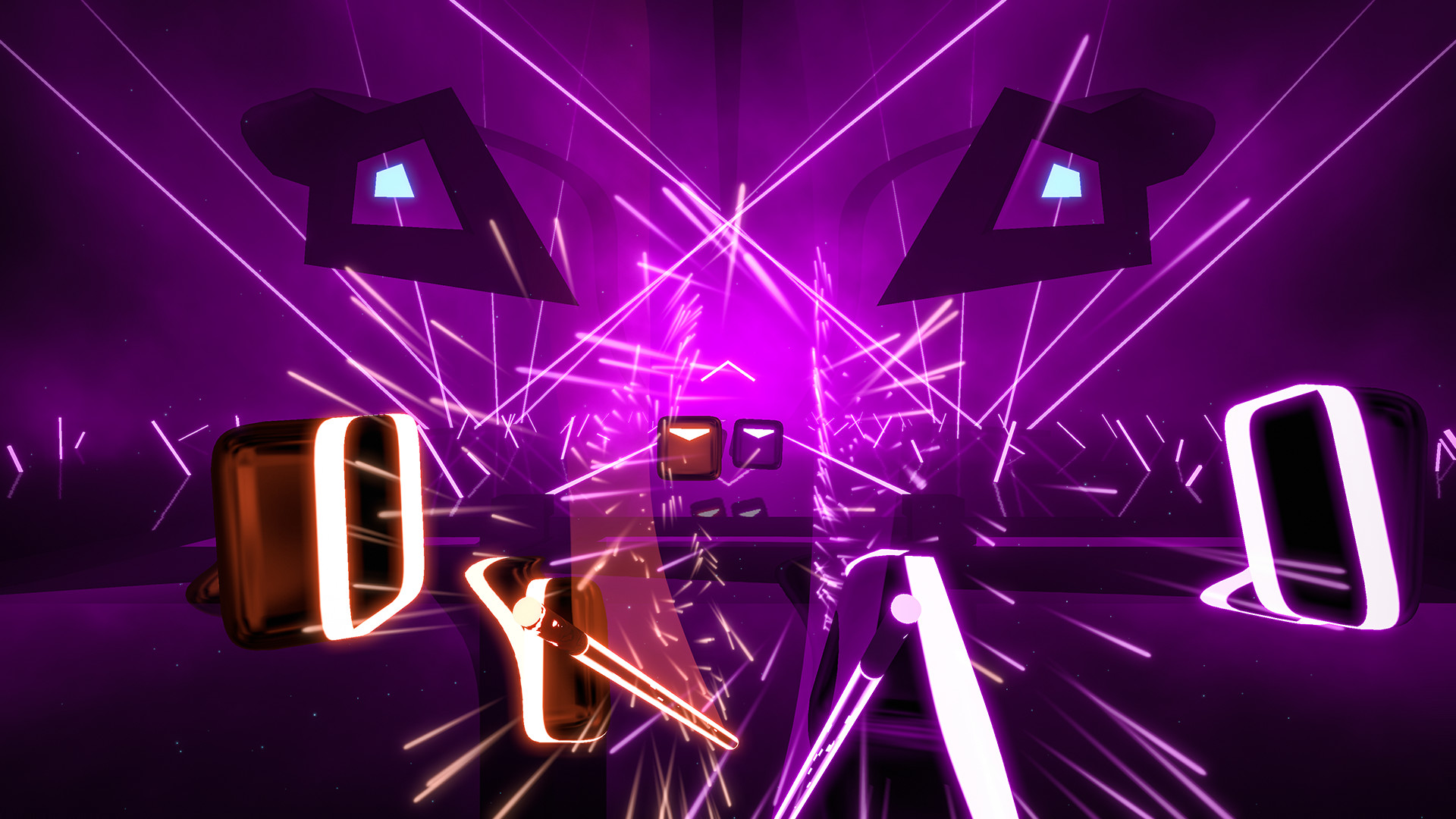
The concept couldn't be simpler. Colored blocks fly toward you to the beat of music. You slash them with glowing sabers in the correct direction. That's it. A five-year-old can understand it in seconds. But at expert difficulty, it's one of the most physically demanding and mechanically precise games on any platform.
Why it mattered
Before Beat Saber, the most common reaction to trying VR was "that's cool" followed by never putting the headset on again. Beat Saber changed that. It gave people a reason to come back every day. The combination of music, physical movement, and the satisfaction of nailing a perfect run created a gameplay loop that's almost addictive.
It also became the go-to VR demo. When someone tries VR for the first time, you put them in Beat Saber. It requires no gaming experience, it's immediately fun, and it's impressive to watch from the outside. More headsets have been sold because of Beat Saber demos than any other single factor.
The custom song ecosystem
Beat Saber shipped with a limited soundtrack, but the custom song community turned it into an infinite jukebox. Through mods, players can download and play virtually any song imaginable, mapped by community members who create custom beatmaps with incredible creativity and precision. This community-driven content pipeline kept the game alive and relevant years after launch.
The fitness angle nobody expected
Nobody designed Beat Saber to be a fitness app, but that's what it became for millions of people. Playing on expert difficulty for 30 minutes is a legitimate workout. People started losing weight playing Beat Saber. Fitness communities formed around it. It proved that VR could make exercise genuinely fun, not just "gamified exercise" fun, but actually fun.
Its legacy
Eight years after launch, Beat Saber is still the most played VR game in the world. It's been ported to every major platform. It's generated hundreds of millions in revenue. And it's still the first thing most people think of when you say "VR game."
That kind of cultural impact is rare in any medium. Beat Saber didn't just succeed as a game. It proved that VR is a platform worth building for.