
The Samsung Galaxy XR developed a tell this spring. For the first twenty minutes or so after you put it on, it behaved exactly like the $1,799 flagship it is supposed to be. Then, somewhere around the half hour mark, the seams started to show. Animations hitched. The system UI stuttered. Eventually the whole thing slowed to the point where, as more than one owner put it on Reddit, the headset was "functionally useless." For roughly three weeks, that was not a hardware defect or a misbehaving app. It was Android XR itself.
XrMay 17, 2026
Android XR Broke the Galaxy XR for Three Weeks, Then Fixed It. The Repair Is the Real Story.
By Jordan Kuo
Staff Writer, VR.org
Advertisement
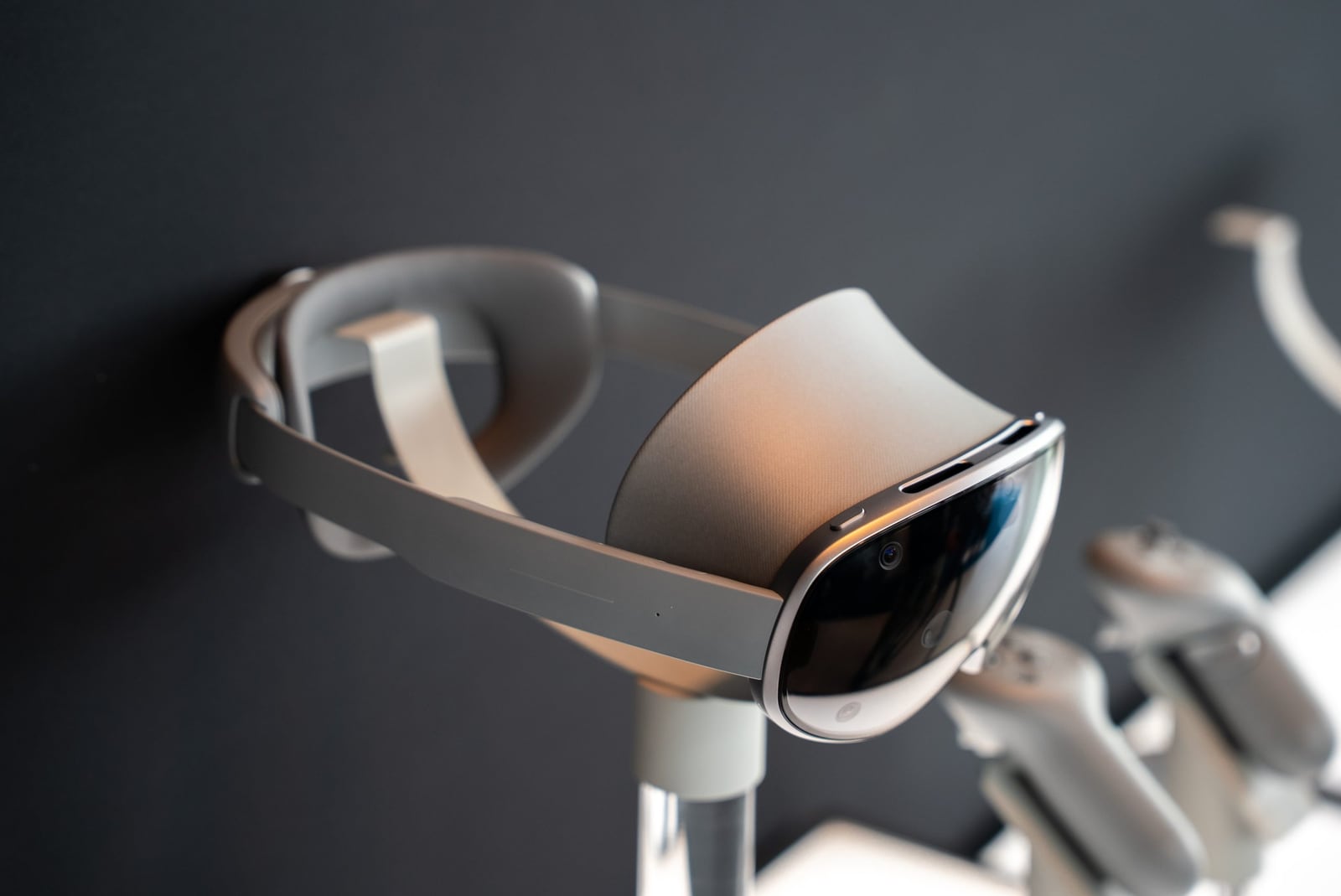
The culprit was a memory leak introduced by an Android XR system update that shipped in April. A memory leak is one of the more recognizable failure modes in software: the system allocates memory for a task and never fully reclaims it, so available resources bleed away the longer the device runs. That explains the signature pattern owners kept describing. The Galaxy XR ran fine on a fresh boot and degraded predictably the longer a session lasted, regardless of whether someone was streaming PC VR, browsing, or just sitting in the home environment. It was not tied to one app because it was not living in one app. It was in the layer underneath all of them.
That distinction is the whole story here, and it is worth slowing down on.
Google answered fast, in public
To Google's credit, the response was quick and unusually direct. The bug surfaced on the r/AndroidXR subreddit, where Galaxy XR owners documented the slowdown in detail. Google replied in the thread itself rather than through a press statement, confirming that "the team is fully aware of this issue and we have made getting a patch out to everyone our absolute top priority." No timeline came with it, which is never reassuring, but the acknowledgement landed where the affected users actually were.
The fix arrived on May 7 as build I610UEU2AZD8, described in the changelog as "a series of system stability and performance optimizations" with "a focus on improving the overall user experience." Owners who installed it broadly reported that the headset returned to its pre-update behavior, fast and responsive through long sessions again. A handful of residual crash reports trailed the rollout, which is normal for a stability patch, but the core regression was resolved. Start to finish, the episode ran a little under three weeks.
Advertisement
Why a platform bug is not a device bug
If this had been a Samsung firmware problem isolated to one batch of headsets, it would be a footnote. It was not. Android XR is Google's attempt to do for headsets and glasses what Android did for phones: supply the operating system a fleet of manufacturers build hardware around, so none of them has to write a spatial OS from scratch. The Galaxy XR, codenamed Project Moohan during development, is the first shipping device on that platform and effectively its reference design. When the platform regresses, the reference device regresses with it, and right now the reference device is most of the installed base.

That changes the math on a bug like this. On a mature platform with tens of millions of units and a staged rollout pipeline, a memory leak gets caught on a beta channel or a small percentage ring long before it reaches everyone. Android XR does not have that luxury yet. The installed base is small, which sounds like it should make testing easier, but it also means there is no large, diverse population of devices quietly absorbing a bad build before it goes wide. A regression in the system layer reaches a meaningful share of all Android XR hardware in the world more or less at once. That is the structural risk of being early, and it is the part developers and hardware partners should be reading closely, not the leak itself.
What the next OEMs should take from this
Google has spent the past year recruiting hardware partners for Android XR. Samsung is shipping. Xreal has Android XR glasses on its roadmap, and Google has talked openly about more manufacturers to come. Every one of those companies is being asked to bet a product line on an operating system someone else controls and updates over the air. The Galaxy XR incident is a useful, low-stakes data point for exactly that decision, and it says two things at once that point in opposite directions.
The discouraging read: Google's pre-release validation for Android XR is not yet catching the kind of long-session resource bug that a few hours of ordinary real-world use would surface, and there is no obvious public beta or staged-rollout buffer between Google's build server and a customer's face. The encouraging read: when it broke, Google owned it quickly, in the open, and shipped a working fix in under three weeks without the hardware partner having to absorb the blame. For a platform this young, the recovery behavior arguably matters more than the defect, because the defects are going to keep happening. What partners need to know is what happens next when they do.
The timing sharpens all of this. Google I/O opens Tuesday, May 19, and Android XR is one of the headline tracks. Google will spend that keynote asking developers to build for the platform and OEMs to ship hardware on it. The Galaxy XR's three bad weeks are now part of the context for that pitch. Not a fatal part. Platforms are allowed rough patches, and this one closed cleanly. But anyone walking into I/O deciding how much of their roadmap to hand to Android XR now has a concrete answer to a question that used to be hypothetical: when the platform breaks the only flagship it has, how fast does it get fixed? This time, the answer was about as good as a bad situation allows. It is still worth asking again next time, because on a platform this new, there will be a next time.
Advertisement