
I make music and design sound for a living, so when people ask me to explain why VR matters, I do not give them a speech. I hand them a headset, load up Beat Saber, and let the game do the talking. Eight years after it launched, that is still my answer. Beat Saber just celebrated its eighth anniversary with three new free tracks, and I want to talk about why this little block-slashing rhythm game remains, in my honest opinion, the single most important title in all of VR.
GamingJune 2, 2026
Beat Saber Turns 8. As a Composer, I Think It Is Still the Most Important Game in VR.
By Evan Marcus
Co-Founder, VR.org
Advertisement
The Anniversary Drop
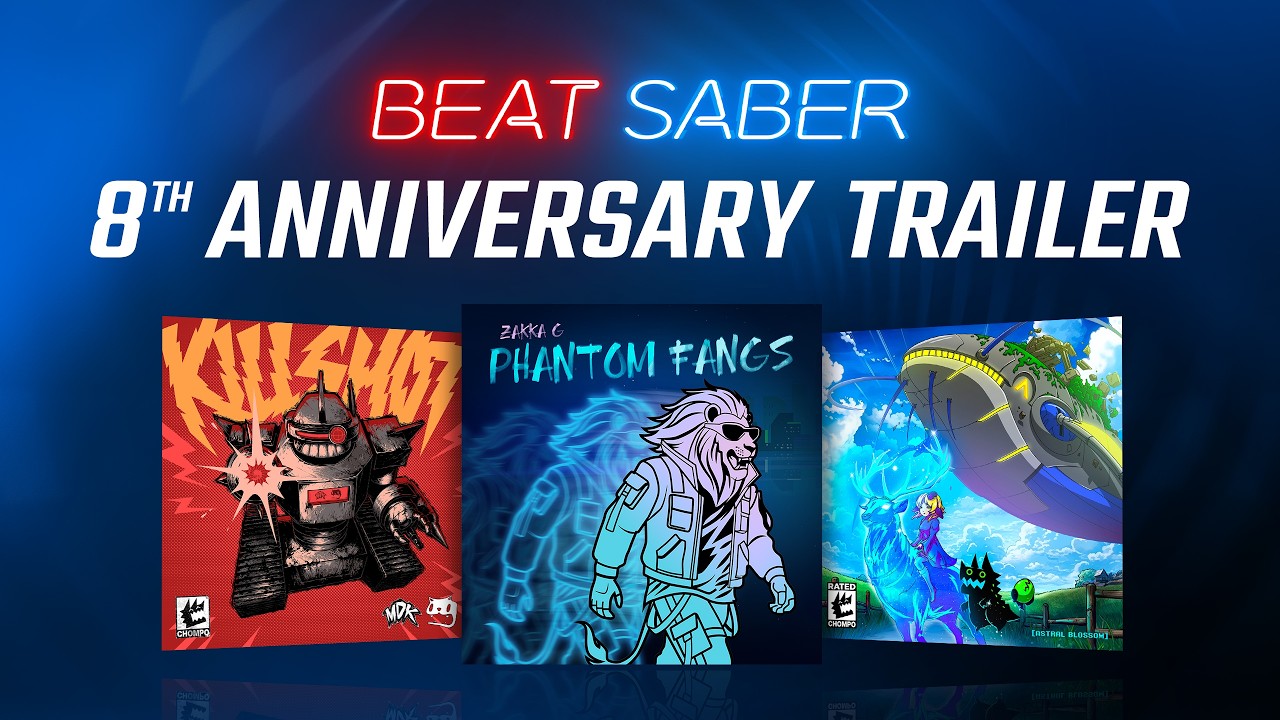
Let me cover the news first. To mark eight years, Beat Games added three free tracks that arrive automatically as a standard update, sitting in the Extras section for everyone on Quest and SteamVR. The headliner is an original in-house track called Phantom Fangs from Zakka G, built specifically to get you weaving, ducking, and lunging to an electronic beat. Alongside it are two from emerging artists: Boom Kitty x MDK's Killshot, which is exactly the high-energy bass you want for a sweat session, and Astral Blossom from Skybreak and Daeya, a melodic future bass track that the studio accurately calls a crybanger.
What I love about this drop is the in-house original. Beat Games writing their own track instead of just licensing more pop songs tells you they still understand the thing that made Beat Saber work in the first place. The music is not a backdrop. It is the level design.
Why Rhythm and VR Were Made for Each Other
Here is the part I can speak to professionally. Rhythm games and VR are a perfect marriage, and it comes down to a concept called embodiment. In a flatscreen rhythm game, you press buttons in time with music. Your brain registers the timing, but your body is mostly still. In Beat Saber, you are swinging your actual arms through actual space to hit notes that come at you in three dimensions. The music stops being something you hear and becomes something you physically inhabit.
As someone who composes, I can tell you that the holy grail of music is getting a listener to feel rhythm in their body rather than just process it in their head. Dancing does this. Playing an instrument does this. And Beat Saber does this for people who would never set foot on a dance floor or pick up a guitar. It translates the felt sense of a beat directly into arm movement, and the feedback loop is instant. You hit the note, you feel the slice, the haptics fire, the sound triggers. That tight coupling of audio, visual, and physical feedback is what makes it feel less like playing a game and more like becoming part of the song.
The Numbers Are Genuinely Staggering
Beat Saber is not just culturally important, it is the commercial backbone of consumer VR. It is nearing 10 million unit sales on Quest alone, and it tops Meta's list of the 50 best-selling Quest games of all time. It was the top-selling game on PSVR2 in 2024. Reporting pegged its revenue north of 250 million dollars years ago, and it has only kept selling since.
Advertisement
Think about what that means. In an industry where studios shut down, where Rec Room and Survios made headlines this spring for all the wrong reasons, where Meta loses billions on Reality Labs every quarter, one rhythm game has quietly sold to nearly ten million people and shows no sign of slowing down. Beat Saber is the closest thing VR has to a system seller. It is the Wii Sports of this generation, the game that justifies the purchase for a huge chunk of the install base.
It Is Still the Best Onboarding Tool We Have
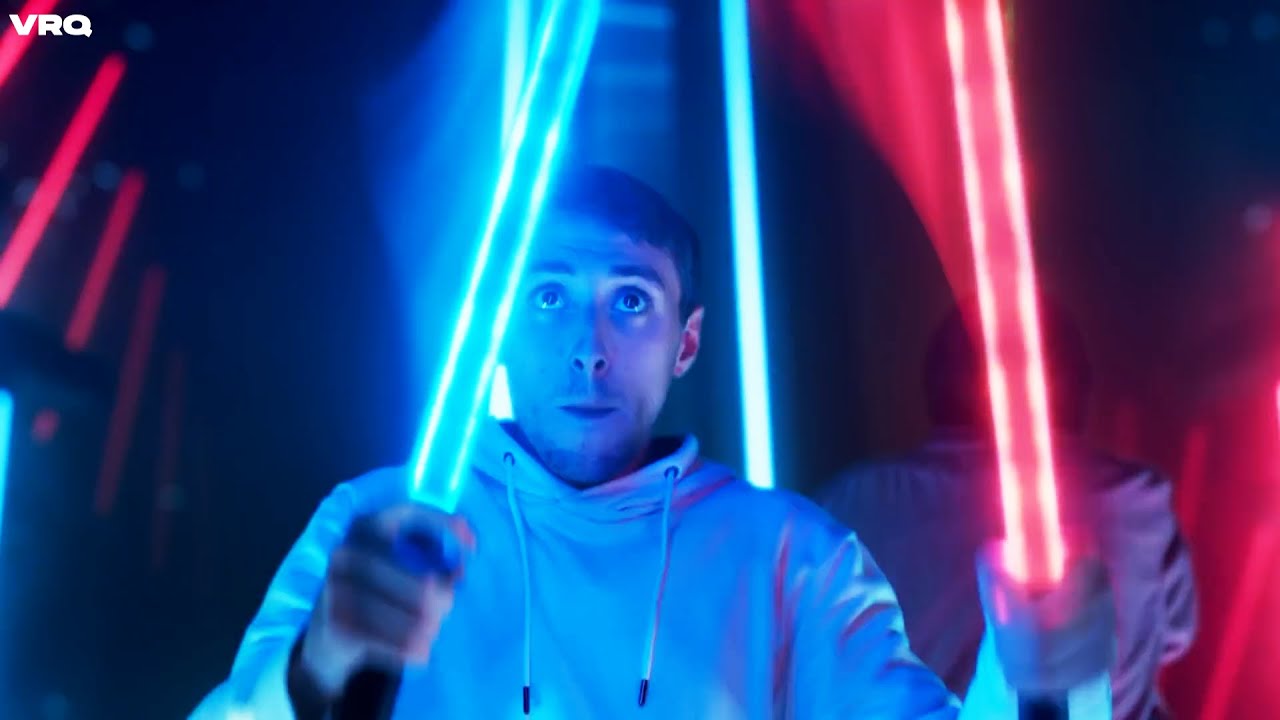
Every VR enthusiast knows the ritual. A friend or family member is skeptical about VR. They have heard it makes people nauseous, they think it is antisocial, they do not get the appeal. You put a headset on them, and you do not start with a sim or a horror game or anything complicated. You start with Beat Saber. Within thirty seconds, they are grinning. Within two minutes, they forget they are wearing a headset at all. Within five, they are asking when they can buy one.
No other VR game does this as reliably. The barrier to understanding is zero. Slash the blocks in time with the music. That is the entire pitch, and it works on a five-year-old or a seventy-year-old. The genius of Beat Saber is that it requires no gaming literacy, no tutorial, no patience. It delivers the core promise of VR, the feeling of being inside an experience rather than watching it, faster than anything else ever made.
Eight Years In and Still Setting the Standard
It is a little wild that a 2018 game is still the benchmark. You would think eight years of hardware advances and developer experience would have produced a half-dozen Beat Saber killers by now. Plenty have tried. Synth Riders, Pistol Whip, OhShape, and others have all carved out audiences with their own takes on rhythm in VR, and some of them are genuinely excellent. But none have dethroned the original, because Beat Saber nailed the fundamentals so completely that there is very little to improve on. The core loop is perfect. Everything since has been refinement.
That is the mark of a true classic. Tetris did it. Pac-Man did it. Beat Saber belongs in that conversation, a game so elegantly designed that it defined its genre on arrival and has never been meaningfully surpassed. As a composer, as a gamer, and as someone who has spent years trying to convince people that VR is worth their time, I am genuinely glad it is still here, still getting new music, and still slicing.
Happy eighth birthday, Beat Saber. Go grab the new tracks and remember why you fell in love with VR in the first place.
Advertisement