
Meta and Microsoft announced today that a "starter edition" of cloud-based Xbox Game Pass is now bundled into Horizon+, Meta's VR subscription service. That adds 50-plus flatscreen games to a library that previously held about 100 VR titles, so on paper the service just got 50 percent bigger without the price moving off $8 a month or $60 a year. Fallout 4, Fallout 76, Deep Rock Galactic, Overcooked 2, Grounded and DayZ are all in there.
GamingJuly 22, 2026
Xbox Game Pass Is In Horizon+ Now, and the 10-Hour Cap Tells You What This Really Is
By Evan Marcus
Co-Founder, VR.org
Advertisement
Then you read the second paragraph of the announcement and find the number that actually defines this deal. Ten hours of cloud gaming per month.
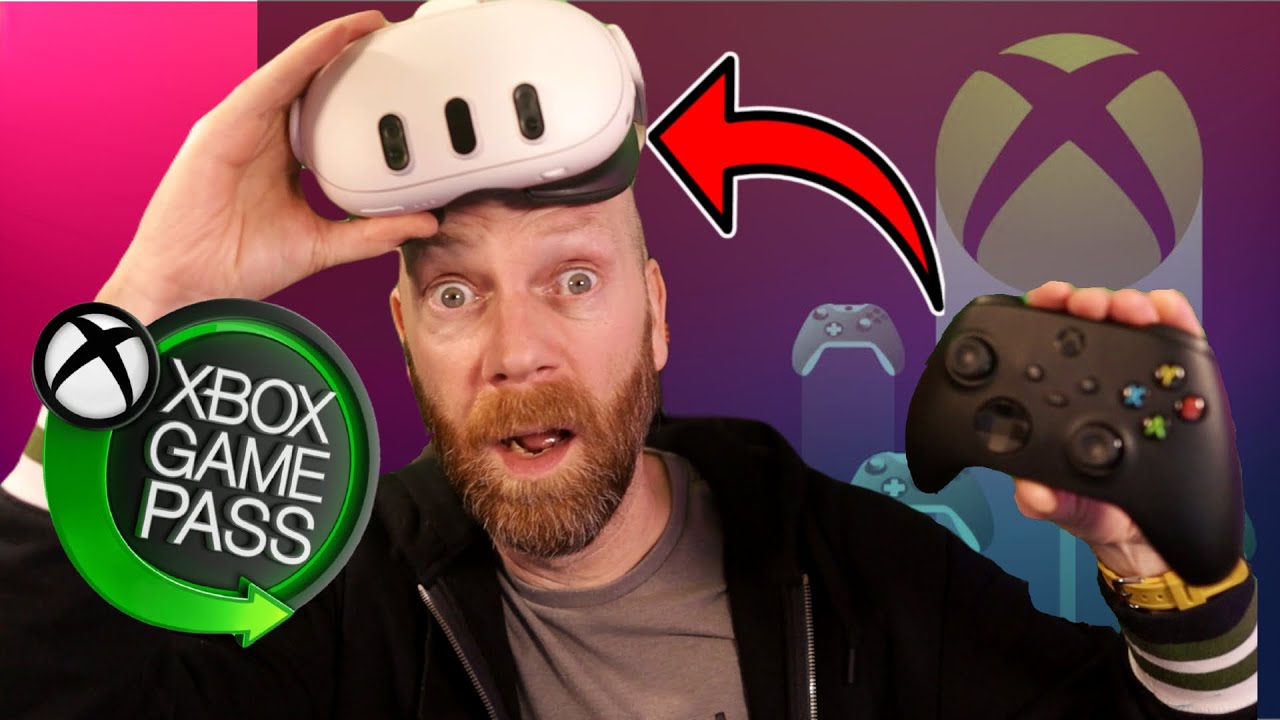
Ten hours is twenty minutes a day
I want to be fair here, because I have spent enough evenings streaming flatscreen games to a giant virtual theater screen in a Quest to know it is a genuinely nice way to play. Lying in bed with a 26-foot Fallout 4 floating in front of you is a legitimately good experience that no monitor replicates. I am not sniffing at the feature.
But ten hours a month is one long Saturday. It is a single Deep Rock Galactic session with friends who keep saying "one more mission." Anyone who plays enough to care about a game subscription burns through that in a week and then hits a wall, at which point the only way forward is buying a separate Xbox Game Pass at $10 on top of the $8 you already pay. The funnel is not subtle. It is barely even a funnel. It is a hallway with an arrow painted on the floor.

You can dodge the cap by downloading games to an actual Xbox or a Windows PC and streaming from your own hardware, which is unlimited. That is a real option and it works well. It also means the headline feature is most useful to people who already own the gaming hardware that makes the headline feature unnecessary.
This is a Steam Frame answer, and everyone knows it
Valve is about to ship Steam Frame, a headset whose entire pitch includes playing your existing flatscreen Steam library locally on the device and streaming the heavy stuff from a PC. Meta has spent the last year visibly moving Reality Labs money toward smart glasses and AI, and it is not funding new VR games at anything like the old rate. So when a competitor shows up whose main non-VR advantage is "your regular games run here," you need an answer, and cloud streaming is by far the cheapest one available.
Cheap answers are not automatically bad answers. Steam Frame is going to cost considerably more than a Quest 3S, and price is the single biggest reason Quest owns the installed base. If Meta can say "we do flatscreen games too" for zero additional cost to the subscriber, that blunts a real attack for very little money.
The difference that will not go away is ownership. On Steam Frame you download the game and it sits on the device and it works when your internet does not. On Quest, in this arrangement, the games live somewhere else and you are renting a pipe to them. Stop paying either subscription and a chunk of your catalog simply stops being yours. I have made my peace with subscriptions generally, but I notice that every time the industry offers me more games for the same money, what I am actually getting is fewer games that I keep.
The gamepad thing is the real quality of life win
Buried at the end of the announcement is the update I am most happy about. Meta says it is finally shipping Xbox gamepad emulation for Quest's Touch controllers "in the coming weeks." Until now, playing a flatscreen game on Quest meant pairing an actual Xbox controller over Bluetooth, which is fine at home and deeply annoying anywhere else. Being able to pick up the controllers already in the headset case and play a flatscreen game is the kind of small friction removal that changes how often you actually do a thing.
So: a decent perk with an obvious upsell attached, plus one genuinely good feature that should have shipped three years ago. If you already pay for Horizon+, you got more stuff today for the same money and there is no reason to be annoyed about that. Just do not mistake ten hours a month for a games library.
Advertisement