
The working assumption across most of the VR industry in 2026 is that the enthusiast PC VR market is a rounding error. Quest volumes dominate the conversation. Standalone is where the money is. Sony has PSVR2 for the console crowd. The tethered PC VR headset, the kind you strap on to play Half-Life: Alyx on a high-end GPU, is supposed to be the dying end of the category. Bigscreen has decided to disagree. The Beyond 2 shipped this year at 107 grams, with 2560 by 2560 micro-OLED panels per eye, a 116-degree horizontal field of view, integrated eye tracking, and a $1,019 price that undercuts several competitors with worse specs. For the specific slice of the market that still cares about PC VR being the best VR, this is the most interesting headset of 2026.
Bigscreen Beyond 2 Is a 107-Gram Argument That PC VR Is Not Dead
The weight is the story
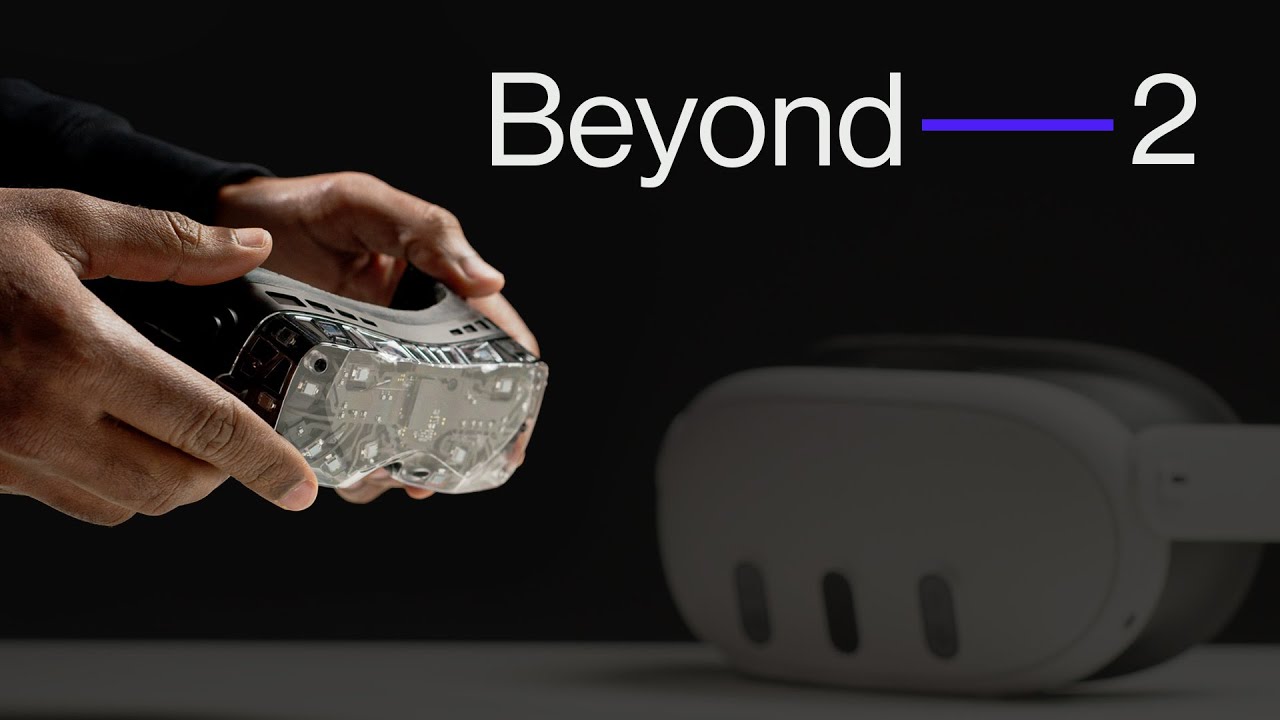
A Quest 3 weighs 515 grams with the stock strap. A Valve Index is 809 grams. A Vision Pro is 600 to 650 grams depending on the band. Bigscreen Beyond 2 is 107 grams. That is not a typo, and it is not a misleading spec that excludes some essential component. It is the entire headset as you wear it, with a custom facial interface molded to the user's face scan.
Weight matters more in VR than in almost any other piece of consumer electronics. Every extra gram sits on the bridge of the user's nose and the back of their head, and every session longer than 30 minutes exposes the cumulative fatigue. Long sim racing sessions, flight sim marathons, and the kind of social VR hangouts that last three hours are the exact use cases where a 107-gram headset stops being a spec and starts being a quality-of-life upgrade. Users who have tried the original Bigscreen Beyond consistently reported that they forgot they were wearing it, which is the rare compliment that justifies the premium pricing on its own.
Spec sheet versus reality
2560 by 2560 per eye is 6.5 megapixels per eye, or 13 megapixels total. The panels are micro-OLED, which means per-pixel illumination, true blacks, and contrast ratios that LCD-based headsets cannot touch. The 116-degree field of view is narrower than a Crystal Super or a Varjo Aero, but wider than the original Beyond and wider than most standalone options. Pancake optics keep the form factor thin and handle edge-to-edge clarity well enough that the small FOV sacrifice feels fair.
Eye tracking is new on the Beyond 2. The original Beyond did not have it, which was a real limitation for users who wanted foveated rendering to stretch their GPU budget further. Dynamic foveated rendering on a 13-megapixel headset is not a luxury, it is a practical requirement if the user wants to run modern sims at native resolution. The Beyond 2 exposes the eye data through SteamVR, which means VRChat avatars get accurate gaze, social VR users get proper eye contact, and performance-sensitive apps can render only what the user is actually looking at.
What it is not
The Beyond 2 is not an all-in-one headset. It does not have SLAM tracking. It requires SteamVR base stations, which means a minimum of two 1.0 or 2.0 lighthouses mounted in the play space. It does not ship with controllers. Users typically pair it with Valve Index controllers or the newer Etee finger-tracking controllers. It requires a powerful PC, ideally a 4080 or 4090 or better, to push its native resolution at acceptable frame rates.
None of that is a flaw. It is the definition of the product. Bigscreen is building a headset for the user who already has a base station setup, already has controllers, already has a high-end PC, and wants the highest-quality visual experience available without also taking on the 600-plus gram weight of the headsets that historically owned that segment. That is a smaller market than Quest's, but it is not zero, and it has been starved of new options since the Valve Index entered its sixth year on the market.
The pricing signal
$1,019 is not cheap. It is also $480 less than a Varjo XR-4, $320 less than a Pimax Crystal Super, and in the same general tier as a Vision Pro while doing something completely different. Bigscreen has positioned the Beyond 2 as the high-end enthusiast option that does not require a mortgage, and that positioning matters because the enthusiast market has been quietly annoyed at $1,500 and $2,000 headset pricing for a while now.
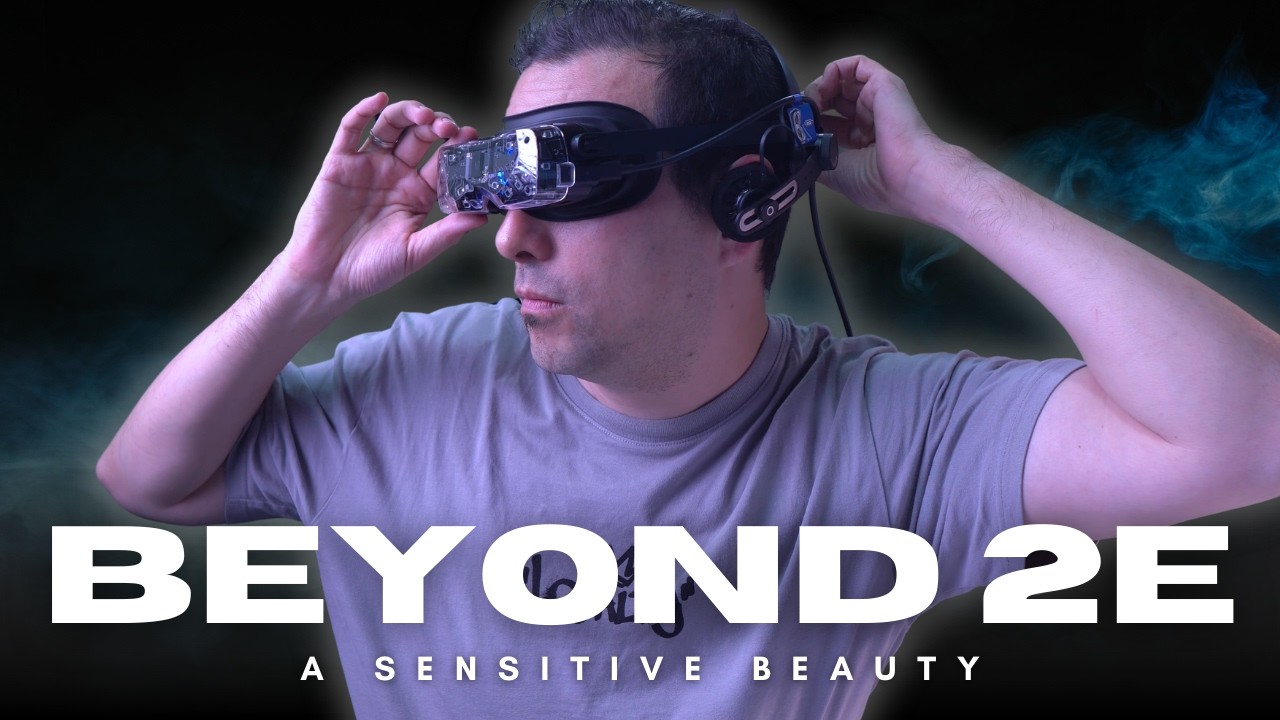
There is also the Beyond 2e variant for users who want the extended FOV and prescription lens support bundled in. At $1,219 it is still under the Crystal Super, and for users with strong prescriptions the integrated lenses remove a real source of friction.
What this means for the category
A 107-gram headset does not fix the fundamental challenges facing PC VR. Meta has still won the standalone volume war. Steam's monthly VR survey still shows Quest headsets making up the majority of active users. Developers still get more financial upside from Quest store submissions than from SteamVR releases. The Beyond 2 is not going to reverse any of that.
What it does is protect the ceiling. For users who already know that standalone VR has a visual fidelity gap, and who care about closing that gap more than they care about convenience, the Beyond 2 is the most compelling new option in years. It proves that the enthusiast segment is still commercially viable for a small, focused company. And it puts pressure on Valve to finally ship whatever the Index successor turns out to be, because the longer the Deckard stays a rumor, the more the top end of the market belongs to Bigscreen.