
Google I/O 2026 opens tomorrow, Tuesday May 19, with the keynote at 10am PT from Shoreline Amphitheatre. Google has already confirmed the headline for the XR crowd: it will preview Android XR glasses, a Gemini-powered pair of everyday eyewear that pairs with an Android phone. Nina Castillo covered what developers should watch for here last week. This piece is about the other audience, the one that decides whether any of this becomes a product people actually buy.
ArMay 18, 2026
Google Previews Android XR Glasses Tomorrow. Meta Already Sells Them by the Million. That Gap Is the Whole Story.
By Sam Whitfield
Staff Writer, VR.org
Advertisement

Here is the tension worth holding in your head through the entire keynote. The word Google keeps using is preview. The word that describes Meta's position is shipping. That is not a small semantic difference. It is the entire competitive story of smart glasses in 2026.
What Google Has Actually Confirmed
The pre-announced shape of the product is clear enough. Android XR glasses run Gemini 2.5 Pro for real-time translation, navigation, messaging, and visual understanding. They carry a camera, microphones, and speakers, and a paired Android phone does the heavy compute. There is an optional in-lens display that surfaces contextual information privately, and an audio-first variant with no screen at all. Google has lined up an eyewear strategy rather than a single device: Warby Parker, Gentle Monster, and a Samsung-built model are the names attached so far, which is the first time Google has approached glasses as a platform with fashion partners instead of a single reference design.
On paper that is a strong package. Gemini is genuinely good at the live-translation and visual-question tasks that make smart glasses feel useful rather than gimmicky. The four-partner approach is the right structural answer to a market where people will not wear hardware that looks like hardware. And Android XR as a shared OS layer across Samsung's Galaxy XR headset and these glasses is a coherent ecosystem bet.
The Number That Frames Everything
Now the other side of the table. Meta's Ray-Ban Display glasses reportedly exceeded sales expectations by more than 300 percent. Demand in the US was strong enough that Meta paused its planned early-2026 expansion into the UK, France, Italy, and Canada, citing limited inventory. EssilorLuxottica said it sold more than seven million Ray-Ban and Oakley smart glasses in 2025, more than tripling its previous annual total. Counterpoint Research put Meta at roughly 82 percent of the global smart glasses market in the second half of 2025. Meta is reportedly scaling toward ten million units of annual production capacity by the end of this year.

That is the gap. Google is going to stand on stage tomorrow and show a demo of a category Meta has already turned into a real consumer product with real distribution, real retail presence inside EssilorLuxottica's eyewear empire, and a year of installed-base learning. A keynote demo, however polished, is a promise. Meta is past the promise stage.
Advertisement
Google's Glasses Problem Has Never Been the Technology
It is worth remembering that Google previewed smart glasses before. Google Glass was demoed in 2012, shipped to developers in 2013, and became a cultural punchline before it ever became a product. The technology was ahead of its time. The follow-through was not there. Google has a long pattern of previewing ambitious hardware at I/O and then letting it drift, and the market knows it.
This is why the language tomorrow matters more than the hardware specs. If Google says these glasses ship this year with a price and a partner launch order, that is a credible challenge to Meta. If Google says developer preview, early access, or coming later, the market will read it the way it has learned to read Google hardware previews, and Meta keeps the field for another full cycle while it scales toward ten million units.
The Stack Play Underneath
There is a longer game that makes the preview less fragile than it looks. Android XR is a three-party stack: Samsung builds hardware, Google supplies the OS and Gemini, Qualcomm makes the silicon. No single company owns all three layers, which is exactly how Android phones beat a vertically integrated iPhone on volume. Apply that logic to glasses and Google does not need to out-ship Meta in 2026. It needs to make Android XR the default platform that every non-Meta eyewear maker builds on.
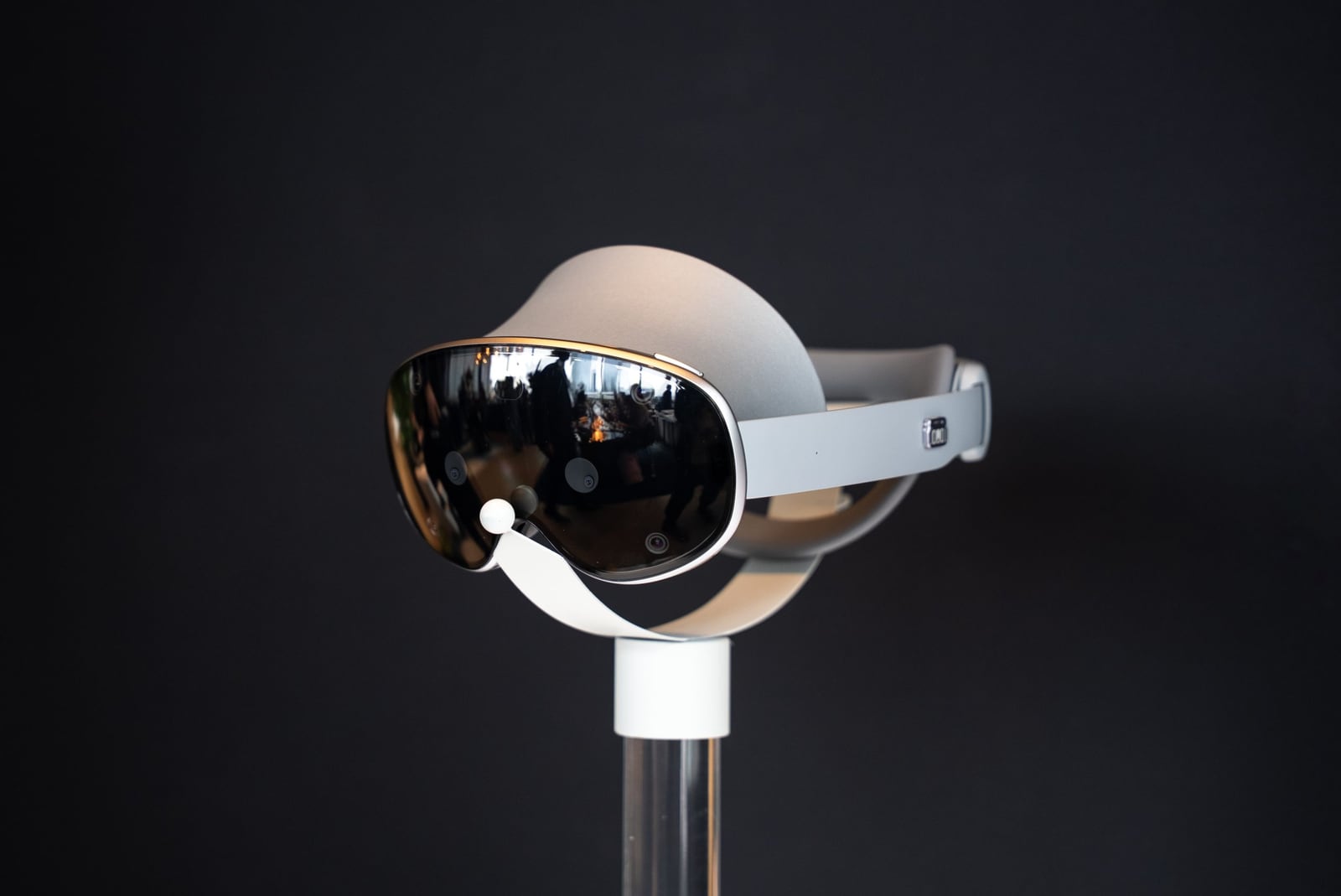
The runway for that is unusually clear right now. Apple's next Vision Pro is reportedly not arriving before 2028, and Apple's own glasses program is still settling on design directions with no display in the near-term versions. That leaves smart glasses as a two-horse race for the next two years: Meta with the market, Google with the platform. Tomorrow is Google's chance to make the platform feel inevitable even though the product is not shipping yet.
What to Actually Watch Tomorrow
Four things will tell you how seriously to take this. First, ship language: a date and a price, or another preview. Second, which partner launches first and where, because EssilorLuxottica's retail footprint is Meta's real moat and Warby Parker plus Gentle Monster is Google's answer to it. Third, whether the Gemini translation and visual-understanding demos are live and unscripted or canned, because latency is the difference between a useful product and a stage trick. Fourth, any signal on the audio-first screenless model, which is the variant that competes directly on price with the glasses Meta is already selling at the lower end.
Google has the better AI and arguably the better platform structure. Meta has the one thing that has decided every consumer hardware category in history, which is a product on shelves that people are buying faster than the company can make them. Tomorrow's keynote does not need to beat Meta on stage. It needs to do the one thing Google previews almost never do, which is convert into something you can buy before the moment passes. Watch the verbs, not the demo.
Advertisement