
When Valve announced Half-Life: Alyx in November 2019, the VR community collectively lost its mind. After more than a decade of silence on the Half-Life franchise, Valve wasn't just making a new Half-Life game. They were making it VR only. No flatscreen version. No compromises. This was Valve betting everything on Virtual Reality as a legitimate gaming platform, and they delivered one of the most important games ever made.
GamingMarch 14, 2026
Half-Life: Alyx is Still the Gold Standard for VR Gaming
By Evan Marcus
Co-Founder, VR.org
Advertisement

I've been a PC gamer since the late 90s. I grew up on the original Half-Life, spent hundreds of hours in Half-Life 2, and waited like everyone else for a sequel that never came. When Alyx dropped in March 2020, I played it start to finish over the course of a week. And six years later, I can say without hesitation that it's still the best VR game ever made. Nothing has come close.
It understood what VR actually is
Most VR games feel like they were designed as flatscreen games and then had VR bolted on. Alyx was the opposite. Every single interaction was built from the ground up for your hands. Opening a door, catching a bottle mid-air, loading a magazine into a pistol, pulling a headcrab off your face. None of these moments exist on a traditional screen. They only work because you're physically doing them.
The gravity gloves were the perfect solution to one of VR's biggest problems: picking stuff up off the ground is annoying when you're standing in your living room. Instead of bending down, you flick your wrist and objects fly toward you. It sounds simple. It changed everything. I found myself flicking every piece of junk in the environment toward me just because it felt so satisfying. It's the kind of design that only comes from a team that actually spent years playing their own game in VR.
The world felt real
City 17 in Alyx isn't just a backdrop. It's a place you inhabit. I spent entire stretches of the game just looking around. Picking up newspapers. Reading graffiti on walls. Studying the details of Combine technology up close. The level of environmental storytelling was unmatched, and VR made it hit differently than it ever could on a monitor.
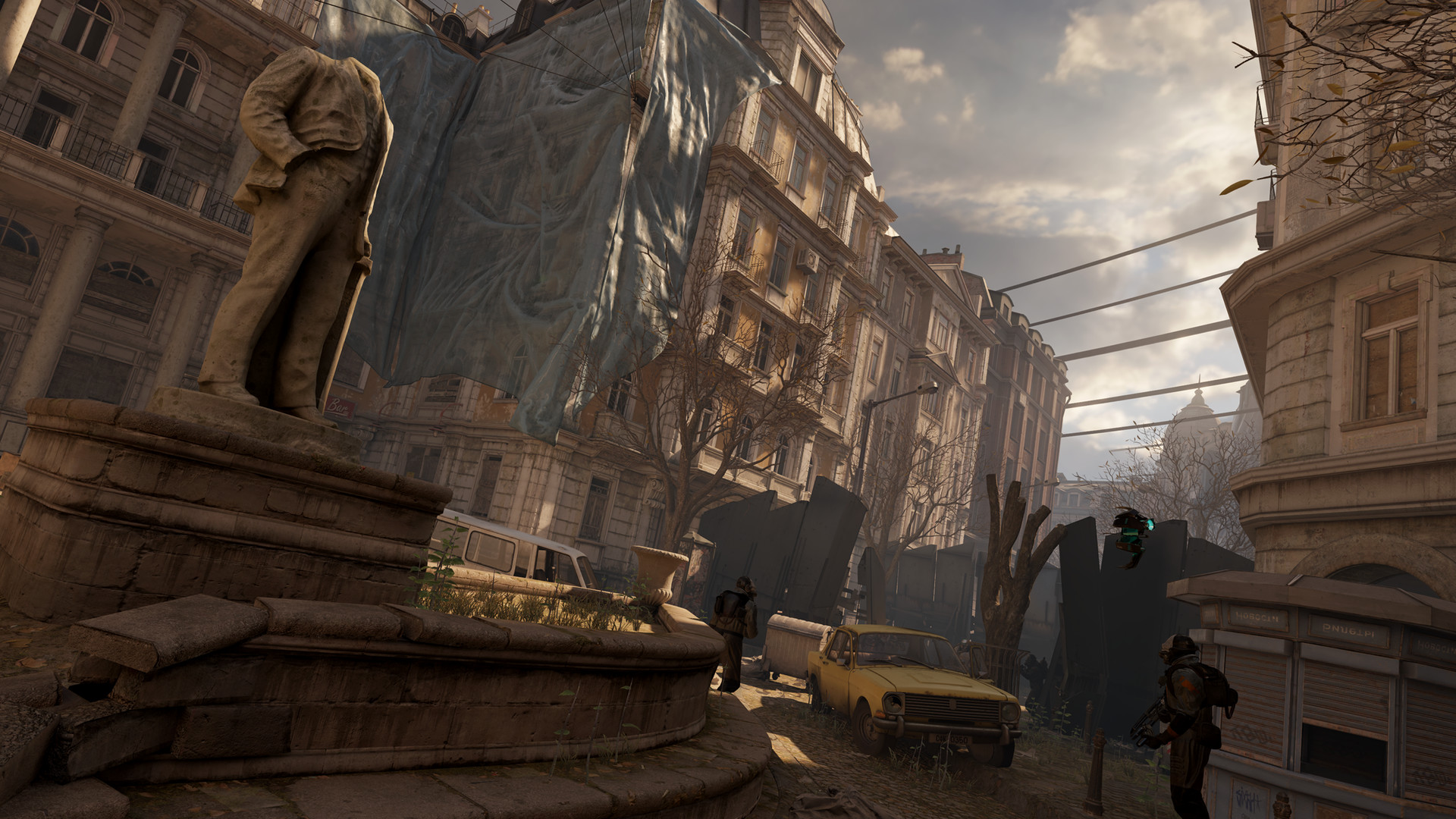
There's a moment early in the game where you walk out onto a balcony and see a Strider walking through the streets below. On a flat screen, that's a cool visual. In VR, you physically lean forward to look over the railing. You look up at this towering machine and feel small. That feeling of scale is something VR does better than any other medium, and Valve understood that completely.
The horror worked too well
I've played plenty of horror games on a flat screen. Resident Evil, Dead Space, Silent Hill. In VR, horror is a completely different animal. The Jeff chapter in Alyx, where you have to navigate through a pitch-black vodka distillery while avoiding a blind, sound-hunting alien, is one of the most intense gaming experiences I've ever had. I was physically covering my mouth to stay quiet. I caught myself holding my breath. No flatscreen game has ever done that to me.
Valve nailed the pacing too. Alyx isn't a horror game, but it uses horror in precisely the right moments to break up the action and exploration. The dark sections earn their scares because the rest of the game gives you breathing room.
Why nothing has matched it
The VR gaming landscape has grown significantly since Alyx launched. We've gotten great games. Resident Evil 4 VR, Into the Radius, Bonelab, Asgard's Wrath 2. But none of them have the polish, pacing, and design cohesion of Alyx. Part of that is budget. Valve had the resources and the time to make something at a AAA level. Most VR studios don't have that luxury.
But it's also a design philosophy thing. Valve didn't try to make a VR game that would also work on a monitor. They committed fully. Every puzzle, every combat encounter, every story beat was designed exclusively for the person standing in their room with a headset on. That commitment shows in every minute of the game.
What it means for VR gaming's future
Alyx proved that VR isn't just a gimmick or a tech demo platform. It's a legitimate medium for telling stories and creating experiences that are impossible anywhere else. The problem is that six years later, we're still waiting for the next game at that level. The upcoming Steam Frame could change that by giving developers a larger install base to target. And with studios like Valve clearly still invested in VR gaming, there's reason to be optimistic.
If you own a VR headset and haven't played Half-Life: Alyx, stop reading this and go play it. If you don't own a VR headset, Alyx is the reason to buy one. It was the gold standard when it launched, and it still is today.
Advertisement