
Meta has quietly done something pretty significant for VR developers this past month. The full Haptics design stack, both the desktop authoring tool (Haptics Studio) and the runtime SDK that ships the playback into your game, is now open source on GitHub under the MIT license. You can fork it, modify it, ship it in commercial products, and you do not owe anyone a royalty.
SoftwareMay 6, 2026
Meta Just Open-Sourced Its Haptics Stack Under MIT. The Best Tool for VR Touch Design Is Now Yours to Fork.
By Nina Castillo
Staff Writer, VR.org
Advertisement
That is a meaningful break from how this stuff usually works. Proprietary haptic engines have historically been closed black boxes locked to a specific console SDK or audio middleware license. Meta, of all companies, just put the most polished cross-platform haptic authoring tool on the planet into the public commons. If you build for Quest, you already knew Haptics Studio was good. The news is that you can now ship it anywhere, modify the engine, and not worry about a license rug-pull two years from now.
What actually went open source
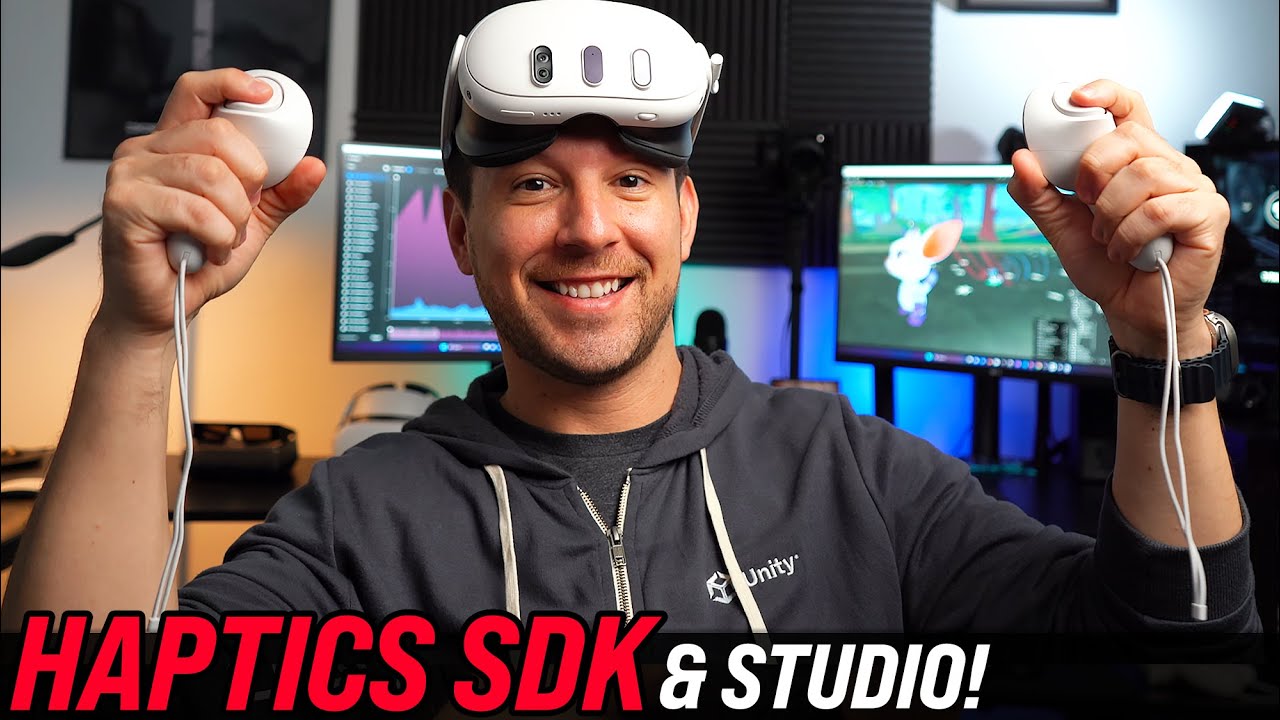
Two pieces. The Haptics SDK was released to GitHub late last year under MIT, which was the runtime side of the story. That is the C++ library that loads .haptic files, decodes them, and drives the actuators in the controller or headset. Useful, but on its own it was missing the part most teams need, which is the authoring tool.
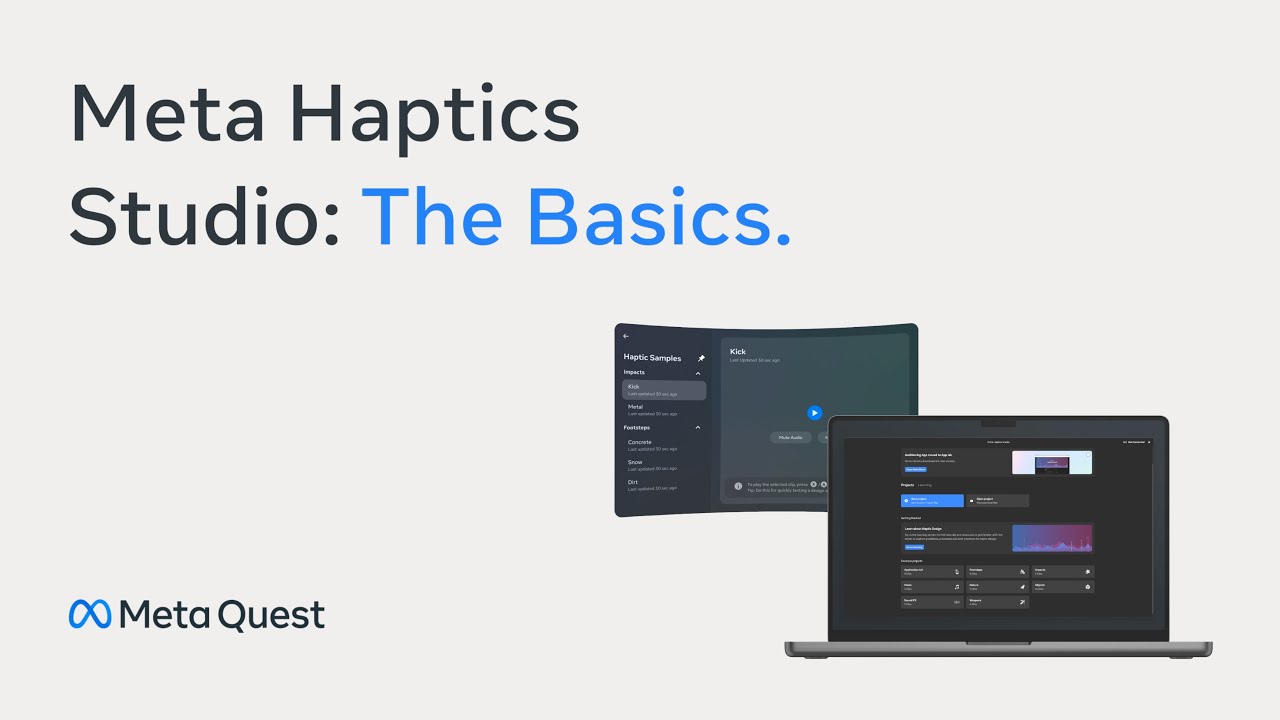
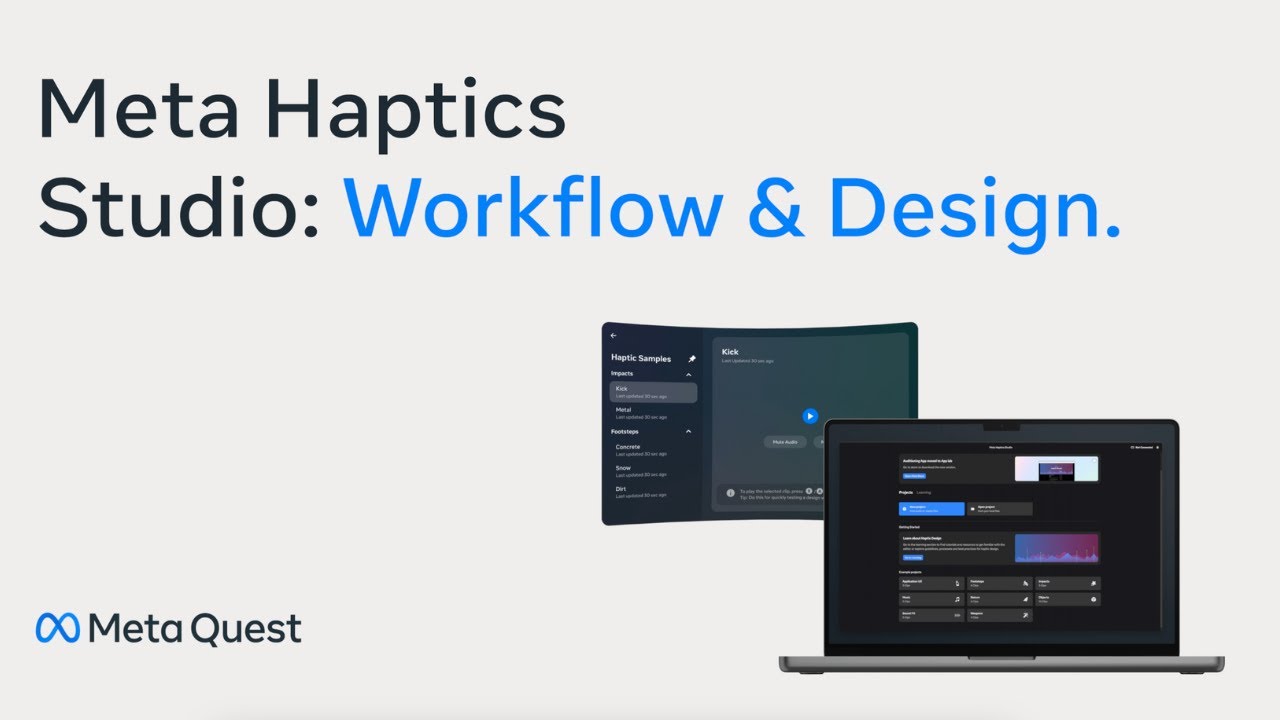
That changed this month. Haptics Studio, the desktop app that lets sound designers and developers author haptic effects with a visual waveform editor, is also now on GitHub. You point it at a WAV or MP3, and it gives you a synchronized haptic curve you can audition on a real Quest controller in real time. The output is a portable .haptic file that the open source SDK plays back on whatever device supports it.
Both are MIT licensed. That means Sony engineers can theoretically take the runtime, port it to PSVR2 actuators, and ship it. Same for Pico. Same for HTC. Same for an indie studio building a custom haptic vest. The license does not stop them.
Wwise and FMOD just made this an actual standard
The other shoe drops in audio middleware. FMOD already supported the Meta haptic format through its Haptics Instrument starting in FMOD 2.03.11, which means anyone scoring a game in FMOD could already drop haptic effects into the same event timeline as their audio. Now Wwise is shipping native .haptic support too, with the integration landing in the current release cycle. Audiokinetic confirmed it back at GDC.
Combined, those two integrations cover essentially every commercial VR title in production today. If you are scoring sound for a Quest game, your tool already speaks haptic. If you are scoring it in Wwise for PSVR2 or PC VR, your tool now speaks haptic. The .haptic format is on track to become the de facto interchange spec for controller haptics across platforms, the same way .wav became the universal audio interchange format. That is a thing nobody saw coming three years ago.
Why Meta is doing this
It is fair to ask. Meta is not famous for releasing first-party tooling under MIT, and Haptics Studio took years of internal R&D to build. The likely answer is that Meta has decided controller haptics are a commodity layer, not a differentiator. The actual differentiator is the controller hardware itself, the TruTouch actuators that ship inside Touch Plus and Touch Pro. The format is just the protocol.
By open sourcing the format and tools, Meta makes it easier for third party studios to ship haptics on Quest, which is the only platform with the wide-band actuators that make those haptics feel good in the first place. It is the same playbook as OpenXR. Make the standard free, capture the value at the hardware layer.
What you can do with it right now
If you are a developer, the practical implications start today. Clone the repo. Compile Haptics Studio for your platform. Author a few effects against your own audio assets. Drop the SDK into your engine of choice (Unity and Unreal both have first-party plugins, and a Godot port is already in progress in the GodotXR community). Ship it in your game. No platform fees, no per-title license, no NDA.
If you are a sound designer, this is the moment to stop thinking about haptics as a programming task and start thinking about it as a creative discipline. The waveform editor in Haptics Studio is genuinely good, and it now lives next to your DAW workflow instead of inside an engineering pipeline three teams away.
The pattern keeps repeating
This is the same story we covered with Godot 4.6 and OpenXR last month. A piece of XR infrastructure that used to be proprietary becomes free, the standards win, and the value moves to the platform owners who control the hardware. Meta is not doing this out of generosity. They are doing it because they have read the room and decided that an open ecosystem is the fastest route to making Quest the indispensable VR development platform.
For the rest of us, that is fine. Open source XR keeps stacking up wins, and Haptics Studio is one of the more useful ones. Go check out the repo.
Advertisement