
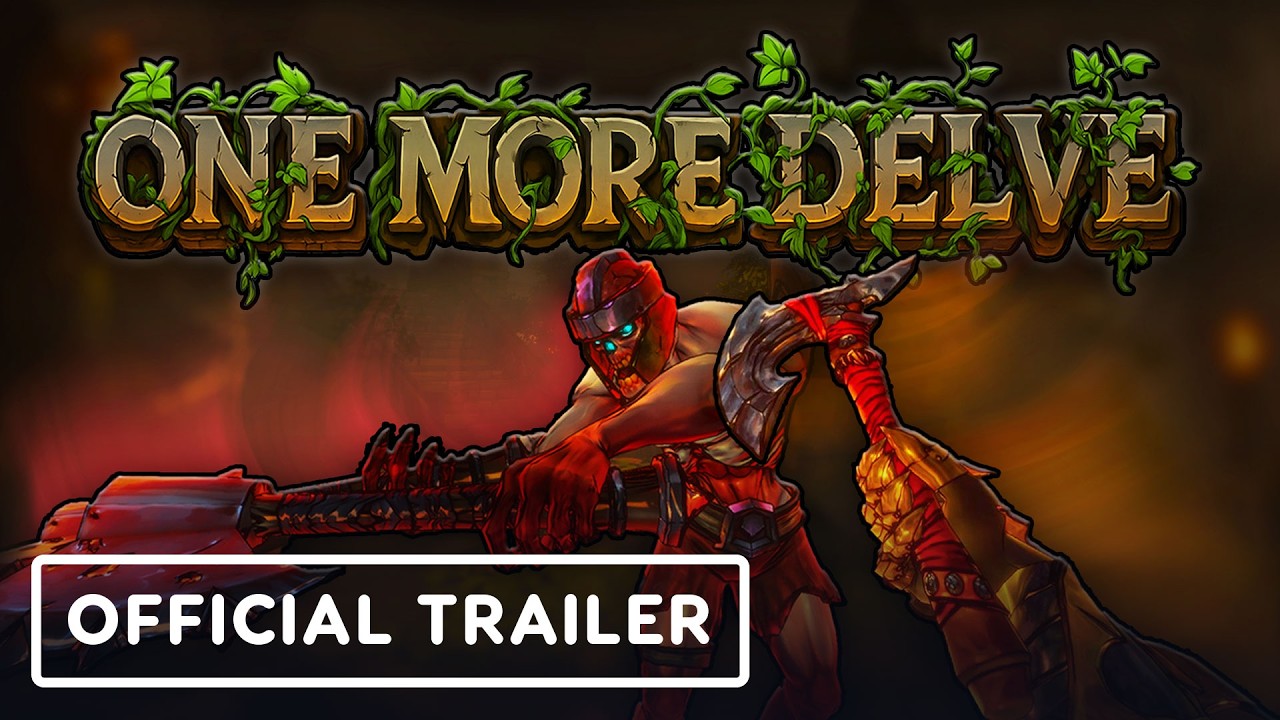
I spent most of last night swinging a rusted longsword at goblins in a candle-lit cellar with two friends shouting in my ear about loot drops, and I cannot stop thinking about it. One More Delve released into Early Access yesterday on Quest 3, Quest 3S, and SteamVR. It is a physics-based, three-player co-op VR dungeon crawler. It is also, as far as I can tell, mostly the work of a single student developer at a studio called ATVR. That second part is the one I cannot get over.
GamingApril 28, 2026
One Student. Three-Player Co-Op. Real Physics. 'One More Delve' Just Embarrassed Half the Big-Studio VR Releases This Year.
By Evan Marcus
Co-Founder, VR.org
Advertisement
I have been gaming for a long time. I grew up in dungeon crawlers. I burned hundreds of hours in EverQuest, played through every Diablo, ran every dungeon in Final Fantasy XI probably twice. So when I say a one-person VR project nailed the feel I have been chasing in this category since the Vive launched in 2016, that is not nothing. I have been a paying customer for every serious VR dungeon crawler that shipped, from Vanishing Realms to The Wizards to Asgard's Wrath 2 to Dungeons of Eternity, and I love them all to varying degrees. None of them feel quite like this.
The Pitch in One Paragraph
You drop into a dungeon with up to two friends. You wield melee weapons, bows, shields, and spells. The combat is fully physics-driven, meaning your sword has weight, every parry has a cost, and a clean shield bash actually staggers an enemy because the simulation says it should. There is RPG-style progression with looting, weapon classes, and a spell system the developer has been steadily expanding through its devlogs. The whole thing is wrapped in a heavily saturated cel-shaded art style that looks like a Saturday-morning cartoon got loose in a Soulslike.
That is it. That is the entire pitch. There is no MMO subscription, no battle pass, no Discord-only beta key. You buy it, you boot it, you delve.
Why the Physics Matter
Most VR melee combat shipping right now is what I would politely call "hitbox theater." Your sword passes through an enemy, the game registers a hit, a damage number floats up, you swing again. It works, but it never quite feels like swordplay. Blade and Sorcery set the bar a long time ago for what physics-driven combat should feel like, and almost nobody has touched that bar since.
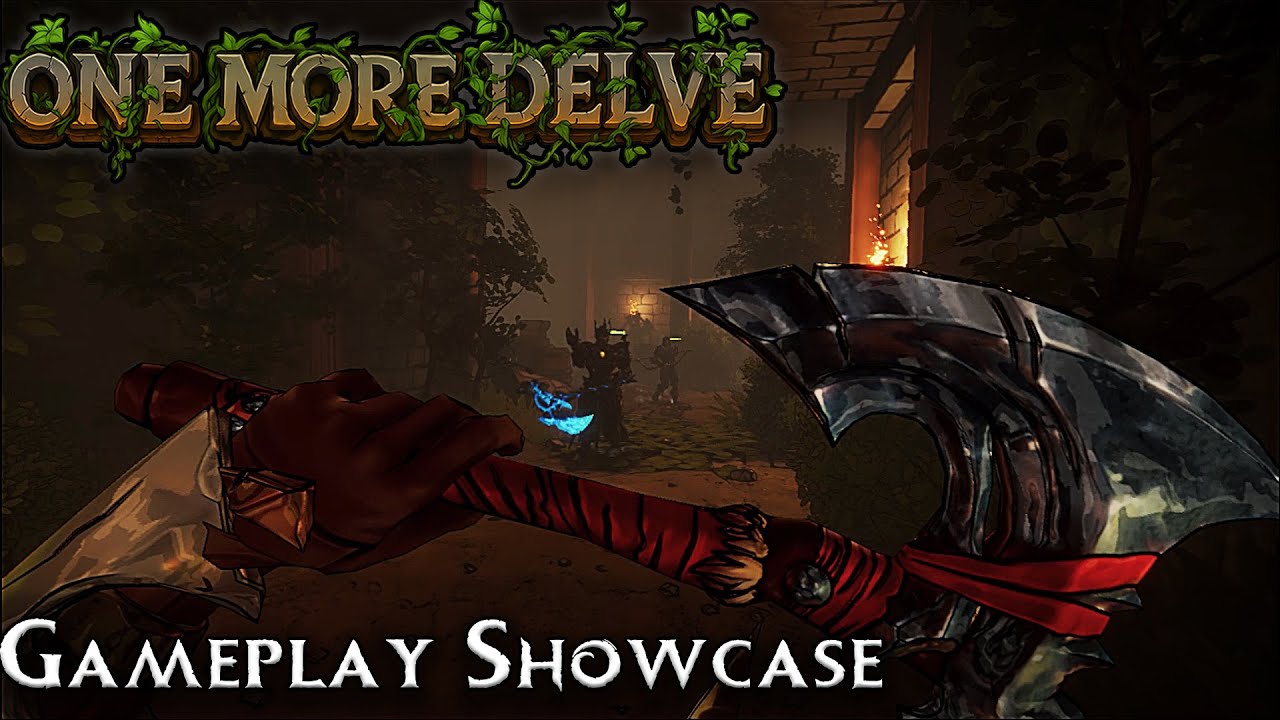
One More Delve is in the conversation. Weapons have inertia. Shields collide with weapons in a way that feels mechanical, not animated. When I parried a spear thrust last night, the spear bounced. When I shoulder-checked a goblin with my shield, the goblin actually flinched off-axis based on the angle of impact. Every interaction has the kind of physical fidelity that costs a lot of engineer-hours to get right, and I keep reminding myself one person built most of this.
Three-Player Co-Op Is the Right Number
Two-player co-op in VR feels like an experiment. Four-player co-op feels like a logistics problem, half the run is spent waiting for someone to load in or fix their tracking. Three is the sweet spot, and almost nobody picks it. Dungeons of Eternity got close. One More Delve nails it.
With three people in a dungeon, you naturally fall into the classic tank-DPS-support shape without the game ever asking you to. Last night one of my friends ran shield-and-spear and held the front. I ran a two-handed warhammer and crashed into anything she missed. Our third was a glass-cannon mage with healing-adjacent spells. Nobody picked classes. The combat sandbox just nudged us into roles based on what we grabbed off the loot table.
Advertisement
This is the magic of physics-driven combat in a small group. The system creates the team dynamic for you. You do not need a Holy Trinity UI lecture. You need three people, three loadouts, and an enemy that hits hard enough to make you actually communicate.
The Solo-Developer Story Is the Real Headline
Here is the part that has been bouncing around my head all morning. The VR industry has spent the last six months in what can only be called a slow-motion contraction. Meta laid off three internal VR studios in January. Sanzaru is gone. Camouflaj got cut down to a handful of people and the Batman: Arkham Shadow sequel was canceled. Polyarc gutted its team earlier this month. Owlchemy is still humming, Skydance is still shipping, but the AAA VR pipeline is unmistakably thinner than it was a year ago.
And then a student in a bedroom ships a physics dungeon crawler with three-player co-op that runs natively on Quest 3 hardware, and I sit down with it and have more fun than I have had in any of the bigger releases I have queued up this month. That tells you something about where the energy is in this medium right now. It is not at the top of the org chart. It is in the indie scene, the SideQuest scene, the kid who started a Unity project two years ago and just kept building.
I am not pretending one indie release fixes the structural problems in VR. It does not. We still need bigger studios making bigger bets, and the layoffs at Meta are going to leave a hole in the release calendar for a while. But there is a parallel story playing out, and it is the more hopeful one. The barrier to building a serious VR game has come down a lot. Quest 3 is a real GPU. Unity and Unreal both have mature XR pipelines. The store distribution exists. A single motivated developer can ship something that holds up next to a fifty-person team's output, and a real chunk of the most interesting VR releases of the last twelve months have been exactly that.
The Caveats Are Real
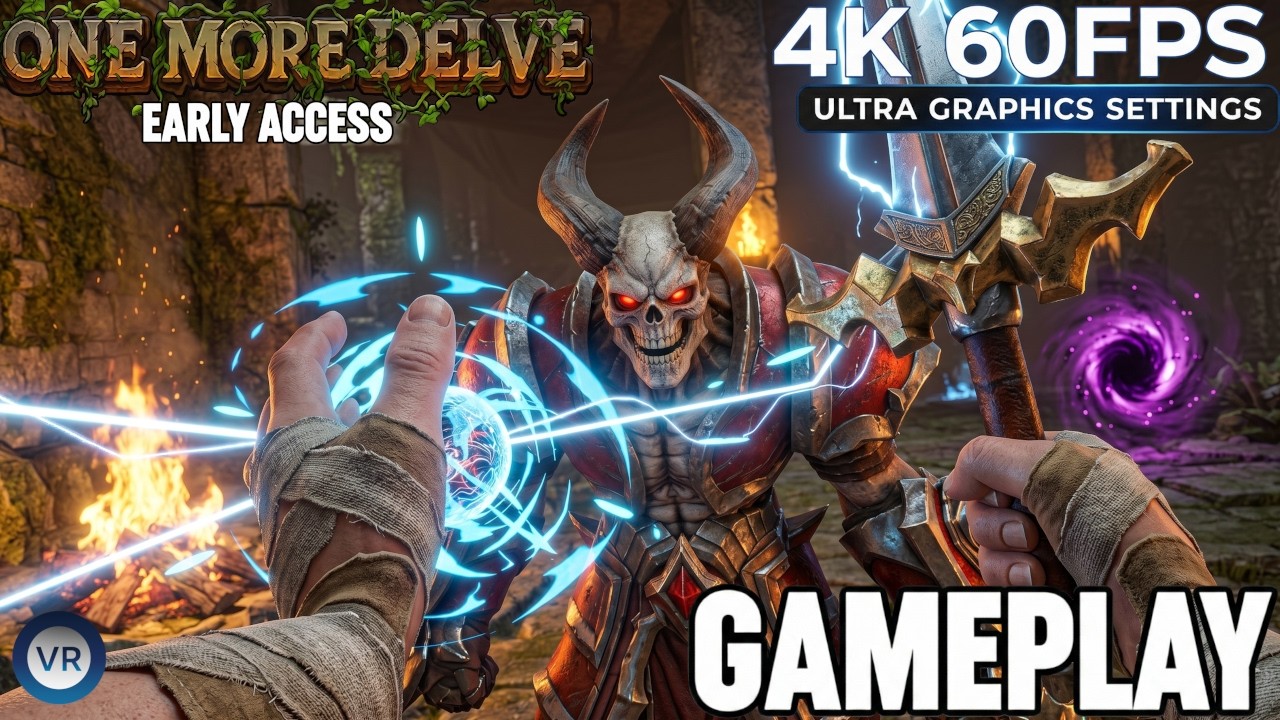
This is Early Access, and you can tell. There are placeholder textures in a couple of dungeon tile sets. The enemy variety is limited. Some of the spells fire visual effects that look temporary. Networking has occasional hiccups in three-player sessions, and one of my buddies got booted out of a run mid-dungeon last night for reasons we never fully diagnosed.
The developer has been transparent about the roadmap. The full release is targeted for later in 2026 with new enemy types, additional weapon classes, more spells, multiple difficulty tiers, and expanded progression. None of that is in yet. What is in is a tight, satisfying core combat loop and a content slice big enough to lose a weekend in. At fifteen percent off through Steam right now, that is more than fair.
The Bottom Line
If you have a Quest 3, a Quest 3S, or a PCVR setup, and two friends who will put on headsets at the same time, buy this game. Bring weapons. Bring snacks. Block off three hours, because that is how long my supposed-to-be-a-quick-session ended up running last night. One More Delve is the kind of release that reminds me why I fell into this medium in the first place. A small team, sometimes a one-person team, can still ship something that makes you forget about the headset on your face and just play. That is the whole game, in every sense of the phrase.
I will be back in the dungeon tonight. I am bringing the spear this time.
Advertisement