
Mixed reality has one genuinely magical trick, and it is this: it turns your actual living room into the game board. A ghost peeks out from behind your real couch, a portal opens on your real wall, digital objects sit on your real coffee table. It is the thing that makes passthrough MR feel like the future in a way pure VR sometimes does not. But it has always carried a lonely catch. That magic is tied to your room, and your room is yours alone. Mixed reality has been, almost by definition, a solo experience. VirtualGo is building the thing that changes that, and the concept is more important than the game it debuts in.
XrJuly 5, 2026
Mixed Reality's Biggest Limitation Is That It Is Lonely. VirtualGo Is Building the Fix.
By Jordan Kuo
Staff Writer, VR.org
Advertisement
Why sharing mixed reality is so hard
Think about what MR multiplayer actually requires and the problem becomes obvious. In a normal VR multiplayer game, everyone meets inside a shared virtual world that belongs to no one, a neutral digital space the servers host. Mixed reality does not work that way. The game is anchored to one person's specific physical environment, their furniture, their walls, their floor plan. There is no neutral shared world, because the world is somebody's actual house. For two people to play a mixed reality game together, they have historically needed to be standing in the same physical room, which defeats most of the point of online multiplayer.
That limitation has quietly capped what mixed reality games can be. The most compelling MR experiences have been single-player by necessity, because nobody had solved the problem of letting a friend across town share a space that only exists in your home.
What VirtualGo actually built
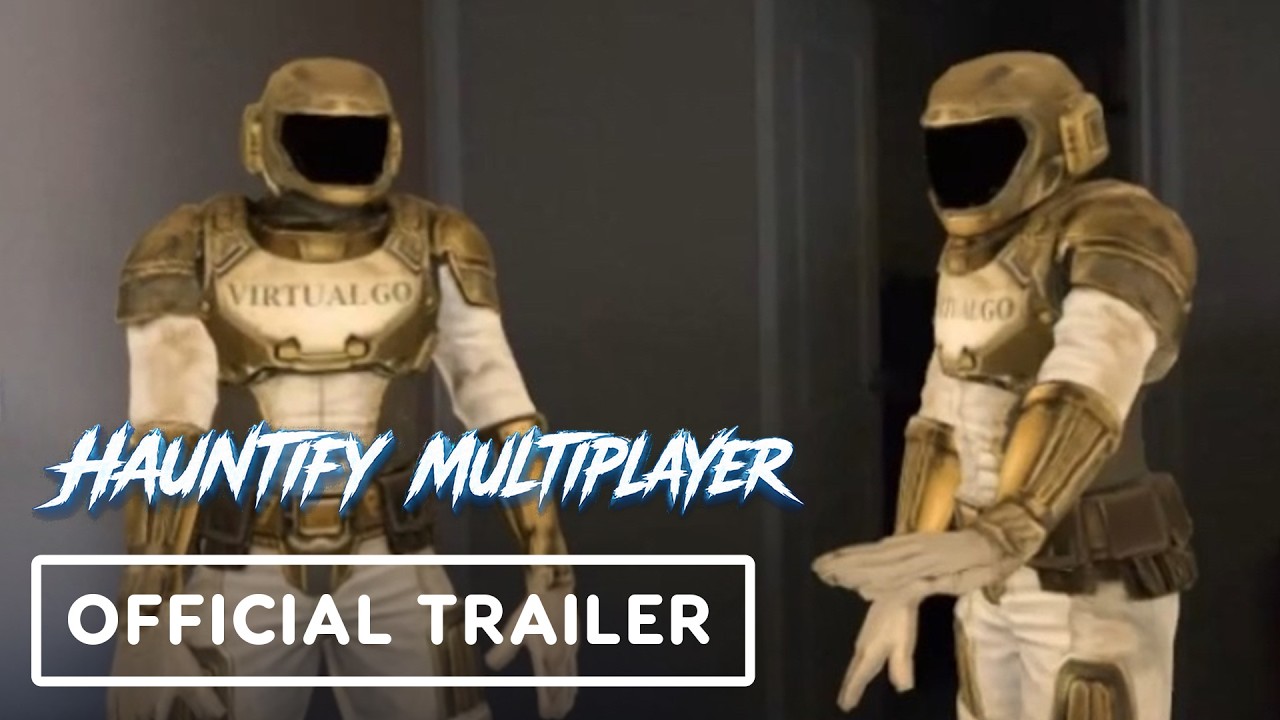
VirtualGo, the studio behind the mixed reality horror game Hauntify, is tackling this directly. Its upcoming system lets a host scan their real play space once, and then invite remote players to join that exact scanned space in real time. The host experiences the game in true mixed reality, their own furniture transformed around them, while remote friends enter that same digitized environment as VR players, appearing inside a representation of the host's home. Everyone sees the same ghosts, the same events, the same interactions, all anchored to the host's real room.
The clever part is that it bridges two different realities at once. One player is in mixed reality, looking at their genuine physical space with digital content layered on top. The others are in full VR, dropped into a virtual reconstruction of that same space. They can join as allies, as enemies, or as the monsters hunting the person whose living room it actually is. For a horror game, the idea of a friend logging in as the thing stalking you through your own home is genuinely inspired. Map your space once, VirtualGo says, and host unlimited group sessions.

Why this matters beyond one horror game
It would be easy to file this as a neat feature for a single title, but the studio is explicitly thinking bigger, and it should. CEO David Montecalvo has said the system is not limited to horror or shooters, that it is meant to translate across any genre, cozy games, RPGs, and beyond. That generalization is the whole story. What VirtualGo is really building is a piece of foundational plumbing for shared mixed reality, the missing layer that lets any MR experience become multiplayer without everyone crowding into one room.
If that plumbing works and becomes reusable, it unlocks an entire category of experiences that could not exist before. Imagine a cozy game where a friend visits the cafe you built in your kitchen, or a tabletop RPG played on your real dining table with players joining from three different cities, or a co-op puzzle that spans one person's actual home. The reason this is a spatial computing story and not just a game update is that shared, cross-reality space is exactly the kind of capability a mixed reality platform needs to mature past solo novelty. Someone had to solve it. A small studio taking a real run at it is how these foundational pieces usually arrive.
The honest caveats
Temper the excitement with some realism. This is an announced system, not a shipped one, with the multiplayer updates for Hauntify and the studio's shooters Mission Rift and FPS Enhanced Reality targeted for 2027. VirtualGo is a small developer, and the technical challenges here are real, scanning spaces accurately, keeping remote players synchronized in a digitized room, and handling the fact that guests are experiencing a reconstruction of your space rather than truly being present in it. The representation will only ever be as good as the scan and the networking behind it, and mixed reality plus real-time multiplayer is a demanding combination.
But the direction is exactly right. Mixed reality has spent its whole existence being a wonderful thing you do alone. The studios figuring out how to make it social are working on one of the most important unsolved problems in the medium, and VirtualGo just showed a credible path. The magic of your room becoming the game is real. The magic of sharing that room with people who are not in it might be what finally makes mixed reality a place you want to spend time with friends.
Advertisement