
For most of its life, WebXR has felt like the web's most promising science experiment. The idea was always lovely: load a URL, tap into your headset, and you are inside an immersive scene with no app store, no install, and no gatekeeper. The reality was messier. What worked in Chrome behaved differently in Safari, hand tracking was a maybe, and shipping a polished experience meant writing browser-specific workarounds and praying nothing broke on the next update. In 2026 that story is quietly changing, and the reason is less glamorous than a new headset but far more important: WebXR is finally being treated as a real, governed, cross-browser standard.
SoftwareJune 17, 2026
WebXR Is Finally Becoming a Real Cross-Browser Standard. Interop 2026 Is Why It Matters.
By Nina Castillo
Staff Writer, VR.org
Advertisement

Two things are driving the shift. First, the WebXR Device API has matured to Candidate Recommendation at the W3C, which is the stage where a spec is considered stable enough to gather real implementation experience. Second, WebXR has been put forward as a focus area for Interop 2026, the annual effort where browser vendors publicly agree to close the gaps between their implementations and get scored on how well they do it. Neither headline will trend on social media, but together they signal that immersive on the web is graduating from "cool demo" to "thing you can actually build a business on."
What Candidate Recommendation and Interop 2026 actually mean
If you do not live inside the W3C process, the jargon is easy to ignore. Here is the plain version. A Candidate Recommendation is the W3C saying a specification has had wide review and is ready for browsers to implement in earnest. To move forward from there, the spec needs at least two independent, interoperable browser engines that implement every feature, plus royalty-free licensing commitments so nobody can later show up with a patent and tax the whole ecosystem. That last part matters more than it sounds. Open, royalty-free standards are the reason the web outlasted every walled-garden plugin that tried to own rich media.
Interop 2026 is the complementary piece. It is the mechanism that turns "the spec says X" into "every browser actually does X the same way." Vendors nominate focus areas, agree on a shared test suite, and then a public dashboard tracks each engine's pass rate through the year. When WebXR is in that program, a failing test is no longer a quiet footnote in someone's bug tracker. It is a number on a scoreboard that Google, Apple, Mozilla, Microsoft, and Samsung have all agreed to care about.
Where the browsers stand today
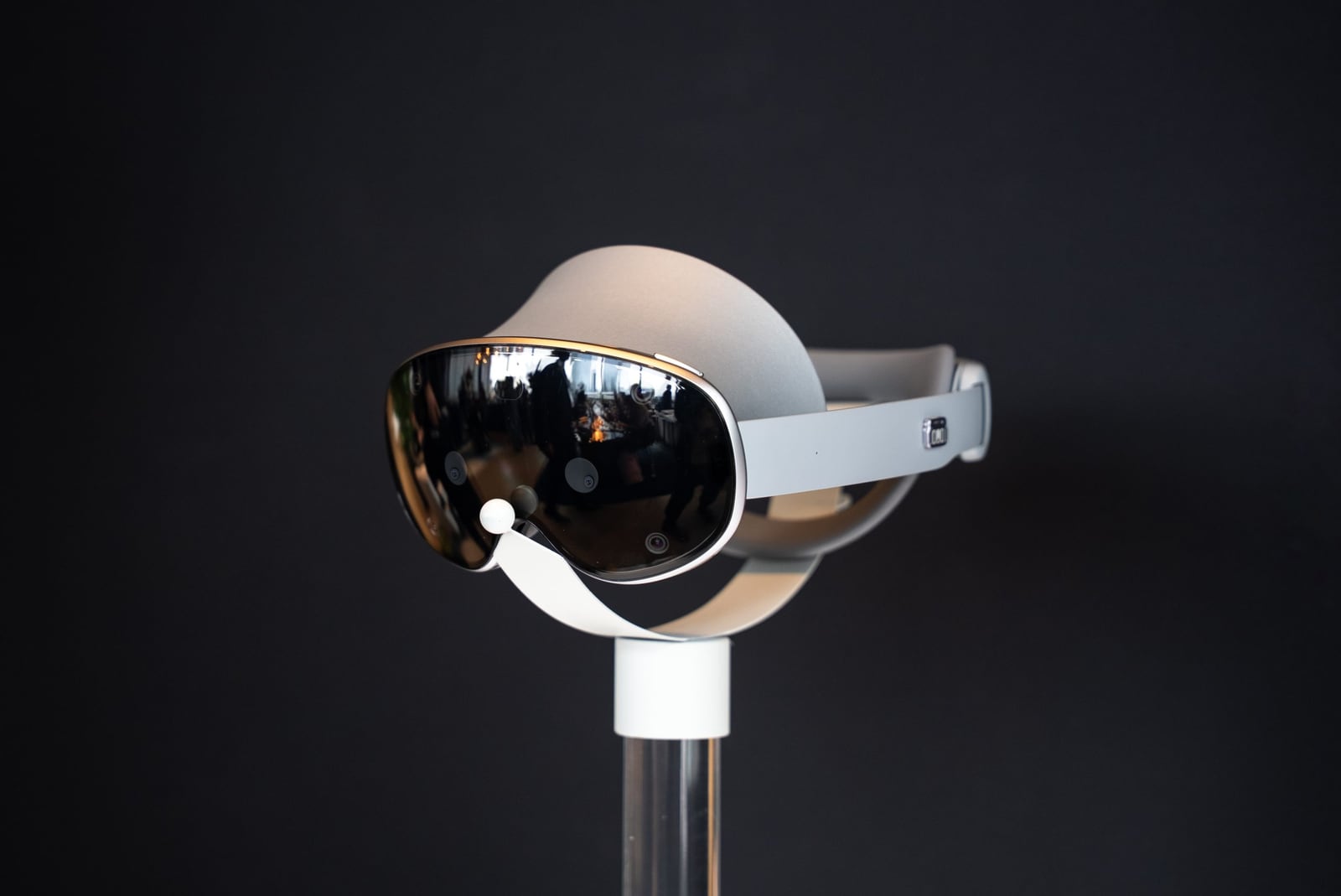
The practical support map is healthier than a lot of developers assume. Chrome and Edge carry full WebXR on desktop and Android, including newer Android XR hardware like the Samsung Galaxy XR. The Meta Quest Browser is arguably the most complete mobile target, with passthrough AR, plane detection, spatial anchors, and hand tracking all reachable from a web page. Samsung Internet and Opera ride along on the same engine work. The biggest recent change is on the Apple side, where Safari now exposes WebXR on visionOS with a gaze-and-pinch input mode that maps naturally to how the Vision Pro already works.
Advertisement
That is the part worth sitting with. For years the standard knock on WebXR was that Apple was absent, so "write once, run everywhere" was really "write once, run everywhere except the most talked-about headset on the market." With Safari in the mix and an Interop scoreboard pushing everyone toward the same behavior, the cross-platform promise stops being marketing and starts being something you can test.

Why this is the moment to start building
Standards news is only as useful as the tooling around it, and that is where 2026 looks genuinely good for newcomers. You do not need to own every headset to develop for them. Meta's Immersive Web Emulator runs as a Chrome extension and lets you simulate a headset, its controllers, and hand poses right on your desktop, so you can iterate on a Three.js scene without strapping anything to your face every five minutes. Frameworks have caught up too. Three.js and Babylon.js both ship mature WebXR layers, and the broader move to WebGPU under the hood means these scenes render faster than the WebGL era allowed. If you want higher-level building blocks for mixed reality, toolkits now wrap the messier parts of planes, anchors, and meshes so you are not hand-rolling them.
None of this makes WebXR the answer to every problem. Heavy, performance-hungry titles still belong in a native engine, and there are platform features a web page simply cannot reach. But for the enormous middle ground of training modules, product configurators, museum pieces, marketing experiences, and quick interactive demos, the case for shipping immersive content as a plain URL has never been stronger. A link works on every device, updates instantly, and skips the app-store tax and review queue entirely.
The quiet truth of web history is that the open standard usually wins, not because it is flashier, but because it is everywhere and it is free to build on. WebXR spent years as the promising option that came with an asterisk. The combination of a stabilizing spec and a public interoperability push is how that asterisk finally gets removed. If you have been waiting for the web side of XR to feel safe to invest in, this is the signal you were waiting for.
Advertisement