
Google I/O had no shortage of AI announcements this year, but for anyone tracking the spatial computing space, the standout moment happened on the show floor. XREAL brought Project Aura to the event, giving press and developers their first hands-on time with what might be the most capable pair of AR glasses anyone has worn outside a research lab. The verdict from journalists who tried them: these are legit.
ArMay 24, 2026
XREAL Project Aura Showed Up at Google I/O and Stole the Show
By Jordan Kuo
Staff Writer, VR.org
Advertisement

70 Degrees Changes Everything
The headline spec is the 70-degree field of view through optical see-through OLED displays. For context, most consumer AR glasses on the market today sit between 45 and 52 degrees. That extra width matters enormously for spatial computing because it determines how much virtual content can exist in your peripheral vision before hitting the edge of the display. At 70 degrees, Project Aura covers enough of your visual field that AR overlays start to feel like part of the environment rather than a floating rectangle you have to look directly at.
Journalists who tried the glasses outdoors noted that the displays were sharp and bright even in direct sunlight. That is a meaningful detail. Most AR displays wash out in bright conditions, which limits them to indoor use. If Aura's optics hold up across lighting conditions at retail, it solves one of the biggest practical barriers to all-day wearable AR.
The Hardware Design
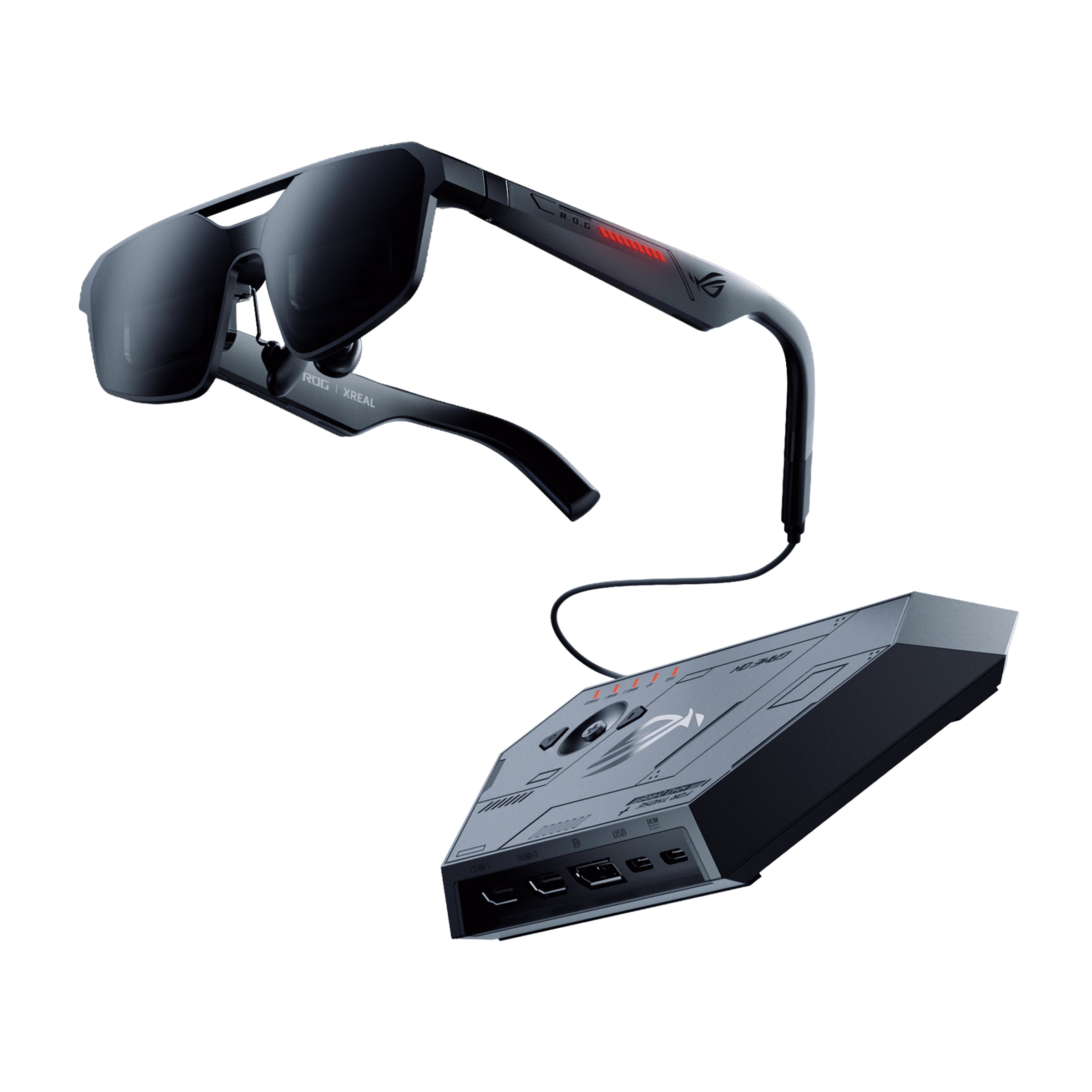
Project Aura uses a split-compute architecture with an external processing puck connected to the glasses. This keeps the frames lightweight while allowing the system to run full Android XR on Qualcomm Snapdragon silicon. Three cameras are built into the frames: one on each side for hand tracking and spatial awareness, and a center camera for photos, video, and visual context for Gemini AI queries.
The glasses can function entirely standalone or double as a wearable monitor when connected to a laptop via DisplayPort. That flexibility is smart positioning. It means Project Aura does not need to justify its entire price tag on AR features alone. Even if you only use it as a private display half the time, the hardware earns its place.
Android XR Makes It Real
Project Aura runs Android XR natively, which means it gets access to the entire platform ecosystem Google is building. Gemini AI integration, Google Maps immersive view, YouTube 360 content, and every app that developers build against the Android XR SDK. This is the practical payoff of Google's platform strategy: XREAL does not need to build an entire software ecosystem from scratch. They build the hardware, Google provides the operating system, and developers build once for every Android XR device.
Developer kits will be available globally, giving select developers early access to hardware alongside tools and resources designed specifically for Android XR development on Aura. XREAL confirmed that retail launch will happen before the end of 2026, though specific pricing and date remain unannounced.
What Comes Next
Project Aura is the first third-party hardware to ship with Android XR that is not a Samsung product. That distinction matters. If Android XR is going to become the platform that powers the entire AR glasses category the way Android powers phones, it needs hardware diversity. XREAL delivering a 70-degree FOV product before Samsung's own display glasses ship is a strong signal that the ecosystem is already competitive.
We will cover pricing and availability when XREAL announces them. For now, the takeaway is straightforward: Android XR glasses are real, they work, and the first one ships this year.
Advertisement