
Every year it happens the same way. The family comes over for the Fourth, the food gets eaten, the conversation lulls in that mid-afternoon heat, and eventually someone spots the headset. What follows is, without fail, the most fun part of the day. I have converted more skeptics to VR at holiday gatherings than at any other time, because a room full of relaxed people with nothing urgent to do is the perfect audience. If you have a headset and a house full of family this weekend, you are sitting on the best party trick you own. Here is how to use it well.
GamingJuly 4, 2026
One Headset, a Full House: The VR Games to Play With Your Family This Fourth of July
By Evan Marcus
Co-Founder, VR.org
Advertisement

The one thing to understand before you start is the constraint that shapes everything: you almost certainly have one headset and a lot of people. So the goal is not to find the deepest game. It is to find the games where one headset entertains an entire room, and where the person wearing it and the people watching are all having fun at once. Good news. Those games exist, and some of them are perfect for exactly this.
First, cast to the TV. This is the whole secret.
Before a single game, do this one thing: cast the headset view to your television. On Quest you can cast to a TV or a phone in about thirty seconds, and it transforms the entire experience from a solo activity into a spectator sport. Suddenly the whole room can see what Grandma is flailing at, everyone can coach, laugh, and heckle, and the person in the headset stops feeling self-conscious about looking silly. Half the fun of VR at a party is watching other people play it. Casting is what unlocks that. Do not skip it.
The instant crowd-pleasers: one plays, everyone watches
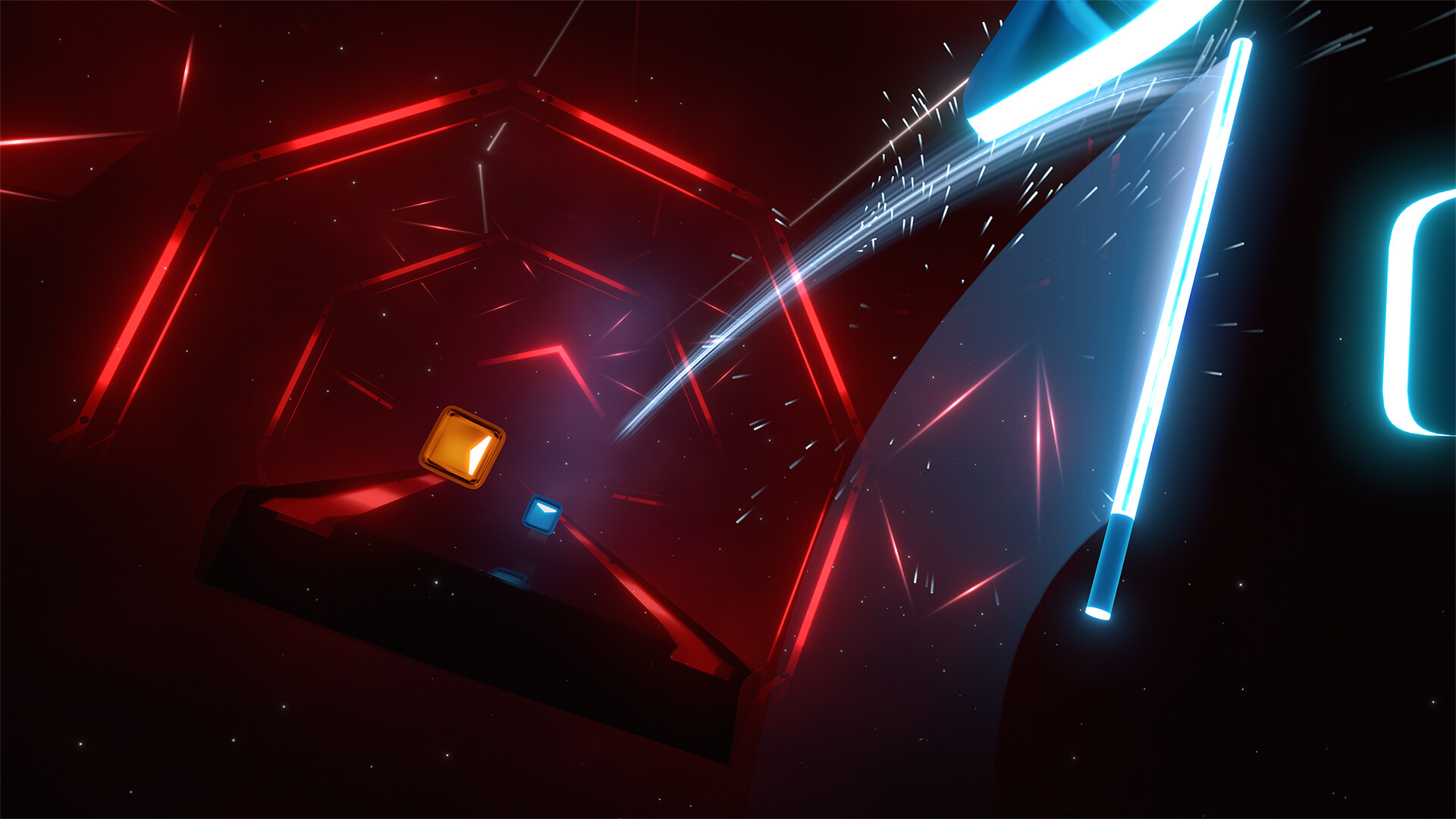
These are your openers, the pass-and-play games that convert newcomers in under a minute. The king, as always, is Beat Saber. I have written before about why it is the most important game in VR, and holiday gatherings are exactly why. You hand someone the headset, they slash a few blocks in time with the music, and within thirty seconds they are grinning and the room is cheering. It requires zero gaming skill and it looks fantastic on the TV. It is the single best VR ambassador ever made.
Right behind it are the Owlchemy comedies, Job Simulator and Vacation Simulator. These are the games I hand to people who insist they are not gamers, because they are not really games so much as playgrounds. You throw things, you make a mess, you goof around in a cartoon world, and the physical comedy of watching your uncle fumble a virtual stapler is genuinely hilarious for spectators. Fruit Ninja is another dead-simple winner, slicing fruit with your hands is instantly understood by literally anyone. None of these ask anything of the player except a willingness to look a little foolish, which after a holiday meal is not a high bar.
The whole-family games: everyone plays at once, no extra headsets
This is the category people do not know about, and it is the secret weapon. There are VR games designed so that the person in the headset is only part of the experience, and everyone else plays too, using their phones or a piece of paper. No second headset required.
Advertisement
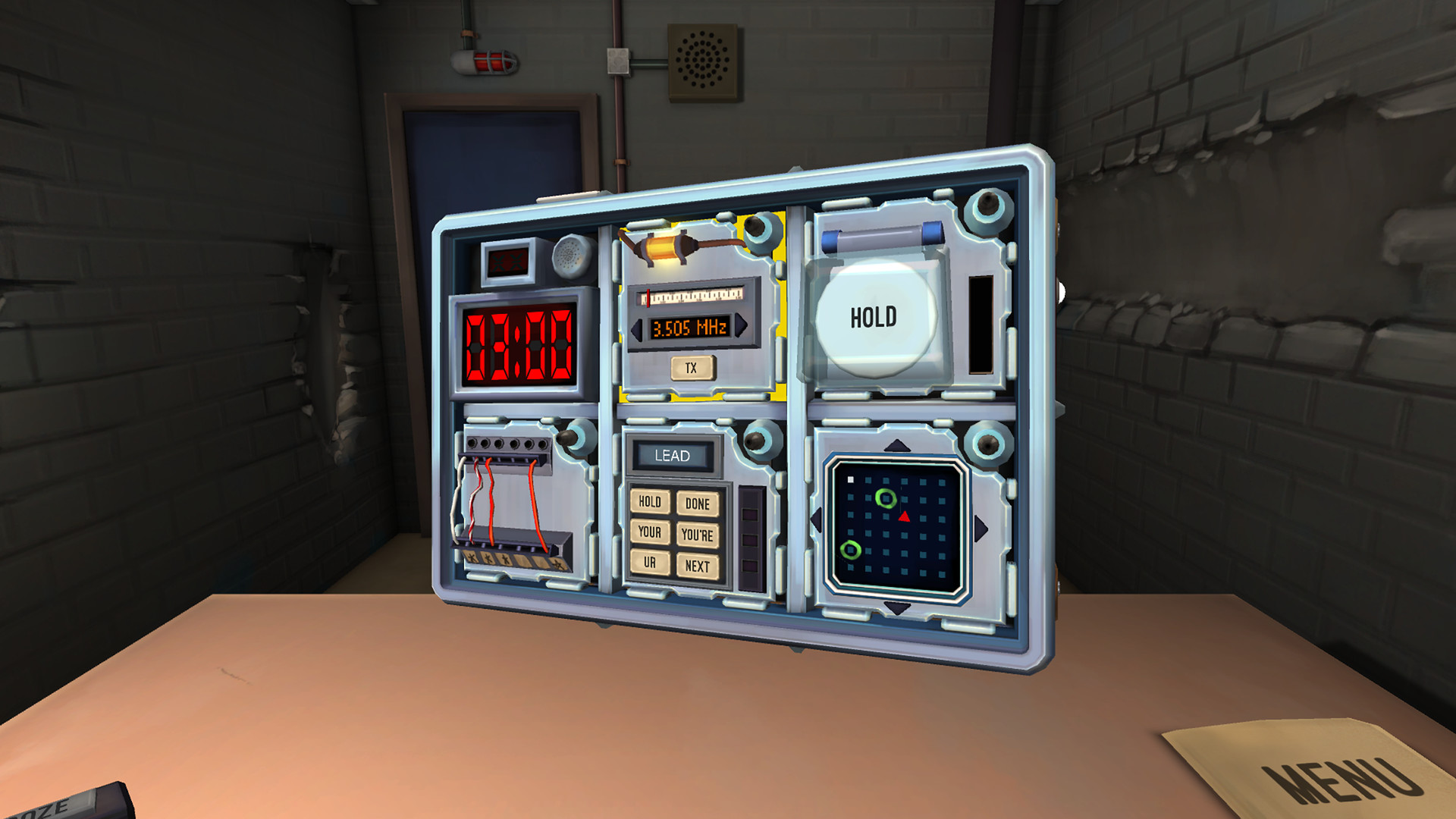
The all-timer here is Keep Talking and Nobody Explodes. One person wears the headset and sees a ticking bomb. Everyone else holds the defusal manual, printed out or on a phone, and has to talk the bomb-wearer through disarming it before it blows. It turns your entire family into a frantic, shouting bomb squad, and it is one of the best party experiences in any medium, VR or not. Grandparents who would never touch a controller happily read wire-cutting instructions off a sheet while the kids scream.
Then there is Acron: Attack of the Squirrels. The person in the headset is a tree guarding acorns, and everyone else joins on their phones as squirrels trying to steal them. It is built from the ground up for one headset and a crowd of phone players, and you can pass the headset around so everyone gets a turn being the tree. It is pure, chaotic family fun, and it scales to a big group better than almost anything.
If you happen to have more than one headset, or crossplay
Maybe your family is the kind where two or three people brought headsets, or where a cousin has one at their place and wants to join from afar. If so, a few games open up that are worth knowing. Walkabout Mini Golf is the gold standard for relaxed group play, with a guest pass system that lets one person's library carry the whole group, and it is calm enough that nobody gets motion sick. Just Another Cooking Game is a free, chaotic co-op kitchen for two to four players that is perfect for family game night energy. Demeo is a wonderful digital tabletop RPG for up to four, with crossplay across PC and PSVR2, if your family leans board-game. And if the older kids and adults want something with a little more adrenaline, Arizona Sunshine 2 offers four-player co-op zombie blasting with crossplay, though maybe save that one for after the little ones are in bed.

A few rules to keep it fun and safe
Two quick practical notes so the day goes smoothly. First, hygiene and comfort. A lot of faces are going to be in that headset, so wipe the facial interface down between players, and if you do this often, a cheap wipeable cover is a good investment. Keep sessions short, five minutes per person keeps the line moving and keeps anyone from getting overheated or dizzy on a hot day.
Second, and this matters most with newcomers, watch for motion sickness and give people space. Start everyone on the gentle, stationary games I listed first, not on anything with artificial locomotion, because nothing kills a new player's interest faster than feeling queasy. Make sure the play area is clear of furniture, coffee tables, and small children, because a first-timer swinging at Beat Saber blocks has no idea where their arms are going. Spot them with a hand near their back. And take the headset off anyone who starts saying they feel a little weird, immediately and without argument.
The real reason to do this
Here is what I have learned from years of holiday VR sessions. The magic is not really the games. It is the moment a family member who has spent years rolling their eyes at this hobby of yours puts the headset on, and their face changes, and they go quiet, and then they start laughing, and then they take it off and ask, with total sincerity, how much one of these costs. You get to be the person who showed them. That is worth more than any review score.
So cast it to the TV, cue up Beat Saber, and hand the headset to the family member most convinced they will hate it. If you want more ideas once the easy wins are done, our best VR games of 2026 list has plenty. Happy Fourth, everyone. Go make a convert.
Advertisement