
Resolution Games' announcement at AWE 2026 that Demeo is coming to the Xreal Aura did not get the headline treatment it deserved. Most coverage filed it under the broader Aura launch story, two lines down from the Snapdragon Reality Elite spec sheet and the $99 reservation deposit. That undersells what actually happened. With Aura support, Demeo becomes the first XR game whose lobby spans every major spatial computing platform shipping in 2026: Meta Quest, Apple Vision Pro, Samsung Galaxy XR, PICO, PSVR2, and now the first wave of Android XR glasses. It also crosses the streams to flat screens, with Steam, Mac, iOS, and PlayStation 5 players able to drop into the same session.
XrJune 29, 2026
Demeo Is Now the Glue Holding XR's Splintered Ecosystem Together
By Jordan Kuo
Staff Writer, VR.org
Advertisement
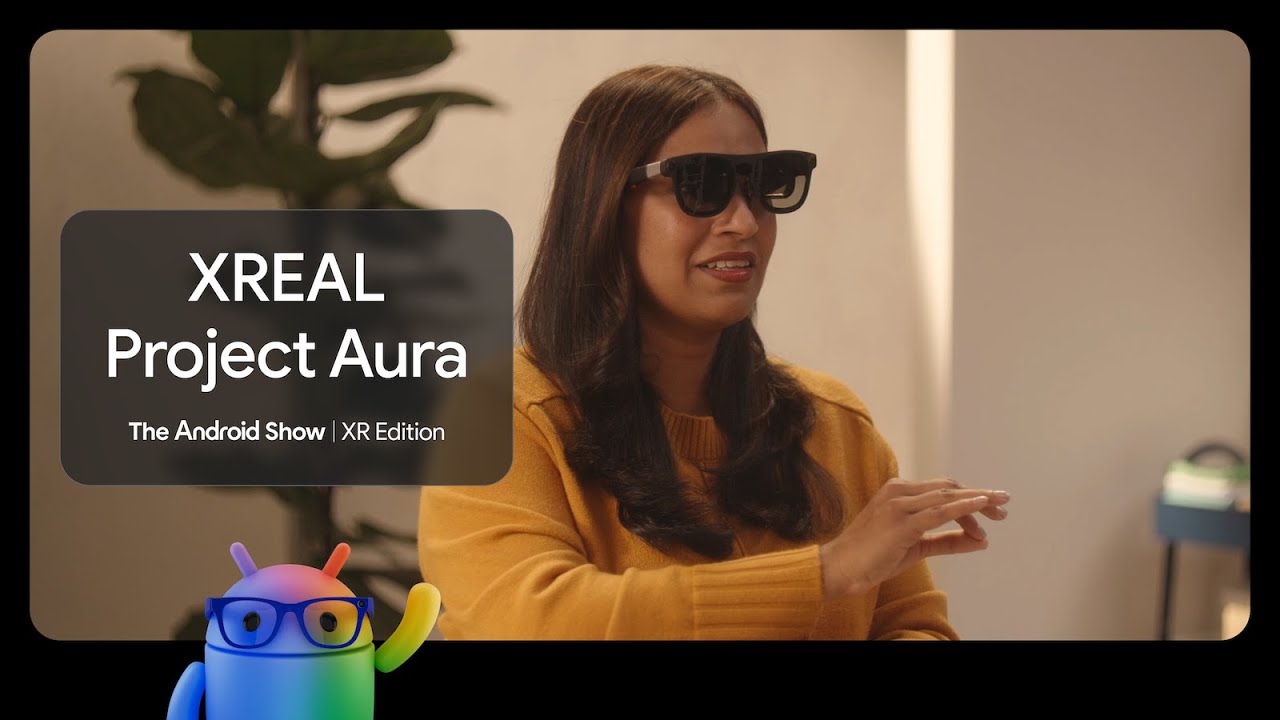
That is six XR ecosystems, four flatscreen platforms, and one game lobby. As far as I can tell from public materials, nothing else in the medium currently spans that range. Rec Room comes close on the social side. No Man's Sky and Resident Evil Village both span PSVR2 plus PC VR plus flat, but neither hits Vision Pro or the new Android XR class. Demeo, a turn-based co-op tabletop dungeon crawler that was a launch surprise on Quest back in 2021, has quietly become the most interoperable thing in XR.
Six Headsets, One Lobby
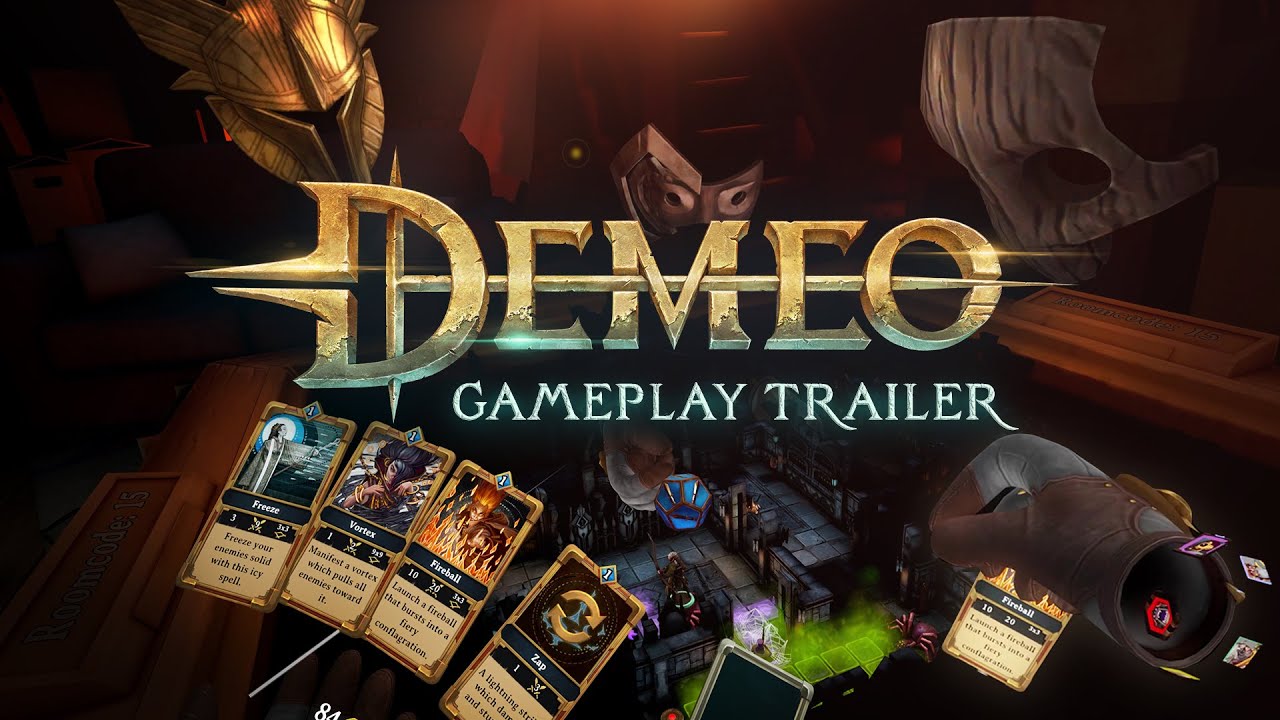
The pitch is simple in marketing terms and brutal in engineering terms. Four players sit around a virtual game board. One is on a Quest 3 in their living room. One has just put on a Galaxy XR in Seoul. One is wearing a Vision Pro in a cafe in Brooklyn. One is on a pair of wired Aura glasses tethered to a phone in their pocket. They roll dice, move minis, and cast spells in the same shared world, in real time, with hand tracking on every device that supports it.
This is the kind of cross-play that platform holders have publicly endorsed for years and quietly fought tooth and nail against in private. Apple's App Store, Meta's Horizon Store, Sony's PSVR2 storefront, and now Google Play on Android XR each have a strong commercial reason to keep their players inside the walled garden. Resolution Games is in the rare position of getting all four to sign off because Demeo predates the modern store wars and has earned trust on every platform it touches. New entrants will not have that luxury, which is precisely why the Aura addition is more interesting as a platform story than as a game story.
Why Aura Specifically Is the Hard Part
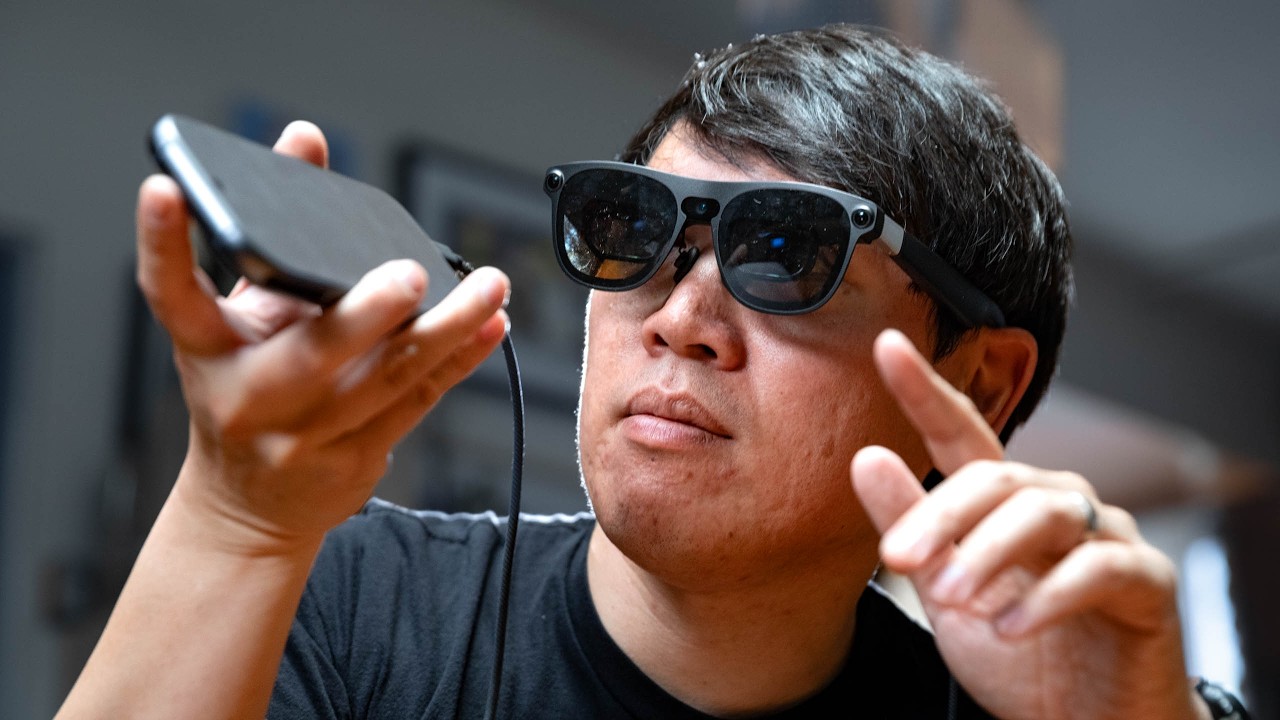
The Quest, PSVR2, Vision Pro, and Galaxy XR ports were always going to happen. Those devices share a common shape: a full headset with inside-out tracking, controllers or hand tracking, and a self-contained or PC-tethered runtime. The Aura is the odd one out. It is a pair of wired optical see-through glasses weighing under 95 grams, plugged into a Snapdragon Reality Elite puck or compatible phone. The display is bright but it lives in the real world. There is no opaque environment to hide behind, and the input model is hand tracking plus voice plus the host device.
Advertisement
For a tabletop game, that is actually a near-perfect target. Demeo is already designed around the metaphor of a physical board on a physical table. On Aura you can just place it on your real coffee table, lean back on your real couch, and play. The Resolution Games team has been clear that the Aura build is using Android XR's hand tracking and the Aura's world-facing sensors to anchor the board, rather than forcing the game into a curated virtual room. That is the right call. It is also the kind of small platform-shaped choice that other studios are going to have to start making, repeatedly, as the Android XR glasses cohort grows from one device this fall to the five-plus devices Google is shepherding through partner labs.
The Cross-Play Pattern Other Devs Should Steal
The technical playbook here is not mysterious, and it is worth spelling out because it will be the dominant XR architecture by 2027. The game logic, networking, and state live in one place. The rendering and input layers are abstracted per platform. Resolution Games has already done this once, going from a Quest-only launch to PSVR2, Vision Pro, PICO, Galaxy XR, and flat in fewer than five years. Aura is just another rendering target with a different field of view, different anchoring affordances, and a different control surface.
For studios building new XR games today, the lesson is to design for input agnosticism from day one. Six-degree-of-freedom controllers, hand tracking, and gaze plus pinch all need to feel native rather than retrofit. Galaxy XR runs Android XR. So does Aura. So will whatever Samsung's glasses look like later this year, and so will whatever Gentle Monster, Warby Parker, and the rumored five-plus partner devices ship after that. If your input layer cannot already handle the difference between a Quest Touch controller and a Vision Pro pinch, you are not building for the next two years of XR. You are shipping a Quest game with a Vision Pro port plan.
What Is Still Missing
Aura support for Demeo is announced. It is not shipped. Aura itself does not arrive until the fall, and Resolution Games has not committed to a day-and-date launch. The cross-play promise also depends on every store approving the matchmaking flow, which has been the friction point on past XR cross-play efforts. Apple in particular has historically required friend codes rather than open matchmaking when cross-store sessions cross the App Store boundary.
Even with those caveats, this is the most important Android XR third-party announcement of the month. Aura needs a credible day-one library, and a marquee co-op title that connects out to a base of a few million Quest owners and a few hundred thousand Galaxy XR owners is exactly the kind of social proof that turns a $1,500 pair of glasses into something a player actually buys. It also gives every other studio in the room at AWE a working blueprint. Build once, render six ways, ship the lobby everywhere. That is the version of XR that finally feels like a platform instead of a collection of incompatible hobbies.
Advertisement