
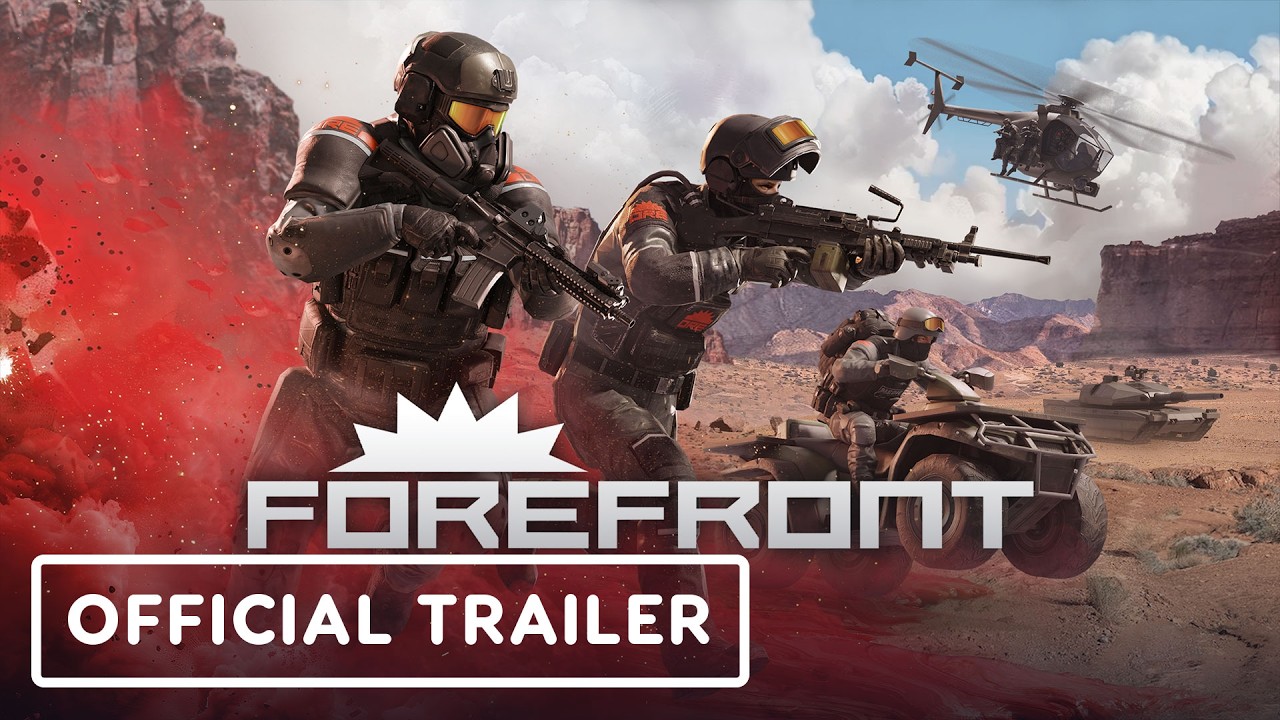
I have been waiting for a VR shooter to deliver Battlefield-scale combat for as long as VR has been a thing. Onward was close on tactical rigor but capped at ten players. Contractors pushed the player count but always felt like an arena shooter wearing fatigues. Pavlov got bigger with VR modifications on PC but never shipped a native 32-player Quest experience. On Thursday, Forefront goes 1.0 with 32 players across land, sea, and air, cross-platform matchmaking between Quest, SteamVR, and Pico, and a $27.99 price tag. I have spent this week watching early access clips and reading Triangle Factory's patch notes, and I am telling you right now this is the one I was waiting for.
GamingApril 21, 2026
32-Player VR Combat Finally Ships This Week. I Have Questions.
By Evan Marcus
Co-Founder, VR.org
Advertisement
The developer earned this
Triangle Factory is not some random studio taking a shot at the big leagues. They are the team behind Breachers, which has a legitimate claim to being the best tactical close-quarters VR shooter ever made, and Hyper Dash, which was basically Overwatch in a headset and still has an active playerbase three years later. If any studio had the right to try a 32-player title in VR, it was always going to be this one. They have spent a year iterating in early access with ten substantial content updates, adding vehicles, gadgets, and new maps like Tunnels, Oasis, and Fjord.
That early access period is what makes me believe in the 1.0 date. Most VR multiplayer shooters that attempt large-scale battles die quietly because the netcode falls apart at scale, the standalone hardware cannot render the player count, or the playerbase evaporates after launch weekend. Triangle Factory has been proving out all three problems in public for a year. If they are pulling the 1.0 trigger now, it is because the numbers back it up.
What 32 players in VR actually means
Here is the thing. Every time someone says "big multiplayer VR," I picture Planetside 2 with hand tracking. That is not what this is. 32 players in VR is a wildly different feel than 32 players in a flat-screen game. The spatial component changes everything. You can actually see other humans taking cover behind a vehicle. You can physically peek over a wall and see a sniper line up a shot. The scale collapses in a way that you cannot replicate on a monitor.
Vehicles are going to make or break this. Land, sea, and air means tanks, boats, and helicopters, and VR vehicles have a long history of being either incredible or completely unusable. War Thunder's VR support is transcendent when it works. Flight sims in VR are already the gold standard of the category. A helicopter pilot pulling up over a ridge, spotting 24 enemies on the ground, and calling in targets while their gunner returns fire is the kind of emergent moment that flatscreen Battlefield players have been bragging about for twenty years. If Forefront nails that loop, it is going to be the reason people buy Quests in 2026.
Advertisement
Cross-platform is the quiet headline
Everyone is going to talk about the player count because the player count is a marketing number. The actual impressive engineering is that Quest, SteamVR, and Pico players are all going to match into the same lobbies, with cross-progression preserved across platforms. That is not trivial. Every platform has different tracking capabilities, different input systems, different networking stacks. Keeping 32 players across three ecosystems in sync at combat speeds is real work.
PSVR2 is getting added later in the year, which is the right call. Sony's headset has been quietly building momentum through 2026 and a flagship 32-player shooter would be a strong addition to the library. But launching day one on the three platforms that share the most player DNA is smart. Quest is where the volume is. SteamVR is where the hardcore PC sim players live. Pico 4 Ultra is carving out real numbers in Europe and Asia. Covering that triangle on launch day is how you build a persistent playerbase.
My actual worry
Here is what I am watching. 32 players on a Quest 3 standalone is a lot of bodies to render at 90Hz with vehicles and particles and destruction and all the stuff that makes a combat game feel combat-y. Triangle Factory has been shipping visual upgrades specifically for the PC VR build, including real-time lighting and improved effects, which tells me they are already accepting that the Quest version is going to look different than the SteamVR version. That is fine. I accepted that trade-off for Contractors and I will accept it here.
My real worry is population. Large-scale shooters live and die by whether you can find a full lobby at 11pm on a Tuesday three months after launch. Breachers has an active playerbase because tactical five-on-five works with a small dedicated community. 32-versus-32 needs 64 people online at the same time per server, and VR's total concurrent user count on any given night is smaller than you might think. Triangle Factory has to get the onboarding right, keep the update cadence hot through the summer, and hope that the cross-platform matchmaking pool is deep enough to keep matches full in off-hours.
I will be there Thursday
$27.99 is the right price. It is cheaper than Battlefield 6, cheaper than Call of Duty, cheaper than most VR games that ship with half the features. The price signals confidence. Triangle Factory is betting on volume and retention, not premium launch revenue, which tells me they have done the math on what the VR shooter market actually looks like.
If it lands the way I think it will, this is going to be the VR game I play all summer. If it does not, I will write that article too, because that is how this works. Either way, Thursday night I am in a 32-player lobby trying to flank a tank with a rocket launcher, and so are a lot of you. Let me know in the comments what map you are rolling into first.
Advertisement