If you ask a room full of XR developers which engine they build in, the answer is still mostly Unity, with Unreal in second and everything else tied for a distant third. Godot 4.6 is the release that makes the "everything else" column a real option. The headline feature list reads like a spec sheet for a modern XR stack: native OpenXR 1.1 support with a fallback layer for OpenXR 1.0, frame synthesis for reprojection, Quad View rendering for foveated quality, a universal APK that deploys to every OpenXR-compatible headset from one build, and full Spatial Entities support for spatial anchors, plane detection, and marker tracking. All of it open source. All of it free. And increasingly, a lot of it funded by Meta.
SoftwareApril 22, 2026
Godot 4.6 Is Quietly Becoming the Best Open Source XR Engine, and Meta Is Helping Pay for It
By Nina Castillo
Staff Writer, VR.org
Advertisement
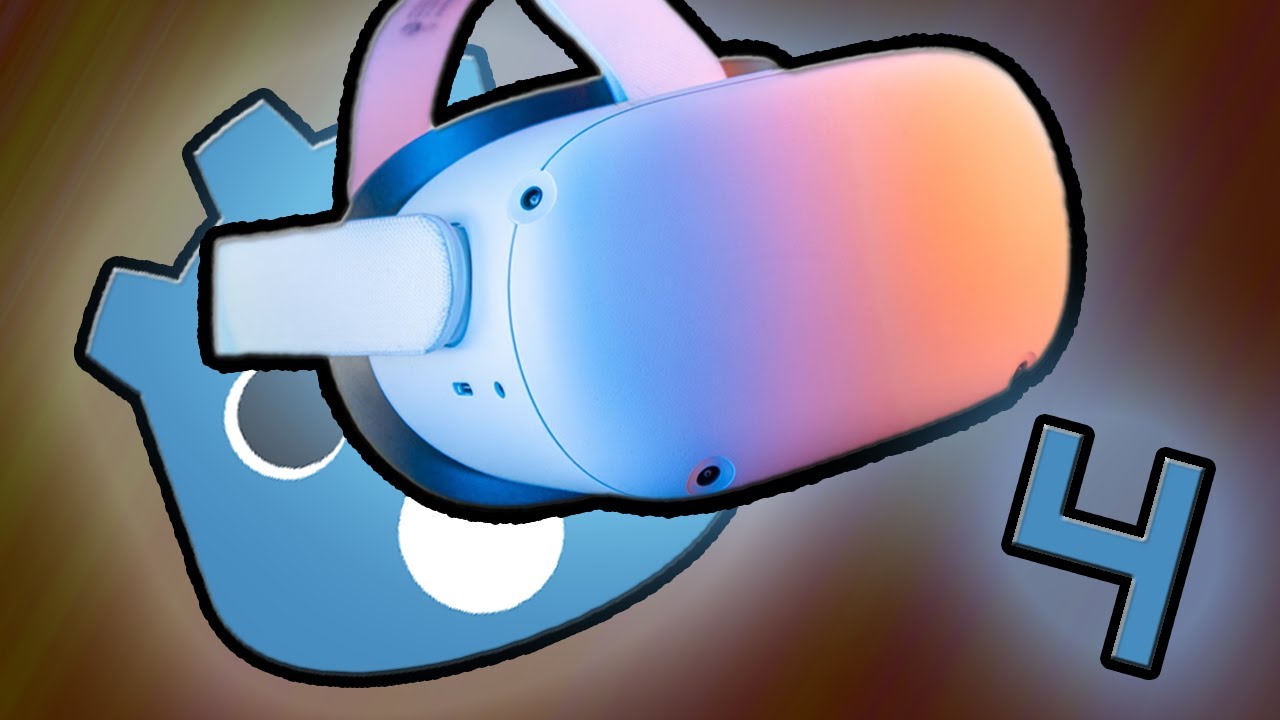
The OpenXR 1.1 upgrade is the big one
OpenXR 1.1 is the version of the standard that most headset vendors have actually converged on. The previous major release, 1.0, had enough ambiguity in the specification that different runtimes implemented features differently, and engine developers had to write vendor-specific glue code to fill the gaps. 1.1 closed a lot of those gaps. Meta's Quest, Samsung's Galaxy XR, HTC's Focus Vision, and Varjo's XR-4 all speak 1.1 natively now. Godot 4.6 adopting it as the default target means an indie developer can write one render path and have it work everywhere without per-headset conditionals cluttering the code.
The frame synthesis addition is the other quietly important piece. Frame synthesis, sometimes called reprojection or Application SpaceWarp depending on the vendor, lets the runtime render at half the native frame rate and synthesize the in-between frames. Meta's Application SpaceWarp, specifically, gives games roughly 70% more frame budget on standalone hardware. Assassin's Creed Nexus VR used it to hit its visual target on Quest 3. Godot 4.6 exposes the hooks so a solo developer can opt in with a single project setting.
Why Meta is funding this
Meta has been paying a rotating group of Godot contributors since 2024 to improve the engine's OpenXR support, build Quest-specific feature extensions, and produce high-quality samples and documentation. This is not charity. It is strategic.
Unity's pricing model blew up in 2023 and then blew up again after the rollback. Unreal's royalty model has never quite fit indie VR economics. A healthy third engine option is in Meta's direct interest because Meta wants as many apps on the Quest store as possible, and friction in engine tooling is one of the biggest reasons indie developers stop before they ship. Funding Godot's XR story costs Meta a fraction of what the Horizon OS content pipeline costs, and the return is measured in Quest store submissions.
The practical result is that Godot's Quest-specific documentation has gone from "sparse and outdated" in 2023 to "genuinely good" in 2026. The godot-xr-tools repository has production-ready components for locomotion, grabbing, pointing, and climbing. The OpenXR Vendors plugin handles Meta-specific extensions like color passthrough, scene understanding, and controller model loading. An indie team can prototype a Quest game in a weekend without writing a single line of vendor SDK code.
Universal APK is the feature nobody is talking about
The Android improvement that landed in 4.6 lets developers deploy one universal APK for all OpenXR-compatible devices. That sounds boring until you have shipped to Quest, Pico, and HTC separately and realized each platform requires its own build, its own signing, its own store upload, and its own update cadence. A universal APK collapses that to one artifact.
This matters especially for cross-platform indie teams where every hour of release-engineering is an hour not spent on the game itself. It also matters for Android XR, which is about to ship on Samsung's Galaxy XR and XREAL's Project Aura glasses. If an indie developer can ship one Godot build that runs on Quest, Galaxy XR, and Aura from a single upload, that is a materially different future than the one where every headset has its own store, its own review process, and its own SDK.
Where Godot still trails
I want to be clear. Godot is not Unity. The asset store ecosystem is smaller. The rendering pipeline is still catching up on some PBR features. Third-party middleware like Wwise and FMOD have integrations but they are less polished than their Unity counterparts. If you are building a photo-realistic AAA Quest title you are still going to reach for Unreal or Unity.
But a lot of indie XR is not that. A lot of indie XR is stylized, solo-developer, small-team work where the engine needs to be fast, predictable, and not charging you seat licenses or runtime fees. That is the exact sweet spot Godot 4.6 lands in. For developers who have been watching the Unity pricing saga with one eye on the door, the door is now an open, well-documented, Meta-funded option that ships with OpenXR 1.1, Spatial Entities, and a universal APK. That is a real alternative. Take it seriously.
Advertisement