
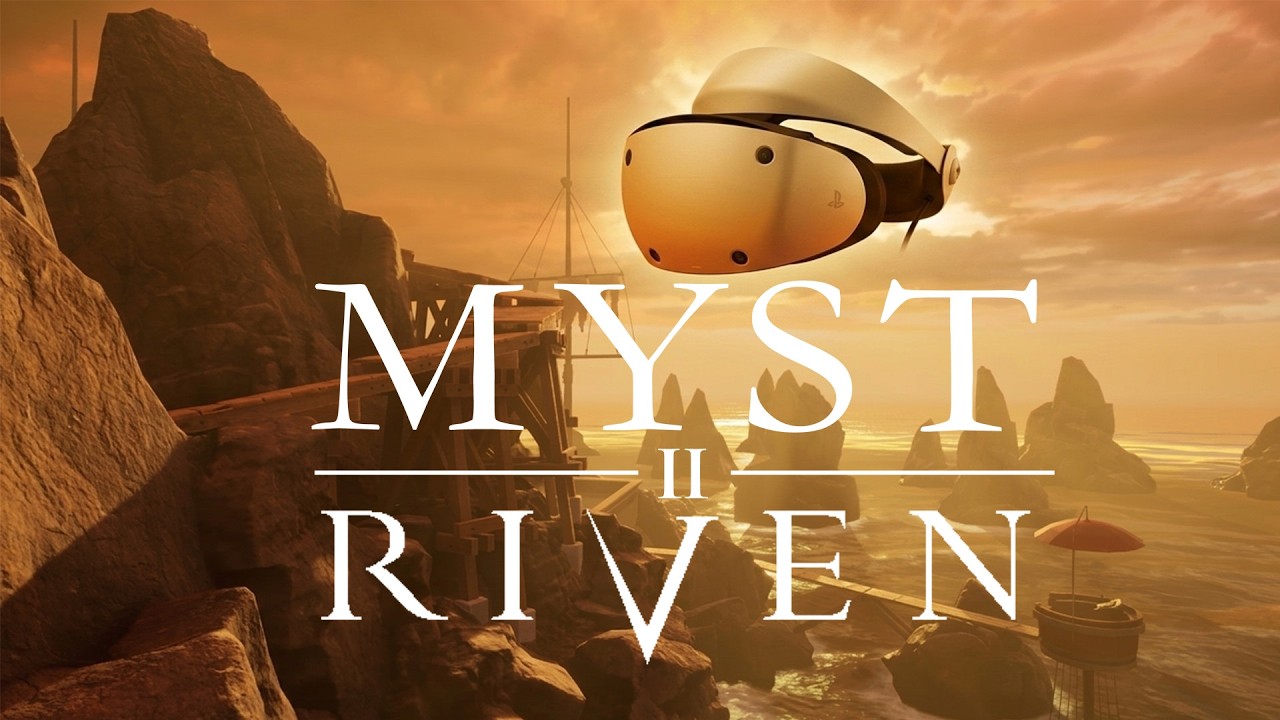
Myst and Riven land on PlayStation VR2 today, both Cyan Worlds remakes arriving at $34.99 with full VR and flatscreen support. That is the news. But step back from the launch calendar for a second, because there is a larger story that the today release quietly underlines, and almost nobody is saying it out loud: one month after Meta raised the price of every Quest it sells, PlayStation VR2 has become the best hardware value in consumer VR. Not the best headset for everyone. The best value. There is a difference, and the difference is the whole article.
HardwareMay 19, 2026
A Month After Meta's Price Hike, PSVR2 Is Quietly the Best Deal in VR. Nobody Is Saying It Out Loud.
By Alex Reeves
Staff Writer, VR.org
Advertisement

Run the Math Nobody Re-Ran
On April 19, 2026, Meta adjusted Quest pricing in response to the global memory chip shortage. The Quest 3S 128GB went from $299.99 to $349.99. The Quest 3S 256GB went from $399.99 to $449.99. The flagship Quest 3 512GB went from $499.99 to $599.99. Meta was transparent about why, and the reasoning is sound. Memory got expensive for everyone, and a standalone headset is mostly memory, silicon, and battery. The increase was not greed. It was physics.
Here is what did not move during that month. PlayStation VR2 still sits at roughly $399. Sony did not raise it, because PSVR2 is not a standalone computer. It is a display and a pair of tracked controllers that borrow all their compute from a PS5 you already own. The memory crisis that pushed Quest up did not touch the part of the stack PSVR2 actually sells. So the column nobody bothered to re-run now reads strangely. The headset with OLED panels, per-eye HDR, eye tracking, foveated rendering, headset rumble, and adaptive-trigger controllers is the cheap one. The Quest 3 it used to lose price comparisons to now costs two hundred dollars more.
The Software Knock Got Quieter
The standard rebuttal to any PSVR2 value argument has always been the library. For most of 2023 and 2024 that rebuttal was fair. The headset shipped with excellent hardware and a thin, inconsistent slate, and Sony's own marketing went silent almost immediately. That criticism has not vanished, but it has weakened, and the timing of today is the proof. Myst and Riven are not filler. They are two of the genre-defining puzzle adventures in gaming, rebuilt in Unreal Engine 5, with ray tracing and PS5 Pro enhancements, and they are exactly the kind of presence-driven experience the format was built for. Microsoft Flight Simulator already demonstrated that the panel can carry a flagship simulation. The drip is slow, but it is no longer dry.
A headset is a bet on the next two years of software, not the last two. On that basis the PSVR2 bet looks better in May 2026 than it did at launch, and it costs less in real terms than the headset most buyers reflexively compare it to.
The Catch, Stated Honestly
This is where the headline earns its asterisk, because a value claim that hides its cost is just marketing. PSVR2 is not standalone. It needs something to drive it, and that something is not free. The clean path is a PS5, which is roughly $499 on its own and more for a PS5 Pro, the configuration that actually unlocks the higher VR render resolution in games like the ones launching today. If you already own a PS5, the $399 headset is a genuine bargain. If you do not, the real entry price is closer to nine hundred dollars, and the value math flips back toward a standalone Quest that needs nothing else in the room.
Advertisement
The PC route exists and complicates the picture further. Sony's official PC adapter is about $59.99 and lets the headset run SteamVR content. But the adapter strips out the exact features that make the panel special. No headset rumble. No eye tracking. No foveated rendering. You are paying for an OLED display and leaving its best tricks at the door. So the honest version of the claim is narrow and specific. PSVR2 is the best value in VR for people who already own the box that drives it. For everyone else it is a conditional recommendation, and pretending otherwise is how the headset got over-sold the first time.
Why The Silence
If the value case is this clear, the obvious question is why the conversation has not caught up. Part of it is narrative inertia. PSVR2 was written off in its first eighteen months, the industry attention moved to standalone and then to smart glasses, and once a product acquires a story it keeps that story long after the underlying numbers change. Part of it is Sony, which has done almost nothing to reframe the headset around the new pricing reality and seems content to let it coast. And part of it is that the people most affected by Meta's increase are shopping in the standalone aisle by default. They never walked past the tethered option to notice it did not move.

None of this is a prediction that PSVR2 wins anything. Steam Frame is coming, and a standalone SteamOS headset with a real content pipeline changes the value table again the moment it ships. The point is narrower and it is true right now. In the specific window between Meta's April increase and whatever Valve does next, the most under-discussed deal in VR is the headset everyone stopped talking about two years ago. Myst and Riven landing today is a good reason to look at it again. The price tag is a better one.
Correction, September 9, 2026: This article said the PS VR2 PC adapter leaves you with "No headset rumble. No eye tracking. No foveated rendering." The first two are right and the third is not. Sony's own announcement of the PC adapter lists HDR, headset feedback, eye tracking, adaptive triggers and haptic feedback other than rumble as unavailable on PC, but names "foveated rendering (without eye tracking)" among the features that do work there. What the adapter removes is the eye-tracked kind, not foveated rendering altogether. Our September 9 piece on No Man's Sky adding a PC VR foveated rendering path explains why the distinction now matters.
Advertisement