
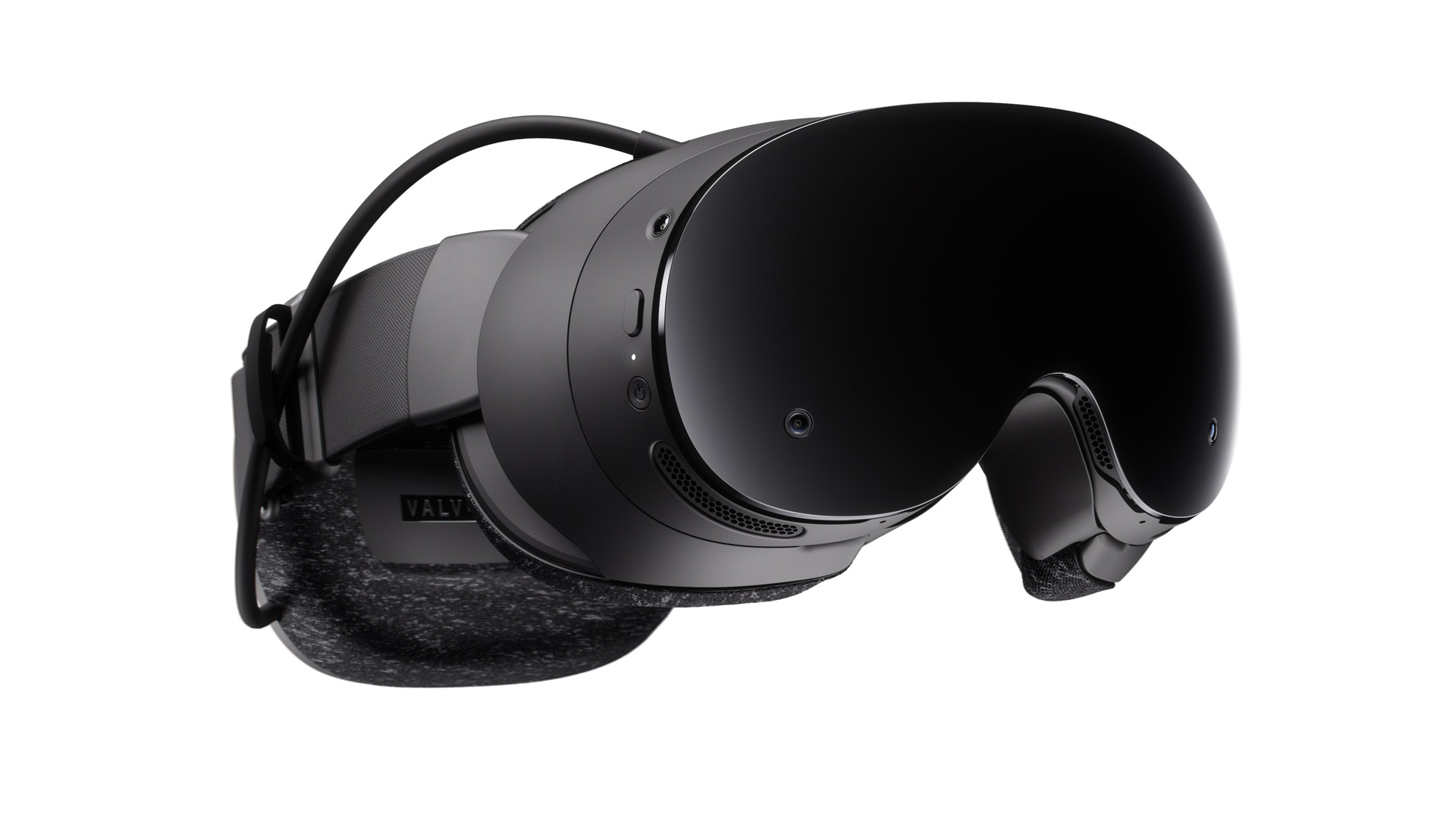
0.41 percent. That is the Steam Frame's first reading in Valve's hardware and software survey, as a share of Steam accounts with a VR headset connected in September. About one in 244. Valve sells the headset through a reservation queue and sent the first purchase emails on September 18, so the reading covers 13 days of sales. It ranks 18th of the 28 rows Valve names, one row under the 2019 Oculus Quest at 0.43.
HardwareOctober 6, 2026
Valve Added the Steam Frame to September's Steam Survey Late: 1 in 244 VR Headsets After 13 Days of Waitlist Sales
By Alex Reeves
Staff Writer, VR.org
Advertisement
The row was not there when the table went up. MIXED read the page at 12:26 UTC on October 2 and reported that Valve's headset had no line of its own. PC Guide copied out the same table that day, with "Other" at 1.93 percent, up from 1.24. An Internet Archive capture from 16:51 UTC on October 4 still shows it that way. The live page on October 6 does not.
Where 0.44 points went
Set the archived table against the live one and three rows differ. "Other" dropped from 1.93 to 1.49. "Valve Steam Frame" appeared at 0.41. HTC's Vive Focus Vision moved from 0.26 to 0.29, with its label recapitalized. The first number is the sum of the other two changes, to the hundredth. Every other row is identical.
The change column was restated with it. The Frame shows a gain of 0.39 points, which puts it at 0.02 percent in August, weeks before anyone could buy one. The page does not say whose headsets those were. "Other" now shows a gain of 0.29 instead of 0.69.
That settles most of a question the first version of the table raised. The unlabeled bucket had posted the second-largest gain of the month. More than half of that gain, 0.39 of 0.69 points, was the Steam Frame. The remaining 0.29 is still unexplained, and "Other" at 1.49 percent is still larger than the Bigscreen Beyond.
What 0.41 measures
Less than a month, for a start. Valve priced the Frame at $1,059 on September 14 and began sending purchase emails on September 18, in shuffled reservation order. That leaves 13 days of September for a headset to be bought, delivered, connected and counted.
It is also a share of a small base. Valve puts accounts with any VR headset at 1.35 percent of those surveyed, down 0.14 points. The Frame's 0.41 percent of that works out to roughly one surveyed machine in 18,000. The survey says of itself that "participation in the survey is optional, and anonymous," and Valve does not publish how a headset gets detected, so the page cannot say whether a Frame used on its own, away from a PC, registers at all. None of this is a sales figure.
Within those limits the reading is not small. A gain of 0.39 points is the second largest among named headsets in September, behind only the Quest 3. The Frame already sits above the Vive Focus Vision at 0.29 and the Vive XR Elite at 0.16. Pimax, at 0.67, is the next line worth watching. Bigscreen, whose Beyond 2 now starts at $959, holds 1.27.
The rest of the table
Quest 3 took 26.90 percent, up 0.89, and is back in first. Quest 2 fell 1.17 points to 25.80 after leading in July and August, MIXED's log of the chart shows. Quest 3S has 11.07 and the Valve Index 10.83, both down.

Two older headsets set highs. Pico 4 reached 4.76 percent and PS VR2 reached 2.31, each the highest reading in the chart's window by MIXED's count, which runs from April 2025. The Pico 4 shipped in 2022 and is still adding PC users while ByteDance pushes its replacement to the fourth quarter. Every PS VR2 in the survey is running through Sony's PC adapter, so that growth says nothing about the console.

What it means if you are buying
Quest 3 and Quest 2 together hold 52.70 percent of connected headsets. That is why a new PC VR release is still tuned for them first, and 0.41 percent will not move a studio's test plan this year.
For anyone holding a reservation, the row is the first public number attached to that queue, and it is a small one. Valve needed at least two days to find its own headset in its own survey. October will be the Frame's first full month in the table. That survey is due in early November, and it is the reading to wait for before drawing a line through two points.
Advertisement