
There is a quiet shift happening in XR development that most people outside the developer community have not noticed yet. WebXR adoption grew 40% in 2026. Browser-based immersive experiences are no longer experimental demos. They are becoming a real alternative to native app development, and the implications for the entire XR ecosystem are significant.
XrApril 13, 2026
WebXR Adoption Just Jumped 40%. The Browser is Coming for Native Apps.
By Jordan Kuo
Staff Writer, VR.org
Advertisement

The friction problem
If you have ever tried to get someone to try a VR experience, you know the biggest obstacle is not the headset. It is the steps between "here, try this" and actually being in the experience. Download the app. Create an account. Wait for the install. Accept permissions. Load the tutorial. By the time you get through all of that, the moment is gone.
WebXR removes almost all of those steps. You open a URL in your browser and the experience loads. No app store. No download. No account creation. Click the link and you are there. Research shows this distinction matters more than most developers realize. App download friction reduces engagement by 50 to 70 percent compared to browser-based experiences. That is not a small gap. That is the difference between someone actually trying your XR content and closing the tab on the store listing.
Browser support finally caught up
The reason WebXR felt like a niche technology for so long was that browser support was inconsistent. That changed in 2026. Chrome and Edge have full WebXR support on desktop and Android, including the Samsung Galaxy XR. Safari enabled WebXR by default in visionOS 2 on Apple Vision Pro with a new gaze-and-pinch input mode. Meta Quest Browser supports passthrough AR, plane detection, anchors, and hand tracking through WebXR. Samsung Internet and Opera have full support on compatible devices.
That coverage means over 5 billion people with web browsers can now access WebXR content in some form. Not all of those are headset owners, but even on a phone, WebXR can deliver "magic window" AR experiences that used to require a dedicated app.
What developers are building
The interesting part is where WebXR is showing up. IKEA uses WebAR for product visualization. Shopify merchants offer try-before-you-buy experiences through the browser. Educational institutions are building interactive chemistry labs and physics simulations that run on school devices without IT departments having to approve and install anything. Enterprise companies are deploying remote maintenance tools and virtual showrooms. Event organizers trigger QR-code-powered WebXR companion experiences at physical venues.
None of these require a $500 headset. That is the point. WebXR meets people where they are, on whatever device they already own.
The tools are maturing fast
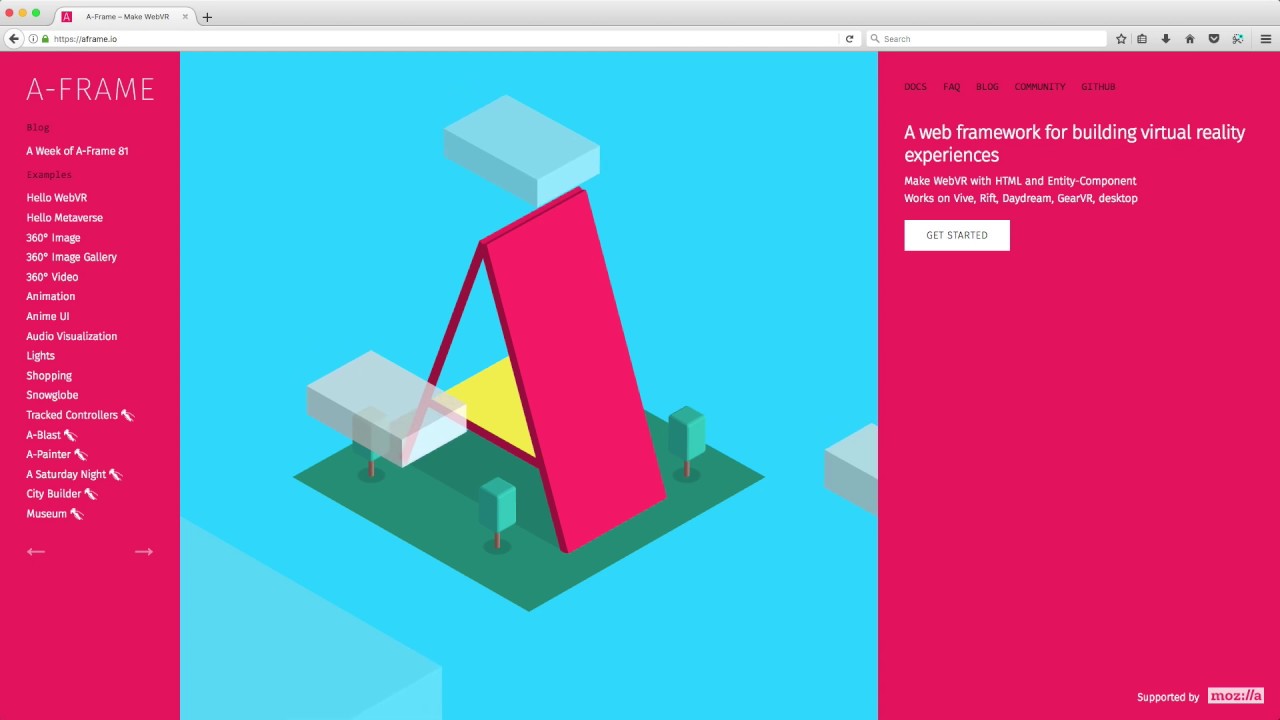
Three.js remains the de facto standard for browser-based 3D and its built-in WebXRManager makes VR and AR development relatively straightforward. A-Frame, the declarative HTML framework built on Three.js, continues to lower the barrier for developers who are comfortable with web technologies but new to 3D. Babylon.js offers another robust option with full WebXR support.
The biggest development tool story is Google's Vibe Coding XR workflow, built on the open-source XR Blocks framework. It lets developers create interactive, physics-aware WebXR applications from plain language prompts in under 60 seconds. That is not production-ready code for a shipping product, but it collapses the prototyping phase dramatically.
WebGPU is the other piece worth watching. It brings near-native rendering performance to the browser, which closes the visual quality gap between WebXR and native apps faster than many expected. Combined with improved APIs for hand tracking, eye tracking, and spatial audio, the technical argument against WebXR keeps getting weaker.
What this means for the XR ecosystem
WebXR is not going to replace native Quest games or high-fidelity Steam VR experiences. The performance ceiling for complex simulations and graphically demanding applications still favors native development. But for a growing category of XR use cases, the browser is now good enough. And "good enough" with zero friction beats "technically superior" with seven installation steps.
The Interop 2026 initiative proposed WebXR as a focus area, which means browser vendors are actively coordinating to close cross-browser compatibility gaps. That kind of standardization work is what separates a promising technology from a reliable platform.
For XR developers weighing their next project, the math is changing. One codebase that works across Quest, Vision Pro, Galaxy XR, and every phone browser in the world is a compelling proposition. The 40% adoption growth is not a spike. It is the beginning of a curve.
Advertisement