
Meta's glasses lineup split three ways at Connect on Wednesday. Ray-Ban Meta Audio, at $349 and shipping October 13, is the company's first pair with no camera at all, and it arrives in exactly the Clubmaster and Burbank styles that the Luna reporting named last week. Ray-Ban Meta (Gen 3), at $449 and on sale now, keeps a 12 MP camera and moves to a six-microphone array. Ray-Ban Display, the $799 pair with a screen in the right lens, opened orders in Canada and the UK, with France, Italy and Germany taking preorders for October 13. For anyone building against Meta's glasses, that is three capability tiers where, for practical purposes, there used to be one.
ArSeptember 23, 2026
Three Tiers of Meta Glasses, and a Wearables Toolkit That Still Cannot Publish to the Public
By Jordan Kuo
Staff Writer, VR.org
Advertisement
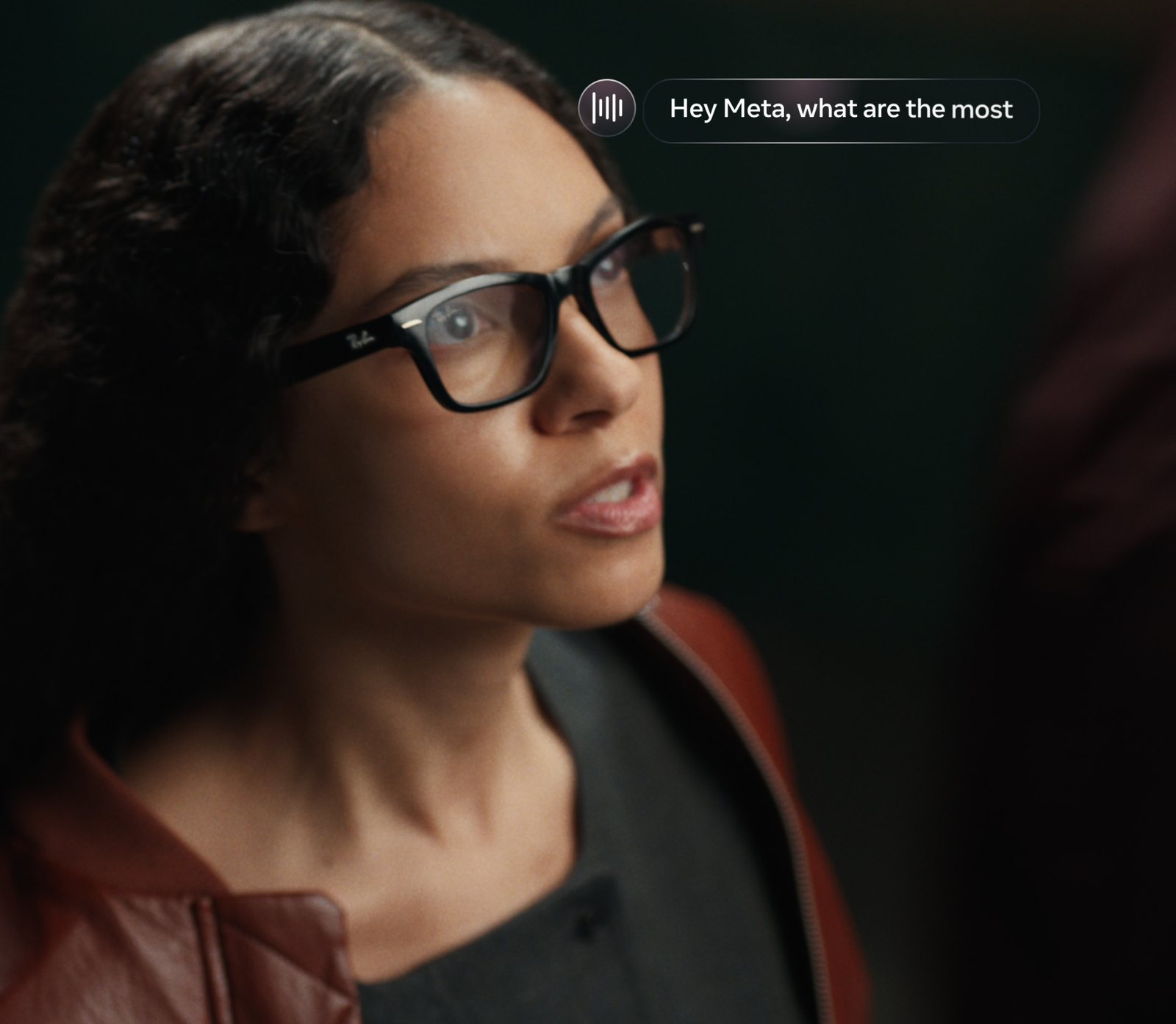
The toolkit's device list is already a generation behind
The Meta Wearables Device Access Toolkit, the iOS and Android SDK that lets a phone app reach the sensors on a pair of glasses, was designed around the camera. Its developer FAQ describes the surface as video streaming, photo capture, microphone and audio, plus the in-lens display on Ray-Ban Display, and it lists Ray-Ban Meta Gen 1 and Gen 2, Ray-Ban Display, Oakley Meta HSTN and Oakley Meta Vanguard as the supported hardware. Neither pair announced on Wednesday is on that list yet. That is normal for products that were secret until the keynote, and it says nothing on its own about whether support is coming.
Audio is the harder case. When Meta introduced the toolkit in September 2025, several of the early partners it named, Microsoft Seeing AI and Twitch among them, were camera products first, describing or broadcasting what the wearer sees. A pair with no camera keeps only the microphone and speaker path, the thinner half of the toolkit, and Meta has not said whether an integration that asks for audio alone will run on it. If you have shipped a mobile app that feature-detects hardware, you already know how this goes: the device matrix grows a row, and every integration has to decide what it does when the capability it assumed is simply absent.
Publishing is still closed, with three months left in 2026
The larger constraint did not move this week. The same FAQ still says that "publishing is currently not available during the Developer Preview phase," and developers can hand builds to limited audiences through release channels but cannot ship to the public. Meta's September 2025 announcement described the preview as arriving "ahead of opening up publishing to general availability in 2026." It is now the last week of September.
That gap matters more after Wednesday than it did before it, because every other number in Meta's glasses announcement points toward a bigger installed base. Meta says it will offer more than 100 glasses styles by the end of the year, is selling Meta Glasses in Singapore, South Korea, Mexico and the UAE starting now, and lists about a dozen more markets for Ray-Ban Meta and Oakley Meta later this year. The audience a third-party developer could reach is growing in every direction but one. There is still no way to publish to it. Thursday's developer state of the union at 10 AM Pacific is the obvious venue for a general-availability date, and if one does not appear there, the 2026 target is close to gone.
Display is the tier with a second way in
Ray-Ban Display is the one tier where the native toolkit is not the only route. The FAQ also covers Web Apps, built in HTML, CSS and JavaScript and shared by URL, a distribution path that sidesteps the store question entirely, and Meta's Connect catalogue includes an on-demand session on building them that goes up Thursday. Until this week that path reached US buyers only. With orders open at CA$1,149 in Canada and £749 in the UK, and preorders at €899 in France, Italy and Germany, a web app written for a small monocular display in the right lens now has an audience in six countries, and a localization problem that arrived with it.

The Display features Meta announced alongside the rollout are its own: hologram calls in WhatsApp, driven by voice, in US Early Access later this fall, and cycling and transit directions later this month in the US and Canada. Hologram calling is the same feature that ships with Meta VR Glasses next spring, which makes it one of the few pieces of software Meta is now carrying across both its glasses and its headsets.
The assistant stays first-party
The layer Meta is keeping for itself is the voice that answers. The toolkit has never exposed Meta AI to outside apps, a limit spelled out when Meta funded its first glasses grants in August, and the company's plan for the assistant now runs through Muse, the personal agent Meta introduced on September 8, which it says it is "working on bringing" to AI glasses with no date attached. Developers get the sensors. The assistant stays in-house. Phones went through the same arrangement: Siri shipped on the iPhone 4S in 2011, and SiriKit did not let outside apps into it until 2016. A camera-free pair built around talking to an assistant is the product where that boundary is most visible, and it is the part of the glasses stack least likely to change on Thursday.
Advertisement