
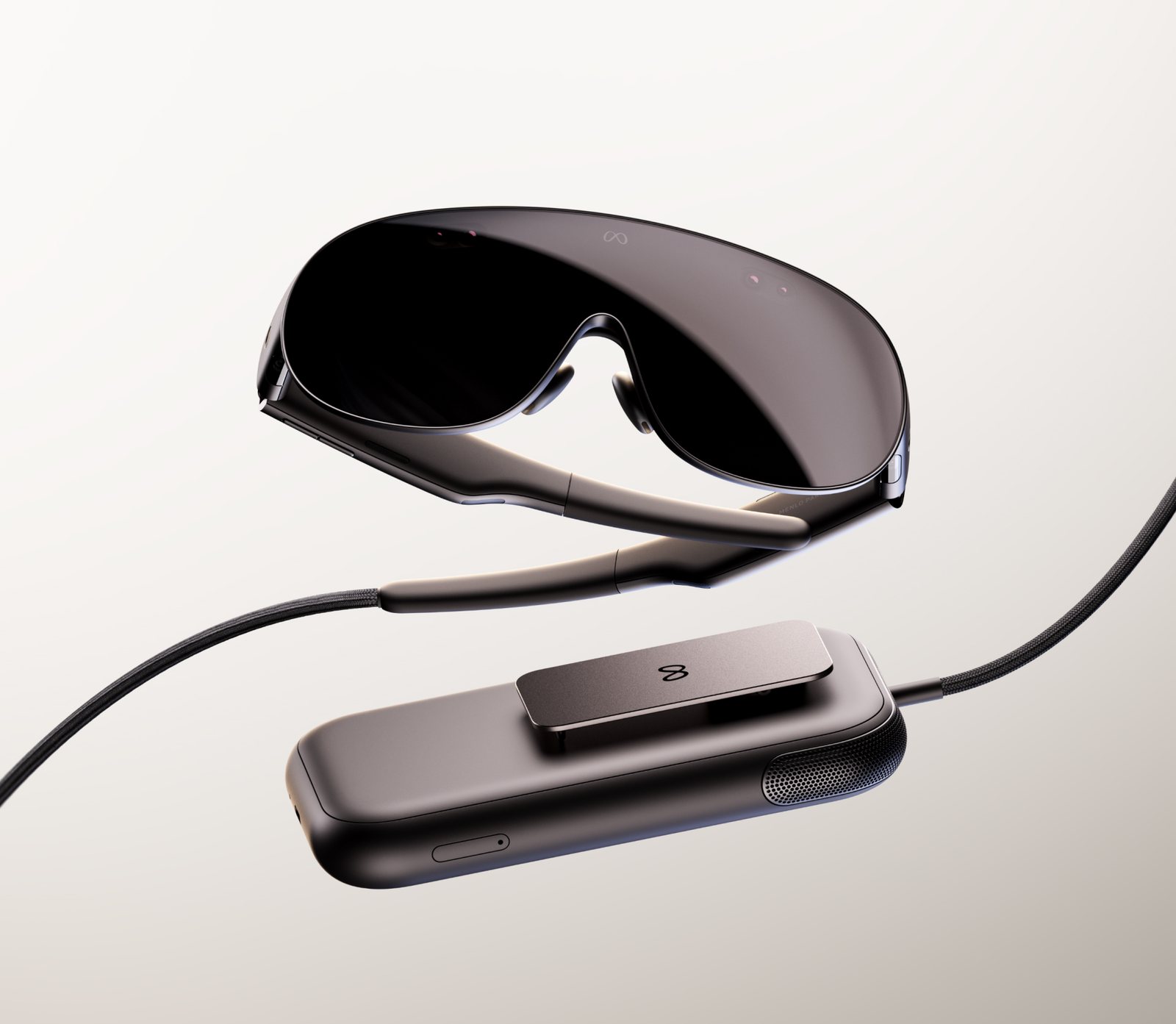
Meta VR Glasses cost $1,299.99. They go on sale in spring 2027, weigh about 100 grams on the face, and ship without controllers. Meta announced them at Connect on Wednesday without saying the codename out loud. Road to VR confirms this is the device previously known as Project Phoenix.
HardwareSeptember 23, 2026
Phoenix Arrives as Meta VR Glasses: $1,299.99, Spring 2027, and a 300-Gram Puck
By Alex Reeves
Staff Writer, VR.org
Advertisement
There are no preorders and no date beyond the season. Internal Meta memos from last December put Phoenix in the first half of 2027. Spring is on schedule.
$300 over the reported target
Price is the number that moved. In June 2025, the Wall Street Journal reported an internal hope of landing under $1,000. VR.org's July read was that the hope had been formed in a cheaper year. Since then Qualcomm has raised chip prices by double digits on anything shipping after September 1, and Meta had already raised Quest prices in April on memory costs.
The $1,299.99 covers 128GB of storage, a microSD slot that takes cards up to 1TB, and a 45W power supply, per Road to VR. It does not cover controllers. The interface is built around eyes, hands and voice, and Touch Plus controllers are sold separately. Controllers from an existing Quest 3 or 3S will pair. UploadVR reports a bundle with controllers "in some retail channels."
100 grams on the face, about 300 in the pocket
Meta says the glasses are five times lighter than Quest 3. Quest 3 weighs 515 grams with its strap, so the math holds. The weight did not disappear, though. It moved.
Compute, battery and storage sit in a puck on an optical tether, and Road to VR puts that puck at roughly 300 grams. On the head the frame carries displays, pancake lenses, cameras and sensors. UploadVR notes there is not even a tracking coprocessor in it. The load rests on nose pads and temple arms, with no strap.
That is a different contact patch from July's closest comparison, the Bigscreen Beyond 2 at 107 grams, which Bigscreen measures without its strap or facial interface. Meta has not said what "about 100 grams" includes. Before Wednesday, the heaviest thing Meta asked anyone to balance on nose pads was Ray-Ban Display, at 87 grams.
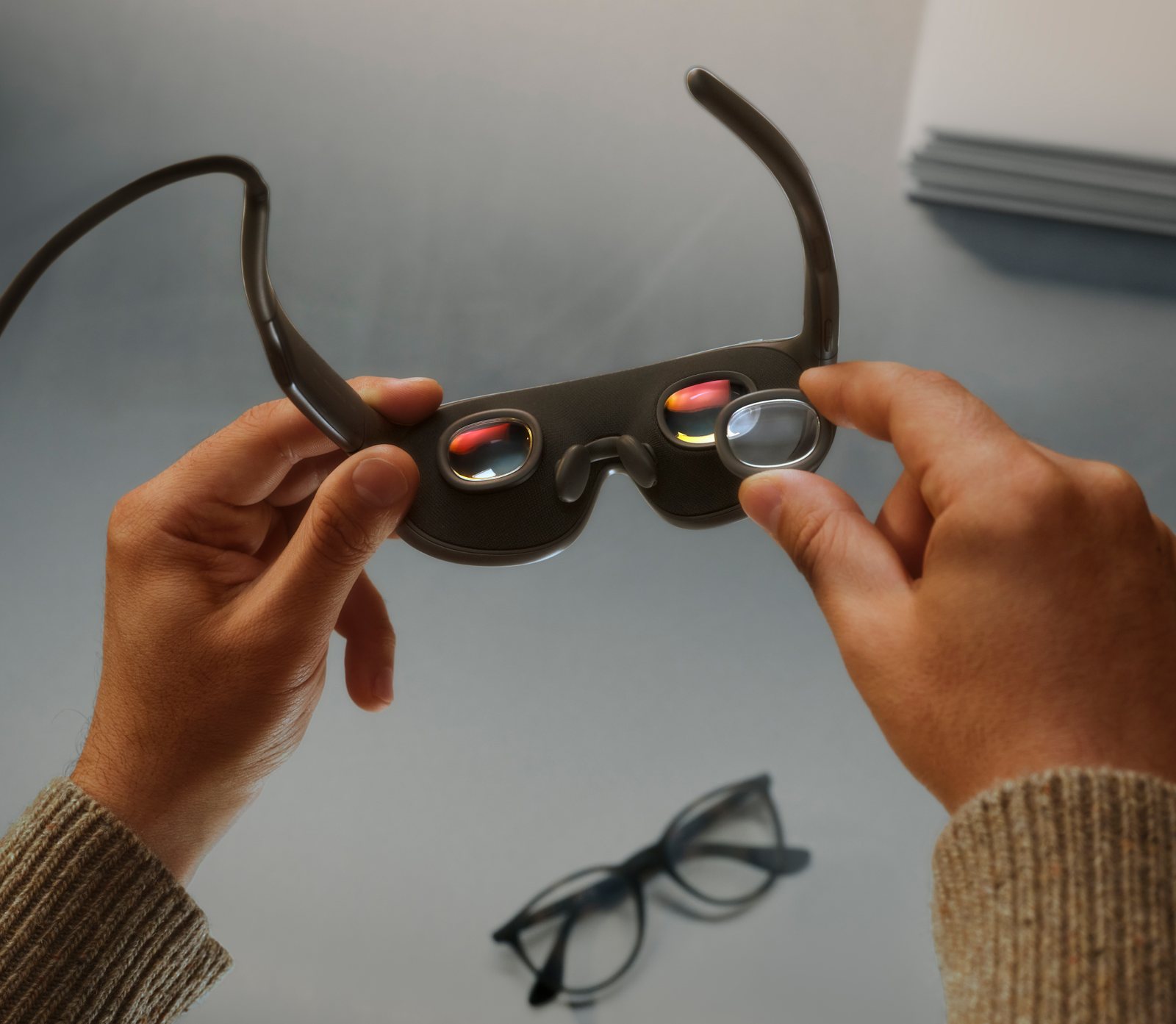
Fit comes from a manual IPD adjustment covering 56 to 70 millimeters. Glasses wearers get prescription inserts through Zenni Optical. Nobody has priced them yet.
Advertisement
Sharper than Quest 3, and narrower
The displays are micro-OLED. That makes this the first Meta headset without LCD panels since the original Quest in 2019. UploadVR lists 2412 by 2288 pixels per eye at 120Hz, and Meta quotes 37 pixels per degree against roughly 25 on Quest 3.
The cost is field of view. VR Glasses cover 70 degrees horizontal by 66 vertical, where Quest 3 covers about 110 by 96. A sharper, smaller image suits a movie screen better than a sword fight.
The puck runs Qualcomm's Snapdragon Reality Elite with 12GB of RAM and the same operating system as Quest 3, so existing Quest apps carry over. Meta rates the battery at "up to three hours of continuous high-resolution media playback," with 45W fast charging.
Movies first, games fourth
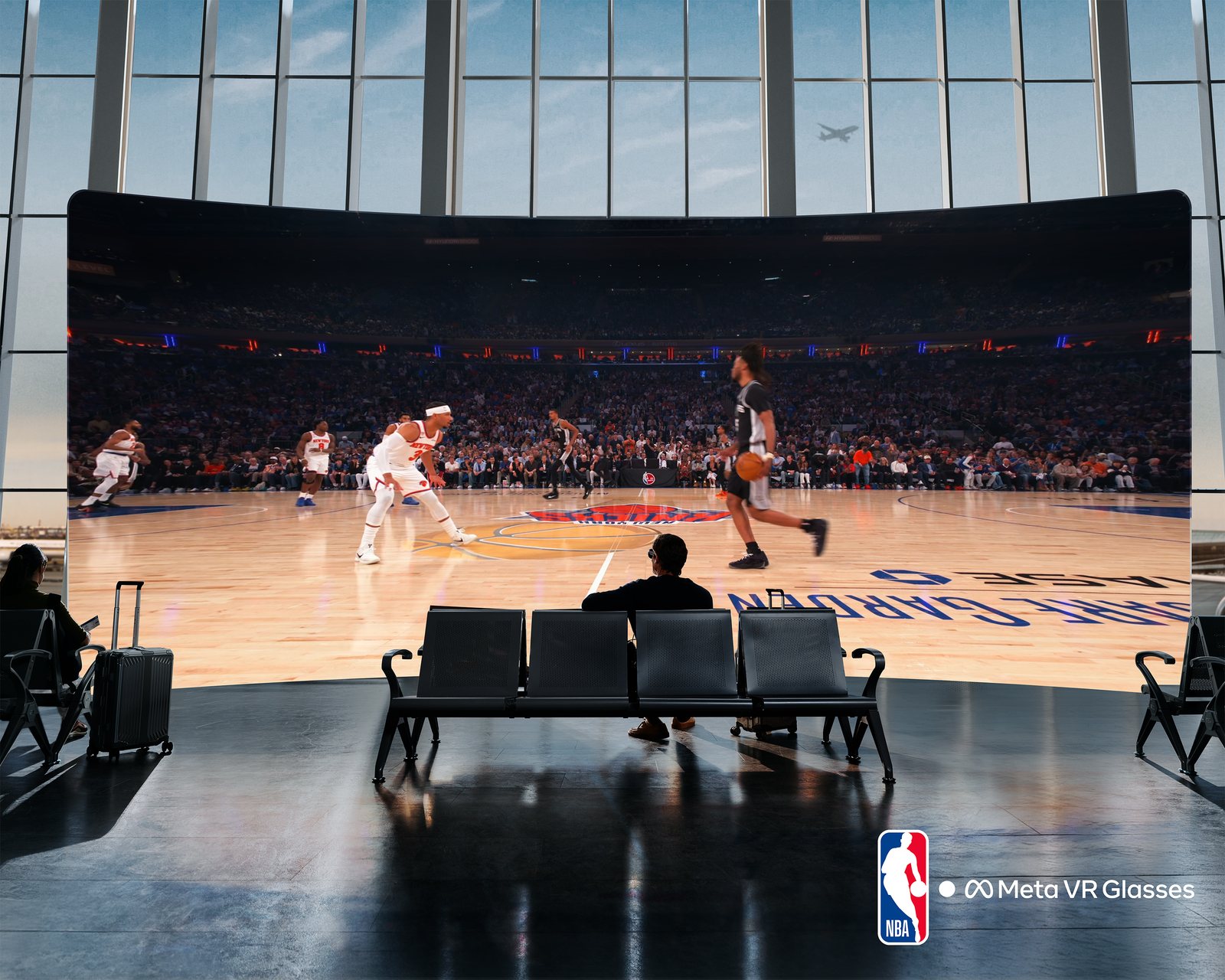
Meta's own announcement calls the device a personal cinema, a courtside seat, a workspace and a gaming console, in that order. The partner list follows the same order. That 2025 WSJ report was about Meta chasing Hollywood deals, and the keynote produced them: the first IMAX Enhanced certification on a VR device, Disney+ movies in 3D from November, "first time in 3D" releases with James Cameron's Lightstorm Vision in 2027, and more than 100 live sports events a year with MLB, NBC Sports, TNT Sports and UFC once the glasses launch.
Games get a number instead. Meta says more than 75 titles will be playable with hand gestures alone at launch, with Xbox Cloud Gaming for flat games on top. The first-party headline is a hand-tracked mode for Beat Saber, which Road to VR says arrives next year. There was no new big-budget exclusive of the kind Meta used to put in the Quest box, which fits a year in which Meta closed three of its studios.
Hologram calling launches with the hardware. Meta says the photorealistic avatar, built on its Codec Avatars research, works in any calling app "from WhatsApp to Zoom." UploadVR reports it starts as a 2.5D stereoscopic video stream, with full 3D planned later.
What it means for a buyer
Meta's recent record on hardware announced with both a price and a date is clean: five for five since 2023. VR Glasses have a price and a season. That is most of the way there.
The alternatives on shelves this fall are simpler to price. Steam Frame starts at $1,059 and is shipping now. Quest 3 is $599.99. Two Quest 3s cost $1,199.98, and both come with controllers.
For movies on a flight or a large private monitor, VR Glasses bring the sharpest panels Meta has put in a headset and the deepest media deals it has signed. For games, the narrower view, the missing controllers and a launch list built for hand tracking point the other way. Anyone shopping for a gaming headset this year does not need to wait for spring.
Advertisement