
Meta VR Glasses: Price, Release Date, Specs, and Everything We Know
Last updated: October 7, 2026
See also: our launch analysis, everything announced at Meta Connect 2026, the Steam Frame hub for the headset that launched nine days earlier, and our VR release dates tracker. For something you can buy today, see the best VR headsets.
Meta VR Glasses are Meta's ultralight VR headset, announced at Connect on September 23, 2026 and previously known as Project Phoenix. They cost $1,299.99 and go on sale in spring 2027. The glasses weigh about 100 grams and hand compute, battery and storage to a roughly 300-gram puck on an optical tether, so the part on your face weighs about as much as a deck of cards. Controllers are sold separately. This page covers the price, release date and specs, how they compare with Quest 3, Steam Frame and Vision Pro, and every development we have tracked since the codename surfaced.

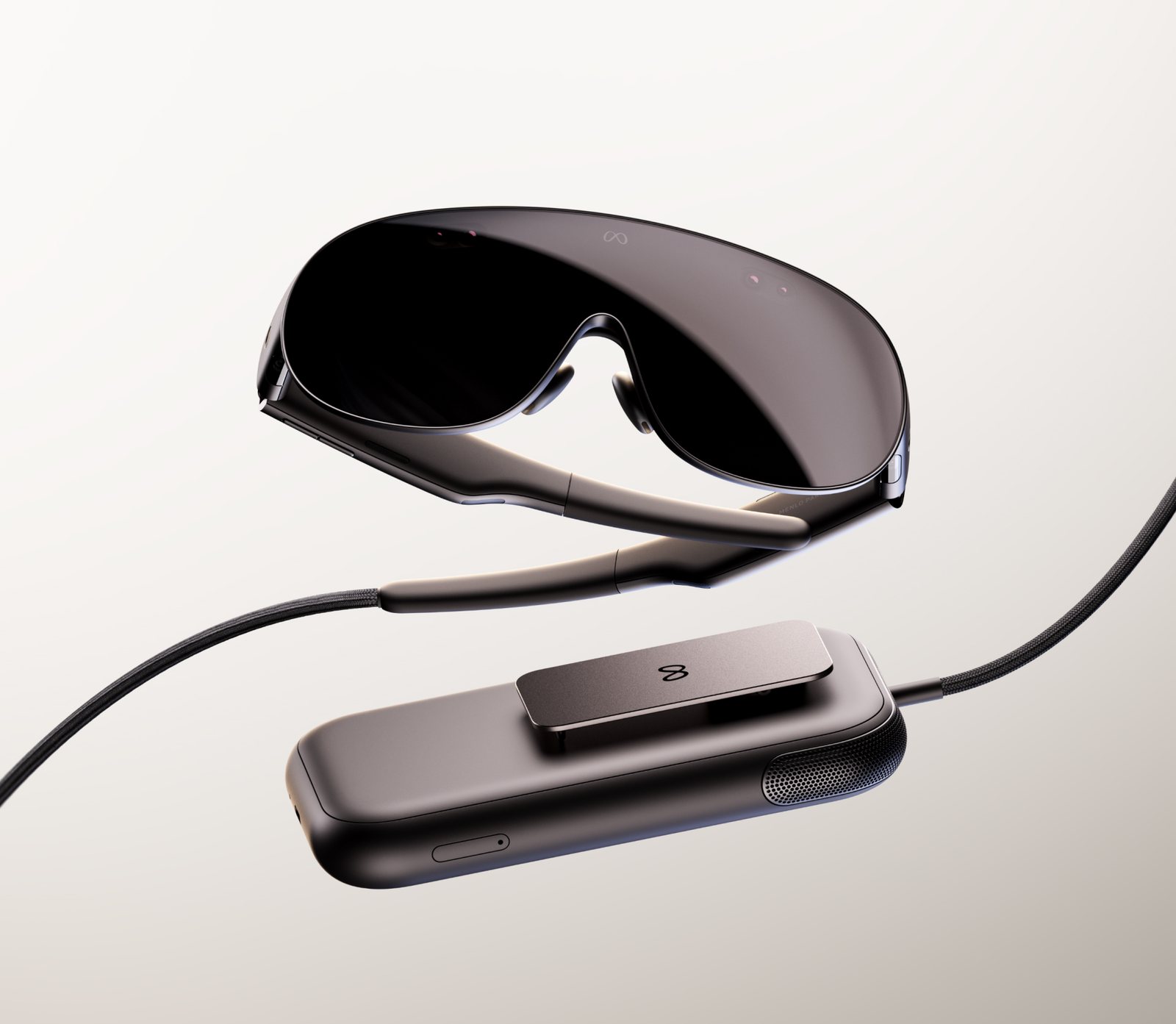
Meta's official page takes email sign-ups for launch news. We will switch this button to Meta's preorder page the day it opens.
Image: Meta
Price: $1,299.99, controllers sold separately
Meta's announcement puts Meta VR Glasses at $1,299.99 in the US. According to Road to VR, that covers 128GB of storage, a microSD slot for cards up to 1TB, and a 45W USB-C power supply. No microSD card and no controllers come in the box. Touch Plus controllers are sold separately, controllers from a Quest 3 or Quest 3S will pair, and UploadVR reports a bundle with controllers "in some retail channels." Prescription lens inserts come through Zenni Optical, and nobody has priced them yet.
The price landed above the reporting. The Wall Street Journal reported in 2025 that Meta hoped to come in under $1,000, and our launch analysis walks through why chip and memory costs pushed the other way. For context, the Steam Frame starts at $1,059, Quest 3 is $599.99, and Apple Vision Pro now starts at $3,699.
Release date: spring 2027
Meta says the glasses "will go on sale Spring 2027." There is no exact date and preorders are not open. That matches the internal timeline reported since last December, which put the device then called Phoenix in the first half of 2027. Road to VR lists 25 launch countries: the US, UK, Canada, Mexico, Germany, Poland, France, the Netherlands, Belgium, Italy, Switzerland, Austria, Ireland, Iceland, Finland, Spain, Sweden, Norway, Denmark, Japan, Taiwan, South Korea, Singapore, Australia and New Zealand. We will add the exact date to the release dates tracker the moment Meta gives one.
Specs
| Spec | Meta VR Glasses |
|---|---|
| Price | $1,299.99 (US) |
| Release | Spring 2027, no exact date |
| Weight | About 100 g glasses; about 300 g compute puck |
| Displays | Dual micro-OLED, 2412 x 2288 per eye, up to 120Hz, Dolby Vision |
| Sharpness | 37 pixels per degree |
| Field of view | 70 degrees horizontal by 66 vertical, about 87 to 88 diagonal |
| Lenses | Pancake lenses built for the device |
| Chip | Qualcomm Snapdragon Reality Elite in the puck, 12GB RAM |
| Storage | 128GB, microSD up to 1TB |
| Battery | Up to 3 hours of continuous media playback, 45W fast charging |
| Connection | Optical tether carrying power and data to the puck |
| Input | Eye tracking, hand tracking and voice; Touch Plus controllers optional |
| Passthrough | Full color |
| Audio | Dolby Atmos spatial audio in the frames |
| IPD | Manual, 56 to 70 mm |
| Sizes | Two frame sizes, sold as separate models; no measurements published |
| Prescription | Lens inserts through Zenni Optical |
| Software | Same OS and store as Quest 3, hologram calling, Xbox Cloud Gaming |
| In the box | Glasses, puck, 45W USB-C power supply; no controllers or microSD card |
Meta VR Glasses specifications from Meta's announcement, Road to VR and UploadVR, September 23, 2026.
How they compare with Quest 3, Steam Frame and Vision Pro
| Meta VR Glasses | Quest 3 | Steam Frame | Vision Pro | |
|---|---|---|---|---|
| Price (US) | $1,299.99 | $599.99 (512GB) | $1,059 (256GB) | $3,699 (256GB) |
| Weight | About 100 g on the face, plus 300 g puck | 515 g | 440 g complete, 185 g visor | 750 to 800 g |
| Display | Micro-OLED | LCD | LCD | Micro-OLED |
| Resolution | 2412 x 2288 per eye | 2064 x 2208 per eye | 2160 x 2160 per eye | 23 million pixels total |
| Field of view | 70 x 66 degrees | About 110 x 96 degrees | 110 x 110 degrees | Not published |
| Compute | Snapdragon Reality Elite (puck) | Snapdragon XR2 Gen 2 | Snapdragon 8 Gen 3 | Apple M5 |
| Controllers | Optional, sold separately | Included | Included | None in the box; PS VR2 Sense controllers supported |
| Availability | Spring 2027 | On sale | Shipping by reservation | On sale |
Maker specifications, plus Road to VR and UploadVR for Meta VR Glasses. Weights as each maker measures them.
The short version: Meta VR Glasses are the lightest thing on your face in this group by a wide margin and the sharpest per degree, and they pay for both with the narrowest view. Road to VR reports that Meta quotes 37 pixels per degree against Vision Pro's 34, despite Vision Pro's higher pixel count, because the image is packed into a smaller field of view. Quest 3 shows you more of the world at once at about 25 pixels per degree, and Road to VR puts the Steam Frame at roughly 20 to 25. Our Steam Frame vs Quest 3 and Quest 3 vs Vision Pro comparisons cover the headsets you can buy now.
Why they weigh 100 grams
Meta says the glasses are five times lighter than Quest 3 "primarily because of their two-part system." The glasses carry the displays, lenses and sensors. The puck carries the chip, the battery and the storage, and clips to a pocket or bag. UploadVR notes there is no onboard computing in the frame at all, not even a tracking coprocessor, and describes a magnesium alloy frame with fanless passive cooling and an open-periphery design that leaves the real world visible to your sides and below. The weight rests on nose pads and temple arms, not a strap.
Active games are the obvious test of that design. At Connect, Meta described a cinching strap accessory to Road to VR that connects the tips of both temple arms, and those tips detach for the purpose. Nobody has seen an image of it yet, and Meta has not said whether it comes in the box or costs extra. The only other accessory Meta has named is a light blocker that attaches magnetically.
In July, when Quest firmware first showed the device on nose pads, we looked at what a sub-110-gram budget would take, using the 107-gram Bigscreen Beyond 2 as the closest comparison. Meta came in under that target. It has not said exactly what its "about 100 grams" includes, and Road to VR's hands-on is careful on the point: "A half-hour demo is a poor basis for understanding long-term comfort for any device."
What Meta built them for
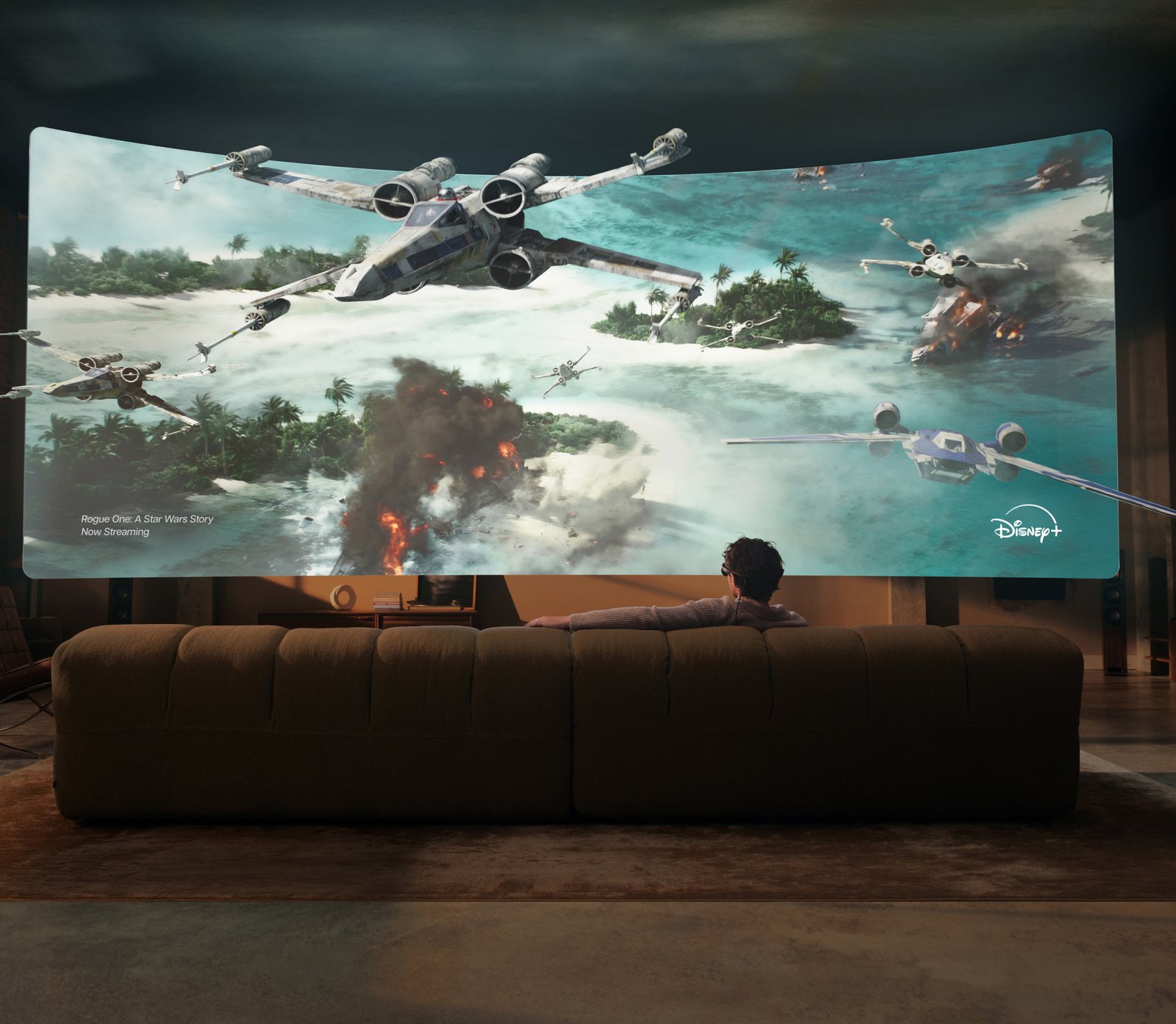
Meta's own pitch lists a personal cinema, a courtside seat, a workspace and a gaming console, in that order. The media deals are the deepest part of the announcement: the first IMAX Enhanced certification on a VR device, Disney+ movies in 3D from November in select countries, a Disney Immersive Cinema by ILM app, "first time in 3D" releases with James Cameron's Lightstorm Vision in 2027, and more than 100 live sports events a year with MLB, NBC Sports, TNT Sports and UFC once the glasses launch.
For work, Meta promises multiple virtual screens and turns any flat surface into a keyboard and touchpad. For games, it says more than 75 titles will be playable with hand gestures alone at launch, with Xbox Cloud Gaming for flat games and the wider Quest catalog through optional controllers. Hologram calling, built on Meta's Codec Avatars research, puts a photorealistic version of you into calls in apps "from WhatsApp to Zoom."
First impressions from hands-on demos
Road to VR's Scott Hayden came away most impressed by the passthrough. His hands-on calls it "the best I've seen on a standalone VR headset," with "no noticeable stitch lines, no appreciable latency, good color reproduction." He found the field of view "noticeably smaller than Quest 3's," and noted Meta will ship an optional light blocker accessory. His framing of the device is the useful one: a middle point between all-day AR glasses, which he calls still elusive, and the heavier VR headsets people own today.
Fit is the part to watch. The glasses come in two frame sizes sold as separate models, and Hayden tried both. The smaller one clamped the sides of his head and kept slipping down his nose. The large was comfortable. Meta has not published measurements for either, so there is no way yet to know which one to order.
What has surfaced since Connect
Meta has said nothing new about price, preorders or a date since the announcement. Its product page still lists spring 2027 with a Notify me form, and the controllers, the strap and the prescription inserts are all still unpriced. What is new comes from developer documentation and from test builds of Quest software.
Meta's developer documentation is more careful about field of view than the keynote was. It calls 70 by 66 degrees the "nominal straight-ahead" figure and tells developers to treat it "as an upper bound rather than the full area available for placing UI," because fit and gaze direction can shrink what a wearer sees. The same page gives a "p90 perceived target" of 58 by 54 degrees to test against. Meta ships a developer tool that crops a Quest 3, Quest 3S or Quest Pro to either figure, and Road to VR found a third-party WebXR app that does the same job in the Quest 3 browser. If the narrow view is your main worry, that is the cheapest way to judge it before spring.
Horizon OS 2.9, now in Meta's public test channel for Quest, carries early signs of the software. UploadVR reports redesigned window control bars with a dedicated grab handle, which it says appear to be built around the gaze input shipping with VR Glasses. A second UploadVR report found references in the same builds to a cinema environment labelled Theater Home and a lighting feature called Dynamic Ambience, described in earlier builds as a halo of light around the screen you are watching. Both come from datamined test builds. Meta has announced neither, and test-channel features do not always ship.
Every Meta VR Glasses development, dated
Meta's official page takes email sign-ups for launch news. We will switch this button to Meta's preorder page the day it opens.
Image: Meta
Frequently asked questions
How much do Meta VR Glasses cost?
$1,299.99 in the US, according to Meta's announcement at Connect on September 23, 2026. Road to VR reports the price includes 128GB of storage, a microSD slot for cards up to 1TB and a 45W USB-C power supply. Controllers are not included: Touch Plus controllers are sold separately, and controllers from a Quest 3 or Quest 3S will pair. UploadVR reports a bundle with controllers will be offered in some retail channels. Prescription lens inserts come through Zenni Optical and have not been priced.
When do Meta VR Glasses come out?
Meta says Meta VR Glasses will go on sale in spring 2027. There is no exact date and preorders are not open yet. Road to VR lists 25 launch countries: the US, UK, Canada, Mexico, Germany, Poland, France, the Netherlands, Belgium, Italy, Switzerland, Austria, Ireland, Iceland, Finland, Spain, Sweden, Norway, Denmark, Japan, Taiwan, South Korea, Singapore, Australia and New Zealand.
Can you preorder Meta VR Glasses?
Not yet. Meta says Meta VR Glasses go on sale in spring 2027 for $1,299.99, and preorders have not opened. Meta's official product page at meta.com/vr-glasses takes email sign-ups through a Notify me button for launch news. VR.org will add preorder links to its Meta VR Glasses page the day they go live.
Are Meta VR Glasses the same as Project Phoenix?
Yes. Road to VR reports that Meta VR Glasses were previously known under the codename Project Phoenix, the ultralight puck-tethered headset reported through 2026 with a weight target under 110 grams and a first-half 2027 launch. Meta did not use the codename on stage.
How much do Meta VR Glasses weigh?
About 100 grams for the glasses, which Meta compares to a deck of cards and says is five times lighter than Quest 3. Compute, battery and storage live in a separate puck that clips to a pocket or bag, which Road to VR puts at roughly 300 grams. Only the glasses sit on your face, resting on nose pads and temple arms with no head strap.
Do Meta VR Glasses have a head strap?
Not as standard. The glasses rest on nose pads and temple arms. For active VR games, Road to VR reports that Meta described a cinching strap accessory at Connect 2026 that connects the tips of both temple arms, which can be detached. Meta has not shown the strap or said whether it will be included or sold separately. A magnetic light blocker is the other announced accessory.
Do Meta VR Glasses come in different sizes?
Yes. Road to VR reports two frame sizes sold as separate models, each shipping with multiple nose pads, and its reviewer found the smaller one too tight while the large fit comfortably. Meta has not published head measurements for either size, and lens spacing adjusts separately from 56 to 70 millimeters.
Do Meta VR Glasses come with controllers?
No. Meta VR Glasses are controlled with your eyes, hands and voice by default, and Meta says more than 75 games at launch can be played with hand gestures alone. Touch Plus controllers are sold separately, existing Quest 3 and Quest 3S controllers pair with them, and UploadVR reports a controller bundle in some retail channels.
Can Meta VR Glasses run Quest apps and games?
Yes. UploadVR reports that the puck runs the same operating system as Quest 3 and supports the same content, rendered at higher resolution with eye-tracked foveated rendering. Games built around controllers need Touch Plus controllers, sold separately. Meta also lists Xbox Cloud Gaming for streaming flat games.
Can you wear Meta VR Glasses with prescription glasses?
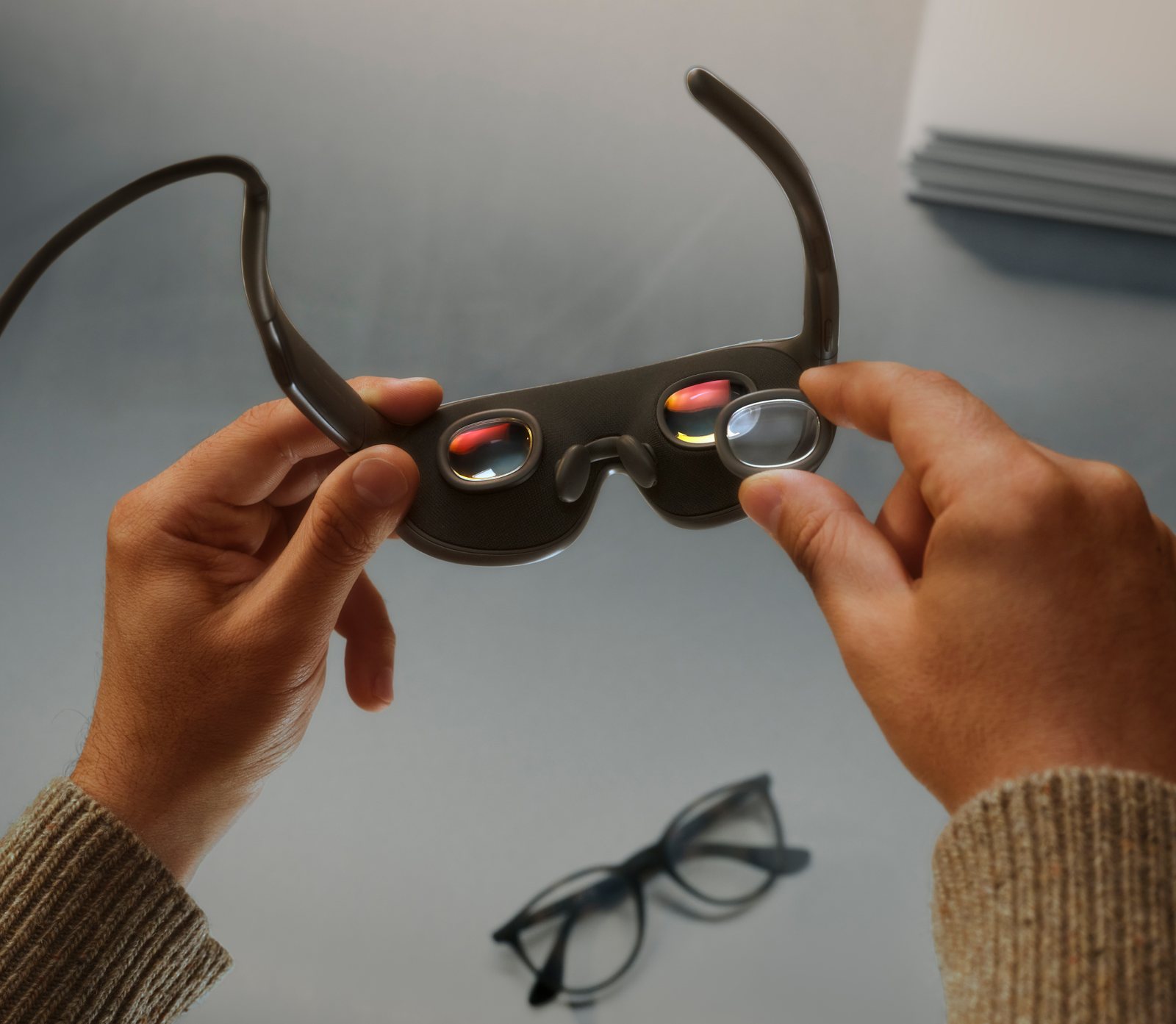
Not over them. Road to VR reports prescription lens inserts through Meta partner Zenni Optical, and Meta's own press images show a clip-in insert fitting behind the lenses. The glasses also have manual IPD adjustment from 56 to 70 millimeters. Insert pricing has not been announced.
How long does the Meta VR Glasses battery last?
Meta rates the puck battery at up to three hours of continuous high-resolution media playback, with 45W fast charging. Road to VR describes it as three or more hours of mixed use and says the puck can charge while in use.
How do Meta VR Glasses compare to Apple Vision Pro?
Meta VR Glasses weigh about 100 grams on the face plus a roughly 300-gram puck, against Apple's listed 750 to 800 grams for Vision Pro including its Light Seal and band. Vision Pro has more pixels, but Road to VR reports Meta quotes a higher 37 pixels per degree against Vision Pro's 34, because Meta's 70 by 66 degree field of view is narrower. Meta VR Glasses cost $1,299.99; Vision Pro starts at $3,699 in the US after a June 2026 price increase.