
Meta Connect 2026: Everything Announced, and How It Compares With the Reporting
Last updated: September 23, 2026, after the keynote
Part of our VR, AR and XR events calendar. See also the Steam Frame hub for the launch landing the day before, and our Quest 4 tracker.
Meta Connect 2026 opened on September 23 with Mark Zuckerberg's keynote from Menlo Park, and the developer state of the union follows at 10:00 AM Pacific on the 24th. The headline was Meta VR Glasses, the ultralight headset reported for months as Project Phoenix: about 100 grams on the face, a compute puck on an optical tether, and a price of $1,299.99 when it goes on sale in spring 2027. There was no new Quest. On the glasses side, Meta announced Ray-Ban Meta Audio, its first glasses without a camera, at $349; Ray-Ban Meta (Gen 3) at $449; and a Ray-Ban Display rollout to Canada, the UK, France, Italy and Germany, eight months after it paused the first four. Below: every announcement with its price and date, then how each one compares with what was reported before the show.

Dates, time, and how to watch
| Day | Session | Time (Pacific) |
|---|---|---|
| Wednesday, September 23 | Meta Connect keynote with Mark Zuckerberg | 4:00 PM |
| Thursday, September 24 | Developer state of the union | 10:00 AM |
| Thursday, September 24 | Developer sessions | On demand |
Meta Connect 2026 schedule as published on Meta's official agenda, checked September 18, 2026.
The keynote replay and Thursday's developer stream are free at meta.com/connect, which frames the show as a two-day livestream about "AI technologies, AI glasses and VR," in that order. The official agenda puts the keynote at 4:00 PM Pacific, which is 7:00 PM on the US East Coast, midnight in London and 1:00 AM on Thursday in Berlin and Paris. Europe gets the developer state of the union at a friendlier hour: 10:00 AM Pacific is 6:00 PM in London.
Everything Meta announced
| Announcement | Price | Availability |
|---|---|---|
| Meta VR Glasses (Project Phoenix) | $1,299.99 | Spring 2027, no preorders yet |
| Ray-Ban Meta Audio (no camera) | From $349 | Preorder now, ships October 13 |
| Ray-Ban Meta (Gen 3) | From $449 | Available now |
| Meta Adventurer with plug-in case | $249 | Preorder now, on sale October 23 |
| Meta Glasses LISA Edition, Kylie Jenner Ivory | From $399 | New styles |
| Ray-Ban Display in Canada and the UK | CA$1,149 / £749 | Orders open now |
| Ray-Ban Display in France, Italy, Germany | €899 | Preorder now, available October 13 |
Meta Connect 2026 keynote announcements, from Meta's newsroom posts and Road to VR, September 23, 2026. US prices unless noted.
Meta VR Glasses carried the keynote. Meta's announcement pitches them as a personal cinema, a courtside seat, a workspace and a gaming console, in that order, backed by IMAX Enhanced certification, Disney+ movies in 3D from November, 3D releases with James Cameron's Lightstorm Vision in 2027, and more than 100 live sports events a year. The glasses weigh about 100 grams, use micro-OLED panels at 37 pixels per degree, and hand compute to a Snapdragon Reality Elite puck that Road to VR puts at roughly 300 grams. Controllers are not included. Meta says more than 75 games will be playable with hand gestures at launch, and hologram calling built on its Codec Avatars research works in apps from WhatsApp to Zoom. Our full breakdown of the price, weight and spec trade-offs covers what the $1,299.99 buys and what it leaves out, and the Meta VR Glasses hub tracks specs, comparisons and every development through launch.
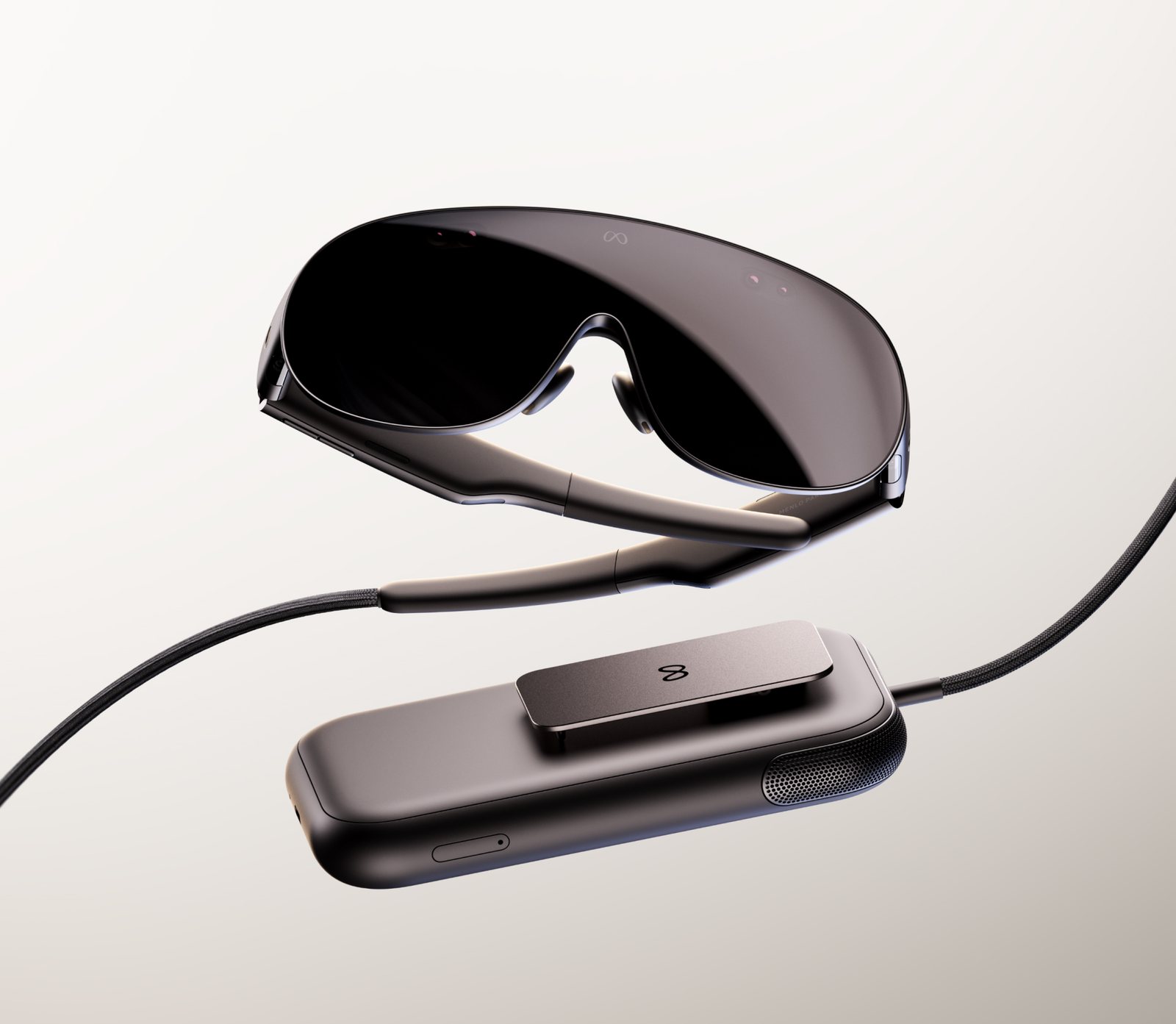
Meta's official page takes email sign-ups for launch news. We will switch this button to Meta's preorder page the day it opens.
Image: Meta
The glasses announcements were broader. Ray-Ban Meta Audio drops the camera entirely, weighs 43 grams and runs up to 12 hours per charge. Ray-Ban Meta (Gen 3) keeps the 12 MP camera and adds an hour of battery over Gen 2, a six-microphone array and an action button, at $449, up from Gen 2's $379. Meta says it will offer more than 100 glasses styles by the end of the year and is bringing Meta Glasses to Singapore, South Korea, Mexico and the UAE now, with Brazil next. Ray-Ban Display, which Meta is finally rolling out internationally, stays at $799 in the US.
How the announcements compare with the reporting
| What was reported | What Meta announced |
|---|---|
| Phoenix weight target under 110 grams | About 100 grams on the face, plus a roughly 300-gram puck |
| Phoenix price under $1,000 (WSJ, 2025) | $1,299.99 |
| Phoenix in the first half of 2027 | On sale spring 2027 |
| Nose pads, puck tether, eye and hand input | All confirmed; controllers optional, sold separately |
| Live hologram call on Codec Avatars | Hologram calling ships with VR Glasses; Display gets it in US Early Access this fall |
| Camera-free Luna glasses, this fall | Ray-Ban Meta Audio, $349, ships October 13 |
| Next-generation Ray-Ban Display | Not announced; software updates and five new countries instead |
| Gaming Quest 4 (Griffin), 2027 at the earliest | Not announced; no Quest news at all |
Pre-show reporting tracked on this page, checked against what Meta announced on September 23, 2026.
Most of the pre-show reporting held. The ultralight headset tracked as Puffin, Loma and then Phoenix arrived on schedule and under its reported weight budget, with the nose pads the firmware graphics showed in July. The price is the miss, and it moved in the direction chip and memory costs pointed all year. The Hologram Calling frameworks found in Horizon OS in August turned into a shipping feature, and the camera-free glasses reported as Luna launched as Ray-Ban Meta Audio in the Clubmaster and Burbank styles the reporting named.
Two things did not appear. There was no new Ray-Ban Display hardware, only software updates and new markets. And there was no Quest hardware news: no price change and no new model. The games list for Quest 3 and VR Glasses was led by Beat Games' hand-tracked Beat Saber: Flux for spring 2027 and a batch of third-party titles, with no big-budget exclusive of the kind Meta used to put in the Quest box, which fits a year in which Meta closed three of its studios. For how Meta's past keynote promises have held up, our check of every Connect promise since 2023 found that products announced with a price and a date shipped on time, five for five.
The day before: Steam Frame
Valve did not wait for summer to run out. The Steam Frame launched on September 14 at $1,059, eleven days after two of its Steam backend packages were revised, through the same reservation lottery Valve used for the Steam Machine. Signups closed September 17, Valve shuffled the list once, and purchase emails started going out September 18. Meta left the Connect stage with no new headset to sell before spring 2027, and when VR Glasses do arrive at $1,299.99 they will cost about $241 more than the 256GB Steam Frame, a SteamOS device that streams the entire Steam catalog and plays over 100 Standalone Verified games on its own. Bosworth said in May that Meta would learn from the Steam Frame. What Meta showed is a much lighter device with a sharper, narrower view, pitched at movies before games. Our Steam Frame vs Quest 3 comparison covers the two headsets people are choosing between this fall.