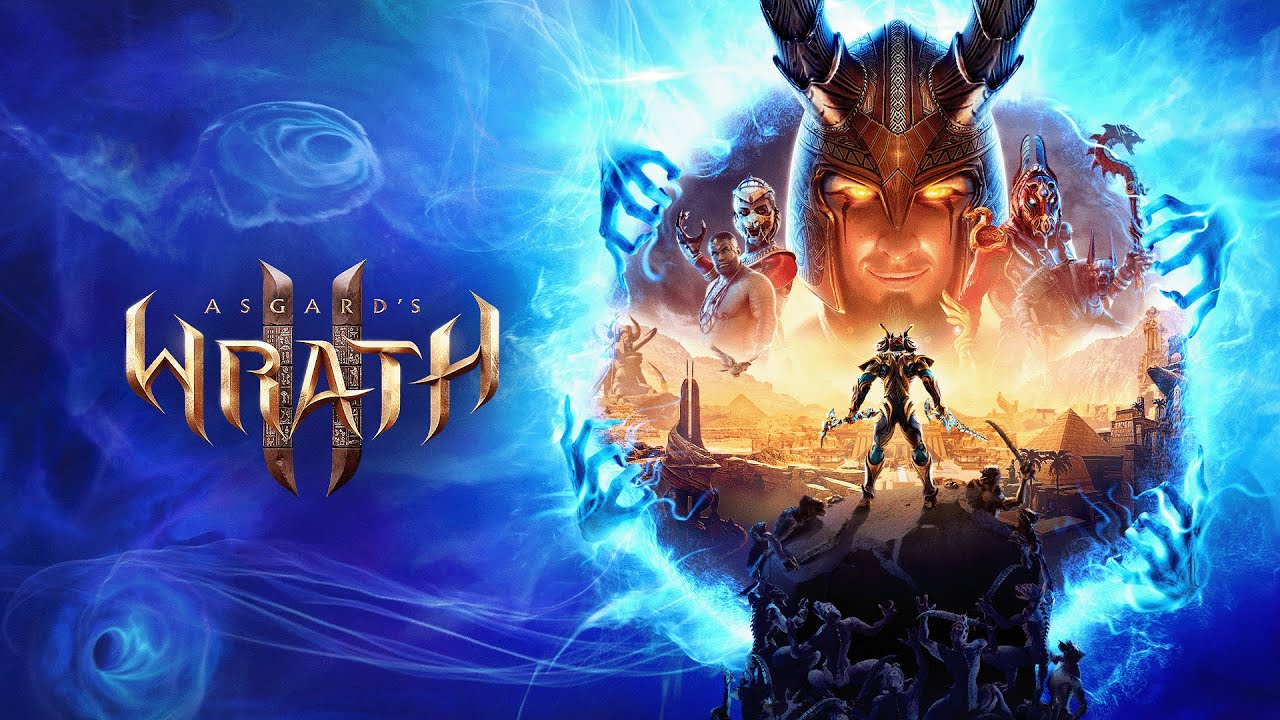
Asgard's Wrath 2 came with my Quest 3. Meta attached a free copy to every Quest 3 it sold that fall, a $59.99 game handed over with the headset, and I lost more of that winter than I want to admit flipping between a god the size of a building and the mortal heroes he was possessing. It felt like a console launch. That was the point.
GamingSeptember 19, 2026
Meta Put a Free Game in the Quest Box Two Years Straight. Who Is Left to Make the Next One?
By Evan Marcus
Co-Founder, VR.org
Advertisement
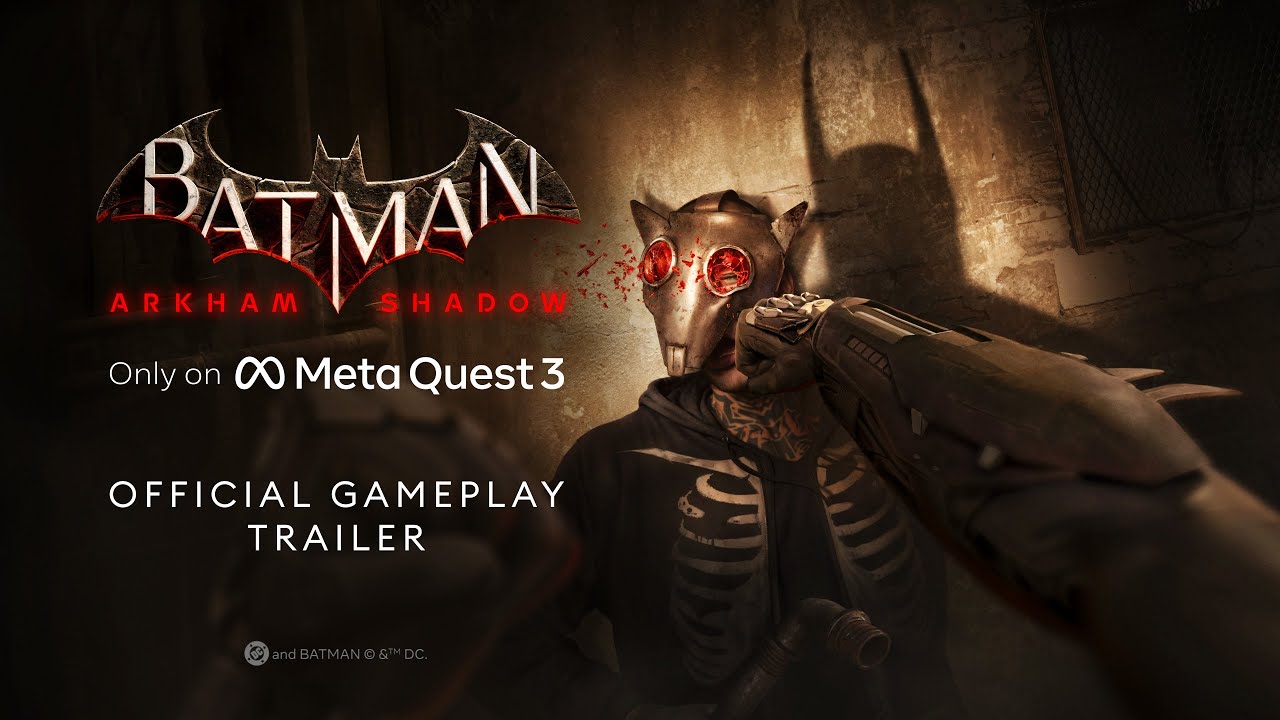
A year later Meta did it again. Batman: Arkham Shadow went into the box with every new Quest 3S for its first seven months on sale, and it was the first VR game that made me feel like I was inside an Arkham game instead of a tech demo wearing the cape. The counter timing was right. So was the Rat King, who had no business being as good a villain as he was.
Four days out from this year's Connect, I keep looking at who made those games. Sanzaru, the Asgard's Wrath 2 studio, is closed. Twisted Pixel, which built Marvel's Deadpool VR for last year's fall slate, is closed. Camouflaj still exists on paper, but UploadVR reported in January that it "will no longer be developing VR games." All of that happened in one week. And the published schedule for Wednesday's keynote and Thursday's developer day does not list a single Quest game.
So who makes the next one?
The pack-in years
Consoles have always sold on the game in the box. It tells you what the machine is for before you have to decide what to buy for it, and Meta understood that better than it usually gets credit for. At Connect on September 27, 2023, Meta put Asgard's Wrath 2 in with both Quest 3 storage sizes, even though the game itself would not be out until December 15. Meta was selling October headsets on the strength of a sixty-dollar RPG that would arrive in time for the holidays, and it kept extending the window to claim it, finally to June 30, 2024. Road to VR called it "in many ways the most ambitious game to ever launch on the Quest platform." Hard to argue.
Sanzaru was not a contractor Meta rented for the job, either. Facebook bought the studio in February 2020.
Connect 2024 ran the same play. Meta's own recap from September 25, 2024 called Arkham Shadow "our biggest and most-anticipated release of 2024," dated it for October 22, and bundled it with any new Quest 3S or 512GB Quest 3 activated before April 30, 2025. Camouflaj had come into the family two years earlier. Meta announced it on the Connect stage on October 11, 2022, alongside Twisted Pixel and Armature, the studio behind the Quest version of Resident Evil 4, and Road to VR's report that day put Meta's studio count at nine.
Then games got one sentence
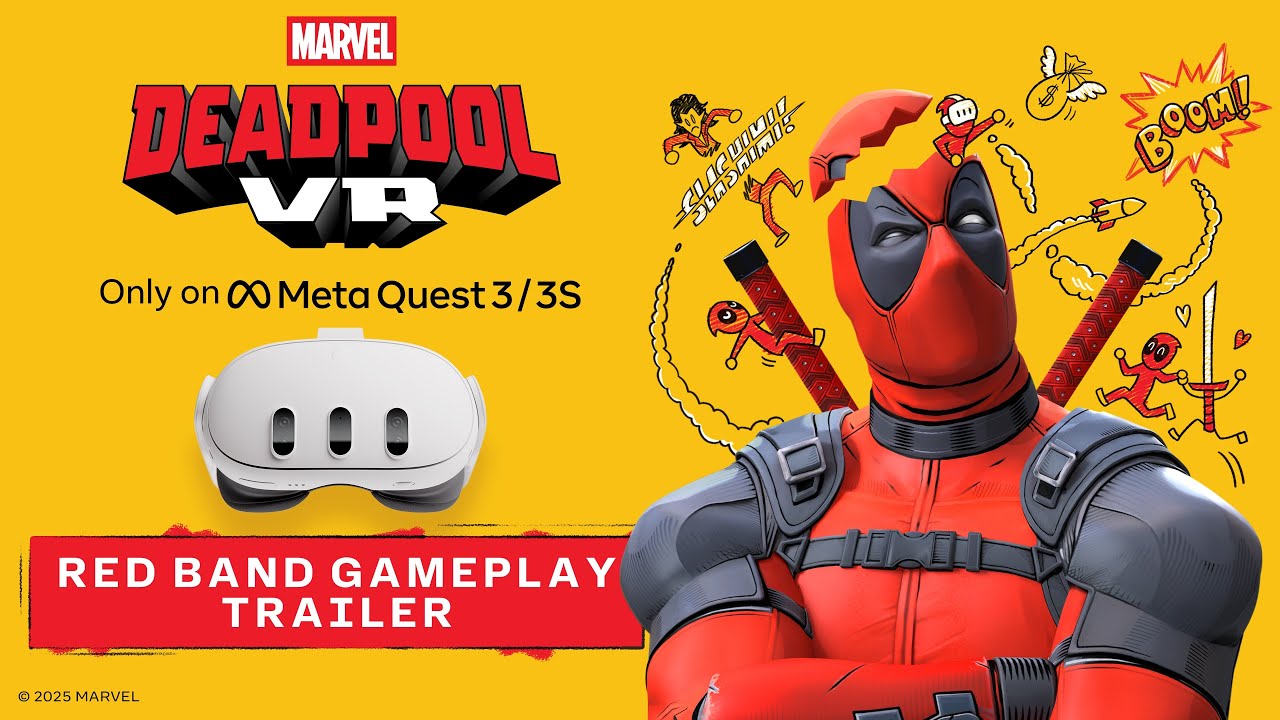
Deadpool VR should have been the third game in that line, and in some ways it was. Twisted Pixel's game came out on November 18, 2025, a Quest 3 and 3S exclusive priced at $50, with John Leguizamo voicing Mojo. I played it that month. It is exactly as loud as its trailers promised, and I mean that mostly as a compliment.
But it never got the box, and look at how Meta talked about it. The Connect 2025 keynote on September 17 belonged to the $799 Meta Ray-Ban Display, Horizon TV, Hyperscape room scanning and a new engine for Horizon Worlds. TechRadar's live blog logged the game's moment on stage in four words, "MARVEL's DEADPOOL VR SPOTTED!", and had moved on to the video hub about two minutes later. Meta's recap of the day gave games a single sentence: "Quest continues to have the best slate of VR games, and it keeps getting better." Four titles followed it. Three came from ILM, Resolution Games and nDreams. Deadpool was the only one Meta had made itself.
Fifty-six days
That is how long Deadpool VR had been out when Meta closed the studio that made it. On January 13, Meta shut down Twisted Pixel, Sanzaru and Armature, part of cuts that Bloomberg reported at more than 1,000 jobs, roughly a tenth of Reality Labs. Asgard's Wrath 2 was just over two years old, which on a console is about the point where the studio that made a hit like that is getting ready to show you what it did next.
Advertisement
Camouflaj got a different ending, which is not the same thing as a better one. Meta said the studio was hit by the layoffs but was not shutting down, per Game Developer. Former employees told Aftermath it was down to "just a handful of employees" working on "the new user experience for upcoming hardware." Then came the detail that actually stung. The Arkham Shadow sequel had been in development at Sanzaru, and UploadVR confirmed that closing Sanzaru ended it.
Nine studios, two left making games
When Meta bought Camouflaj, Twisted Pixel and Armature, Road to VR listed the full roster those three were joining. I went back through it this week to see where each one landed.
Ready at Dawn closed in August 2024. Downpour Interactive was folded into Camouflaj in June 2025, when Meta ended development of Onward. Sanzaru, Twisted Pixel and Armature closed on January 13. Within's fitness app spun out as Supernatural Health in June. Camouflaj is still open. It is not making VR games. That leaves Beat Games and BigBox VR, still running Beat Saber and Population: One.
Two out of nine. And UploadVR's report on the January closures described both survivors as live-service games with "no indication of a sequel arriving for either." Nothing left on that list looks like it is building the kind of game that goes in a box.
Meta's explanation, given to Engadget that week, was two sentences long: "We said last month that we were shifting some of our investment from Metaverse toward Wearables. This is part of that effort, and we plan to reinvest the savings to support the growth of wearables this year." Everything since has followed that line. In April the CFO told analysts that VR investment would "decrease significantly." By June, Horizon Worlds had left VR for good. Reality Labs still lost $4.62 billion in the second quarter.
What Meta says it still pays for
Meta has an answer to all of this, and I want to be fair to it, because parts of it are true. In February, Andrew Bosworth told his Instagram followers that "we are still investing more in content than anyone else, and more than we were four years ago," as UploadVR reported. Two weeks later Samantha Ryan, Meta's VP of content for Reality Labs, laid out the strategy in a developer blog post. She wrote that "among 1P and 3P apps, 86% of the effective time people spend in their VR headsets is with third-party apps," and that Meta put "nearly $150 million in VR developer programs" into 2025, per UploadVR's summary. Beat Games is still shipping, too. Beat Saber dropped to $19.99 in August and picked up Hip Hop Mixtape 2 a couple of weeks later.
I believe those numbers. I just do not think they answer the question.
Developer programs pay for good games, and third-party studios make most of what people play on a Quest. They were never going to make the thing Asgard's Wrath 2 and Arkham Shadow were: a big exclusive, built by a studio the platform owns, timed to a headset launch and put in the box so that the first night with the hardware feels like an event. That job belongs to the platform holder. Nobody else is paid to do it.
Wednesday at 4 PM
The official agenda has the keynote at 4 PM Pacific on September 23, a developer state of the union the next morning, and a page of on-demand sessions: engine SDK updates, Android apps in VR, WebXR, controller-free input, glasses, Meta's Muse AI models. Two sessions are actually about games. Both are Horizon sessions, and both point at the same audience. The first one promises that "when you publish, your game reaches players across Facebook, Instagram and Horizon."
Facebook and Instagram. Not a headset in the sentence.
The hardware reporting leans the same way. Road to VR has Meta showing camera-free glasses, the ones Alex wrote up as Luna, plus a hologram-style call on Project Phoenix, which Jordan traced back through eleven years of Codec Avatars research. Engadget's Karissa Bell was blunt in her preview: "The company has been shuttering VR studios left and right, so I doubt we would see any huge game announcements to go with Phoenix."
Alex argued back in May that the glasses tease was the part of this Connect that mattered. For Meta's business, he is right, and the agenda more or less proves it. For anybody who bought a Quest 3S because Batman came in the box, the part that matters is smaller and a lot more specific. One trailer for a game you can only play on a Quest, from a studio Meta pays for, with a date on the end of it.
Two years ago the answer came in the box. This year I would settle for the trailer.
Advertisement