
Research demos and shippable interfaces are different artifacts, and the distance between them is normally measured in years of unglamorous platform work that nobody outside the company ever sees. Meta has been publishing photorealistic Codec Avatars research since 2015, as Road to VR noted this week, and for eleven years those avatars have stayed inside the research org, appearing on a stage once a year and then going home. The Information now reports that Mark Zuckerberg and chief technology officer Andrew Bosworth are expected to demonstrate a hologram-like video call built on an advanced version of those avatars, live during the keynote at Connect on September 23.
XrSeptember 17, 2026
Eleven Years of Codec Avatars Research Is Reportedly Getting a Live Keynote Slot
By Jordan Kuo
Staff Writer, VR.org
Advertisement

The demo is reportedly tied to Project Phoenix, the slim puck-tethered mixed reality headset that leaked out of a Horizon OS firmware package in July carrying a setup video, independent per-eye lens adjustment, removable nose clips, and eye and hand tracking as its only input methods. Pairing the two reveals is not a scheduling coincidence, because the avatar pipeline and the sensor package are the same project viewed from opposite ends.
The framework showed up before the stage did
August teardowns of Horizon OS turned up sub-frameworks named for Hologram Calling that reference Codec Avatars extensively, alongside product tour videos for a feature called a Hologram inside builds of the Meta AI mobile app, which this site went through at the end of that month. Anyone who has shipped on a mobile platform knows the difference between a capability that lives in one first-party app and a capability exposed as a system service with a package boundary and a name, because only the second one is something an application can call.
A keynote demo on its own is a marketing artifact. A framework sitting in the OS is an interface commitment, and interfaces are expensive to walk back once third parties depend on them. Those two things surfacing within a month of each other is the ordering you would expect if Meta intends developers to reach this eventually, rather than the ordering you get when a research team is handed ten minutes of stage time.
The sensors are the actual constraint
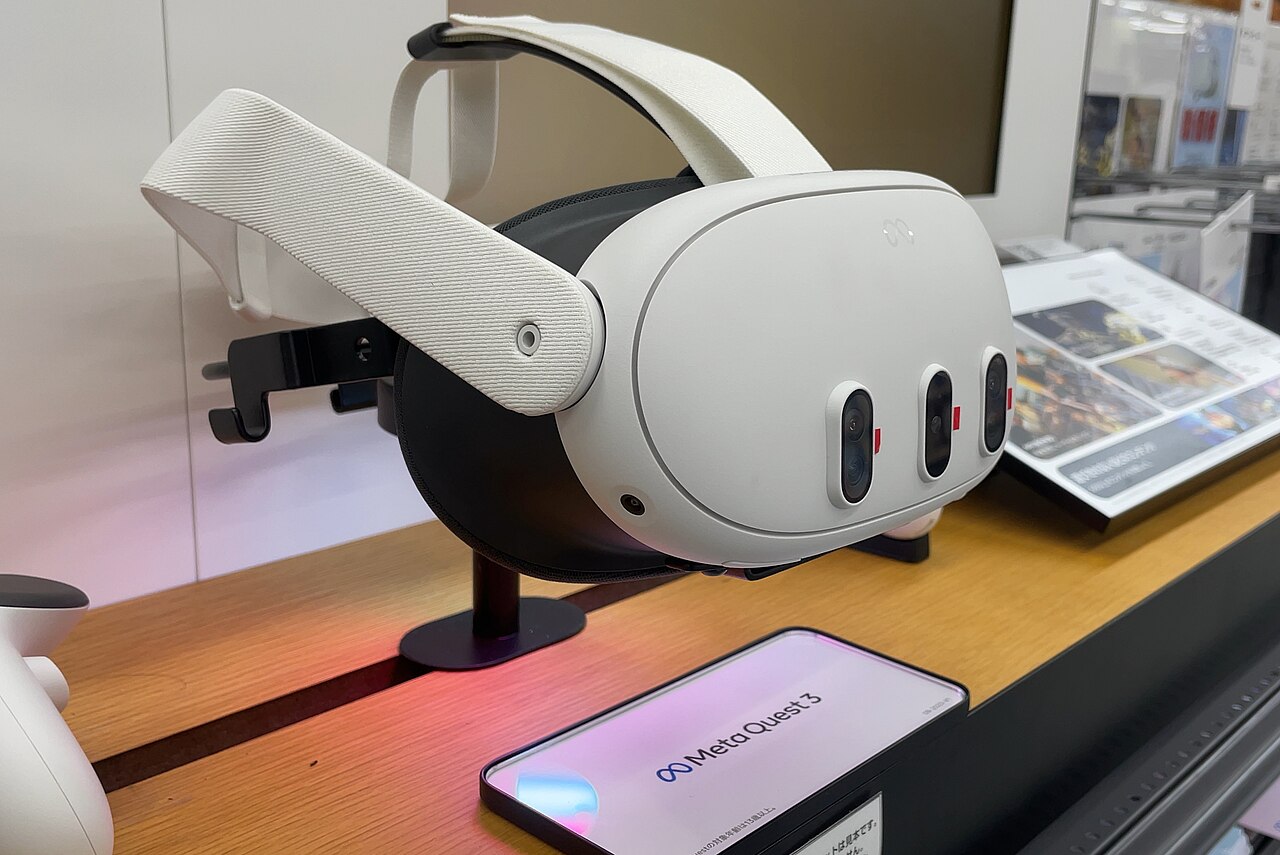
Driving a photoreal avatar in real time is a sensing problem long before it is a rendering problem. The system has to infer mouth shape, gaze direction, brow position and skin deformation from a device that sits on the face and cannot see most of it, which is why every credible version of this has depended on a headset with inward-facing cameras rather than on raw GPU budget. Quest 3 shipped without eye tracking, and that single omission is most of why the feature has never had a consumer surface to live on.
Phoenix reportedly has no controllers at all. A headset precise enough to use your eyes as a pointer is also a headset carrying the sensor budget an avatar pipeline has been waiting for, and it is worth being clear that this cuts both ways: continuous face measurement is biometric data by most definitions, including the Illinois statute behind the class action filed against Meta this month.
Personas already set the bar

Personas are the comparison whether Meta likes it or not, because Apple shipped a scanned, reasonably convincing likeness into FaceTime as a normal feature rather than as a demo, and set the expectation that a photoreal avatar is something you use on a Tuesday. Meta's consumer avatars, by contrast, have been deliberately cartoon-stylized since the metaverse push, a product decision rather than a capability ceiling, and one the company has been quietly walking away from since it reorganized its headset roadmap around glasses.
What to actually look for during the keynote
The reporting is thin on the part developers care about, and it is worth saying that prior years produced research peeks rather than product, so a live demo settles nothing on its own. The signal will be in the details around it. Does Meta name a callable surface, or does the hologram only ever appear inside Meta's own calling app? Is there a permission and entitlement model described anywhere, given that the capture is biometric? Does building an avatar require a supervised scan in a Meta facility, the way the early research versions did, or does a phone camera do it? And does any of it run on the Quest hardware already in people's homes, or does it require a headset that reportedly does not ship until 2027?
If the answer to the last two is a phone scan and Quest 3 compatibility, Hologram Calling becomes a platform feature with an install base on day one. If it needs Phoenix and a lab visit, it is a beautiful demo attached to a device most developers will not hold for another year, and the framework in Horizon OS goes on waiting for something to call it. Connect runs September 23 and 24.
Advertisement