
For most of the last seven years, a developer shipping on Quest could plan around a calendar that Meta kept by habit rather than by announcement: a Quest in 2019, Quest 2 in 2020, Quest Pro in 2022, Quest 3 in 2023 and Quest 3S in 2024, each one resetting either the performance budget or the oldest headset still worth keeping in the test rotation. No headset shipped in 2025. On Meta's third-quarter earnings call on October 21, Mark Zuckerberg replaced the calendar with a condition.
XrOctober 26, 2026
Meta Now Ships VR Hardware Only on 'Major Breakthroughs,' Leaving Quest 3 and 3S as the Build Target With No End Date
By Jordan Kuo
Staff Writer, VR.org
Advertisement
"I also shared at Connect that we are changing our approach to virtual reality to only ship new devices when we have major breakthroughs like we had with the Meta VR Glasses this year," he said in his prepared remarks, according to the transcript Meta published after the call.
A condition is harder to put in a production schedule than a date. It is also more specific than it sounds, because the same remarks name the one device that has met it so far, and Meta's developer documentation has been describing that device to studios since September.
Quest sales fell, and the filing stops there
Reality Labs brought in $443 million in the quarter, down from $470 million a year earlier, and Meta's quarterly report to the SEC attributes the drop to "lower Meta Quest sales, partially offset by higher sales of AI glasses." Meta does not report units or split the segment's revenue by product, so the filing cannot say how far Quest fell, only that the decline was bigger than what glasses added. It also cuts into the first half. Through June the segment was running about 6.5 percent ahead of 2025, and after the third quarter the nine-month total is up 2 percent. The 10-Q gives no reason for the Quest decline. Quest 3 has cost $599.99 and Quest 3S has started at $349.99 since the April 19 price increase Meta blamed on memory chips, and Meta has not connected the two.
The segment's operating loss was $4.13 billion, $303 million smaller than a year earlier. The 10-Q credits lower employee compensation, "partially offset by an increase in third-party AI token costs," and the payroll line alone fell by $624 million, from $2.59 billion to $1.97 billion, after a May headcount reduction the filing puts at about 8,000 people across the company. Meta's earnings release guides to a Reality Labs loss of $18 billion to $19 billion for 2026, and Zuckerberg put next year at "around $15B."
A device matrix that stopped growing
Anyone who shipped Android apps between 2011 and 2015 remembers what a growing device matrix costs. Every quarter added screen densities, GPU drivers, OS versions and manufacturer skins, and a real share of each sprint went to keeping old builds alive on new hardware instead of building anything a user would notice. Quest has been close to the opposite for years, a short list of devices on one operating system feeding one store that knows exactly what it is installing onto, and Zuckerberg's condition keeps the list short. Quest 3 and Quest 3S run the same Snapdragon XR2 Gen 2 with 8GB of memory, so the performance target for a standalone release in 2027 is a chip developers have had on their desks since 2023, with Quest 3's higher-resolution panels as the heavier of the two cases. Nothing in Meta's stated plans replaces either headset on a schedule.

Headsets also stay in use far longer than they stay on the shelf. In Valve's September Steam Hardware Survey, the Quest 2, which launched six years ago this month, still accounts for 25.80 percent of the headsets on SteamVR, close behind Quest 3 at 26.90 percent and more than twice the Quest 3S share of 11.07 percent. The survey only sees PC VR. It is still the clearest public evidence of how slowly a headset base turns over, and fewer new headsets means it turns over more slowly still.
Advertisement
The one new profile already has an SDK
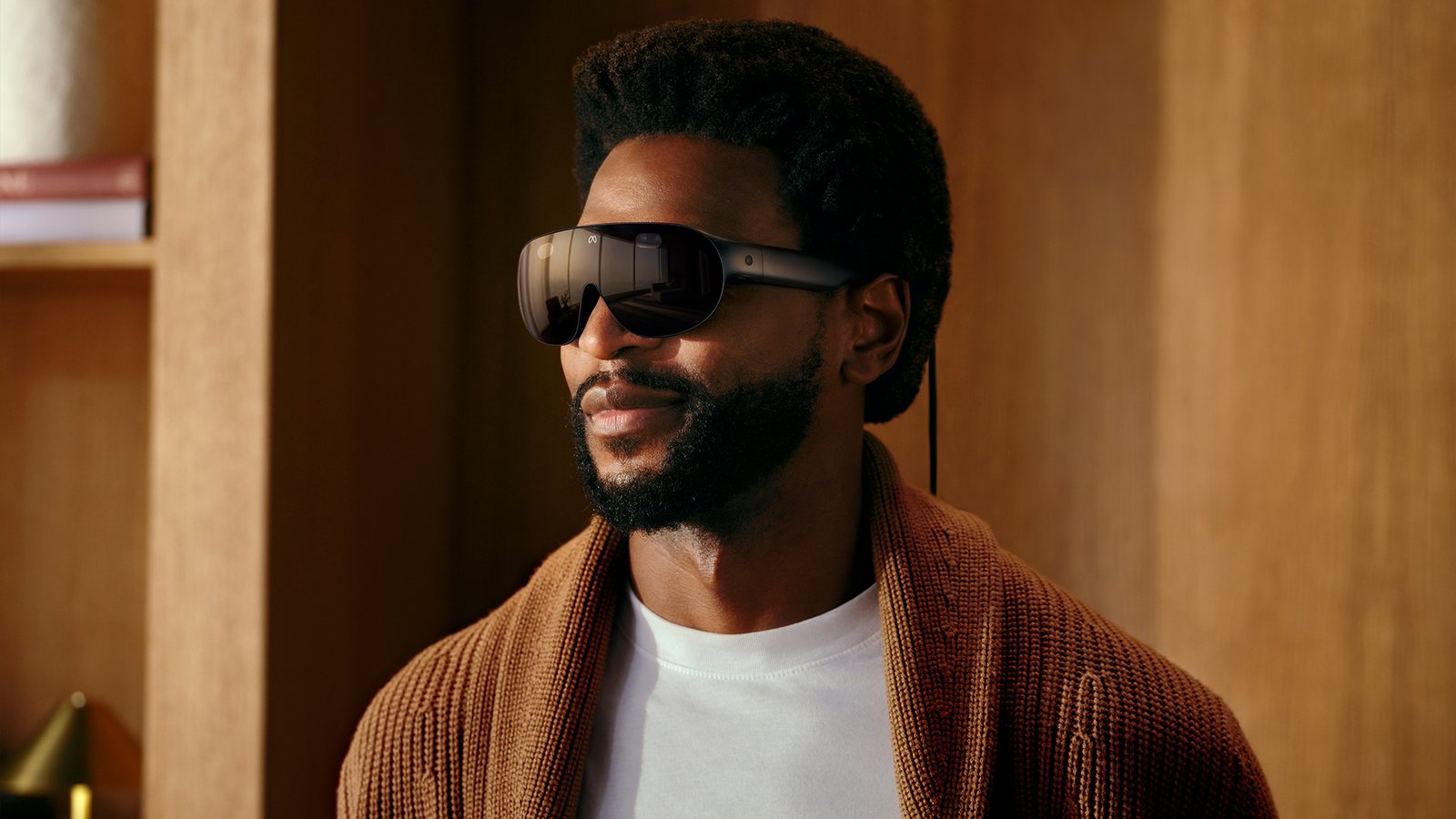
Zuckerberg named a single new row, Meta VR Glasses, which go on sale next spring at $1,299.99. They run the same operating system and store as Quest 3, existing Quest apps carry over, and the compute sits in a tethered puck with a Snapdragon Reality Elite and 12GB of RAM, as Alex covered on launch night. On compute the glasses are at least Quest 3's equal. On almost everything a developer touches they are narrower: about 70 by 66 degrees of field of view against 110 by 96 on Quest 3, and no controllers in the box, which matters because the Horizon Store shows owners without controllers "hand-tracked titles first," a rule Nina walked through in September.
What stands out is the order things arrived in. Apple put the iPhone on sale in June 2007 and did not release an SDK until March 2008, and plenty of platform launches since have run some version of that sequence, hardware first and tools once the platform holder has decided what outsiders may touch. Meta reversed it. The v207 SDKs added a VR Glasses profile to Meta XR Simulator in September. The developer recap Meta published at Connect told studios that "most existing apps should run at parity or better than Quest 3," then flagged apps that "place UI elements at the extreme edges of the field of view, making them harder to see for VR Glasses users." Every Quest after the first went from its full Connect reveal to store shelves in under a month. This one gives studios at least six months.
Arguing for VR on a slower clock
Sam closed his read of the second quarter in July by writing that Meta "has not abandoned VR. It has stopped arguing for it." On this call Zuckerberg did argue for it, for one sentence: "I continue to believe that the path to delivering the holographic experience of bringing together the physical and digital worlds in everyday glasses will come through VR first." The sentence keeps going, "but we will pace this aspect of our investment more to focus on delivering personal superintelligence first," so the call backs Sam's reading of the budget even as it complicates his reading of the rhetoric. What it changes is the job VR has inside Meta. VR is no longer pitched as a product line that earns a refresh every autumn; it is described as the road to glasses, and a road only matters if people are on it, which for the foreseeable stretch means the Quest 3 and 3S owners developers are already shipping to.
For a studio shipping in the first half of 2027
The practical reading is narrower than the earnings headlines. Budget frame time against the XR2 Gen 2 at Quest 3's resolution, since nothing on Meta's stated plans replaces the two headsets that carry it, and Quest 3 pushes more pixels through it than the 3S does. Make the menus and the core loop work end to end with hands, because the only new device Meta has committed to ships without controllers and its store sorts on that basis. Then pull HUD elements toward the middle of the view and run a session in the simulator's VR Glasses profile, which costs nothing and needs no new hardware. Meta is paying for exactly this work, too. The second VR Start competition requires entries to be "fully usable with hands, end-to-end," and submissions close at noon Pacific on November 18. Its Devpost page listed 4,067 registered participants on Monday, against the more than 2,900 developers it says joined last year's round.
The call did not define "major," and Meta has offered exactly one example. It weighs about 100 grams on the face and ships without controllers. If the next device clears the bar the same way, the work that gets a studio ready for it is input and interface work, and none of it has to wait for new hardware.
Advertisement