Every Android form factor eventually has the same argument about where the app actually lives, and for glasses Google appears to have settled it by editing one sentence on a documentation page instead of announcing anything.
ArNovember 2, 2026
Google Play Now Takes Apps for Audio Glasses, on the Phone Track, With Samsung's Pair Reportedly Due in Mid-December
By Jordan Kuo
Staff Writer, VR.org
Advertisement
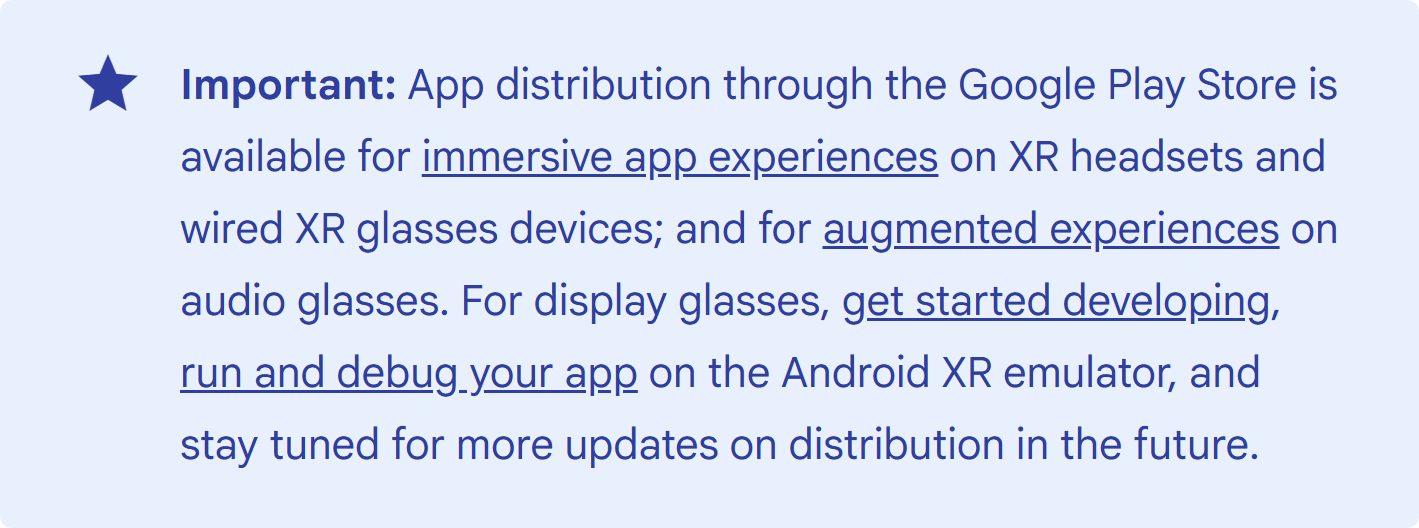
When VR.org quoted that page on September 28, it said Google Play distribution was "only available for immersive app experiences on XR headsets and wired XR glasses devices," which left audio glasses with a line about staying tuned and no route to a customer. The same page now says distribution is available for those immersive experiences "and for augmented experiences on audio glasses." Display glasses inherit the stay-tuned line. Google's October 28 Android Dev Summit post, which moved several XR libraries to stable, does not mention the change, but the page's footer dates its last edit to October 20, so the new wording went in sometime in the three weeks after VR.org quoted the old one.
No new track, no new APK
The mechanics will feel familiar to anyone who has shipped on Android, which is presumably the point. "Play Console doesn't have a dedicated release track for audio glasses," the guide says, so glasses features go into your existing phone APK on the mobile track without any specific publishing changes, and the user downloads to a phone that then connects to the glasses. A headset runs a full APK on the device, while audio glasses run a projected activity, an Activity inside your phone app that the system pushes out to the eyewear. You declare it with a requiredDisplayCategory of XR_PROJECTED, and the XR_PROJECTED_LAUNCHER category is what lets Gemini find it when someone says "open" followed by your app's name.
The phone side moved in the same window. Google's Play services release notes for v26.42, dated October 26, carry one line under Device Connectivity: "[Phone] You can now connect Android XR glasses to your phone."
Two tiers, and you may already be in the first
The quality guidelines split apps into Compatible and Differentiated. Compatible takes "zero additional developer effort": an unmodified Android app qualifies automatically so long as it does not rely on unsupported hardware, and the platform carries its standard notifications and Live Updates to the glasses, read aloud on a pair with no display. That makes the first consequence of this change a slightly strange one, because if you have an Android app on Play that posts notifications, someone may soon hear your copy spoken into their ear by a pair of glasses you never tested against, and nobody on your team will have listened to it.
Differentiated is the tier that earns a "Differentiated for Glasses" badge, which Google says comes from implementing a projected activity. It leans on three libraries, and their version numbers are where a plan for December gets uncomfortable. ARCore for Jetpack XR reached 1.0.0 on October 21. Jetpack Projected is at 1.0.0-alpha14 and Compose Glimmer at 1.0.0-alpha22, both from that same day, and Google's own first-activity sample still opts in with @OptIn(ExperimentalProjectedApi::class). Glimmer's latest release renamed three AlertDialog parameters. An audio-only app can skip Glimmer, since a runtime check on CAPABILITY_VISUAL_UI tells you there is nothing to draw on, but it cannot skip Projected, so a badged listing on Play can now rest on an API surface that is still free to change under you.
Advertisement
Google has been down this road before. Android Wear apps also started out bundled inside the phone APK, and in August 2017 Google told developers they "should unbundle their Wear APK and upload it to the Play Store as a multi-APK," then took the "Enhanced for Android Wear" badge away from bundled apps from January 18, 2018. The comparison has a limit, because a watch app could outgrow the phone and a projected activity by definition cannot. If you lived through that migration, though, you already know to read a badge's eligibility rules as a snapshot and not a promise.
The policy section is the part to read twice
Google's policies for audio-only experiences apply to every app, and they are far more specific than most store rules a mobile developer has met. Facial recognition, surveillance and doxxing are banned outright. The camera may serve video calls and scene understanding but not "real-time, one-to-many live streaming." Persistent background recording or transcription is out when the wearer is not engaged in a user-initiated task. Apps must not "change, dim, or disable" the capture LEDs, or interfere with thwart detection, the system that stops recording if the world-facing LED is covered. Game developers get a line of their own: the tap gesture "must not be repurposed as a continuous controller for interactive games."
Those rules arrive with the category under real pressure. California's capture-indicator bill died on the governor's desk on September 30, and Senators Wyden and Markey have given Meta until November 25 to answer nine questions about its camera glasses, so for a developer on Android XR a Play policy page is the firmest line in sight. Meta, whose glasses are already on shelves, still tells developers they will "soon be able to submit" toolkit apps for publishing, which means that for the moment the platform with the open store is the one whose audio glasses nobody can buy.
December, if the report holds
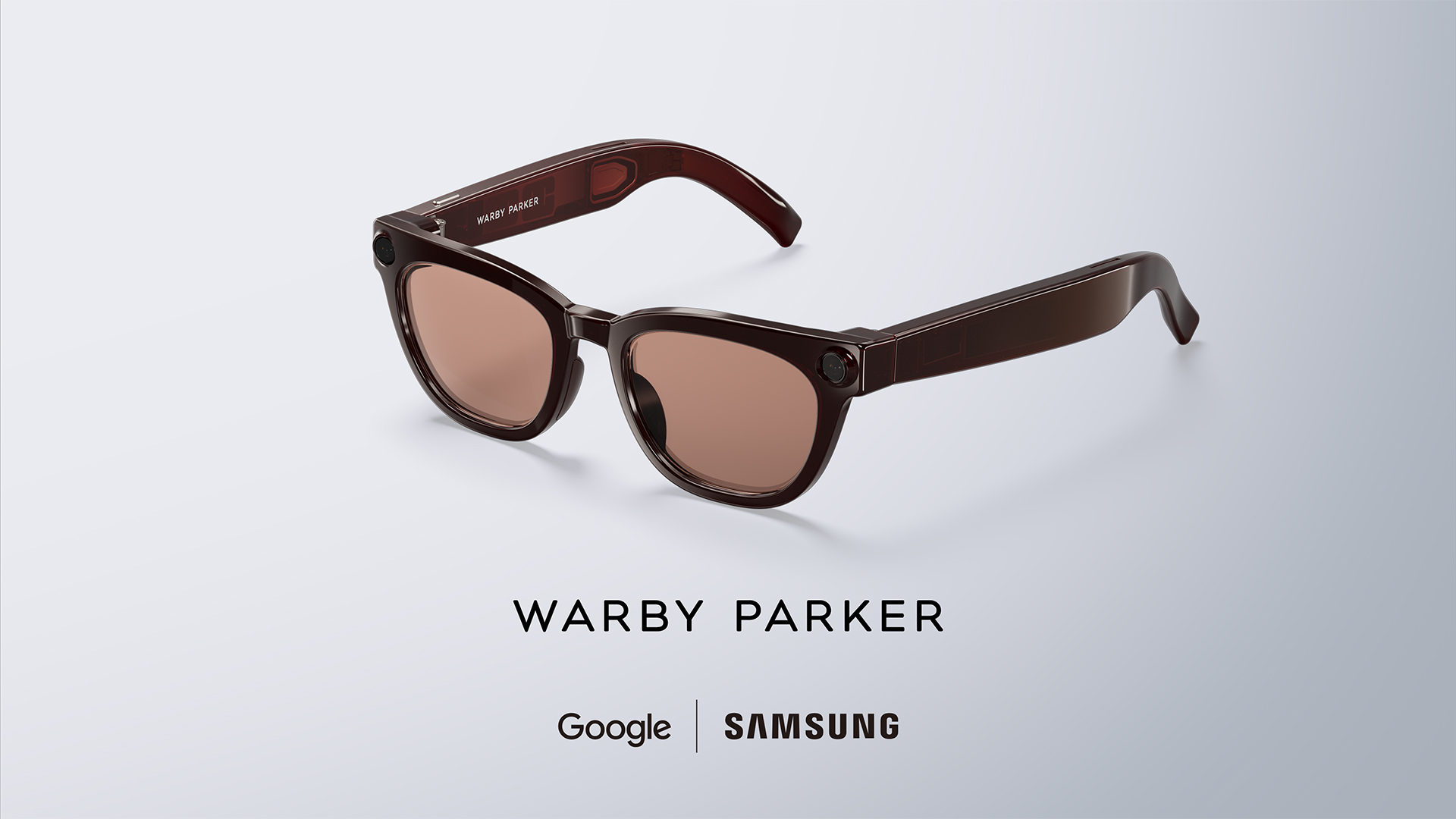
ChosunBiz reported on October 30, as an exclusive citing electronics industry sources, that Samsung has fixed mid-December for its first Intelligent Eyewear in South Korea and the US, with Europe, China and Japan left out of the first wave and the price still under negotiation. That would replace the November date one unnamed official gave The Korea Herald a month earlier. Samsung has confirmed neither. On its earnings call the company listed the "release of smart glasses" among its holiday plans, 9to5Google reported, and Google's consumer page still says "this fall," which mid-December is, by about a week.
The shape of that rollout matters if your feature depends on speech. ChosunBiz notes that Galaxy XR followed the same pattern, Korea and the US first and the UK nine months later, so your first real audience is likely to be speaking Korean or English. Testing, meanwhile, happens in the Android XR emulator, which went stable on October 28 and covers audio glasses without physical hardware, and Google warns that a device that has not launched may not appear in Play Console's device catalog "until closer to its launch," so excluding your app from a pair that has not shipped may not be possible yet.
For a team shipping in the next six months the order of work is reasonably clear. Read your notifications and Live Updates out loud first, because they reach the glasses with no code from you. Put any projected activity behind a flag you can pull, because Projected is still alpha. Hand the policy section to whoever owns your camera features before they scope anything. And leave display-glasses work on the bench, since that is the one door still marked "stay tuned," the same words audio glasses carried on September 28.
Advertisement