
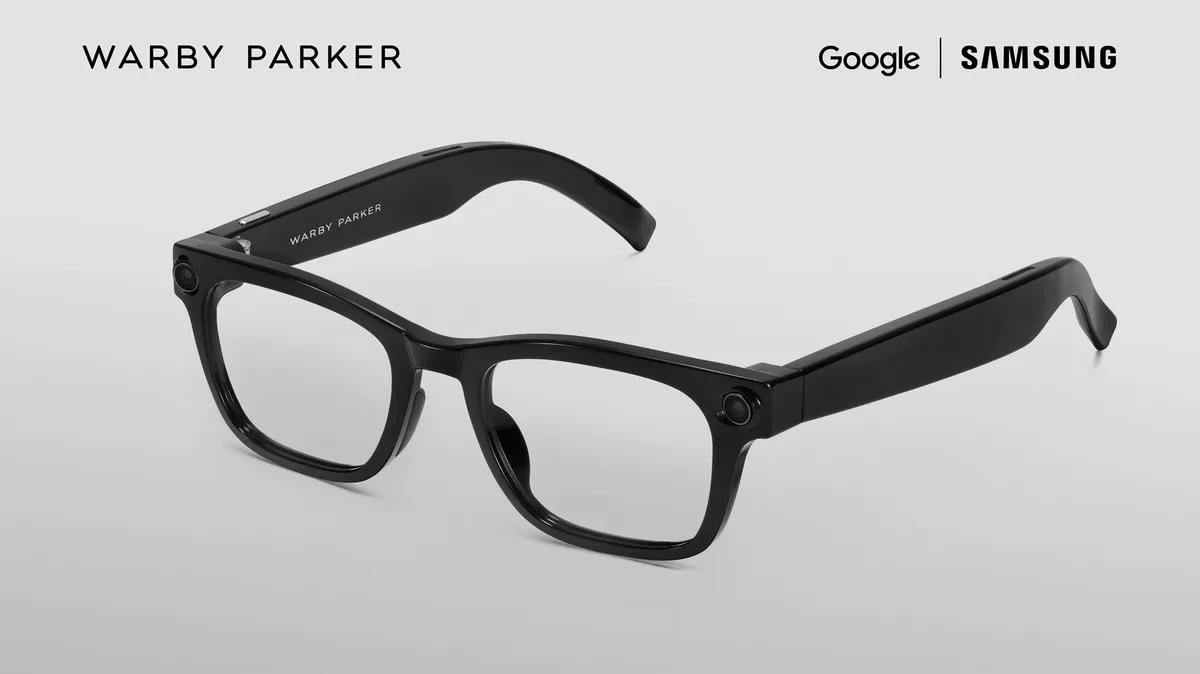
The two biggest companies putting camera glasses in stores this winter have settled on the same architecture, and it is not the one the industry spent a decade pitching: the app lives on the phone. Meta's Wearables Device Access Toolkit hands an iOS or Android app the glasses' camera, microphones and audio, and Google's own documentation describes its glasses experiences as "a dedicated activity that runs within your phone's existing app," projected from the phone to the frames. On Sunday, Bloomberg's Mark Gurman reported that Apple will take the same route with a different handle. Its first glasses will not run apps directly, and Apple wants developers to reach them through Siri AI integrations inside the iPhone apps they already ship.
ArNovember 15, 2026
Apple Wants Glasses Developers Building Siri AI Intents on the iPhone, Not Apps for the Glasses
By Jordan Kuo
Staff Writer, VR.org
Advertisement
What Sunday's report adds
The calendar has not moved since Gurman's July report. Apple still plans to announce the glasses at WWDC in June 2027, and in the newsletter's words, as quoted by The Verge, shipments "would begin before the end of the year," with no augmented reality display. What changed is the plumbing. The prototypes, codenamed N50, run a pared-down version of visionOS on a processor derived from Apple's older smartwatch chips and lean on a nearby iPhone for most of what they do, although Wi-Fi keeps some functions outside third-party apps, such as audio playback, working after the wearer walks away from the phone. The rest is hardware: frames slightly thinner than Meta's second-generation Ray-Bans, cameras sitting flush in oval openings on some test units, a front light for use and charging, and a magnetic charger Gurman describes as "roughly the size of a Tic Tac."
The developer part is the bigger change. As AppleInsider summarizes it, Apple wants developers to focus on making specific functions of their iPhone apps available to Siri, which the wearer then calls on by voice, rather than on apps that run fully on the glasses. Apple has run a version of this play before. The first Apple Watch apps in 2015 ran their code as WatchKit extensions on the paired iPhone, and native watch apps waited for watchOS 2 that September. The difference now is that the developer does not get a screen to draw on. The interface is Siri.
Apple published the developer rules on November 3
Most glasses rumors arrive with nothing to build against, and this one arrives with documentation. On November 3 Apple opened Siri AI to all developers in the iOS 27.3 betas, through a Developer Preview that lets "any app" bring its content and actions into Siri AI using App Intents, adds skills so Siri can chain several of an app's actions into one request, and opens App Store submission "in the spring." Read against Gurman's timeline, that order of events is the strategy, because integrations can be live on iPhones months before the glasses are even announced, and the hardware then launches into a catalog of Siri actions instead of an empty store. An SDK that ships before its hardware is the opposite of a tease, and this one is about a year early.
The preview documentation also contains the rule glasses developers will feel first. People can leave an app's name out of a request only while that app is in the foreground, while it has a Live Activity running, or when they continue a Siri conversation that already mentioned it; otherwise, "while your app is in the background, requests need to mention your app." On a phone that is a small tax. On glasses whose phone stays in a pocket, the app is in the background nearly all the time, so either the wearer says the app's name or the developer keeps a Live Activity going, which makes Live Activities the closest thing this platform has to a foreground. Apple says the API and Siri's behavior may change during the preview, so this is the current rule rather than the final one.
The second friction point is visual. Siri shows an app's custom content as a card snippet built from the developer's own SwiftUI view, and the first glasses have no display. Nothing Apple has published says what becomes of a snippet on glasses without a screen, and none of Sunday's coverage mentions it, so the safe assumption for anyone building now is that the spoken answer has to stand on its own. Apple does ship tools for checking that: a Siri Integration Advisor in Xcode, and a Siri Evaluations framework that scripts conversations with Siri and catches it when Siri starts handling your intents differently.
Advertisement
HomeView already shows the model, and where it stops
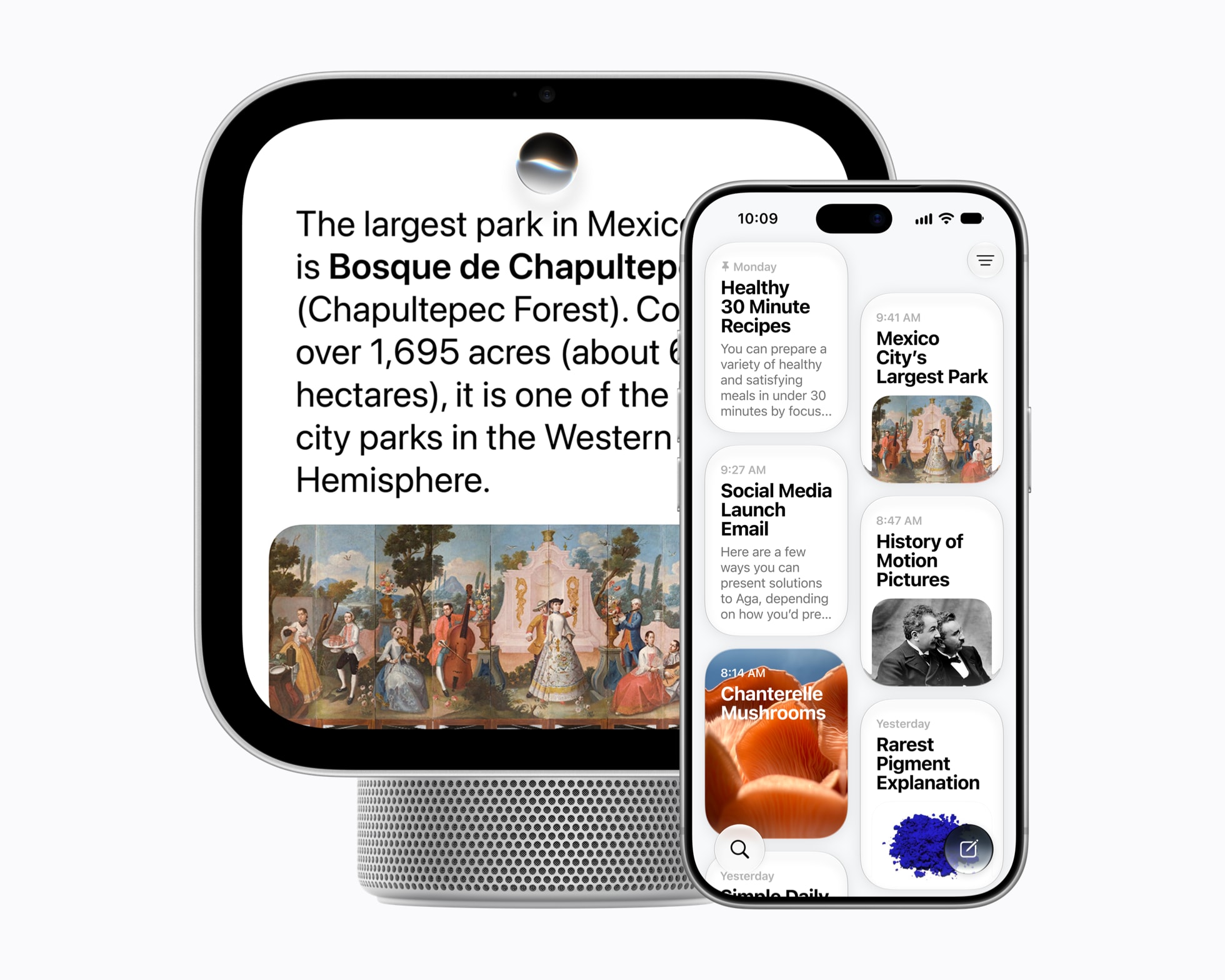
AppleInsider compares the plan to HomeView, the $299 home screen Apple put on sale November 13, and the comparison holds up. HomeView has no App Store. It plays compatible third-party audio and video apps, and a footnote in Apple's October announcement says select apps "require a paired and compatible iPhone nearby." MacRumors traced those to CarPlay-enabled apps through the Apple Developer Program agreement. A developer gets onto HomeView by having already done the CarPlay work, and on Bloomberg's account a developer gets onto the glasses by having already done the Siri work.
HomeView also shows where the model stops. Apple does not sell it in the European Union, "as Siri AI is currently unavailable in iOS in the EU," and says it is "working constructively with the EU in an attempt to find a path forward." Glasses whose entire app story runs through Siri AI on the iPhone inherit that gap unless it closes before late 2027. Apple's developer post adds a constraint no developer controls, too: Apple Intelligence features that rely on server-side models, Siri AI among them, are subject to daily usage limits, with expanded access "available for a fee in the future." A device driven almost entirely by voice leans on Siri harder than any phone does, so those limits matter more on a face than in a pocket.
Three platforms, one launcher: the app's name
Next to Meta and Google, Apple's plan gives a developer the least direct control and, because every App Intents integration on an iPhone is a candidate, possibly the widest reach on day one. Meta's toolkit, tagged 1.0.1 on October 9 in its iOS repository, gives a phone app camera and microphone streams plus motion data, but its FAQ still says developers will "soon" be able to submit experiences for publishing, with no date attached. Google's projected activities give the app a surface of its own, on a Jetpack Projected library still at 1.0.0-alpha14, ahead of the Intelligent Eyewear frames that ship December 10. Apple, if Gurman is right, gives the developer neither a sensor stream nor a surface, only a place in Siri's vocabulary, and nothing reported so far says whether third-party apps will get the camera at all.
The three do share one odd trait. Google's docs say the XR_PROJECTED_LAUNCHER category exists so Gemini can find a projected activity when "a user issues a voice command using the app's name," and Apple's preview needs that name for any request while an app sits in the background. On glasses, an app's name is its icon. If you have shipped an app with a clever name that nobody can pronounce, that problem now has a rough date on it.
For a team planning the next six months, the work is the same whichever way the hardware lands. App Intents written for Siri AI on the iPhone this spring are, on Bloomberg's account, the glasses integration in late 2027. What Apple still owes developers is the business side, and its November 3 post says only that more details on "the terms and usage policies for experiences enabled through Siri AI" are coming. Those terms, more than the frame thickness, will decide whether the glasses are a platform for developers or a feature of Siri.
Advertisement