

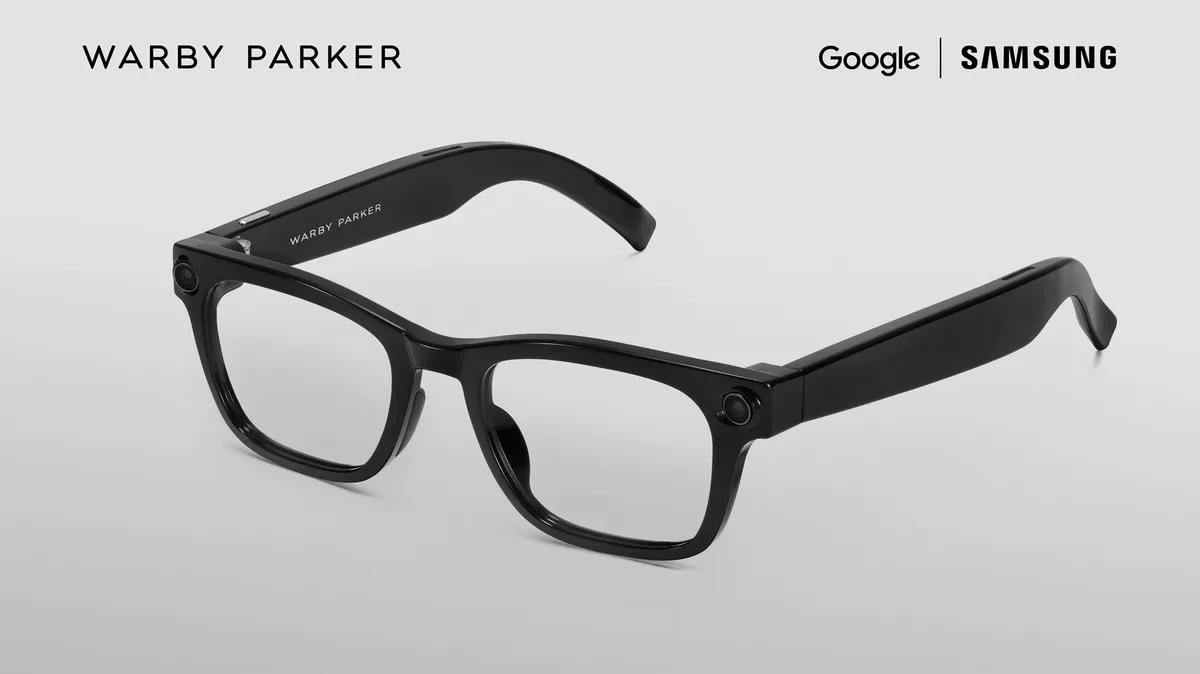
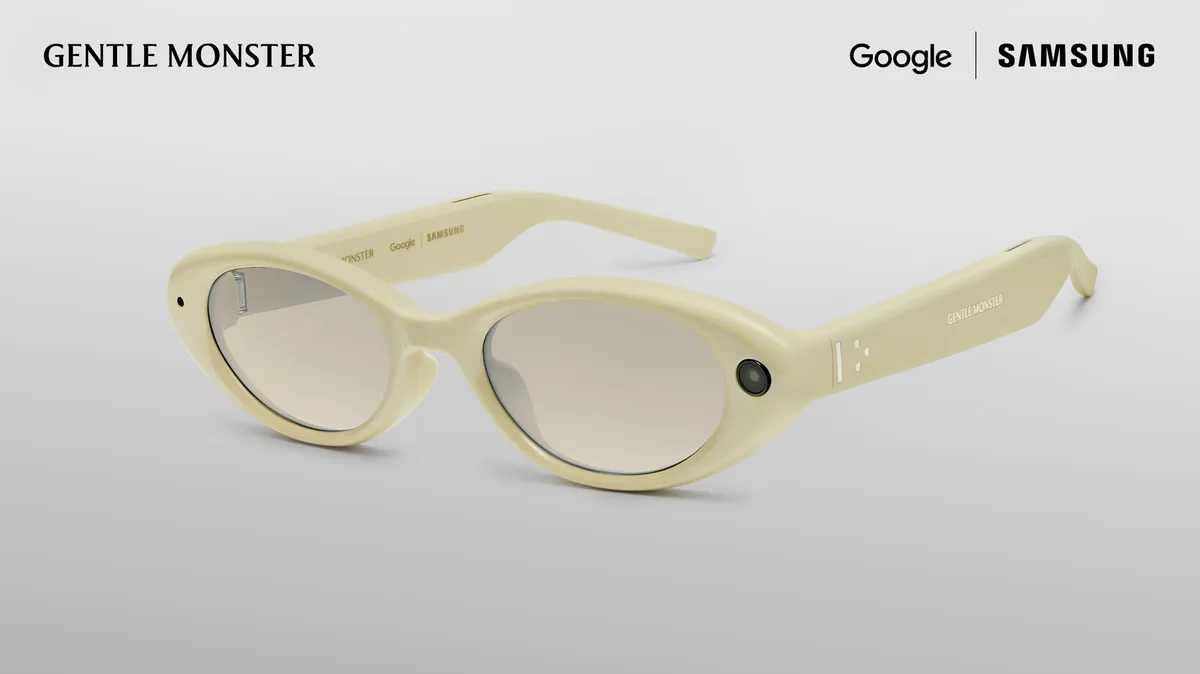
$395. That is what Google charges for its first Intelligent Eyewear in a Warby Parker frame with non-prescription lenses, and the number went public on Thursday as preorders opened at both of its eyewear partners. Gentle Monster's six frames run $449 to $489 on its US store. Both collections go on general sale December 10.
HardwareNovember 12, 2026
Google's Intelligent Eyewear Starts at $395, Ships December 10, and Skips Every Android Phone Maker but Two
By Alex Reeves
Staff Writer, VR.org
Advertisement
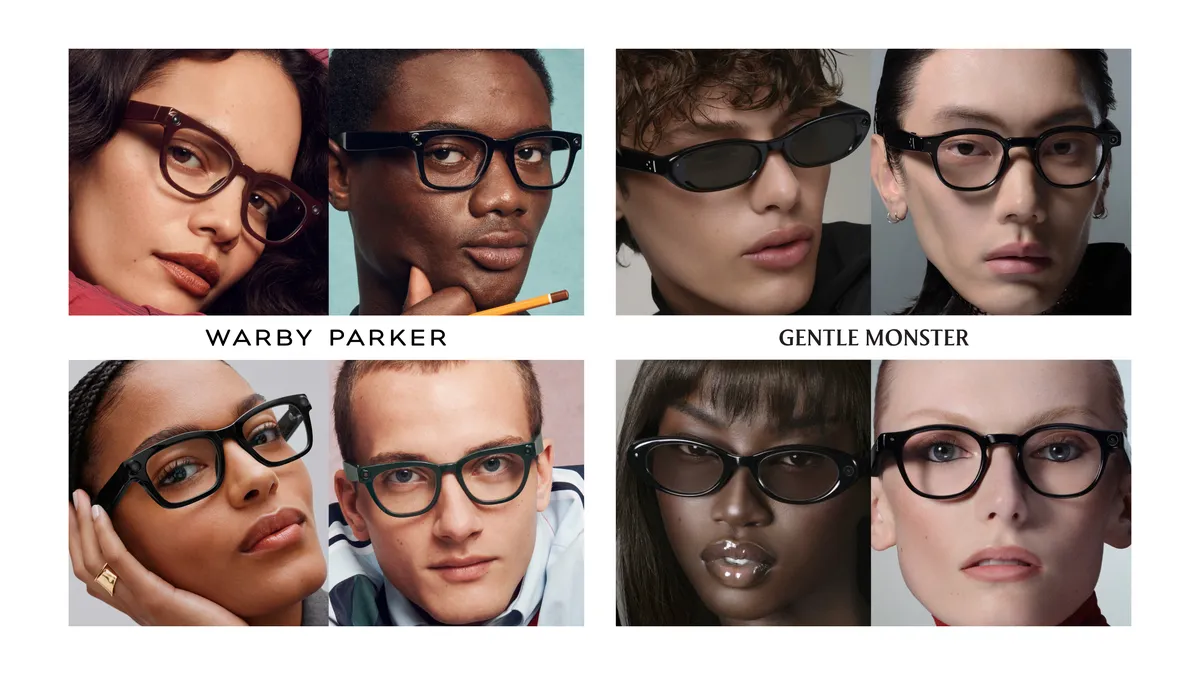
Warby Parker had already dated the preorders in its third-quarter earnings release a week ago. Nobody had named a price before Thursday. Google's launch post, signed by Shahram Izadi, its vice president and general manager for XR, credits Samsung with engineering the hardware and the two eyewear brands with the frames. Orders run online and in stores at both brands. Demo pairs sit in more than 360 Warby Parker shops and select Google Stores. Only Google accounts from the United States and South Korea will work, and only for users 18 and up.
Meta's price band, and Meta's spec sheet
The benchmark is Ray-Ban Meta. Meta sells the Gen 3 at $449 and still sells the Gen 2 at $379, per the prices in VR.org's smart glasses guide. Warby Parker's entry frame lands $16 above the Gen 2 and $54 under the Gen 3. Gentle Monster's cheapest frame matches the Gen 3 to the dollar.
The hardware lines up almost as closely. A Snapdragon AR1 Gen 1 runs it. The camera is a 12-megapixel ultra-wide that records up to 3K video, beside four microphones and a pair of open-ear speakers. Google rates the battery at up to nine hours, the figure Meta gives the Gen 3, and the case holds up to seven more full charges. IPX4 covers splashes and sweat. A slide switch on every pair cuts the camera, the microphones and Gemini, and recording stops if the outer indicator light is covered, according to Google's product FAQ. 9to5Google's launch report adds 2GB of RAM, 64GB of storage and Wi-Fi 6E, none of which Google's own pages state.
Weight is the one published number where Google pulls ahead. Meta gives no weight for the Gen 3. Its Ray-Ban Meta Audio, which gets light by dropping the camera entirely, weighs 43 grams. Google puts its glasses at around 41, camera included.
The lens menu is where the price moves
$395 covers clear or tinted lenses without a prescription. Everything else is extra, and Warby Parker prices it item by item. 9to5Google went through the list: single-vision prescription adds $100, light-responsive lenses $125, progressives $330. A plain pair with light-responsive lenses comes to $520. The most expensive build it priced, a Reid with progressive, polarized, thinner and anti-reflective lenses, reached $1,080.
Meta charges for prescription lenses too, so the fair comparison is not $1,080 against $449. Still, the progressive upgrade on its own costs $49 less than an entire Ray-Ban Meta Gen 2.
Gentle Monster's menu is shorter. A clear prescription lens adds $100 and a light-adaptive prescription lens $140, by the same count, and the store accepts eligible vision insurance. Some of its sunglasses take no changes at all. The black GGS003 is listed as "not eligible for lens and fitting customization."
Advertisement
Six Gentle Monster frames, six models in the FCC filing
The lineup also answers a question the paperwork raised. When Samsung's glasses cleared the Federal Communications Commission in September, VR.org counted eleven model numbers in two families: SM-O200P with five and SM-O200J with six. Droid Life had matched the J family to Gentle Monster from the label drawings. Gentle Monster now sells exactly six frames, GGS001 through GGS006, in 16 colorways. The GGS003 page names Samsung Electronics as manufacturer and importer and Vietnam as the country of manufacture, the same origin printed beside the FCC ID on Samsung's label drawing.
Warby Parker's half fits less neatly. It sells three styles, Alden, Reid and Wren, in optical and sun versions, and Google's post mentions width options. The test lab's reports said the variants within a family differ only in front-frame design and enclosure size, so three styles in more than one width could add up to five models. Neither company has confirmed that. The filing's 6 GHz radio, at least, is accounted for by the Wi-Fi 6E in 9to5Google's spec list.
Which phones it pairs with
The tighter limit is the phone. Google's FAQ lists what can run the companion app: a Pixel 7 or later on the Android 17 September 2026 update, a Samsung Galaxy S or Z phone on One UI 9.0 or later, or an iPhone 13 or later with at least 6GB of RAM on iOS 26.6 or later.
That RAM clause does real work. The iPhone 13 Pro has 6GB. The standard iPhone 13 and the 13 mini have 4GB, so they are out. On Android the list names two makers, Google and Samsung, and only two Samsung lines. Galaxy A phones are missing, and so are Motorola, OnePlus and Xiaomi, as Android Authority pointed out on Thursday. A 2021 iPhone 13 Pro can pair with Google's first Android XR glasses. A Galaxy A phone bought this month is not on the list.
iPhone owners get a smaller feature set, too. Google's post says Gemini's Guided Vision descriptions for blind and low-vision users, the Aira visual-interpreter service and Audible all need an Android phone at launch.
Before ordering
Gentle Monster's store bills the opening as a "1st Batch Pre-Order" running November 12 to 15. A first batch implies a second, and neither brand has said how many pairs the first one holds or when the next opens.
In July, Samsung's James Choi told CNBC the company wanted "to position as premium." IDC's Francisco Jeronimo, quoted in the same piece, said he would not be surprised by a price between $600 and $700. Premium turned out to mean $54 under a Ray-Ban Meta Gen 3.
For a buyer, the order of checks is phone first, then lenses, then frame. On a supported phone this is a $395 to $489 alternative to Ray-Ban Meta, with a lens menu that can more than double the bill. On anything else, Google does not support it at all. Full specs, the frame list and the dated timeline sit on VR.org's Intelligent Eyewear hub, and Warby Parker's demo pairs are in stores now, four weeks before anyone takes a pair home.
Advertisement