
Highest Resolution VR Headset 2026: Sharpest Displays Ranked
Last updated: October 23, 2026
Part of our Best VR Headsets buyer's guide.
The highest resolution VR headset you can buy in 2026 is the Pimax Crystal Super, at 3,840 by 3,840 per eye on its QLED model, for PC VR. The Samsung Galaxy XR and Apple Vision Pro lead standalone headsets on micro-OLED, with over 20 million pixels in total. But raw resolution is only half the story: pixels per degree, how tightly those pixels are packed into your field of view, determines how sharp a headset actually looks. Here is the ranking and what the numbers mean.
| Headset | Resolution / eye | Panel |
|---|---|---|
| Pimax Crystal Super | ~3,840 x 3,840 | QLED (micro-OLED version: ~3,840 x 3,552) |
| Samsung Galaxy XR | ~3,552 x 3,840 | Micro-OLED |
| Apple Vision Pro | ~3,660 x 3,200 | Micro-OLED |
| Pimax Crystal Light | ~2,880 x 2,880 | QLED |
| Bigscreen Beyond 2 | ~2,560 x 2,560 | Micro-OLED |
| Valve Steam Frame | ~2,160 x 2,160 | LCD |
| Meta Quest 3 | ~2,064 x 2,208 | LCD |
| PlayStation VR2 | ~2,000 x 2,040 | OLED |
Per-eye resolutions are from manufacturer figures, except the Vision Pro's, which is iFixit's teardown measurement because Apple publishes only a 23 million pixel total.
1. Pimax Crystal Super, the sharpest headset you can buy

Pimax's Crystal Super is the sharpest headset on sale on both measures this page uses. Its QLED version runs 3,840 by 3,840 per eye, about 29.5 million pixels in total, and Pimax rates it at 50 to 57 pixels per degree depending on which optical engine you choose, against roughly 34 for the Vision Pro. It is a PC VR headset with local dimming, glass aspheric lenses, 72 or 90Hz, inside-out tracking and two controllers in the box, with a $199 faceplate that switches it to Lighthouse tracking. On October 23 Pimax's store listed the QLED version at $1,599 with the Ultrawide and 57 PPD engines, and an 8K micro-OLED version at $2,199 whose 3,840 by 3,552 panels match the Galaxy XR's pixel count. The catch is the PC behind it: that many pixels needs a powerful gaming PC to drive.
2. Samsung Galaxy XR, the sharpest standalone headset
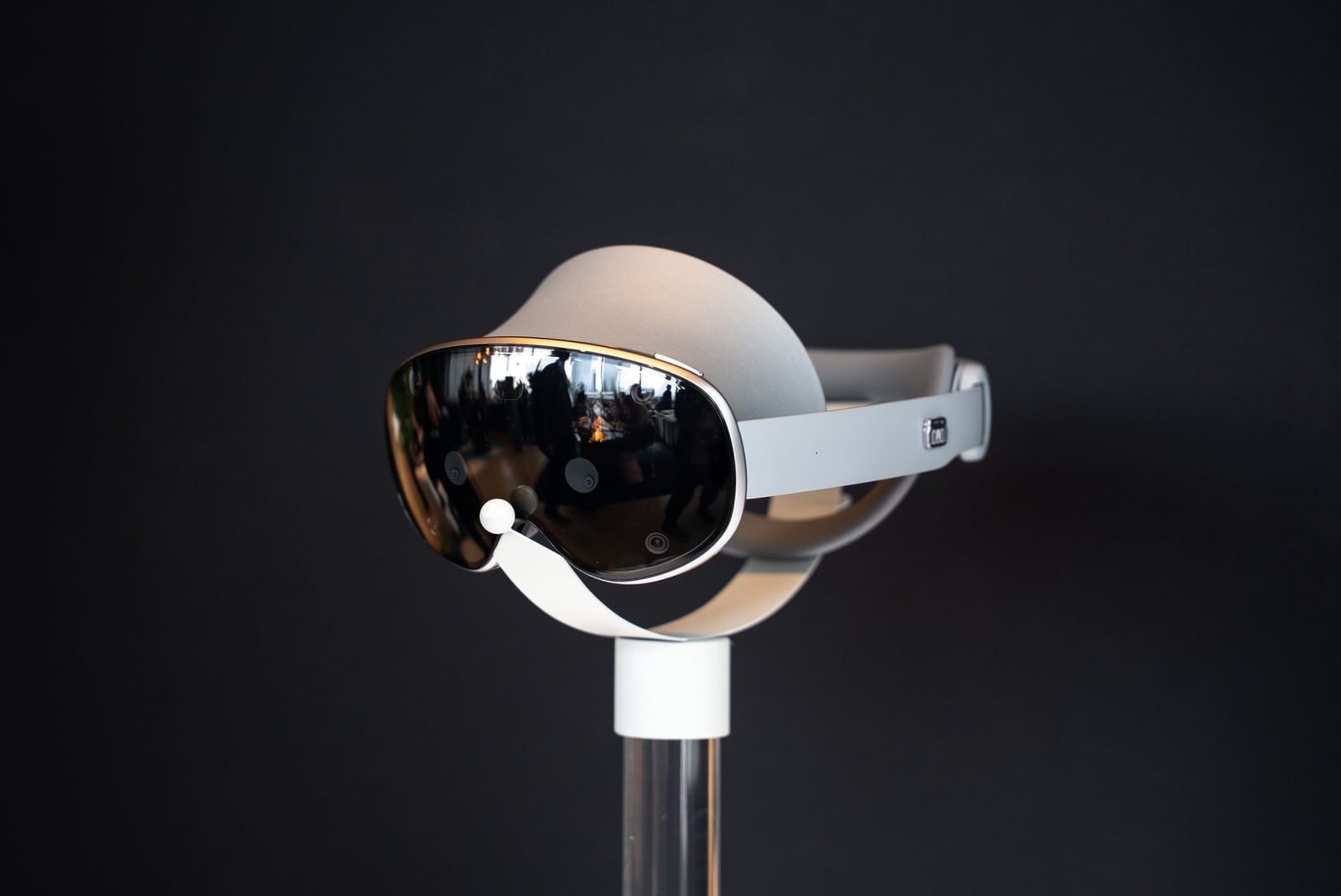
Samsung's Android XR flagship pairs dual micro-OLED panels at roughly 3,552 by 3,840 per eye, around 27 million pixels in total, which puts it at or near the top of the resolution chart. Text is crisp and fine detail holds up, and because it runs Android XR it has Google's ecosystem behind it. It is a premium device at a premium price, so it suits buyers who want the sharpest panel and are invested in the Google and Samsung world.
3. Apple Vision Pro, the clarity benchmark

The Vision Pro set the modern standard with roughly 23 million pixels across both eyes, about 3,660 by 3,200 per eye, and around 34 pixels per degree. The result is clarity where individual pixels are very hard to pick out, which is why it remains the headset to beat for reading, working, and watching. At $3,699 it is the most expensive option here, and its strengths lie in productivity and media more than gaming. See our Quest 3 vs Vision Pro comparison for the full picture.
4. Pimax Crystal Light, the sharpest under $1,000
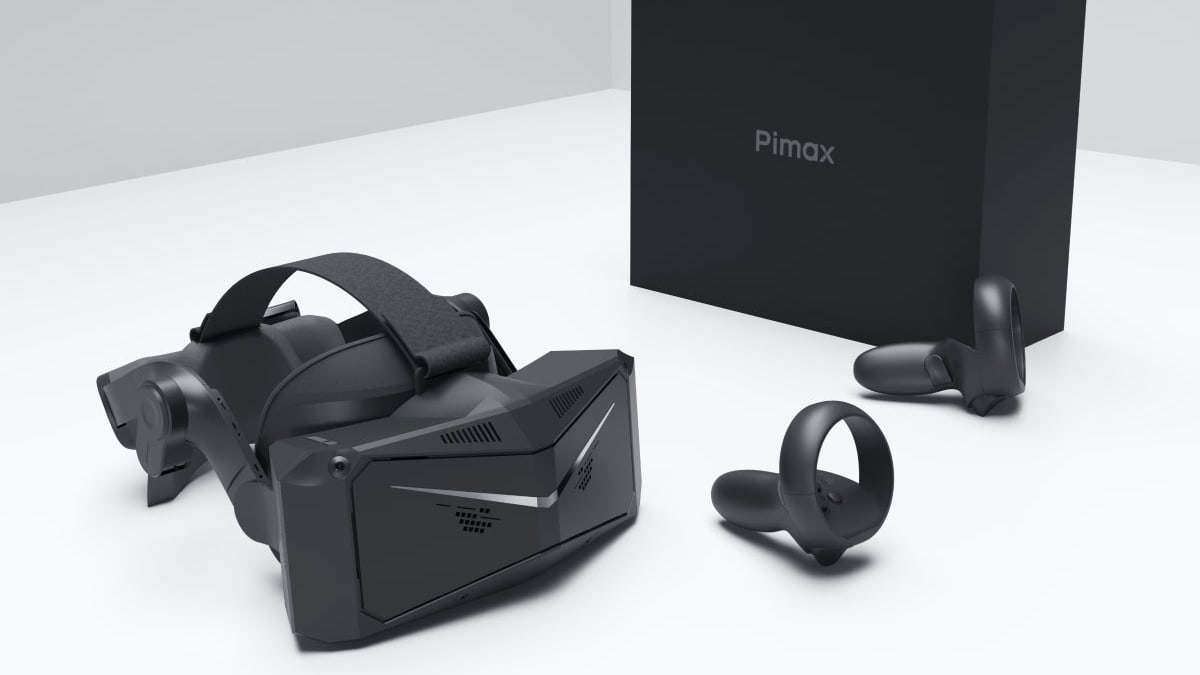
The Pimax Crystal Light runs 2,880 by 2,880 QLED panels per eye with local dimming, which Pimax rates at 35 pixels per degree across a 110 degree horizontal view, level with the Vision Pro on that measure for $899. It ships with two controllers and inside-out tracking, so there are no base stations to buy, though it needs a gaming PC.
The lighter Bigscreen Beyond 2 is the alternative if you already own SteamVR base stations: 107 grams, 2,560 by 2,560 micro-OLED per eye and a peak of 32 pixels per degree by Bigscreen's figure, from $959 with the Light Seal. For where these land against other PC headsets, read our best PC VR headset guide.
Resolution is not everything
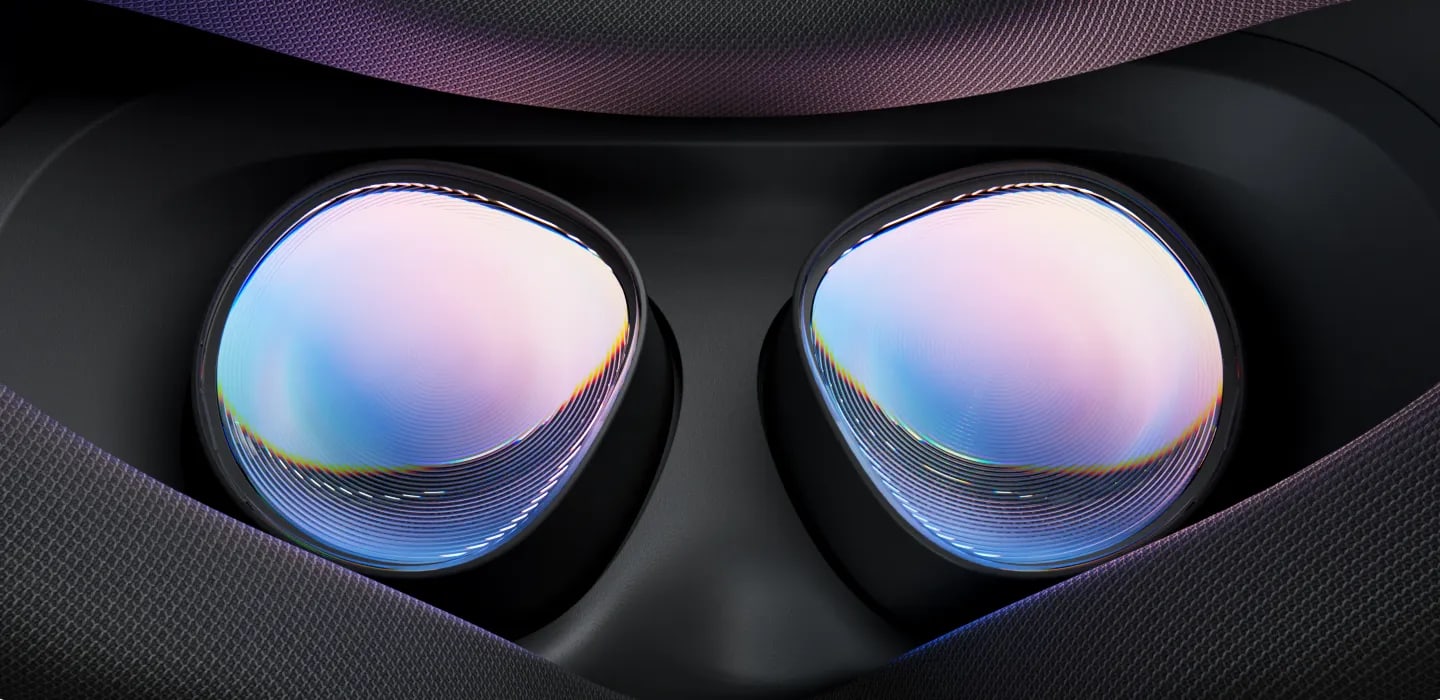
Before you chase the biggest number, remember that lenses, field of view, local dimming, and software all shape what you see. A high-resolution panel behind mediocre lenses can look worse than a lower-resolution panel behind great ones. Pixels per degree is the better single number, and on that measure the order changes. Pimax rates the Crystal Super at 50 to 57 depending on the optical engine and its cheaper Crystal Light at 35. The Vision Pro sits at about 34, a figure from iFixit's teardown because Apple publishes none, and Bigscreen quotes a peak of 32 for the Beyond 2. Samsung publishes no figure for the Galaxy XR. Meta lists the Quest 3 at 25. Makers measure this in different ways, so read small gaps as noise. For most people the Meta Quest 3 is still sharp enough and a far better value, which is why it tops our best VR headsets guide.
The resolution race is not standing still either, and the closest challenger has a name but no longer a date. Project Swan is the Pico Space Pro, which lost its September 2 Beijing debut and moved to Q4 2026, and US reseller Knoxlabs now lists a $2,899 enterprise model for February 2027. Pico claims micro-OLED above 4,000 PPI and an average of roughly 40 pixels per degree, which would top the Vision Pro's 34, plus dual-chip compute at 12ms perception latency and 270 grams. Treat those as claims until somebody outside Pico has handled the hardware. Samsung already quotes 4,032 PPI for the Galaxy XR. Valve's Steam Frame, launched on September 14 at $1,059 and sold through a reservation queue with a waitlist behind it, pairs two 2160x2160 LCD panels with eye-tracked Foveated Streaming, which Valve says steers the best-quality pixels to where you are looking when you stream from a PC. On sharpness it lands in Quest 3 territory: Road to VR's spec comparison puts it at roughly 20 to 25 pixels per degree against about 25 for the Quest 3, and its review found the Quest 3 slightly clearer. Valve's kernel code also describes a 3,552 by 3,840 panel codenamed Plano, the Galaxy XR's resolution, but its one working mode sends 1,776 by 1,920 per eye, and Valve has announced no product that uses it. Our Steam Frame hub has the official specs. Two announced headsets also go straight at pixels per degree. Meta VR Glasses, due in spring 2027, pair 2412 by 2288 micro-OLED panels with a narrow 70 by 66 degree view for a claimed 37 pixels per degree, above the Vision Pro's 34. Pimax's Crystal Pro, announced October 6 and set for spring 2027, claims 35 from 2880 by 2880 QLED panels across 110 degrees. Both are maker figures for hardware nobody can buy yet.