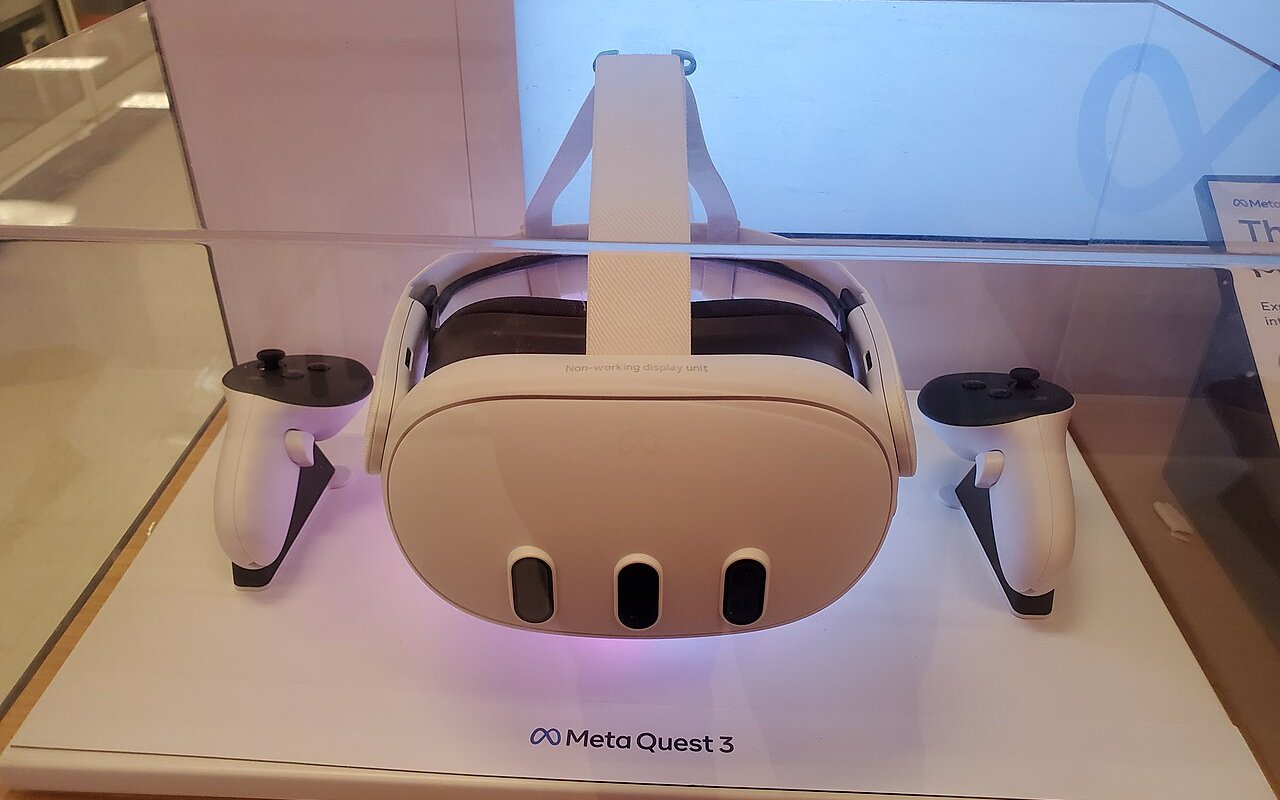
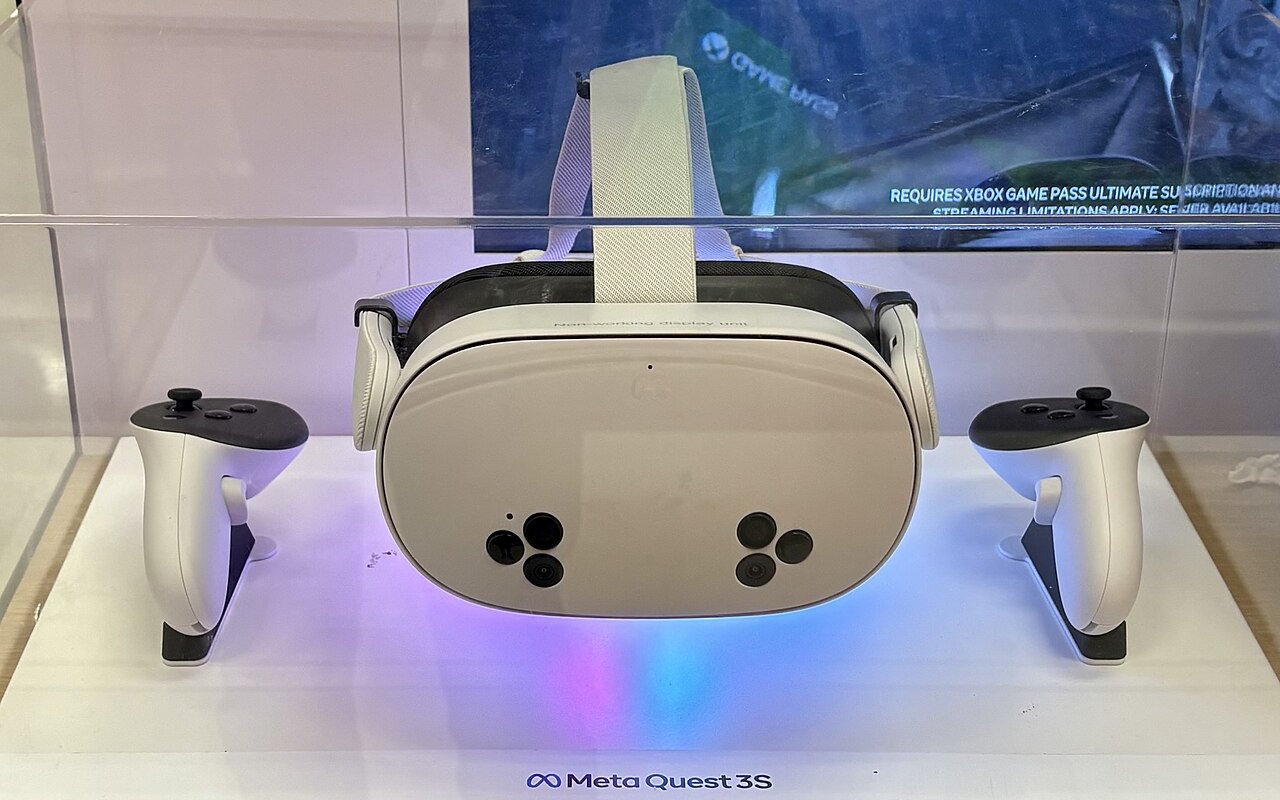
The Quest 3 and Quest 3S share the same Snapdragon XR2 Gen 2 chip and the same game library, so they perform identically. The $599 Quest 3 adds sharper pancake lenses, a higher-resolution display, a wider field of view, and far better mixed-reality passthrough. The $349 Quest 3S gives up those for a $250 saving. Buy the 3S unless image quality or mixed reality is your priority.
Meta Quest 3
Meta Quest 3S
Price
$599 (512GB)
$349 (128GB) / $449 (256GB)
Chip
Snapdragon XR2 Gen 2
Snapdragon XR2 Gen 2 (same)
Lenses
Pancake
Fresnel
Resolution
2064 x 2208 per eye
1832 x 1920 per eye
Field of view
Wider (~110 degrees)
Narrower (~96 degrees)
Passthrough
Color cameras + depth sensor
Same color cameras, no depth sensor
IPD adjustment
Continuous, 53 to 75 mm
Three steps (58 / 63 / 68 mm)
Storage
512GB
128GB / 256GB
Game library
Full Quest library
Full Quest library (same)
PC VR
Yes (Link / Air Link)
Yes (Link / Air Link)
Where to get itMeta Quest 3$599.99In stock at Meta.com: 512GB with two Touch Plus controllers. Amazon sells it at the same price.Buy at Meta.com→Amazon: $599
Where to get itMeta Quest 3SFrom $349.99In stock at Meta.com: 128GB $349.99, 256GB $449.99. Amazon sells the 128GB at the same price.Buy at Meta.com→Amazon: 128GB $349.99
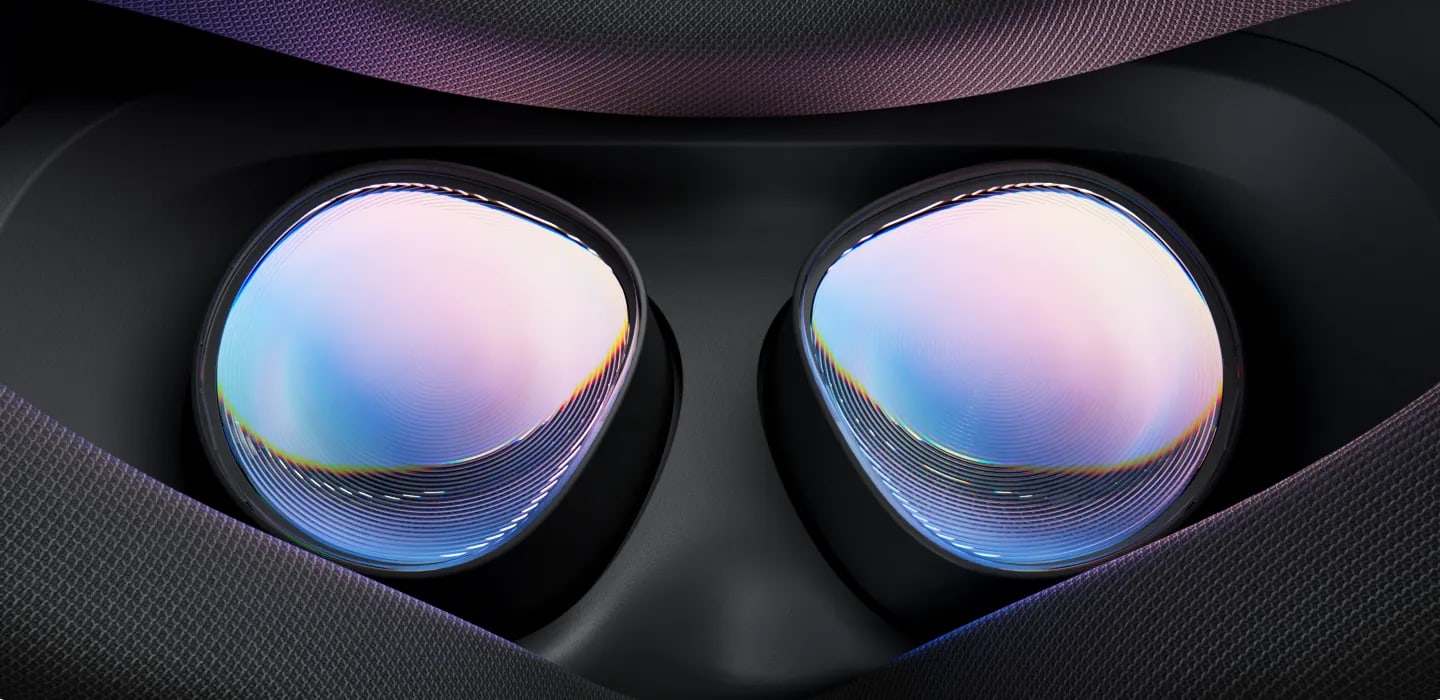
Lenses shape sharpness as much as panels do. These are the Quest 3S's Fresnel lenses. Image: Meta
The most important thing to understand is that the Quest 3 and Quest 3S are the same computer. They run the identical Snapdragon XR2 Gen 2 processor with the same memory, which means every game performs exactly the same on both. There is no such thing as a Quest 3 exclusive. A game that runs at a locked frame rate on the Quest 3 runs at that same frame rate on the Quest 3S.
What changed to hit the lower price is everything you look through. The Quest 3 uses modern pancake lenses that are sharp from edge to edge and give a wider, more immersive view. The Quest 3S falls back to the older Fresnel lenses from the Quest 2 era, which are a little softer toward the edges and have a smaller sweet spot you have to keep your eyes centered in. The Quest 3 also has a noticeably higher-resolution display.
What the extra $250 actually buys
Mixed reality on a Quest 3: the game plays in your actual room. Image: Meta
Three things, in order of how much they matter. First, image quality: the pancake lenses and higher resolution make text easier to read and scenes look crisper. Second, mixed reality: both use the same color passthrough cameras, but the Quest 3 adds a depth sensor and shows the feed through its sharper display and lenses, so the real world looks clearer and digital objects sit more convincingly in your room. On the Quest 3S, passthrough is usable but noisier and a little softer. Third, storage: 512GB on the Quest 3 versus 128GB on the base Quest 3S, which matters because VR games are big.
What you do not pay extra for is performance, comfort, or controllers. Both ship with the same Touch Plus controllers, weigh about the same, and play the same library.
Buy the Quest 3 if mixed reality is a real part of why you want a headset, if you care about the sharpest possible image and reading text comfortably, or if you install a large library and want the 512GB of storage without thinking about it. Enthusiasts and anyone upgrading from a Quest 2 who wants the full generational leap should get the Quest 3.
Who should buy the Quest 3S
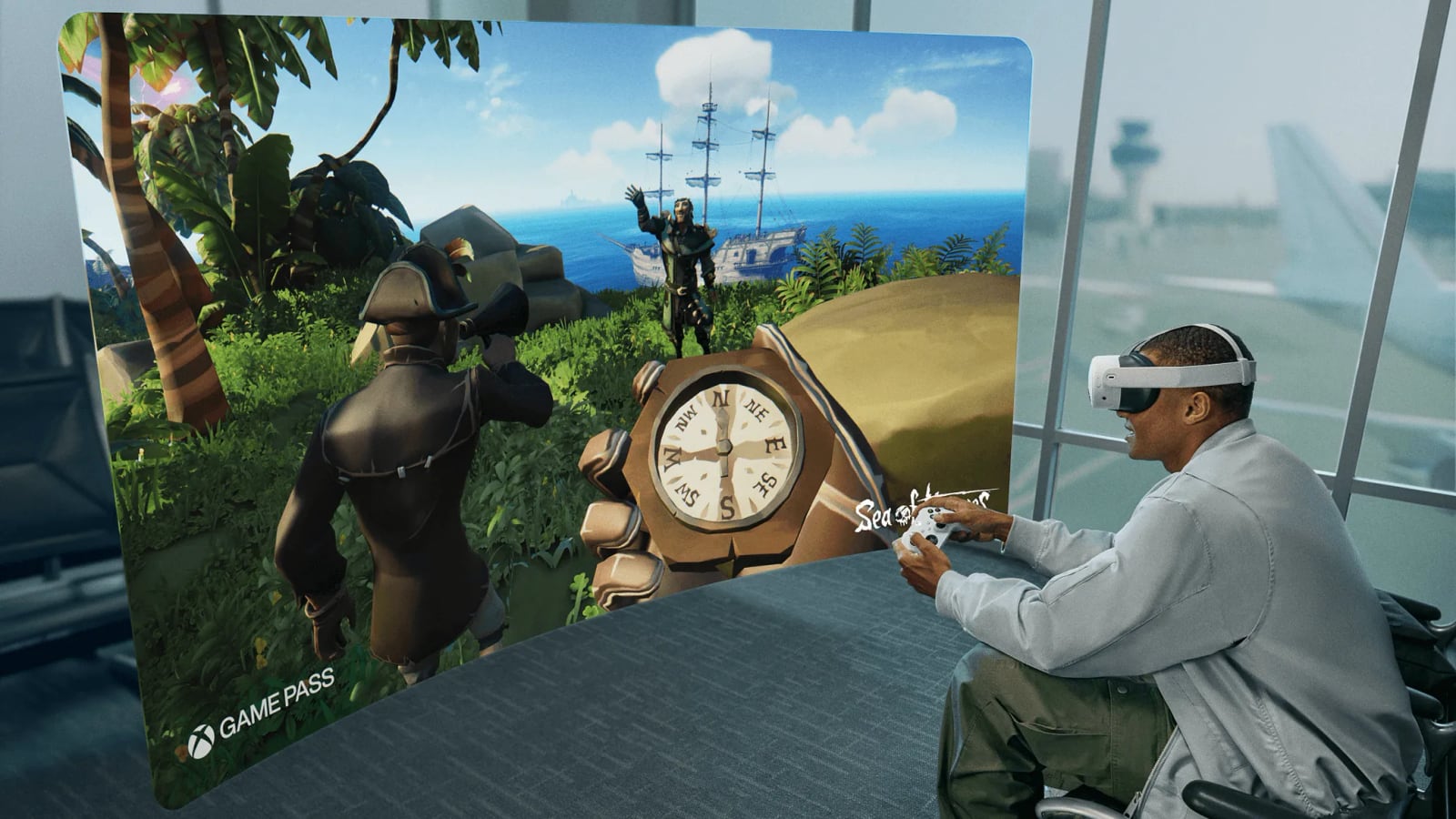
Meta Quest 3S with an Xbox controller and Game Pass on a virtual screen. Image: Meta
Buy the Quest 3S if your main goal is playing VR games and getting into VR for the lowest sensible price. It is the best budget VR headset you can buy new, it runs the entire Quest catalog at full speed, and the $250 you save covers a comfort strap, a case, and a couple of games. For first-time buyers and families, the 3S is the smarter purchase. If you want to see how both stack up against PlayStation and Apple, our full headset guide covers the whole field.
One question worth answering before you buy either: should you wait for the Quest 4? No. Credible reporting puts it in 2027 or later, and Meta's April price hike moved both current headsets up, and Meta has not cut list prices since. Discounts come as limited-time sales instead: on October 20, Meta's own store had the 128GB Quest 3S at $297.49 against its $349.99 list price. Meta Connect on September 23 settled the rest: no new Quest and no price change. The new headset is Meta VR Glasses, the ultralight device reported as Phoenix, at $1,299.99 in spring 2027, and it runs the same apps as these two. These two stay Meta's current lineup through the holidays. Both list prices were re-checked on Meta's own store on October 20 and are unchanged at $599.99 and $349.99. If you own a gaming PC and Valve's $1,059 Steam Frame is on your list too, our Steam Frame vs Quest 3 comparison covers that call. Our Quest 4 tracker sorts every claim if you want the full picture.
Where to get itMeta Quest 3$599.99In stock at Meta.com: 512GB with two Touch Plus controllers. Amazon sells it at the same price.Buy at Meta.com→Amazon: $599
Where to get itMeta Quest 3SFrom $349.99In stock at Meta.com: 128GB $349.99, 256GB $449.99. Amazon sells the 128GB at the same price.Buy at Meta.com→Amazon: 128GB $349.99