
Steam Frame Specs: Every Confirmed Number, and the Ones Valve Has Not Given
Last updated: October 7, 2026
Part of our Steam Frame hub. See also the release date tracker, the price tracker, the Steam Frame vs Quest 3 comparison, and the Great on Frame verified games list.
The Valve Steam Frame is a standalone SteamOS headset with 2160x2160 LCD panels per eye, a Snapdragon 8 Gen 3 paired with 16GB of LPDDR5X, a 21.6Wh battery mounted at the back of the strap, and a visor that weighs 185 grams on its own or 440 grams fully assembled. It has eye tracking, four greyscale tracking cameras, Wi-Fi 7, and a PCIe expansion slot. It does not have built-in color passthrough or hand tracking. It launched on September 14, 2026 at $1,059 for the 256GB Kit and $1,299 for the 1TB Kit, without a power supply in the box.
Specifications below come from Valve's Steam Frame product page, published with the September 14, 2026 launch, and from Valve's original announcement, as documented in UploadVR's write-up of the November 12, 2025 reveal, with the expansion slot detail confirmed against Road to VR's September 2 report. Where sources disagree, this page says so rather than picking the tidier number.
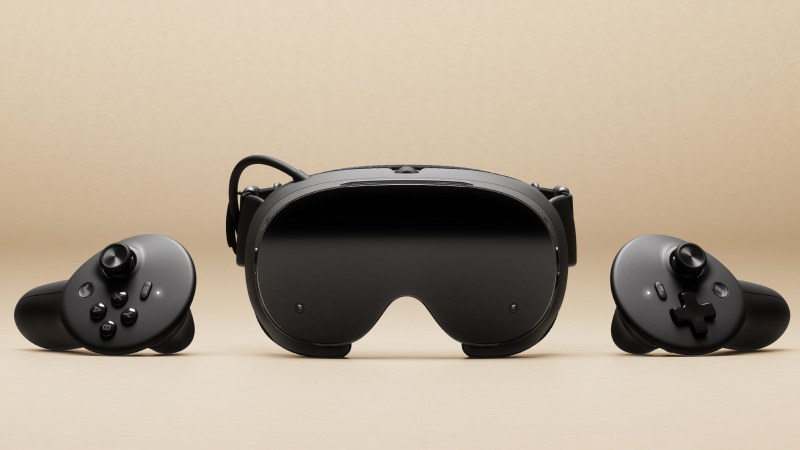
256GB kit $1,059, 1TB kit $1,299, each with controllers, the wireless adapter and Half-Life: Alyx. The 45W power supply is sold separately for $29.
Image: Valve
Display and optics
| Spec | Steam Frame |
|---|---|
| Panels | Dual LCD, 2160x2160 per eye |
| Lenses | Multi-element pancake |
| Refresh | 72 to 144Hz, with 144Hz labeled experimental |
| Field of view | 110 degrees horizontal by 110 degrees vertical, quoted conservatively |
| IPD | Manual dial on top of the headset; Valve lists a 60mm to 70mm target range |
| Glasses | Fits frames up to 140mm wide, per Valve |
| Eye tracking | Yes, low-latency, driving Foveated Streaming |
| Hand tracking | Not supported, an input device is required |
Refresh rate was the one soft figure here. Valve's November 2025 announcement described 72Hz and 120Hz with an experimental 144Hz mode; the launch product page settles it as a supported range of 72 to 144Hz, 144Hz still experimental.
2160x2160 per eye is 4.67 million pixels an eye. Quest 3 renders 2064x2208. On paper the Frame is ahead, but the number that will decide how it actually looks is not on any spec sheet: how hard the Snapdragon has to compress a streamed image to get it across the room. That is what the eye tracking is for.
Compute, storage and power
| Spec | Steam Frame |
|---|---|
| SoC | 4nm Qualcomm Snapdragon 8 Gen 3, ARM64 |
| Memory | 16GB LPDDR5X, unified |
| Storage | 256GB Kit ($1,059) or 1TB Kit ($1,299), UFS |
| Expandable storage | microSD, same cards as Steam Deck and Steam Machine |
| OS | SteamOS 3, with Proton and FEX x86 emulation |
| Battery | Rechargeable 21.6Wh Li-ion per Valve, rear-mounted in a detachable strap; iFixit found the cells glued in and labelled 20.9Wh |
| Charger | Not included. 45W or higher USB-C; Valve's 45W PSU is $29 |
| Weight, visor | 185 g |
| Weight, complete | 440 g with facial interface, speakers, strap and battery |
16GB is double the Quest 3's memory. The Frame needs it: Proton and FEX are translating x86 Steam builds on the fly rather than running native Android ports.
The weight split is the design decision worth understanding. 185 grams on the face and the battery behind your head is a very different object to wear than a 515-gram Quest 3 with its mass out front, even though the Frame's assembled 440 grams is not far off. Valve also put the battery in a strap that detaches from the visor, though iFixit's teardown found the cells glued in with no release mechanism, labelled 20.9Wh, and with no replacement pack on sale yet. What it did not make is a charger: the Frame ships without one, and Valve's own 45W unit is a $29 add-on at checkout.
Cameras, audio and connectivity
| Spec | Steam Frame |
|---|---|
| Cameras | Four high-resolution monochrome fisheye cameras, infrared illuminators |
| Tracking | Inside-out camera-based tracking of headset and controllers |
| Passthrough | Monochrome built in; color via the $149 Arcturus Vision camera add-on |
| Audio | Dual speaker drivers per ear, opposed to cancel vibration; dual microphone array |
| Wi-Fi | Wi-Fi 7, 2x2, dual radios: one for the stream, one for your network |
| Bluetooth | 5.4 |
| Bundled adapter | 6GHz Wi-Fi 6E USB adapter for a dedicated PC streaming link |
| Streaming features | Foveated Streaming, Multi-Link Streaming |
| Expansion | One-lane Gen 4 PCIe port plus dual 2.5Gbps MIPI camera interface |
Four monochrome cameras, no built-in color passthrough. This is the clearest line between the Frame and a mixed reality headset.
Note the two different radios. The Frame has Wi-Fi 7 with two radios, and Valve's launch page spells out the split: one is dedicated to streaming audio and video, the other connects to your Wi-Fi. It ships with a separate 6GHz Wi-Fi 6E USB adapter that plugs into your gaming PC to give that stream its own link. Multi-Link Streaming then routes data across every available connection at once, and Foveated Streaming uses the eye tracker to send the best pixels only where you are looking, which Valve says typically offers over a 10x improvement in image quality and effective bandwidth. That stack is the reason Valve calls this a streaming-first headset rather than a standalone one. Hands-on reports have described the streaming as having no perceptible lag.
The controllers
| Spec | Steam Frame controllers |
|---|---|
| Design | Ringless, 18 IR LEDs per controller |
| Layout | Gamepad parity: A/B/X/Y all on the right, D-pad on the left |
| Thumbsticks | TMR (tunneling magnetoresistance), not potentiometers |
| Sensing | Capacitive on every input and on the handle |
| Battery | One AA per controller, roughly 40 hours |
| Grip straps | Sold separately, in the $59 Ergonomic Accessories Kit with battery doors |
The gamepad-parity layout is the tell: Valve expects you to play flatscreen Steam games in this headset, not just VR ones.
Two details deserve more attention than they got. TMR thumbsticks use magnetic sensing instead of the resistive contacts that wear down and produce stick drift, which is a fix for the single most common controller failure in the industry. And a single AA running roughly 40 hours means no charging dock, no proprietary cell, and no controller that dies mid-session with no way to keep playing.
The expansion slot, and what is already being built for it
The Frame carries a one-lane Gen 4 PCIe data port and a dual 2.5Gbps MIPI camera interface, and Valve has said it intends to publish CAD files so third parties can build their own attachments. At announcement Valve named the categories it had in mind: face tracking, depth sensors, full body tracking, entirely different tracking solutions, and color passthrough cameras.
Ten months later the first product in that last category surfaced. Komodo Station, Valve's hardware vendor in Asia, published a product page for an Arcturus color passthrough module with dual 32-megapixel sensors and 5K stereo capture, apparently earlier than anyone intended. Arcturus Industries built the camera tracking system inside the Frame, so the company selling the upgrade supplied the part being upgraded. On launch day Valve made it official, listing the Arcturus Vision camera on its own Steam Frame page as a Steam Frame Compatible accessory that adds 5K HDR color passthrough and spatial video capture. UploadVR reports a $149 price, a 10-gram weight and dual 32-megapixel Sony RGB sensors, attached through the PCIe expansion port described above. Zenni prescription inserts carry the same Steam Frame Compatible mark.
What launch day answered
| Question | Answer |
|---|---|
| Price | $1,059 for the 256GB Kit, $1,299 for the 1TB Kit |
| Release date | Launched September 14, 2026; reservation signups closed September 17, purchase emails in waves since September 18 |
| Refresh rates | 72 to 144Hz on Valve's product page, with 144Hz experimental |
| In the box | Headset, Steam Frame Controllers, Wi-Fi 6E wireless adapter, Half-Life: Alyx code; no power supply |
| Color passthrough | Arcturus Vision camera, $149 per UploadVR, via the PCIe expansion port |
| IPD range | 60mm to 70mm target range on Valve's spec sheet; Tom's Hardware lists the dial at 57.6 to 69.6mm |
Open questions on this page before September 14, 2026 that Valve's launch announcement and product page resolved.
What Valve still has not told anyone
| Unknown | Where it stands |
|---|---|
| Battery life | Valve still publishes no runtime. Reviews measured about 1 to 2 hours: roughly an hour standalone, about double that streaming |
| Battery capacity | Valve's sheet says 21.6Wh; the pack in iFixit's retail unit is labelled 20.9Wh, and neither has explained the gap |
The gaps that remain after launch, as of October 7, 2026.
The absence of a published battery runtime is still the one that should bother buyers most, and reviewers have filled the gap. Tom's Hardware got about an hour of Half-Life: Alyx running on the headset at 72Hz and more than double that streaming it from a PC. Road to VR averaged 1 to 1.5 hours of mixed use, against about 2 hours on a Quest 3. Valve's only number so far is relative: the notes for its SteamOS 0.4.3 beta, dated October 1, list power efficiency gains of "up to 12%" in both streaming and standalone play.
256GB kit $1,059, 1TB kit $1,299, each with controllers, the wireless adapter and Half-Life: Alyx. The 45W power supply is sold separately for $29.
Image: Valve
Frequently asked questions
What resolution is the Steam Frame?
2160x2160 per eye, on dual LCD panels behind multi-element pancake lenses. That is 4,665,600 pixels per eye, about 2 percent more than the Quest 3's 2064x2208, so the two are close to equal on paper. Valve quotes the field of view conservatively at 110 degrees horizontal by 110 degrees vertical. Valve's launch product page lists supported refresh rates of 72 to 144Hz, with 144Hz labeled experimental.
What chip is in the Steam Frame?
A 4nm Qualcomm Snapdragon 8 Gen 3 (ARM64) with 16GB of unified LPDDR5X RAM. That is a 2023 flagship phone chip rather than an XR-specific part like the Quest 3's Snapdragon XR2 Gen 2, and it comes with double the Quest 3's memory, which matters because the Frame runs x86 Steam games through Proton and FEX emulation rather than native Android builds. Storage comes in 256GB and 1TB UFS kits, priced at $1,059 and $1,299, and there is a microSD slot that takes the same cards as a Steam Deck or Steam Machine.
How much does the Steam Frame weigh?
185 grams for the visor alone, and 440 grams for the complete system with the default facial interface, speakers, strap and rear battery fitted. The weight is deliberately split: the 21.6Wh battery sits at the back of the strap as a counterweight rather than on your face, which is why the front-heavy figure stays low.
Does the Steam Frame have eye tracking?
Yes, with IR illuminators. Valve is not using it primarily for interface control. It drives eye-tracked foveated streaming, which sends full detail only where you are looking and compresses the periphery, so PC VR streaming survives a wireless link. Valve claims lower latency and greater precision than Steam Link VR. Hand tracking, by contrast, is not supported: the Frame requires an input device.
What are the Steam Frame controllers like?
Ringless, with 18 infrared LEDs each for the headset's cameras to track, and a gamepad-parity layout that puts all four of A, B, X and Y on the right controller and a D-pad on the left, so a flatscreen Steam game can be played without remapping. The thumbsticks use TMR (tunneling magnetoresistance) sensors rather than the potentiometers that cause stick drift. Capacitive sensing covers every input and the handle. Each controller runs on a single AA battery for roughly 40 hours. Grip straps are sold separately.
What is the Steam Frame expansion slot for?
The Frame carries a one-lane Gen 4 PCIe data port alongside a dual 2.5Gbps MIPI camera interface, and Valve has said it intends to publish CAD files so third parties can design their own attachments. Valve named face tracking, depth sensors, full body tracking, alternative tracking systems and color passthrough cameras as the categories it had in mind. The first product to appear in that last category is an Arcturus color passthrough module with dual 32-megapixel sensors, built by the same company that supplied the Frame's camera tracking.
Does the Steam Frame have color passthrough?
No. The four outward-facing cameras are greyscale fisheye units built for computer vision, meaning inside-out tracking, room geometry and controller position. Passthrough to the wearer is a secondary use of two of them and it is monochrome. Valve has not positioned the Frame as a mixed reality device, which is the single clearest difference between it and a Quest 3. Color passthrough on a Frame is an accessory purchase: Valve's launch page lists the Arcturus Vision camera as a Steam Frame Compatible add-on that brings 5K HDR color passthrough and spatial video capture. UploadVR reports it costs $149, weighs 10 grams, uses dual 32-megapixel Sony RGB sensors, and attaches through the Frame's PCIe expansion port.
Does the Steam Frame come with a charger?
No. Valve's product page notes that the Steam Frame does not come with a dedicated power supply. Valve sells a 45W PD 3.0 USB-C power supply with a 2.5m cable for $29, and says a Steam Deck charger or any 45W or higher USB-C charger will work. The first-party accessories, including that PSU, are only offered at checkout to buyers who received a purchase email.
What are the Steam Frame Verified requirements?
For standalone VR titles, a game must hold at least 72fps at 1728x1728 per eye running on the headset itself, and anything rendering below 1440x1440 is marked Unsupported. Valve announced 90fps at GDC 2026 and later revised the published figure down to 72 without an announcement. Standalone flatscreen titles need 720p at 30fps with full Frame controller support. The badge is a recommendation rather than a gate, and content streamed from a PC is exempt entirely.