
Forty-four pins. That is the whole of the Steam Frame's front expansion port, and as of Friday every one of them has a published name. Valve's October 9 Steam Hardware post says "Steam Frame CAD files and electrical interface information are now available for non-commercial use." The files sit in a public GitLab repository that Valve describes as "Public Steam Frame CAD and Electrical References."
HardwareOctober 12, 2026
Valve Published the Steam Frame's Front Port Pinout: 44 Pins, One PCIe Lane and a 6-Watt Power Budget
By Alex Reeves
Staff Writer, VR.org
Advertisement
The CAD is the headline. The pinout is the part that changes what can be built.
What is in the repository
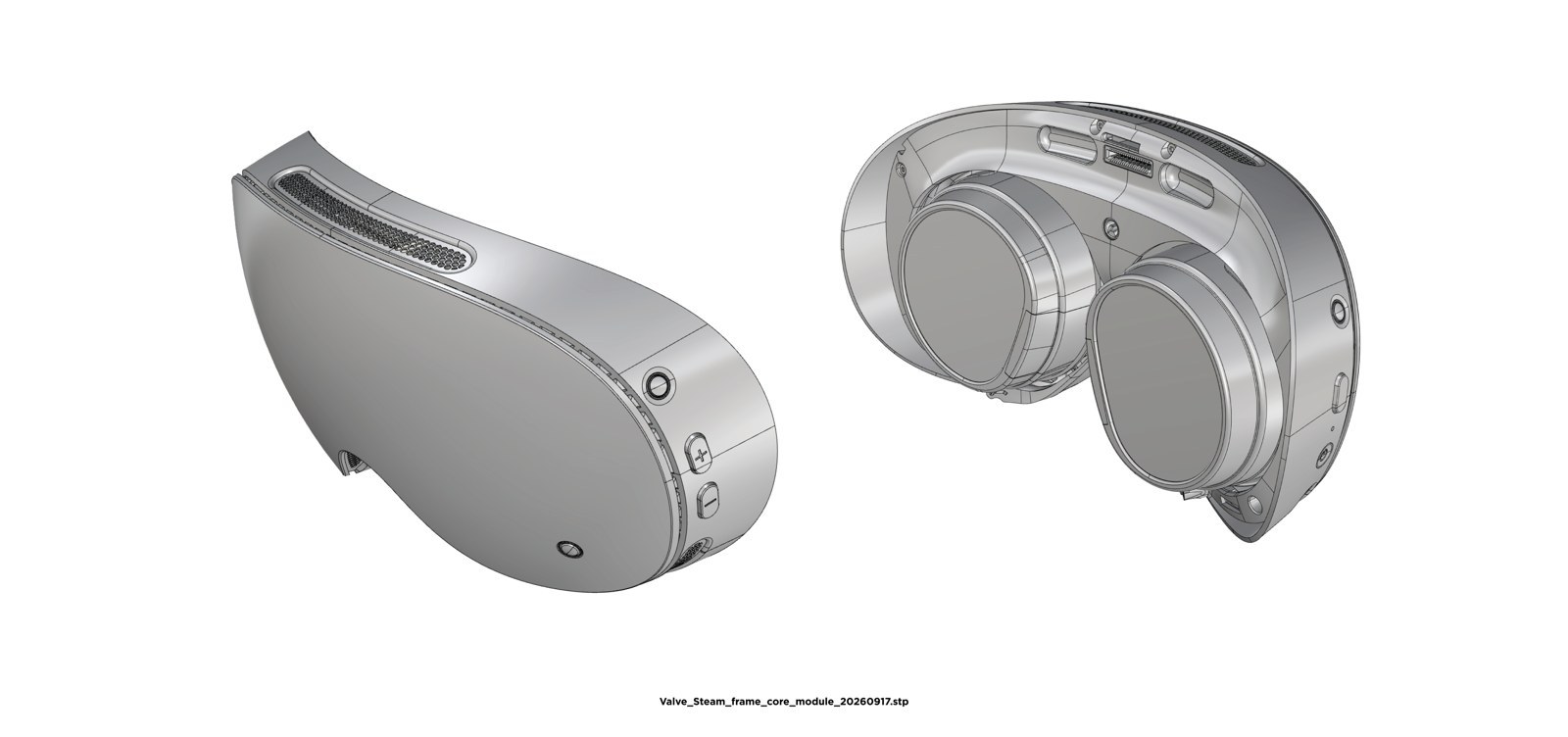
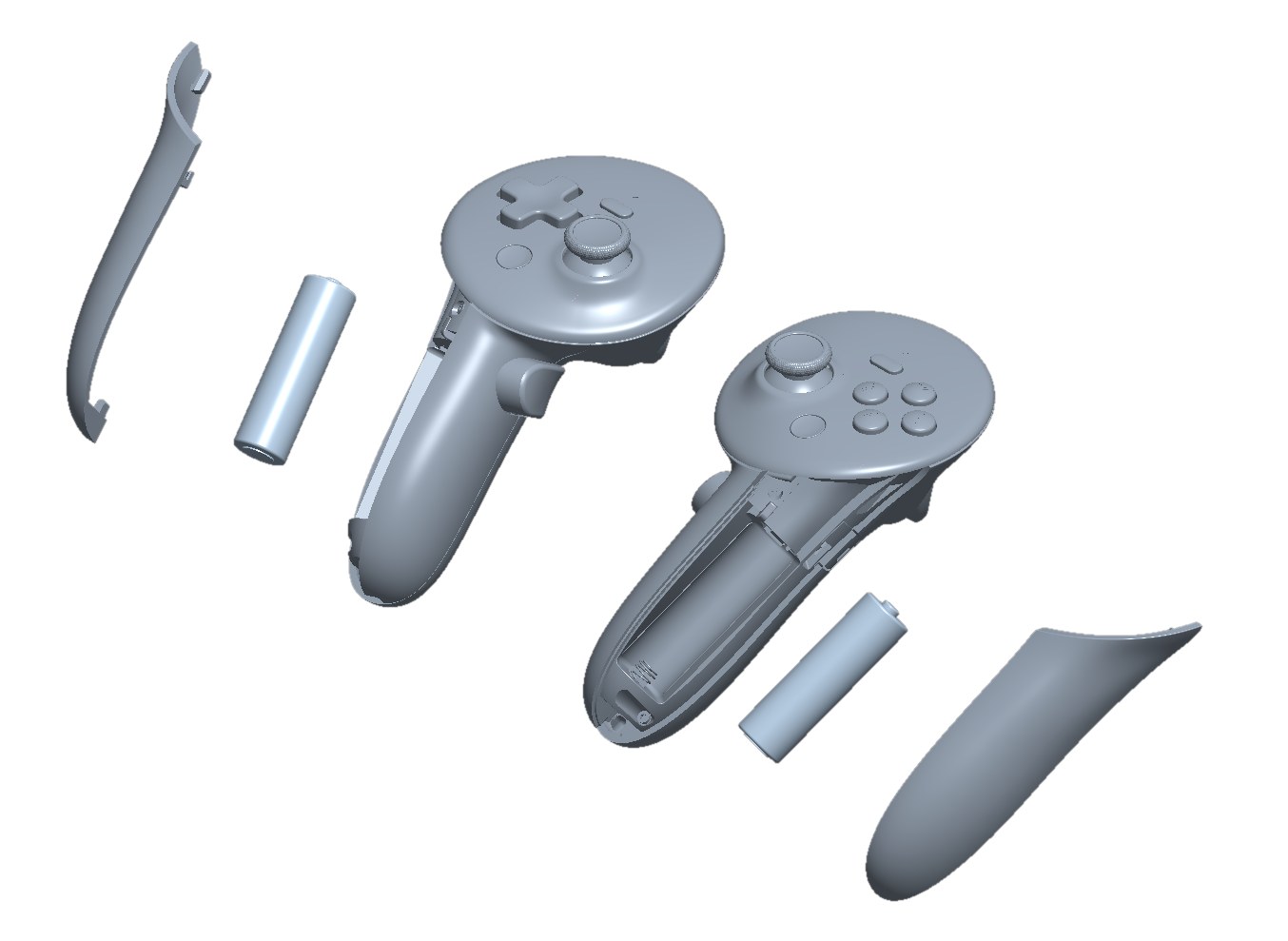
Seven items, by the README's own count. Mechanical models of the core module, the head strap and both controllers, each labelled "stripped down." A drawing of the controller tracking LED locations. The electrical document for the port. And two worked examples of a board that plugs into it: a full USB 3.0 hub drawn in Altium, and a minimal one in KiCad.
File names carry dates. The core module model is stamped September 17, three days after launch. The strap and controller models are dated September 25, and the port document October 1.
One port, two jobs, not both at full width
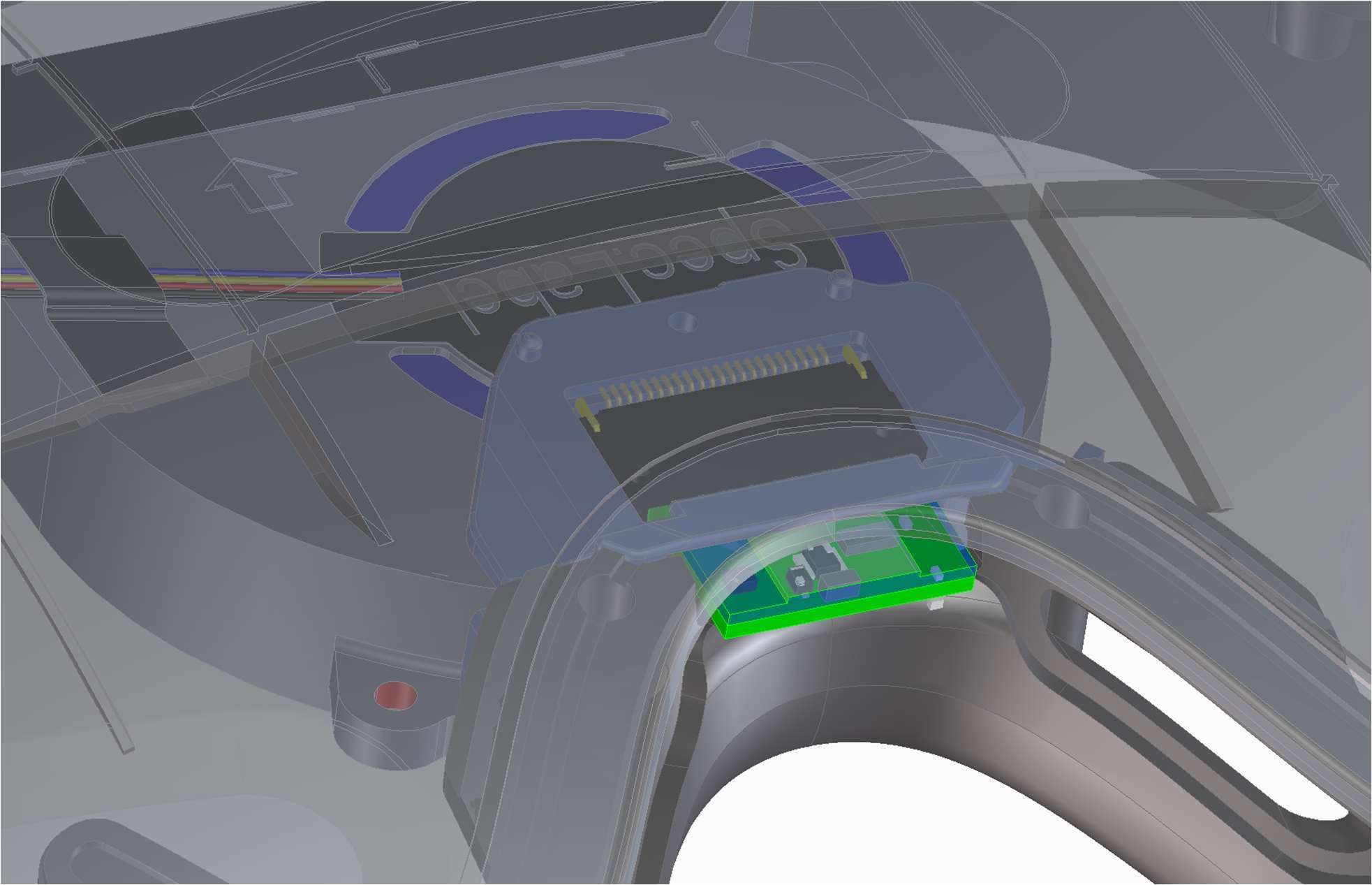
The port document is titled "Auxiliary Port, Nose Bridge." It describes two four-lane MIPI D-PHY camera interfaces, each good for 2.5 gigabits per second per lane, plus a single PCIe Gen 4 lane. That matches what Road to VR described in September, which is how this site first reported the port.
What the earlier description did not show is that the PCIe lane is borrowed. It runs over the left camera's pins through a set of multiplexers. "Only the 'Left' camera signals are switched out for PCIE," the document says, "this enables a singular camera to be functional." Valve lists three configurations as supported: two cameras with no PCIe, one camera with PCIe, or PCIe alone. Two full cameras and a PCIe device at once is marked "potentially supported, needs development."
So an accessory maker picks. Stereo cameras, or one camera and a fast data link.
Six watts, and what it costs
The port supplies 3.1 volts at up to 2 amps continuous, with a current limit near 3 amps. Valve rounds that to 6 watts and attaches a warning: "the allowable 6W of use will consume over 25% of the available battery capacity, so minimizing consumption is recommended." The arithmetic holds against iFixit's teardown, which found a pack rated at 20.9 watt-hours where Valve's spec sheet says 21.6. Six watts for one hour is 6 watt-hours, between 28 and 29 percent of either figure.
Advertisement
There is a hardware revision buried in the same section. "The early devices had a 1A continuous rated part," the document says, changed to the 2 amp part "at ramp to enable higher current draw." It does not say how to tell which part a given headset has.
Power is also gated. Nothing reaches the connector until pin 44 is grounded by the accessory. After that the headset probes for one of three things: a known camera, a pair of pins shorted together to signal a power-only or PCIe-only device, or a response from an identification chip or temperature sensor on the I2C bus. Fail all three and "power will be removed from the port."
The known camera has a name. The document calls it "Arcturus RGB," which is the $149 color passthrough module sold under Valve's compatibility mark. It is the one device the port recognises without extra work.
The licence, and the warranty line under it
Everything is released under Creative Commons Attribution-NonCommercial-ShareAlike 4.0. Make a part, modify it, share it, credit Valve. Selling one requires a separate commercial licence, and the README gives an email address for asking.
The same file sets the cost of experimenting. "Opening the outside enclosure of your Steam hardware will void a warranty," it reads, "as will attaching any hardware that is not 'Steam Frame Compatible' to any of the electrical interface ports." A homemade board in the front port is, by that sentence, a warranty decision.
Valve's own KiCad example comes with a caution as well. "We do not recommend using this for a real accessory, because of the rigid connection to the expansion port." The Altium example routes through a flex cable instead. Valve also published only part of the electrical document: its pages are numbered 8 through 14 of 14. Pages 1 through 7 are not in the repository.
The software half of the post
Friday's post also summarises a month of updates. SteamOS 0.4 reached all users on October 8, the first full release since 0.3.0 in September. Its lead claim is "improved power efficiency and battery lifetime during both streaming and local gameplay, with gains of up to 12%," with a note that results vary by framerate and content. It also carries fixes for the "Error 17" streaming failure, which need SteamVR 2.18.2 or later on the PC side, and a presence sensor setting for people using glasses spacers.
What it means for an owner
Short term, very little. Nothing here is a product. Strap adapters, counterweights and controller grips are the realistic first wave, because they need the mechanical models and nothing else, and the licence lets hobbyists share them freely.
Port accessories are slower. They need a 0.8 millimetre board with gold-plated pads on a half-millimetre pitch, in most cases an identification chip, and a power budget that comes straight out of play time. Anything sold in a box needs a commercial licence from Valve first. The company has now published the rules for all of it. A low bar, perhaps, but one Valve cleared by 44 pins.
For buyers, the practical reading is that the Frame's accessory list will be decided in public. Anyone can check a claimed add-on against the pinout before paying for it.
Advertisement