
iFixit published its Steam Frame teardown on September 23, and the battery is the number to start with. The pack is a curved two-cell lithium-polymer unit rated at 20.9 Wh. It is glued down. No stretch-release tabs, no easy-peel wrap, no debondable adhesive. iFixit freed it with isopropyl alcohol and patient prying, and wrote that it would "much rather see a deliberate release mechanism."
HardwareSeptember 24, 2026
The Steam Frame's Battery Is Glued In, and iFixit Will Not Be Selling One Yet
By Alex Reeves
Staff Writer, VR.org
Advertisement
Elizabeth Chamberlain wrote the teardown. iFixit has been a Valve repair partner since 2022 and states that Valve had no input on the piece and did not review it before publication.
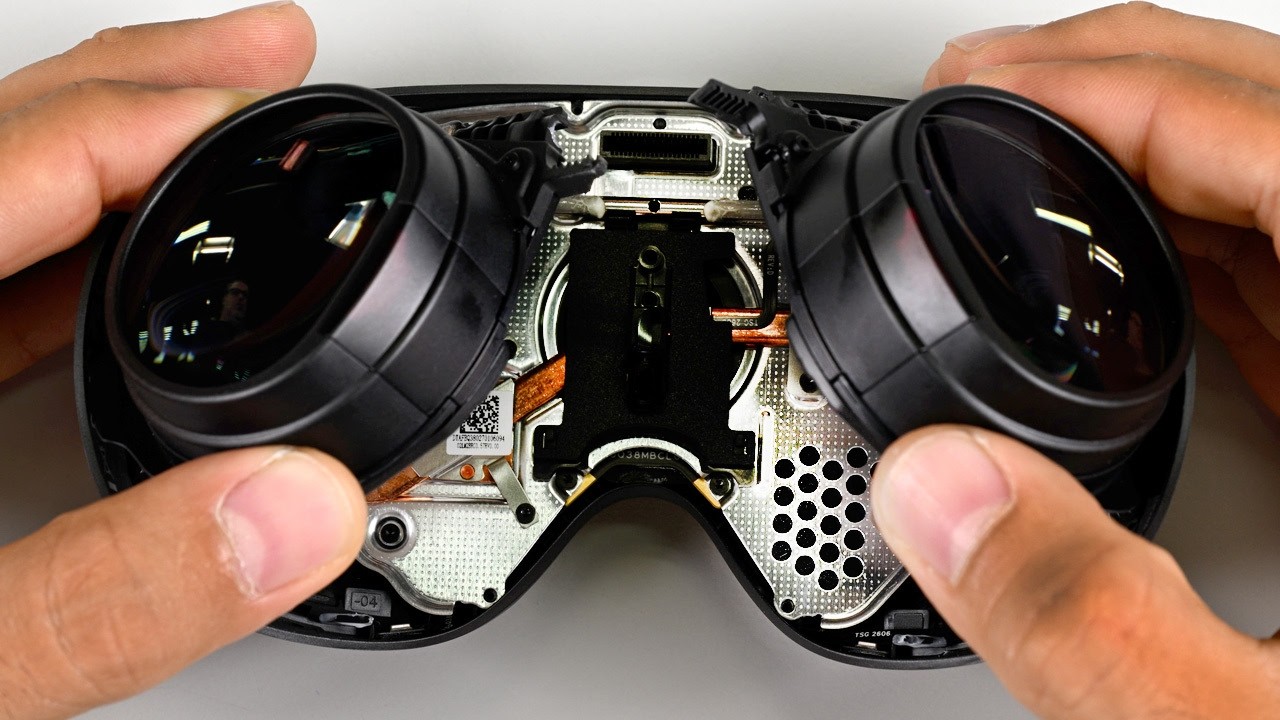
The easy half
Everything that touches a face comes off. Face foam, headrest foam, and the nose bridge, which Valve made modular and independently replaceable. iFixit calls that a step further than it has seen on a headset before. The strap detaches from the optics and compute section too, so battery work happens flat on a bench instead of in midair.
Storage sits outside the shell. A microSD slot on the exterior takes up to 2TB on top of the 256GB or 1TB the kit ships with. iFixit likes it for the plain reason that upgradeable storage keeps a device in use longer.
The optics are the surprise. Slide the lenses to their widest interpupillary setting and the access screws are exposed. Inside, the lens stacks hold to the IPD rail with magnets. Lifting one off is simple. Freeing its cables is not, because they are adhered to the back of the LCD, so a display swap is not tool-free. iFixit still called the procedure "among the most approachable optical-module replacement procedures we've seen."
Those panels are LCDs rather than micro-OLED, a choice enthusiasts have complained about since the $1,059 launch. iFixit makes the repair argument for it anyway: LCD replacements should be cheaper when they land. No display parts are in the store yet, so there is no figure to quote.
Two capacities for one battery
Valve's product page rates the Frame battery at 21.6 Wh. That is the number VR.org carried on launch day and the number in its coverage of the first SteamOS update, which shipped faster charging with no minutes attached. iFixit reports the pack in its own headset is rated at 20.9 Wh. Both figures are on the record. iFixit's teardown does not address the gap.
Runtime is short either way. Reviewers land between one and two hours. iFixit cites Sean Hollister, who reports he has not seen more than two hours even in battery saver mode. Short sessions mean more charge cycles, and more cycles age a lithium pack faster. iFixit expects owners to want a new battery inside a couple of years.
It will not be selling one. "We won't yet be selling Steam Frame batteries when parts go live in our store," the teardown reads. "We hope that will change." The strap connector is the other half of that problem and possibly the answer to it. Power, audio, microSD data and the rear USB-C port all run through one small connection, which iFixit expects the community to reverse engineer into third-party packs. It is also the first place to look when one of those four functions stops working.
Advertisement
A long way to the fan
Under the optics, the Frame looks like every other headset. Copper runs across both displays. Thermal compound covers the processor area. Cables arrive from every direction.
The board carries 16GB of SK Hynix LPDDR5X stacked over a Qualcomm Snapdragon 8 Gen 3, with 256GB of SK Hynix flash in iFixit's unit. The teardown's summary: "It's basically a gaming smartphone strapped to your face." The chip choice matters here. The 8 Gen 3 is a 2023 phone part, not the Snapdragon Reality Elite Qualcomm positioned as the 2027 XR ceiling, and not what Meta put in the $1,299.99 VR Glasses it announced on September 23.
The fan is where the teardown turns. Fan and heat pipe appear to be separate parts, which is the right call. Reaching them is not. Removal runs past the optical assemblies and through the dense internal stack, disturbing far more hardware than a fan swap should. iFixit called it "the Frame's clearest missed opportunity."
A fan is a moving part that needs cleaning. iFixit points out that the fanless Index ran hot enough for owners to fit third-party fans in its frunk.
The controllers split the same way. AA cells, user-replaceable. Thumbsticks, soldered.
What keeping one alive costs
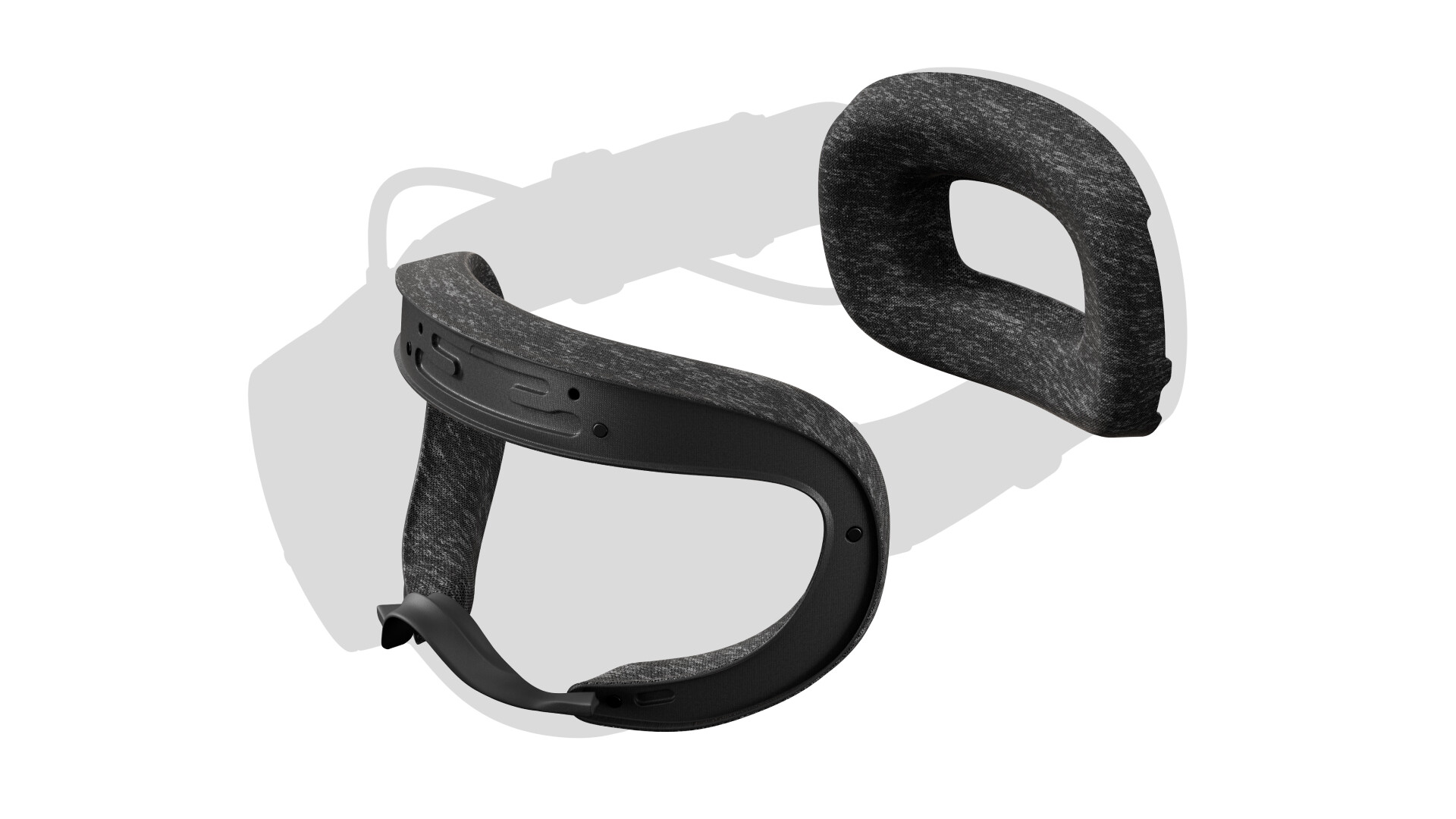
Valve lists the consumables. The Accessory Replacement Kit lists at $49 for a face gasket, a head cushion and a standard light blocker. The Ergonomic Accessories Kit lists at $59 for a top strap, an extended light blocker and two controller hand straps with battery doors. Neither was sold on its own at launch; both were offered at checkout to buyers who had a purchase email. Add the $29 power supply the headset ships without and VR.org put the practical entry price at $1,147.
$49 buys three pieces of foam and a plastic shade. Steam has sold finished games for less.
iFixit says parts and guides are "coming to our Valve Repair Hub soon" and did not attach a repairability score to the Frame. The original Steam Deck earned a 7 out of 10, among the highest the site has given a handheld.
The split is clean for anyone spending the money. The parts that wear out from use are the parts Valve made easy: foam, nose bridge, lenses. The two parts that decide how long a $1,059 headset stays usable are the battery and the fan. Both sit deeper than anything else in the box, one is glued in place, and nobody sells a replacement for it yet.
Advertisement