
Varjo published two press releases on October 29, both datelined Helsinki. The first said the Finnish Defence Forces Innovation Unit and Varjo are piloting virtual counter-drone training on the XR-4 Series. The second said every XR-4 Series headset will be built at Varjo's own facility in Espoo, with assembly moving there in January 2027. Taken separately they read as a training pilot and a supply chain note. Taken together, from the same company on the same day, they describe a headset maker that has finished rebuilding itself around defense procurement.
EnterpriseNovember 6, 2026
Varjo Is Moving All XR-4 Production to Espoo and Piloting Counter-Drone Training With the Finnish Defence Forces
By Sam Whitfield
Contributing Writer, VR.org
Advertisement
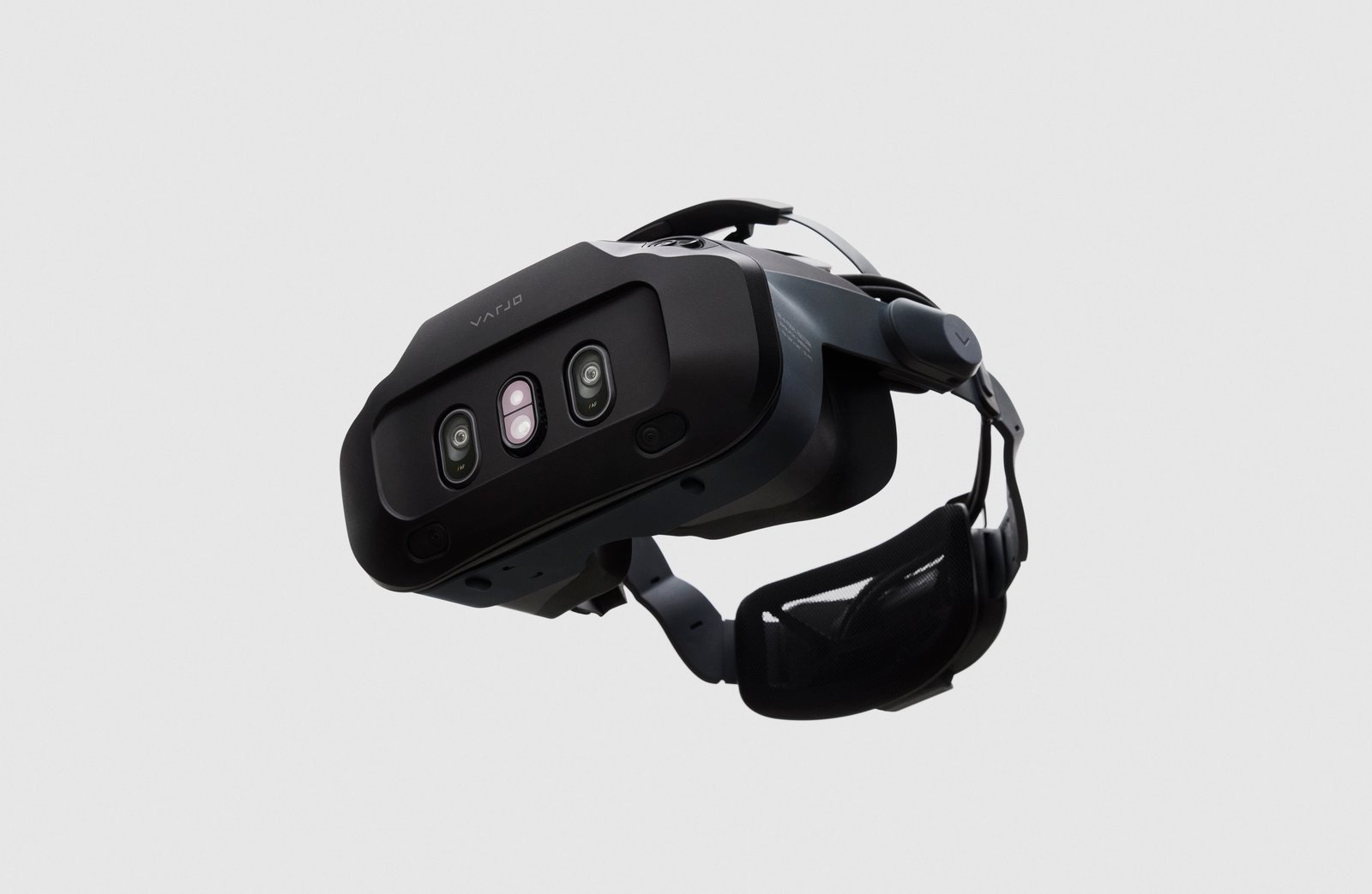
Trade coverage trailed the releases by up to six days. Unmanned Airspace carried the counter-UAS item on October 30, Soldier Systems Daily on November 2, and Auganix on November 4, so anyone meeting the story this week is reading a week-old announcement.
What the Finnish pilot is, and what it is not
On the government side the partner is the Defence Forces Innovation Unit, and the work is being run with a brigade-level unit that neither party named. Varjo's release states the capability claim directly: the XR-4 Series offers visual clarity sufficient to train against a five-inch FPV drone at realistic distances. That is the vendor assessing its own hardware rather than an independent measurement, and it carries most of the weight in the announcement. A five-inch quadcopter at a few hundred meters is small, fast and low in contrast against sky or treeline. Whether a headset resolves it well enough for the training to transfer is the entire question.
Timo Toikkanen, Varjo's chief executive, put the rationale in terms of pace. "The drone threat is one of the critical challenges of the modern battlefield, and training must keep up with the changes," he said in Varjo's release. Major Ville Kuparinen, who heads the Defence Forces Innovation Unit, was more concrete about the appeal, saying virtual technology lets soldiers prepare for drone threats in a realistic and repeated manner without consuming real resources. The pilot, in his words, "gives us valuable insights into how virtual training can be put into even better use."
Preparations started in February 2026, so nine months of groundwork surfaced as a single announcement rather than a standing start. Past that date the release is thin. No contract value, no pilot duration, no headset count, no number of personnel trained. Varjo and the Defence Forces have described an intent and a platform, not a program of record, and anyone sizing this as revenue should wait for the next disclosure.

The Espoo decision is the more consequential of the two
Manufacturing news rarely travels far, and this item deserves more attention than the pilot. Varjo already built the XR-4 Secure Edition in Finland. During 2027 the rest of the Series joins it, with assembly at the company's own Espoo plant starting in January. Varjo's stated reasons are control and continuity: owning the line lowers its exposure to supply disruption, and it shortens the distance from research through assembly to field support.
Advertisement
The compliance language is where the intent becomes legible. Varjo says its XR-4 development, manufacturing and support processes are certified to ISO 27001, and that all headsets built in Finland will comply with the Trade Agreements Act, the US statute governing which countries' products federal agencies may buy. The Secure Edition also ships in a fully offline configuration with no radio components, for air-gapped and classified environments. None of that language is aimed at a consumer; it is aimed at someone working through a security questionnaire before a purchase order.
Varjo puts its installed base at more than 120 defense programs across NATO and allied nations, which is the company's own figure and not an audited one. It published no volumes, no investment total, no headcount and no production targets alongside the move, so the scale of the Espoo line remains unknown. Toikkanen tied the decision to demand, saying in the manufacturing release that "demand for secure, European-made XR is growing fast" and placing the move under the heading of European technology sovereignty.
Twelve months of the same strategy
Neither release changes Varjo's direction. Both finish a strategy it has run in public since last autumn. In October 2025 the company said it was putting more than 40 million euros into next-generation defense technologies, and Rheinmetall became a partner the following month. February 2026 brought ready-to-deploy systems for secure and air-gapped environments, the same customer need the Secure Edition answers. In March the Ukrainian Armed Forces began working with Varjo on virtual training. April added a partnership with VRAI on training analytics. By June the Ukrainian arrangement had expanded to include a counter-UAS simulator, which makes the Finnish pilot the second counter-drone engagement on Varjo's books this year rather than the first.
Against the consumer end of this industry the contrast is difficult to miss. Lenovo folded its XR business into AI wearables in July. Meanwhile the money and the conviction keep landing in defense and institutional training: a $5.1 million Marine Corps gunnery trainer whose opposing force is driven by agentic AI, a Thales partnership with a small Australian training vendor, an Air Force feasibility award for a VR treadmill company that never made consumer hardware pay, an Air Force Reserve maintenance trainer credited with $18.5 million in avoided costs. Varjo belongs on that list in an unusual position, because it sells the headset rather than the courseware, and courseware is where most of this spending has gone.
What a buyer should take from it
For a European defense or public-sector evaluator, the Espoo move settles questions that previously needed a caveat. Country of manufacture, security certification, offline operation and support proximity now sit on one page, and in a scored evaluation that combination tends to outrank a resolution figure.
The broader signal is narrower than the headlines suggest. A counter-UAS pilot with one brigade, no stated budget and no end date is an experiment, and both parties call it a pilot rather than a program. The manufacturing decision is the commitment. A company does not move an entire product line onto its own floor in Espoo for 120 programs it expects to remain at 120.
Advertisement