
Best VR Headset for Watching Movies 2026: Top Picks
Last updated: October 23, 2026
Part of our Best VR Headsets buyer's guide.
The best VR headset for watching movies in 2026 is the Apple Vision Pro, thanks to its micro-OLED display, deep blacks, and immersive cinema environments. For most people the $599 Meta Quest 3 is the smarter buy, turning any room into a giant personal theater with apps like Bigscreen and Skybox. The Samsung Galaxy XR rounds out the top three with native Google TV. If you can wait, Meta VR Glasses arrive in spring 2027 at $1,299.99 as a 100-gram micro-OLED cinema built for exactly this. Here is what makes a headset great for movies, and our picks.
What makes a headset good for movies
For films, the priorities differ from gaming. Display quality: OLED and micro-OLED panels give the deep blacks and contrast that make movies pop. Media apps: you want real streaming apps and a virtual cinema, which is where Quest and Vision Pro shine and the PSVR2 falls short. Comfort: a film is two hours, so weight and fit matter more than for a quick game. Screen size and immersion: the whole appeal is a screen bigger than any TV, set in a theater, a plane cabin, or on the moon.
1. Apple Vision Pro, the best for movies

Nothing watches movies quite like the Vision Pro. Its micro-OLED panels deliver inky blacks and bright highlights, and Apple's Environments drop a cinema-sized screen into a virtual theater or a mountaintop at sunset. It plays Apple TV, Disney+, Prime Video, YouTube (up to 8K on the M5 model), and 3D and spatial video, and the near-retina clarity means no visible pixels between you and the picture. The catch is the $3,699 price, which Apple actually raised by $200 on June 25 as memory costs pushed prices up across its lineup, so do not wait for a discount that is not coming. If money is no object and movies are the point, this is the one.
One thing to weigh before spending $3,699 on a movie headset: Bloomberg reported that Apple cut more than 200 roles on August 21, about 100 of them inside the Vision Products Group, and the immersive video unit was among the teams cut back. The hardware is unaffected, and Apple went on to stream all four of its live immersive MLB games between August 28 and September 18, so nothing you can buy today got worse. But Apple Immersive is the format that makes this headset feel like more than an expensive screen, and the team producing it is smaller than it was in July. Apple did release Remnants on October 16, a 27-minute, PG-13 ghost story from director Ti West that Apple calls its first immersive horror film. It is one film, not a slate. Buy the Vision Pro for how it plays the movies you already own, not for a promised pipeline of exclusives. Compare it to the value pick in our Quest 3 vs Vision Pro guide.
2. Meta Quest 3, the best value cinema

At $599 the Quest 3 gives you 90 percent of the movie experience for a fraction of the price. It is standalone, so you can watch in bed or on a flight, and the app support is unmatched: Bigscreen recreates an actual movie theater you can share with friends, Skybox plays your local files including 3D and 180/360 video, and YouTube, Prime Video, and Disney+ have official apps, with Netflix running in the Quest browser. Disney+ on Quest has been 2D only since it launched in December 2025, but UploadVR reports a November update adds 3D films like Marvel's The Avengers in select countries and several of the Vision Pro app's 3D cinema environments, and Meta plans to let US owners rent or buy "hundreds" of movies on Quest later this year. Its LCD blacks are not as deep as a micro-OLED headset, but the sharp pancake lenses and giant virtual screen make it our value pick and our overall best VR headset.
3. Samsung Galaxy XR, for the Google ecosystem
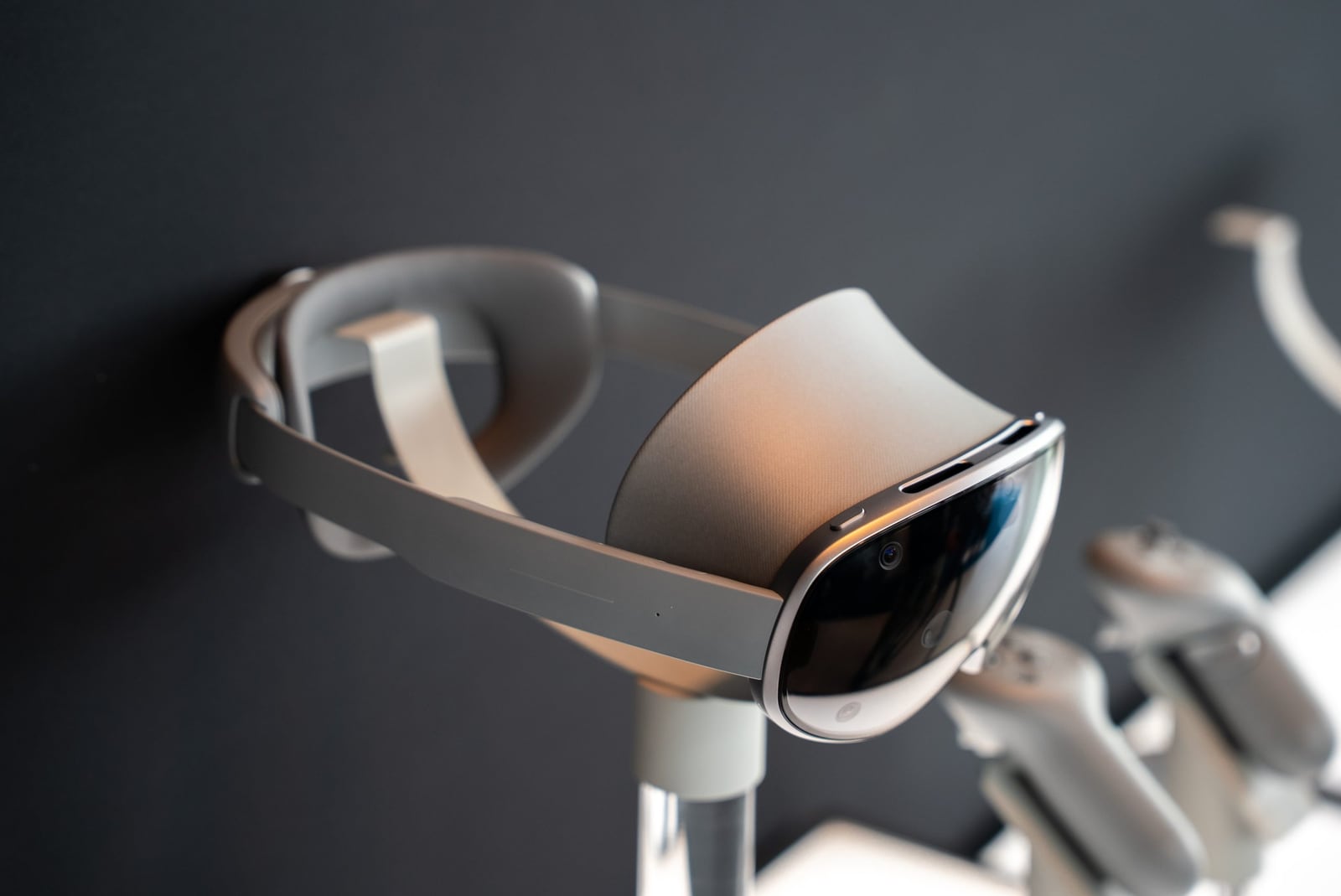
Samsung's Android XR headset is a strong media machine. Its micro-OLED panels rival the Vision Pro for sharpness and contrast, and because it runs Android XR it has native Google TV and YouTube, including a growing catalog of immersive content, and it comes with a Netflix app preinstalled, which neither Quest nor Vision Pro offers. It sits between the Quest 3 and Vision Pro on price, and it is the natural choice if you are invested in Google and Samsung services. Samsung has been pushing it harder as a media device too: the June UK launch shipped with an Explorer Pack software bundle built around exactly this kind of big-screen streaming.
Worth waiting for: Meta VR Glasses (spring 2027)
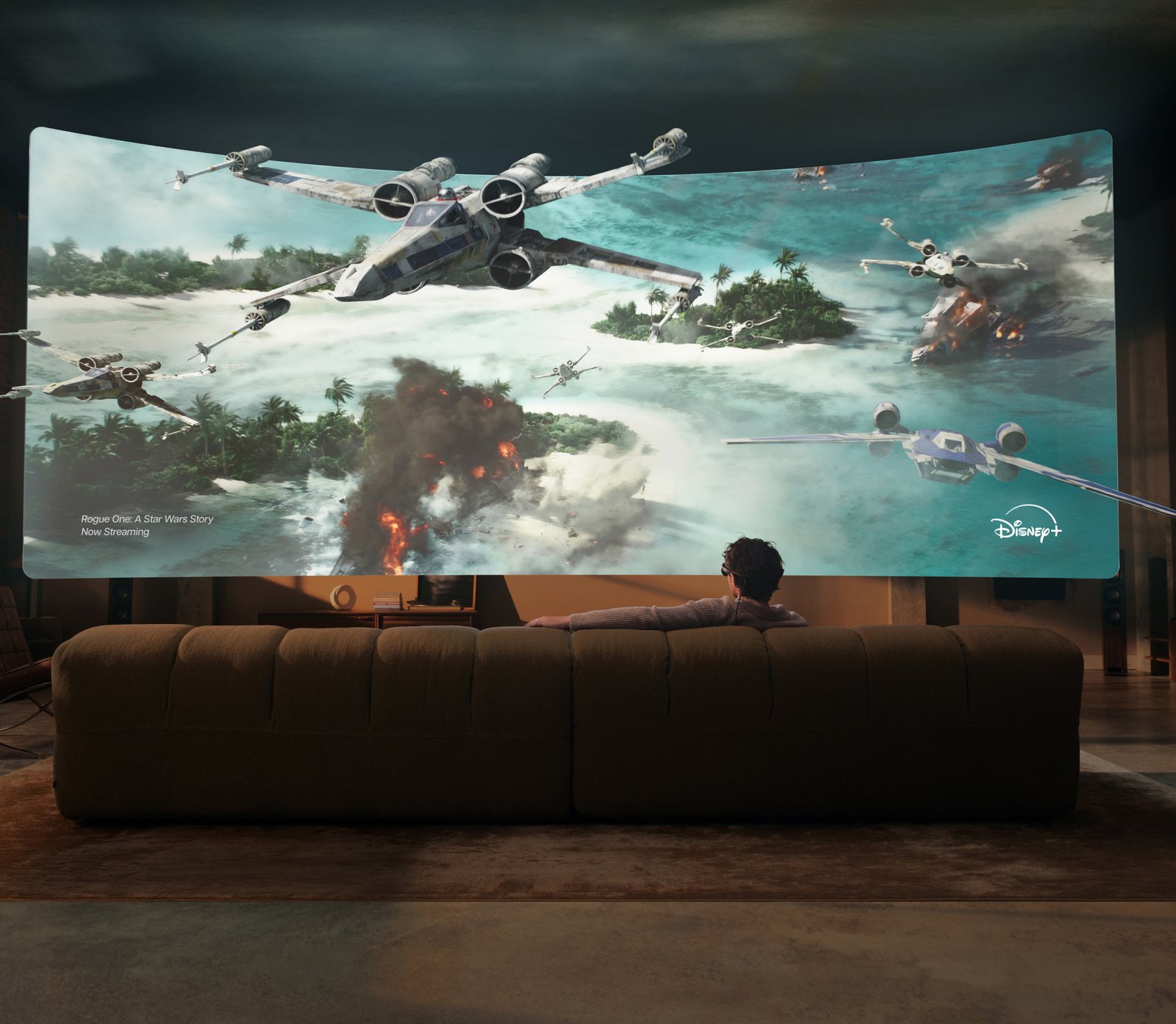
The most movie-focused headset announced this year is not on sale yet. Meta VR Glasses arrive in spring 2027 for $1,299.99, and Meta's announcement lists a personal cinema first, ahead of sports, work and games. They weigh about 100 grams on the face, with the battery and processor in a roughly 300-gram puck on a cable, which is the whole point for a two-hour film: nothing heavy hangs off your face. The micro-OLED panels run 2412 by 2288 per eye at 37 pixels per degree with Dolby Vision HDR, and Road to VR's hands-on found the blacks "predictably deep" with "no noticeable OLED smearing."
The content deals are the deepest Meta has signed. Meta calls the glasses the first IMAX Enhanced certified VR device, with select films in IMAX's expanded aspect ratio. Peacock, HBO Max and Paramount+ are opening their 3D catalogs for the first time, a new Disney Immersive Cinema by ILM app adds VR Enhanced versions of films like Avengers: Infinity War and Star Wars: A New Hope, and James Cameron's Lightstorm Vision will release "first time in 3D" films in 2027. The limits are real, though. The field of view is 70 by 66 degrees against about 110 by 96 on Quest 3, which matters less for a floating screen than for games but still frames the picture more tightly. Meta rates the battery at up to three hours of media playback, enough for a long film and not a double feature. The sides are open, so you will want the optional light blocker; Road to VR's reviewer said that on a plane he "would most definitely opt for headphones and the optional light blocker." And nobody outside Meta has worn a pair for a full film yet, so the comfort case is still a promise. We looked at what 100 grams buys and costs from a Quest 3 owner's side. If movies are the main reason you want a headset and you can wait until spring, these are the pair to wait for.
The apps that make it work
Whatever headset you choose, the software is half the experience. Bigscreen is the standout for a shared virtual cinema on Quest and PC VR, Skybox is the best player for your own movies and 3D rips, whether they sit on the headset or on a DLNA or SMB share at home, and Plex's iPad app runs on Vision Pro in a resizable window, though Plex has still not shipped a native visionOS version. We cover the best of them in our best VR apps guide.
Movie headsets compared
| Headset / Glasses | Price | Best for |
|---|---|---|
| Apple Vision Pro (M5) | $3,699 | Best overall picture, micro-OLED, 3D and spatial video |
| Samsung Galaxy XR | $1,799 | Micro-OLED with native Google TV and YouTube |
| Bigscreen Beyond 2 | $959 | Lightweight PC VR cinema for long sessions |
| Meta Quest 3 (512GB) | $599 | Best all-around value cinema, standalone |
| Meta VR Glasses | $1,299.99 | Spring 2027: 100-gram micro-OLED cinema, not on sale yet |
| XREAL 1 Pro+ | $599 | AR display glasses, 1,200-nit micro-OLED big screen on the go |
| VITURE Beast | $549 | XR display glasses for console and Steam Deck media |
| PlayStation VR2 | $399 | OLED picture if you already own a PS5; new US stock currently unavailable |
| Meta Quest 3S (128GB) | $349 | Cheapest way into a standalone virtual theater |
| RayNeo Air 3s | $269 | Budget micro-OLED display glasses for video |
Headsets and display glasses for watching movies, with current VR.org deals prices. Meta VR Glasses are listed at Meta's announced price and go on sale in spring 2027.
Frequently asked questions
What is the best VR headset for watching movies?
The Apple Vision Pro is the best VR headset for watching movies in 2026. Its micro-OLED displays produce deep blacks and bright highlights that make films look cinematic, and Apple's immersive environments place a huge screen in a virtual theater or landscape. For most people the $599 Meta Quest 3 is the better value, turning any room into a giant personal cinema with apps like Bigscreen and Skybox.
Should I wait for Meta VR Glasses to watch movies?
Only if movies are the main reason you want a headset and you can wait until spring 2027. Meta VR Glasses cost $1,299.99, weigh about 100 grams on the face with a roughly 300-gram compute puck, and use micro-OLED panels with Dolby Vision HDR. Meta calls them the first IMAX Enhanced certified VR device and has lined up 3D catalogs from Disney+, Peacock, HBO Max and Paramount+. The tradeoffs are a 70-degree field of view, a battery Meta rates at up to three hours of media playback, and no preorders yet. If you want to watch movies now, the $599 Quest 3 is the value pick and the Vision Pro the premium one.
Can you watch Netflix and streaming services in VR?
Yes, with one catch: Netflix has no app on Quest or Vision Pro. On the Meta Quest, YouTube, Prime Video, and Disney+ have official apps, and Netflix plays in the Quest browser on a giant virtual screen. The Apple Vision Pro runs Apple TV, Disney+, Prime Video, and (since February 2026) YouTube natively, while Netflix still has no Vision Pro app, so you watch it in Safari. The Samsung Galaxy XR is the one headset here with a Netflix app, preinstalled, alongside Google TV and YouTube built in through Android XR. On Quest, Bigscreen and Skybox also let you watch your own files or stream in a virtual movie theater.
Is the Quest 3 good for watching movies?
Very good, and it is the best value for it. The Quest 3 is standalone, so you can lie back anywhere and watch on a screen as large as you like. Bigscreen recreates a real cinema, even with friends in the same virtual room, and Skybox plays local files including 3D and 180/360 video. Its LCD blacks are not as deep as the OLED-based Vision Pro or PSVR2, but for the price the experience is excellent.
Do you need an OLED headset to watch movies in VR?
No, but it helps. OLED and micro-OLED panels, as in the Apple Vision Pro, Samsung Galaxy XR, and PlayStation VR2, produce true blacks and higher contrast that make dark scenes look better than on the LCD panels in the Quest 3. That said, the Quest 3 remains a great movie headset thanks to its sharp lenses and huge app support. If deep blacks matter most to you, choose a micro-OLED headset.
Is the PSVR2 good for watching movies?
Not really. The PSVR2 has a gorgeous OLED display, and its Cinematic mode will put any PS5 media app, Netflix and Disney+ included, on a resizable virtual screen. But that picture is capped at 1920x1080, Sony offers no dedicated VR cinema app of the kind Quest and Vision Pro have, and it needs a PS5, or a PC through Sony's adapter, which drops HDR. It is a decent fallback if you already own one, not a reason to buy one. If watching movies is a priority, choose the Quest 3, Vision Pro, or Galaxy XR instead.