
Best Standalone VR Headset 2026: No PC, No Console Required
Last updated: October 23, 2026
Part of our Best VR Headsets buyer's guide.
The best standalone VR headset in 2026 is the Meta Quest 3 at $599. It runs everything on board with no PC or console, with pancake lenses, color mixed reality, and the biggest library in VR. The $349 Quest 3S is the best value, and the $3,699 Apple Vision Pro is the premium spatial computer. This guide ranks the all-in-one headsets that need nothing but the headset itself.
1. Meta Quest 3, the best standalone headset
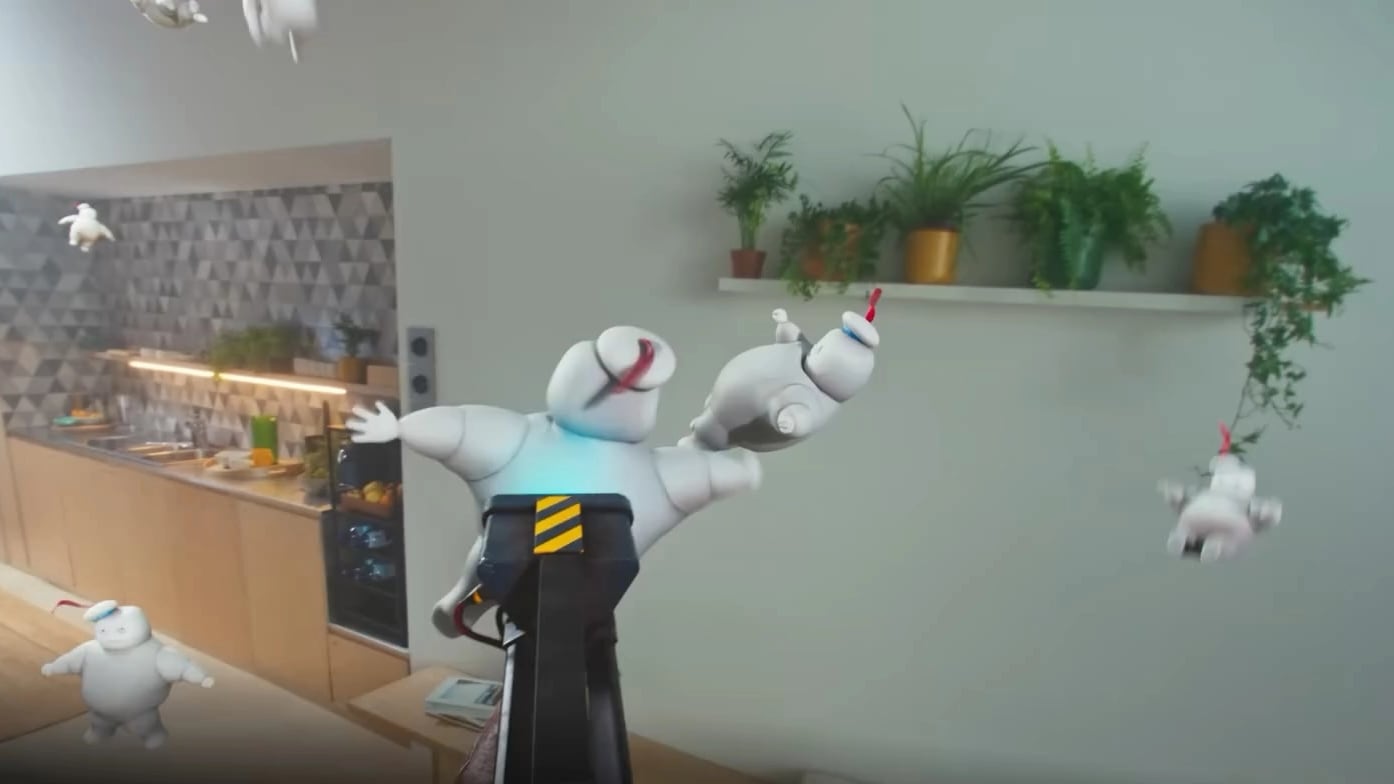
The Quest 3 is the headset we recommend to most people, standalone or otherwise. For $599 you get sharp pancake lenses, the best mixed reality at anything near this price, and the largest game and app library in VR, all with no wires or extra hardware. It also connects to a gaming PC later if you want PC VR, which makes it the most flexible headset you can buy.
2. Meta Quest 3S, the best value

The Quest 3S runs the same chip and the same library as the Quest 3 for $349 with 128GB of storage (the 256GB model is $449), which makes it the best value in VR and the easiest recommendation for first-time buyers. You trade the pancake lenses and higher-resolution display for a lower price, but performance is identical, and the 3S even lasts a little longer: Meta rates it at up to 2.5 hours of average use, against 2.2 for the Quest 3. If you are choosing between the two, our Quest 3 vs Quest 3S comparison breaks it down.
3. Apple Vision Pro, the premium spatial computer

The Vision Pro is the premium standalone option, with some of the sharpest micro-OLED displays of any headset and visionOS controlled mainly by your eyes and hands (Apple sells Sony's PlayStation VR2 Sense controllers for it separately, at $249.95). It is built for media, productivity, and spatial apps more than gaming, and at $3,699 it is a different class of purchase. If you want the best displays and a computer you wear, it is unmatched; if you want VR gaming value, a Quest is the better fit, as our Quest 3 vs Vision Pro comparison explains.
4. Samsung Galaxy XR, the Android XR flagship
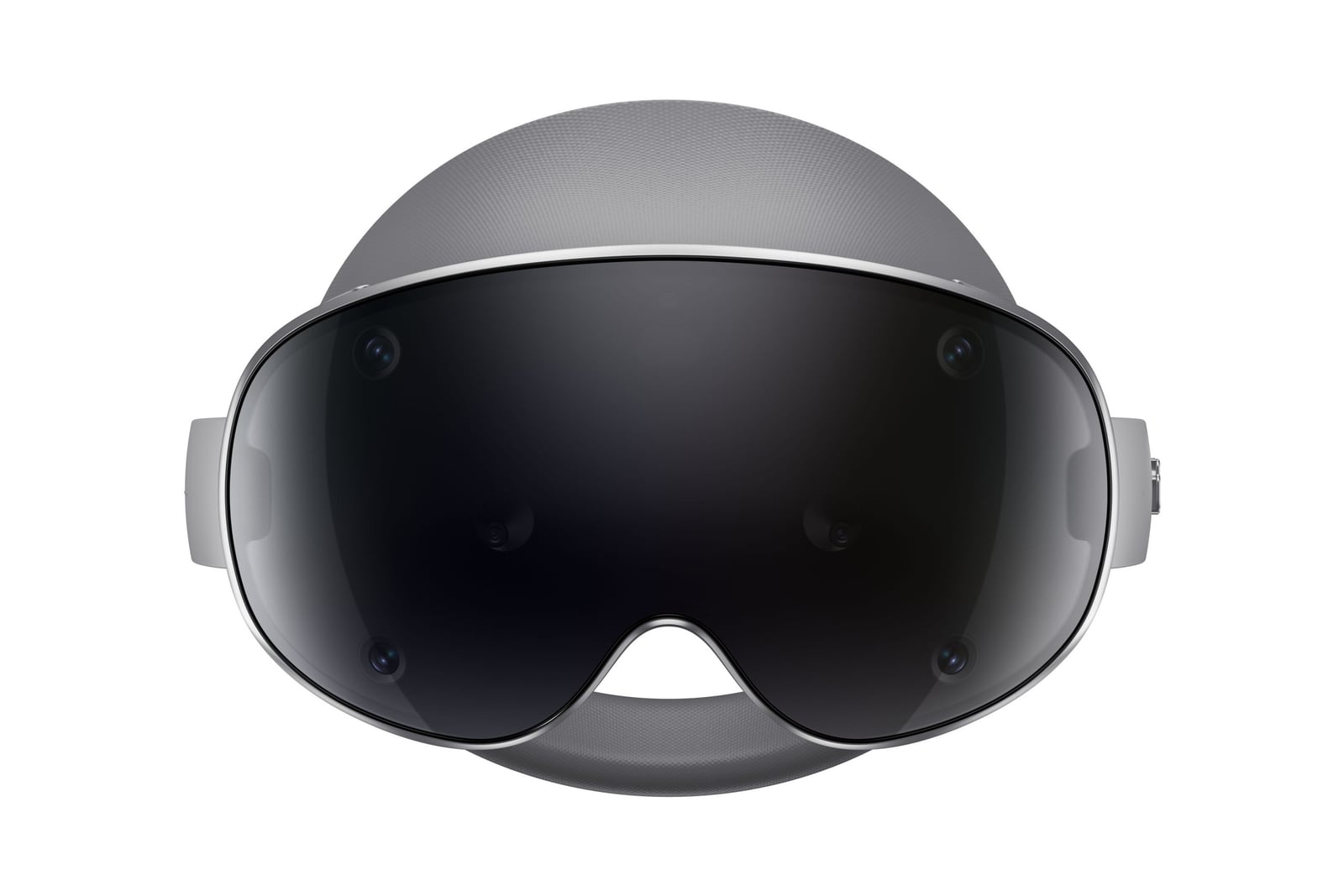
The Samsung Galaxy XR is the flagship of Google's Android XR platform, with eye and hand tracking and Gemini-powered spatial AI. At $1,799 it sits between the Quest and the Vision Pro, and it is the most credible Vision Pro alternative in the Android ecosystem for buyers who want a premium standalone headset tied to Google services.
Battery and weight, side by side
A standalone headset carries its own battery, so how long it lasts and how much it weighs are part of the purchase in a way they never are on a PC headset. Every maker's rating here lands between two and two and a half hours; the Steam Frame managed 1 to 1.5 in Road to VR's test. Weight splits them further apart. The Quests, the Galaxy XR and the Steam Frame weigh 435 to 545 grams on your head, the Vision Pro 750 to 800, and Apple and Samsung both move the battery off the headset into a separate pack on a cable.
| Headset | Price | Weight | Battery |
|---|---|---|---|
| Meta Quest 3 | $599 | 515 g | Up to 2.2 hours |
| Meta Quest 3S | $349 | 514 g | Up to 2.5 hours |
| Samsung Galaxy XR | $1,799 | 545 g, plus a separate battery pack | Up to 2 hours (2.5 for video) |
| Apple Vision Pro | $3,699 | 750 to 800 g, plus a 353 g battery | Up to 2.5 hours |
| Valve Steam Frame | $1,059, waitlist | 435 g (Road to VR) | 1 to 1.5 hours (Road to VR test) |
Weights and battery life from each maker's spec page, checked October 23, 2026, except the Steam Frame, which Road to VR weighed and battery-tested. Makers rate battery differently, so read small gaps as noise.
If two hours is not enough, Meta sells the Elite Strap with Battery for $129.99, which it says adds two hours of play. Sources: Quest 3, Quest 3S, Galaxy XR, Vision Pro and Road to VR's Steam Frame review.
Standalone versus PC VR, and what to avoid
Standalone is the simplest way to do VR: no PC, no console, and a few minutes of setup. The trade-off is that the most demanding, highest-fidelity games still look best on a gaming PC, which is where our best PC VR headset guide comes in (and the good news is a Quest can do both). What to avoid: the cheap phone-in-a-shell headsets are not real standalone VR, with no positional tracking, no controllers, and no library. Start with a Quest 3S instead. For the full lineup, see the main best VR headsets guide.
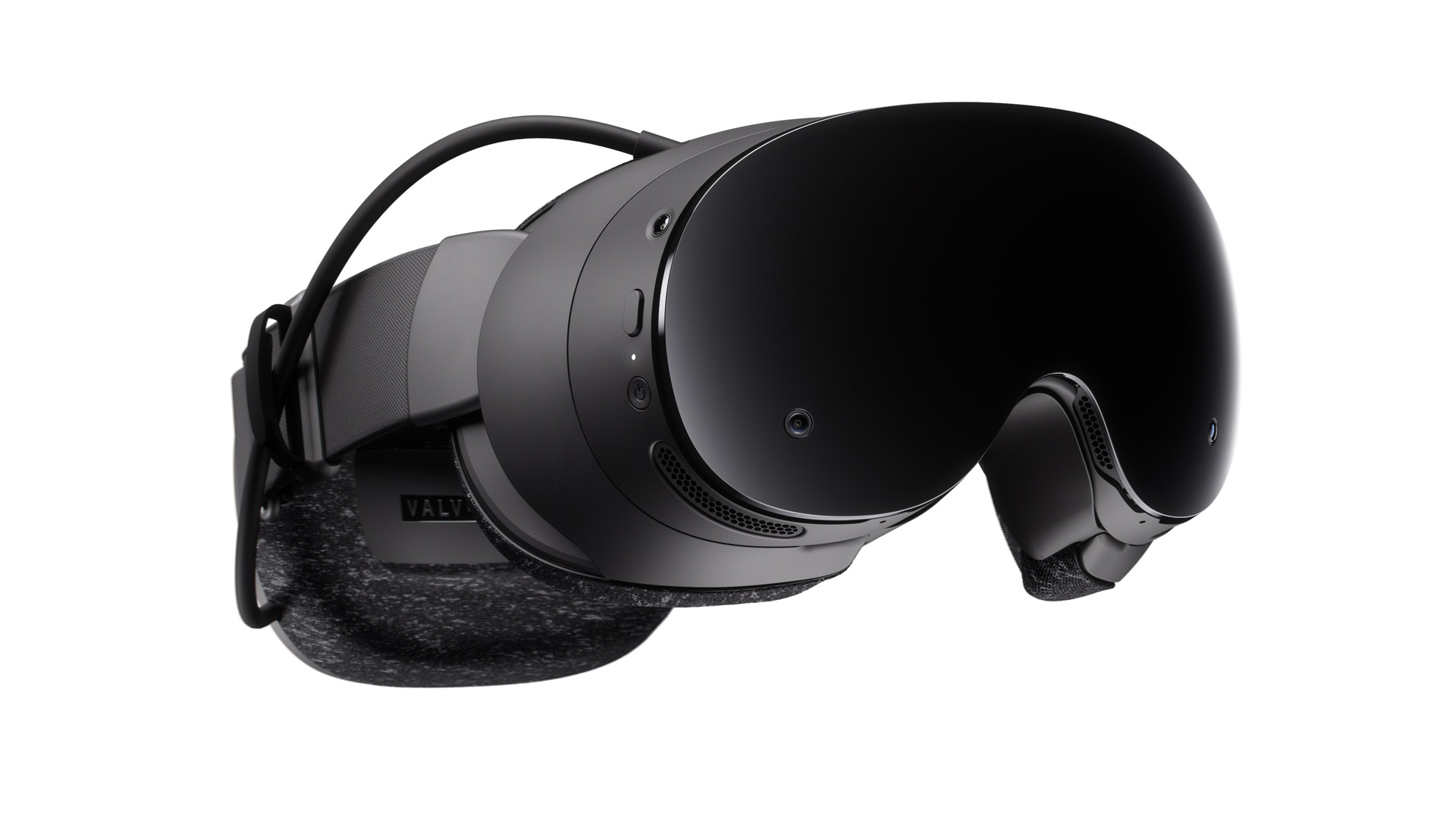
Two more things to watch before you decide. Pico's next flagship, previously Project Swan, is now the Pico Space Pro, and it is late. Pico cancelled its September 2 Beijing debut and moved the headset to Q4 2026. Pico itself has announced no price or regions, though US reseller Knoxlabs lists a 16GB enterprise model at $2,899 with a February 2027 date. The claimed sheet is a 4,000 PPI micro-OLED panel and 270 grams on the head, with the battery in a tethered puck. Pico sells only enterprise headsets in the US today, so treat it as a signal about where standalone hardware is heading rather than a headset you will be buying this year. And Valve's Steam Frame is a standalone SteamOS headset too. It went on sale through a reservation queue on September 14: a Snapdragon 8 Gen 3 with 16GB of RAM, over 100 Standalone Verified games at launch (233 titles were on Valve's Great on Frame list by October 23, 93 of them VR), and a Wi-Fi 6E adapter and Half-Life: Alyx in the kit. At $1,059 for 256GB and $1,299 for 1TB (the $29 power supply is sold separately), it is aiming well above the Quest line rather than at it, and its passthrough is black and white unless you add the $149 Arcturus Vision camera. It is also not a buy-today headset: reservation signups closed on September 17, purchase emails have gone out in waves since September 18, and Valve's October 9 update tells reservation holders whether their email comes by December or in 2027. Anyone joining now goes on a waitlist with no date. Reviews are in. Road to VR found the Quest 3 slightly clearer overall and got 1 to 1.5 hours of battery in mixed use, against about 2 hours on a Quest 3. Our Steam Frame hub and price breakdown cover the details if you want a place on the waitlist.
One thing that did not happen this fall: a Quest 4. Meta announced no new Quest at Connect on September 23, so the Quest 3 and 3S remain its standalone line. What it showed instead was Meta VR Glasses, about 100 grams on the face with the computer and battery in a tethered puck, priced at $1,299.99 for spring 2027 with controllers sold separately. If you were holding off on a Quest in case a successor appeared, there is nothing to wait for this year.
Frequently asked questions
What is the best standalone VR headset in 2026?
The Meta Quest 3 at $599 is the best standalone VR headset in 2026. It runs everything on board with no PC or console, has pancake lenses, strong color mixed reality, and the largest game and app library in VR. If you want to spend less, the $349 Quest 3S is the best value standalone, and if you want a premium spatial computer for media and productivity, the Apple Vision Pro is the high-end pick.
What does standalone VR mean?
A standalone VR headset has its own onboard computer, so it runs games and apps by itself with no PC, console, or phone attached. You put it on and play wirelessly. This is different from PC VR headsets, which need a gaming computer, and from console VR like the PSVR2, which needs a PlayStation 5. Standalone is the simplest and most popular form of VR today.
Is the Quest 3 or Quest 3S the better standalone headset?
Both are excellent standalone headsets that run the same library on the same chip. The Quest 3 has sharper pancake lenses, a higher-resolution display, and a depth sensor that helps mixed reality, for $599. The Quest 3S costs $349 and is the best value. Most buyers are happy with the 3S unless image quality or mixed reality is a priority. Our Quest 3 vs Quest 3S comparison covers the choice in detail.
Can a standalone headset also do PC VR?
Yes. The Quest 3 and Quest 3S can connect to a gaming PC over Air Link or a Link cable to play SteamVR titles, which makes them the most flexible headsets you can buy: standalone when you want simplicity, and PC VR when you want the deeper PC library. The Samsung Galaxy XR can stream PC VR too, through the third-party Virtual Desktop app and Samsung's optional $249.99 controllers, though it is not built around it. The Apple Vision Pro has no general PC VR mode: Valve's Steam Link app for it streams flat games only, and PC VR on it runs through individual apps or third-party tools such as ALVR.
Is the Apple Vision Pro a standalone headset?
Yes. The Apple Vision Pro is a standalone spatial computer that runs visionOS on board, controlled mainly by your eyes and hands, with Sony's PlayStation VR2 Sense controllers sold separately by Apple for $249.95. It has some of the best displays in any headset, but it is built for media, productivity, and spatial apps more than VR gaming, and it costs $3,699. If gaming is your goal, a standalone Quest is the better fit.
How long does a standalone VR headset's battery last?
About two to two and a half hours, by the makers' own ratings. Meta rates the Quest 3S at up to 2.5 hours of average use and the Quest 3 at up to 2.2. Apple rates the Vision Pro at up to 2.5 hours of general use on its separate battery, and Samsung rates the Galaxy XR at up to 2 hours of general use, or 2.5 for video. Road to VR got 1 to 1.5 hours from the Steam Frame in mixed use. On a Quest, Meta's $129.99 Elite Strap with Battery adds about two hours by Meta's figure.
Do I need anything else to use a standalone VR headset?
Almost nothing. You do not need a PC or a console, and nothing stays tethered to the headset while you play. On a Quest, the one extra is a smartphone for the first few minutes: Meta says the Quest 3 and Quest 3S need a Meta account and the Meta Horizon app on your phone to complete the initial pairing and setup, plus Wi-Fi. After that the headset runs by itself. You may eventually want comfort accessories like a head strap or a carrying case, but nothing else is required to start.