
Every spatial platform that has launched in the last decade arrived with the same problem, and every one of them reached for the same expensive solution. The hardware ships. The store is thin. The platform holder starts writing checks, for exclusives, for port funding, for a first-party studio, for a developer relations org whose actual job is persuading somebody to rebuild a working game for a device that has not sold a million units yet. Meta has spent years and billions this way. Apple did a politer, more expensive version of it for visionOS. Google is running the same play right now with its Android XR Catalyst program, handing free dev kits to a deliberately small first cohort.
SoftwareAugust 3, 2026
Valve's Answer to Steam Frame's Content Problem Is Three Translation Layers and Not a Single Port
By Jordan Kuo
Staff Writer, VR.org
Advertisement
Valve is doing almost none of that. On Sunday the reason turned up on the Steam store as a pair of entries nobody will ever play.
Lepton and FEX are now public Steam apps. Neither is a game, and neither has a store page you would browse to on purpose. Lepton is listed as app 3029110 and still resolves in Steam's own store API as of Monday morning. A third entry, blandly titled Steam Frame ARM64 Compat List, is sitting there too, as app 3043620, and that is the one a developer should actually be looking at. All of it landed days after the FCC granted Valve equipment authorization for the headset on July 29.
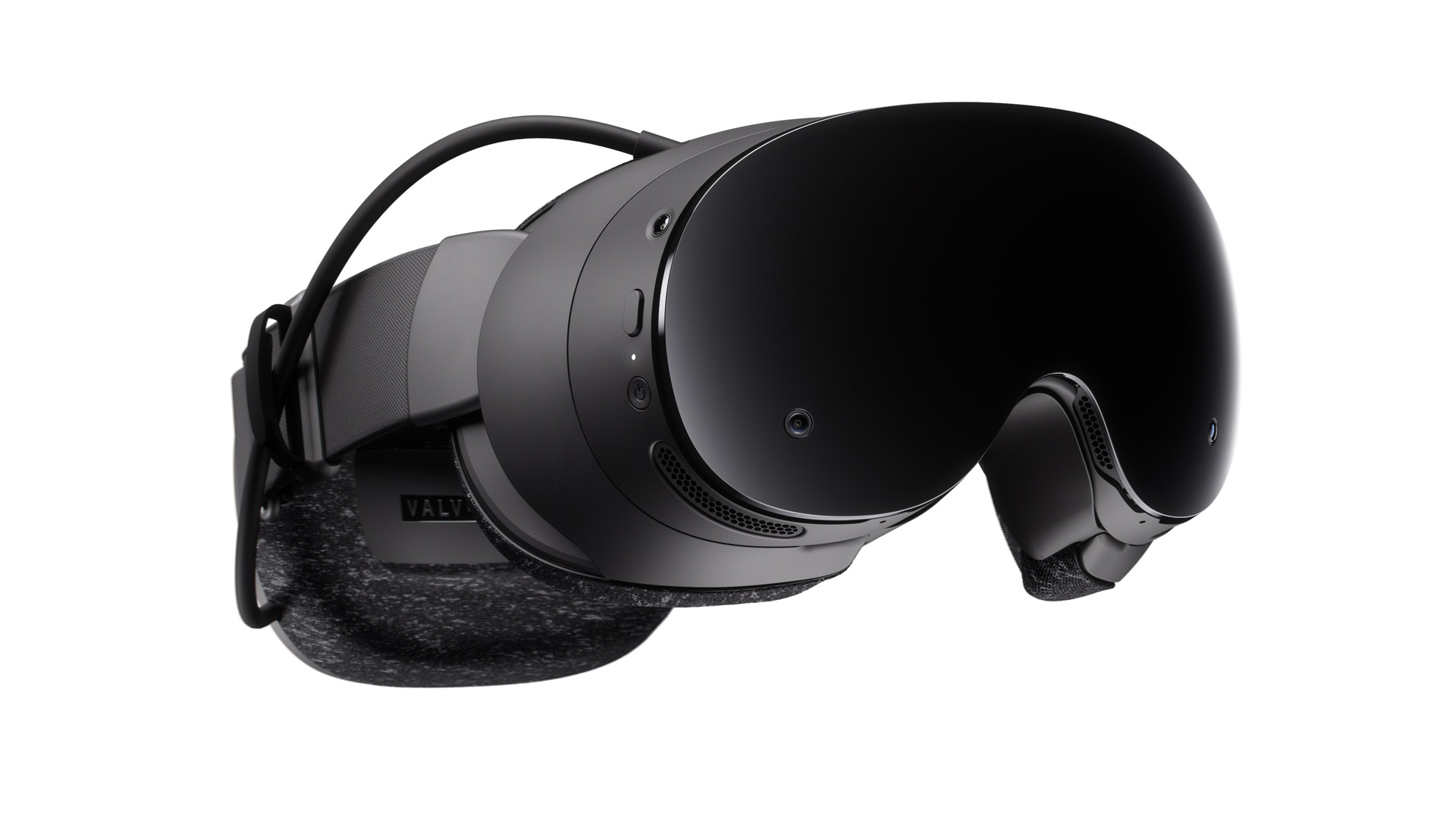
Three layers, none of which the developer has to think about
Proton, which Valve shipped in 2018, is a fork of Wine that lets Windows games run on Linux, and it is the single reason the Steam Deck was not a catastrophe. FEX is a usermode emulator that translates 32-bit and 64-bit x86 instructions into ARM64 at runtime through a JIT compiler, and the design decision that matters is what it declines to emulate: graphics API calls get forwarded to the host system's native OpenGL and Vulkan libraries instead, and translated code is cached so a scene does not stutter every time you walk back into it. Lepton is a fork of Waydroid that runs Android software inside a container sharing the host Linux system's hardware, and it picked up its official name in Valve's own Steam documentation back in December.
Stack all three and the picture gets strange in a productive way. A Windows game compiled for x86 passes through Proton to become a Linux game, then through FEX to become an ARM64 one, and it does this on a Snapdragon 8 Gen 3 with 16GB of LPDDR5X strapped to somebody's face. The developer does nothing.

There is one recent precedent for this working at consumer scale and it did not come from gaming. When Apple moved the Mac off Intel in 2020 it shipped Rosetta 2, and that transition succeeded largely because most people never found out it was happening. Valve is attempting the same disappearing act against a much less forgiving target, since a stereoscopic display running at 90Hz punishes a frame-time spike in a way a spreadsheet never will.
Valve has been paying for this since before the headset existed
The detail that tends to get lost whenever FEX surfaces in a news cycle is that FEX is not Valve's project. It is an open source emulator that lives on GitHub, and Ryan Houdek built the first prototype in 2018, the same year Proton shipped. Valve has funded its core developers ever since, and the company's interest in ARM compatibility runs back further than that, to recruiting efforts in 2016 and 2017 aimed at getting Windows games onto the architecture. Seven years of payroll on an emulator, for hardware that had not been announced.
Advertisement
That is a categorically different bet from the one the rest of the industry is placing. Exclusivity money buys a launch window and then stops working. Funding a translation layer buys a catalogue, permanently, and the catalogue keeps growing whether or not anyone at Valve makes another phone call.
The 90 FPS number and the 10 percent number do not fit together
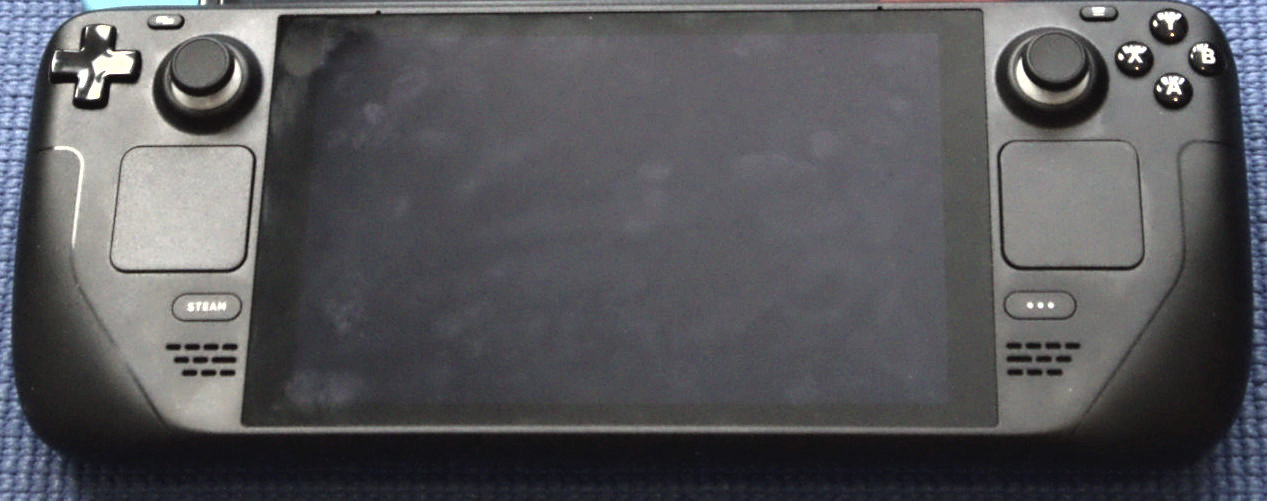
The arithmetic is where this gets uncomfortable. Valve's engineers have put FEX's overhead at 10 to 20 percent, roughly what Proton costs on the Steam Deck, which is a genuinely impressive figure for instruction-level translation. But VR.org reported in April that the Steam Frame Verified bar is 90 frames per second for standalone VR titles, with 720p at 30 for standalone flatscreen, and no 72Hz tier of the sort Meta and Pico both accept. There is no label for "almost."
A native ARM64 build gets the whole frame budget. Anything arriving through FEX surrenders as much as a fifth of it before the first draw call. On a mobile chip holding roughly 10 watts sustained, a fifth is not a rounding error, and the practical result is a library that splits cleanly into two shelves: a small certified one, and a very large one full of things that simply run.
The certified shelf is filling faster than expected. Great on Frame opened in July with roughly half a dozen titles and now lists more than 50. Fifty is a serious number for a headset with no release date, and it is a rounding error next to the Steam catalogue, and both of those are true at the same time.
Lepton is the entry worth watching
FEX gets the headline because emulation is legible and people have opinions about it. Lepton carries the bigger unknown. An Android compatibility layer sitting inside a VR headset invites one obvious question, which is whether the standalone content currently living on the Meta Horizon Store could be made to run, and a fair amount of the coverage has already answered that question enthusiastically. Valve has not answered it at all. What is confirmed is the mechanism, a Waydroid fork containerizing Android on top of Linux, and a mechanism says nothing on its own about store entitlements, DRM checks, or which OpenXR runtime a given Quest build expects to find when it wakes up.
A technical path and a distribution path are separate problems. The second one has killed considerably more good ideas than the first.
If you are shipping something in six months
The split is now clear enough to plan around, which is more than developers could say a month ago. If the badge matters, and on a Valve storefront the badge has historically moved units, the only route is a native ARM64 build with the full 90 FPS budget intact. That is real port work, and it needs to start before the hardware has a date.
If the badge does not matter, the position is better than any XR platform has offered so far. The existing x86 build probably just runs. The cost is 10 to 20 percent, and the alternative cost is an SDK migration, a new engine target, a certification cycle, and a store negotiation.
Nobody else is offering that deal. Valve spent seven years of engineering payroll to be in a position to make it.
Advertisement