
Unseen Reality opens a Kickstarter campaign on August 4 for the URXR One, a pair of spatial display glasses that weigh 93 grams. Early bird units run $699. The standard campaign price is $799, retail is $899, and the company is targeting mid-October to ship.
HardwareAugust 2, 2026
URXR One Hits Kickstarter August 4 With 93 Grams, Four Cameras, and Someone Else's Computer
By Alex Reeves
Staff Writer, VR.org
Advertisement
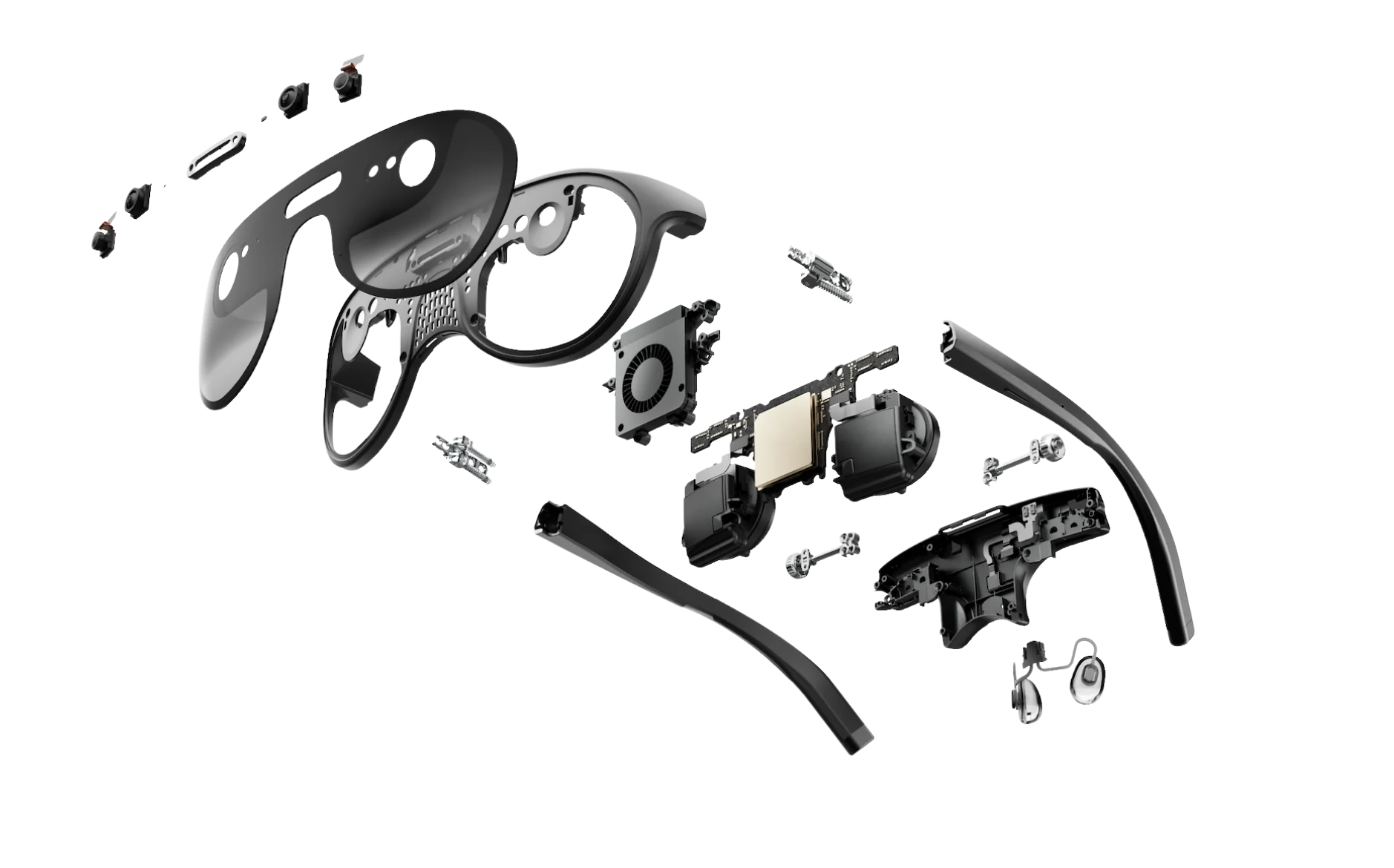
The number that matters is not on the display line. It is on the sensor list. URXR One carries four forward-facing cameras, a dual-camera SLAM system, a 1,000 Hz six-axis IMU, a magnetometer, an ambient light sensor, wear detection, and a four-microphone array. That is a complete 6DoF tracking stack, and it fits in a frame that weighs less than a deck of cards and a half.
The ledger said this was not supposed to fit
VR.org logged the current weight ledger four days ago, after setup graphics for Meta's unreleased Phoenix headset turned up inside Quest firmware. The rule that fell out of it was blunt: nothing under roughly 130 grams carries a processor, a battery, and a camera array at the same time. Rokid Glasses are 49 grams. Ray-Ban Meta sits near 50. XREAL's $299 display glasses are 62, and they get there by putting no camera and no battery in the frames at all. Snap's Specs, fully standalone, weigh 132.
URXR One has the camera array. It does not break the rule. It obeys the rule by deleting the other two things.
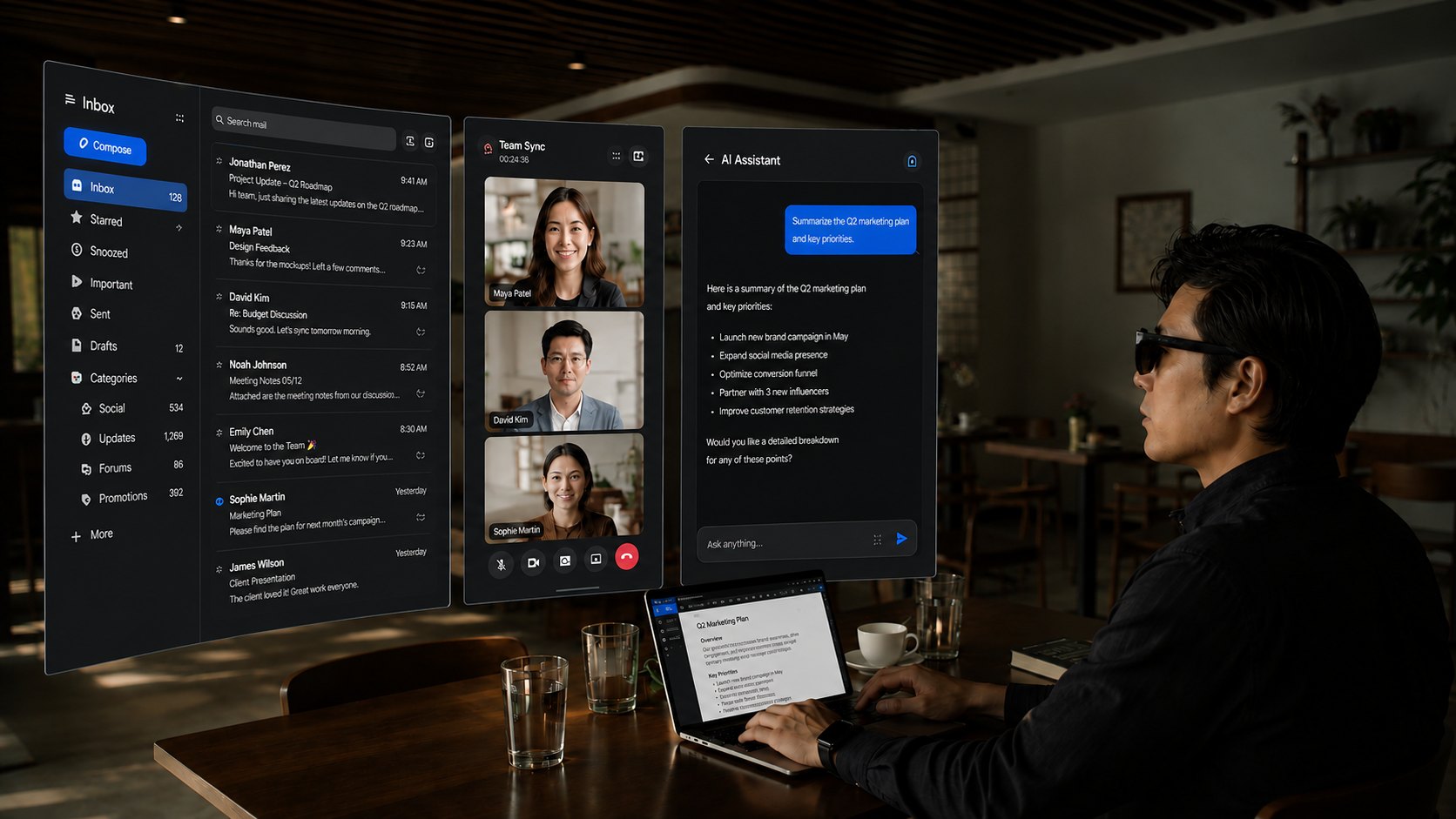
There is no processor in these glasses and no battery. They connect over USB-C DisplayPort Alt Mode to a device that already has both, which means laptops, tablets, and handhelds including the Steam Deck supply the picture and the power. Phones cannot do that on their own, so Unseen Reality sells a 10,000 mAh Power Hub for $69 that carries about three hours.
XREAL ran the same arithmetic on AURA, which comes in under 95 grams by relocating compute to a puck in your pocket. URXR One is two grams lighter and relocates compute into hardware the buyer already owns. Same trick. Different pocket.
Not a birdbath
The category label is doing real work here, so it is worth being precise. Xreal and Viture sell birdbath optics: a panel bounced into the eye, locked to the head, no understanding of the room. URXR One is closer to a Quest with the computer taken out. Passthrough video, pancake optics, and virtual screens that pin to a spot in the room and stay there when the wearer walks across it.
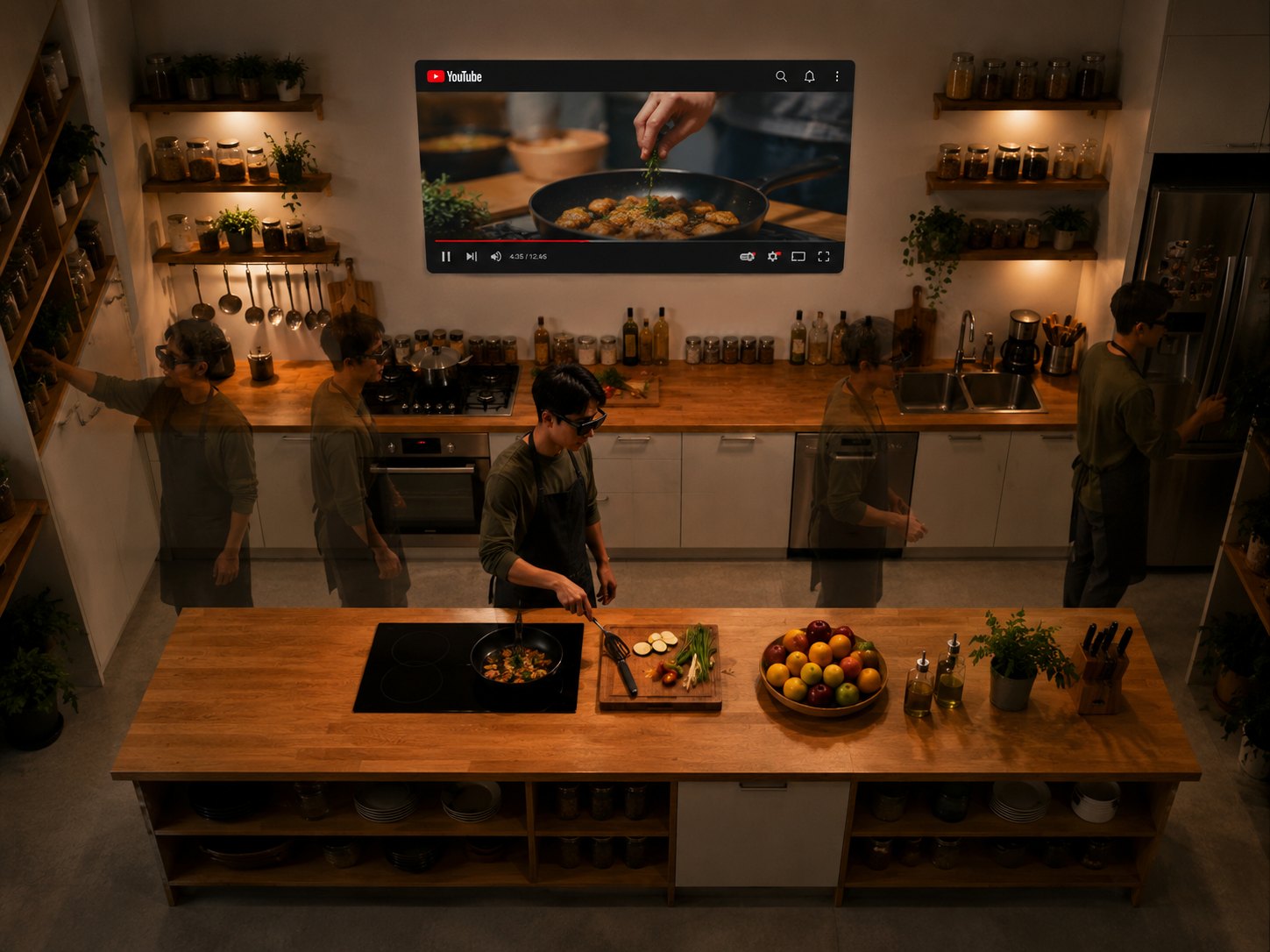
The panels are dual 1.03-inch micro-OLED at 2,448 by 2,064 per eye, running 90 Hz across a 90-degree diagonal field of view, roughly 80 degrees horizontal by 56 vertical. That works out to about 36 pixels per degree, which is meaningfully sharper than a Quest 3 at around 25. Field of view is where the money goes back. Quest 3 covers near 110 degrees horizontally. This covers 80.
Advertisement
The frame is AZ91D magnesium alloy with foldable temples, chosen for strength-to-weight, and Unseen Reality says the center of mass sits behind the nose bridge so the glasses balance instead of pulling forward. IPD adjusts by hand between 58 and 68 mm. Prescription inserts are supported. Screens resize from laptop-sized up to a claimed 200 inches, in either head-locked 3DoF or pinned 6DoF.
The part that is a Kickstarter
Ten weeks separate the campaign opening from the promised ship date. That is the number to watch.
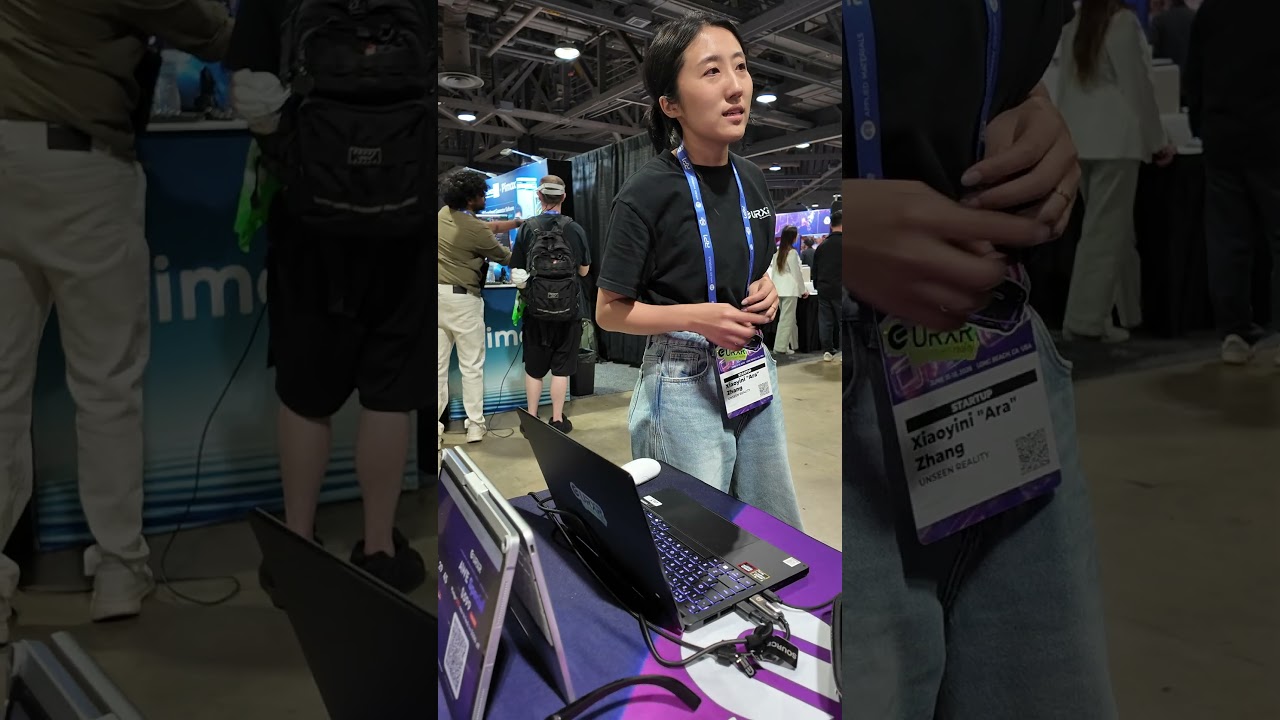
The hardware is real, and that is not a small thing to be able to say. Unseen Reality ran open hands-on demos at AWE USA in Long Beach in June, and third parties walked the booth and filmed the device tethered to a laptop. A working demo is not a production line. It is still more than most crowdfunded headsets have on the day they take the money.
The archive is less encouraging about what happens next. Immersed opened Visor preorders in September 2023 against a 2024 target, and as of last week it was still promising a fuller update on its production ramp while raising preorder prices by $200 behind a three-day deadline. Pimax announced Dream Air in December 2024 and is only now clearing the backlog. Neither of those was a Kickstarter. Both were funded by buyers against a date, and both dates moved.
What $899 has to survive
A crowdfunding price is fixed on the day the campaign opens. A bill of materials is not.
Qualcomm has told hardware partners that its chip prices go up by double digits on September 1, and memory and storage have been expensive all year. Unseen Reality is setting an $899 retail number in early August for hardware it intends to build in the autumn. Backers at $699 are insulated from a price increase. They are not insulated from what a small company does when every unit it assembles costs more than the money it already collected. Historically, that is the moment a ship date starts to move.
None of which makes the device less interesting. A 93-gram wearable monitor with genuine room-scale pinning, 36 pixels per degree, and a magnesium frame is the most credible attempt anyone has made at the thing Xreal buyers have been asking for since birdbath glasses shipped without tracking, and the spec sheet holds its own against headsets that cost twice as much. The company also has an unusually honest pitch, which is that it did not try to put a computer in your glasses.
The catch is the calendar, not the concept. Anyone reaching for the $699 tier on August 4 is not really buying a pair of glasses. They are buying a mid-October date from a company that has never had to hit one.
Correction, September 25, 2026: This article said there is no processor in URXR One. The glasses have no battery and no built-in computer, but they do carry an on-glasses spatial processing unit and a dedicated NPU that run 6DoF tracking and passthrough, per Unseen Reality's spec sheet. The connected device still supplies the picture and the compute for apps, so the glasses leave out the battery and the computer rather than all processing.
Advertisement