
How to Play Astro Bot Rescue Mission on Quest 3 and PC VR
Last updated: October 17, 2026
A living guide, updated as AstroQuest changes. For how the emulator fakes a PS4, a PS VR and its camera, see our October 7 deep dive.
AstroQuest is a free, open-source fan project that plays Astro Bot Rescue Mission, Sony's 2018 PlayStation VR platformer, on a Meta Quest 3 with no console and no PC, or on a Windows PC streamed to almost any VR headset. It runs the shadPS4 PlayStation 4 emulator and fakes the PS VR hardware around it. It includes no game: you need your own dump of the European release from your own PS4. The current version is 0.21.1, released October 13, 2026, and it plays at 30 frames a second on the Quest 3 alone and 60 on a PC.
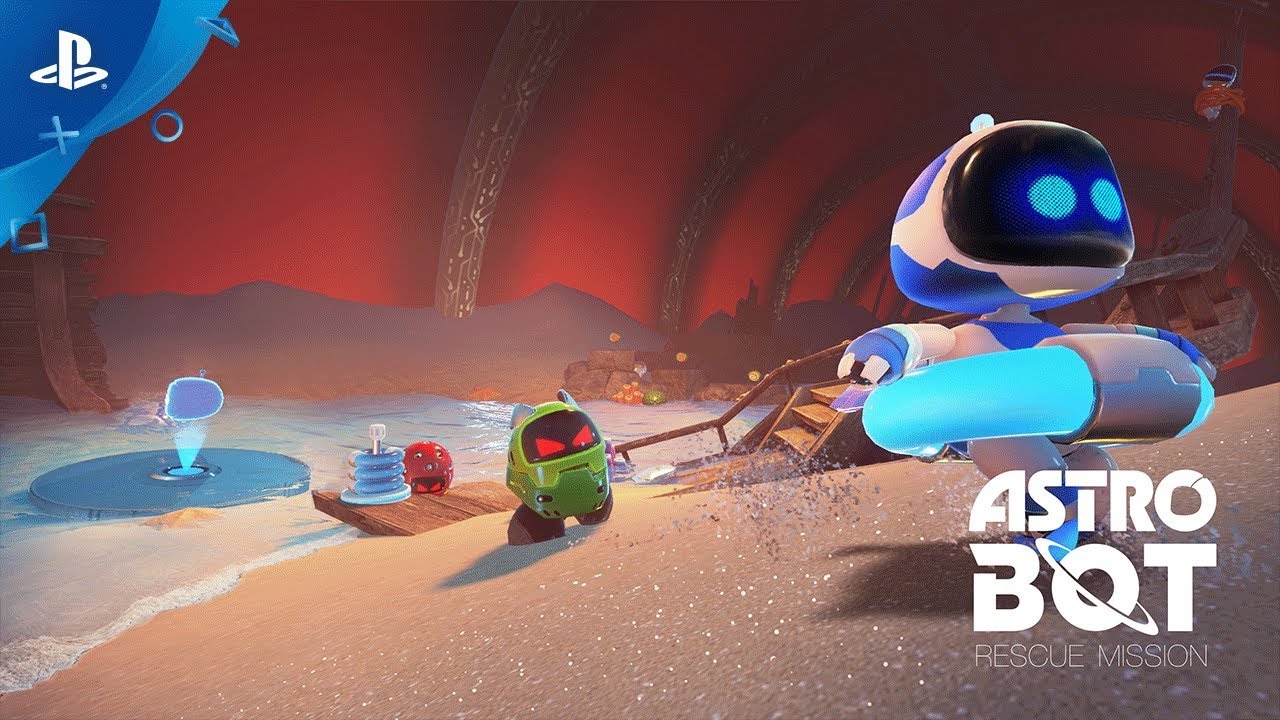
| Frames a second | Picture per eye | |
|---|---|---|
| Original PS4 + PS VR | 60 | 960x1080 to 1440x1536 |
| Quest 3 alone | 30 | 816x870 to 1200x1280, enlarged with FSR 1 |
| PC + Virtual Desktop | 60, more if you ask | 1440x1536 up to 3600x3840 |
Three ways to play, from the AstroQuest README as of version 0.21.1.
The part it will not give you
AstroQuest needs the European release of the game, CUSA12392, at version 1.00 or 1.04, taken from your own PlayStation 4 and your own copy. Buying it again does not help: the README says a package downloaded from the PlayStation Store is encrypted and cannot be used. A usable copy means running unofficial software on a PS4, and the project's whole answer to how is one sentence: "This project gives no information on how to get games, and this repository does not include any game data."
VR.org will not fill that gap either. Any site offering the 13 GB game folder is offering a pirated copy, and you have no way to know what else is in it. One user-reported data point for owners of other regions: an open GitHub issue reports the US release, CUSA12431, working on a PC through SteamVR. The README still lists only the European release as tested.
What you need
| Quest 3 on its own | PC VR | |
|---|---|---|
| Headset | Quest 3 (3S should work, untested) | Any headset with an OpenXR runtime on Windows |
| Computer | Any, for installing with adb or SideQuest | Windows 10 or 11, Vulkan 1.3 GPU, 16 GB of memory |
| Software | Developer mode on the headset | Virtual Desktop or SteamVR, Visual C++ runtime |
| Controller | DualSense, Touch controllers or a gamepad | DualSense on the PC, or Touch controllers |
| Storage | About 13 GB on the headset for the game | About 13 GB for the game |
Requirements by route, from the README.
Quest 3 on its own, step by step
Sideloading is the only way in. You need developer mode, and either adb, Android's command-line tool, or SideQuest, which does the same job with a window. The APK comes from the project's latest release.
- Turn on developer mode. In the Meta Horizon app on your phone, switch the Quest 3 to developer mode. On Windows, adb may also need Meta's ADB driver, described on the same Meta page.
- Install the app. Download the file ending in Quest3.apk from the latest AstroQuest release on GitHub. Connect the headset by USB, allow USB debugging in the headset, and install it with adb install -r, or drag the APK onto SideQuest.
- Copy your game to the headset. Copy your own game folder, named CUSA12392 and about 13 GB, to /data/local/tmp/astro/games/ on the headset with adb push. It takes a few minutes. If your dump is a .pkg file, unpack it on a Windows PC first with the PC version's launcher, which needs no VR hardware for that job.
- Pair a controller, or skip it. Pair a DualSense with the headset in Settings, Bluetooth, if you have one. It is the closest match to the PS4 controller the game expects. The Touch controllers also play the whole game.
- Start Astro VR Host. Open Astro VR Host from your App Library under Unknown Sources. The first start takes a little longer and asks for the microphone, which the game uses when it wants you to blow on things.
- Keep the default settings and play. A start-up menu offers field of view, detail, foveated rendering, upscaling and refresh rate. The project says the defaults are the ones to start with. Expect some stutter in the first minutes of the first session while the shaders compile once.
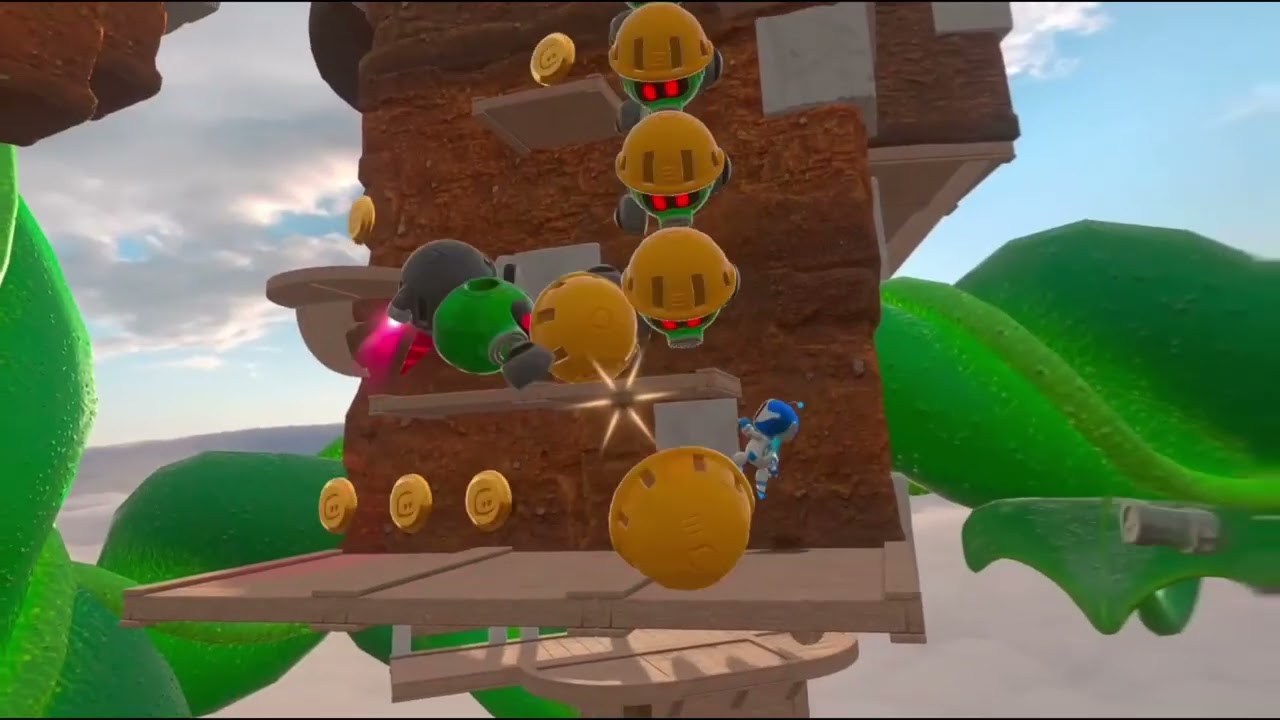
The settings that matter on Quest 3
Version 0.21 added a menu at every start and locked the frame rate to a steady 30, letting only the picture's size move with what the GPU can manage. The developer measured each option on the headset and published the numbers in the Quest notes. The defaults are the ones the project recommends.
| Setting | Default | What it does |
|---|---|---|
| Detail further away | Lighter | Simpler distant models and smaller sun shadows: about a sixth less GPU time in level 3-2 |
| Foveated rendering | Medium | Shades the edges of the view in 2x2 blocks. With Lighter, a 3-2 frame takes 14.3 ms of GPU time instead of 20.1 |
| Picture enlarged with | FSR 1 | AMD's upscaler for crisper edges, at about 0.65 ms a frame |
| Display refresh rate | 90 Hz | Each frame shown three times. 120 Hz is the other choice |
The Quest 3 start-up menu in version 0.21, with the project's own measurements.
Even with all of it, the project is plain that the standalone picture stays well below the PS4's, because the Quest 3's mobile GPU cannot draw this game through an emulator any sharper at 30 frames a second. If you have a capable PC, that is where the full picture is.
Playing from a PC
The Windows build runs the emulator on your PC and shows it in the headset at the PS4's 60 frames a second. Download the file ending in PC-VR-Windows.zip from the same release and unzip it into a folder with a short path, such as C:\Games\AstroQuest, because some game files have long names and Windows caps a full path at 260 characters. Put your game folder, or the .pkg made from your dump, in its games folder.
Quest owners stream it with Virtual Desktop: in the Streamer on the PC, choose VDXR as the OpenXR runtime, and in the headset set Virtual Desktop's streaming frame rate to 120, which gives the game its 60. Connect a DualSense to the PC rather than to the headset, or it arrives without its touchpad and motion sensors. Then start Play Astro Bot VR.bat from the desktop you see in the headset. With a SteamVR headset such as a Valve Index, start SteamVR first and run the same file. The PC notes cover every launcher setting.

Controls
Rescue Mission was built around a PS VR camera watching a DualShock 4. AstroQuest uses the Quest's hand tracking to work out where your gamepad is, and maps the controller's touchpad to buttons for controllers that lack one.
| Action | How |
|---|---|
| Move | Left stick |
| Cross, Square, Circle, Triangle | A, B, X, Y |
| Water cannon, machine gun | Hold the right trigger |
| Hook, throwing stars, chests | Press the right grip (a forward swipe on the touchpad) |
| Catapult at the end of a level | Pull back on the left trigger, let go to shoot |
| Blow into the microphone | X and Y together, or blow |
| Turn without turning yourself | Hold the left grip, flick the right stick (30 degrees a flick) |
| Reset the view | Hold the left menu button for a second |
Controls on the Touch controllers, from the README.
On the world map you pick a planet by looking at it and pressing Cross. Taking the headset off pauses the game.

Known issues
The project calls itself a work in progress, built and tested by one person on one Quest 3 and one PC, with worlds 1 and 2 played through on the headset alone. Reports open on its GitHub issues page on October 17 included a crash starting world 1-3, a PC crash at the very end of level 2-2, effects drawn in only one eye, missing lightning in the world 3 boss fight, and a DualSense dropping out under SteamVR when PS and Triangle are pressed. If the game stops, the release notes ask for the log file in an issue: on the Quest it is core.log in /sdcard/Android/data/com.astrobotquest.vrhost/files/.
Saves, updates and removing it
Installing a new version over the old one with adb install -r keeps your saves. Uninstalling the app deletes them, so copy the savedata folder off the headset with adb pull first. Uninstalling also leaves the game behind if you copied it to /data/local/tmp/astro, and the headset's file manager does not show that folder. The README gives the command to delete it: adb shell rm -rf /data/local/tmp/astro, which frees about 13 GB.
Is it safe to install?
The code is public under the GPL-2.0 license, the same as shadPS4's, with a notices file crediting every borrowed component, and each release ships SHA-256 checksums for its files. Download only from bigmak94/AstroQuest on GitHub. Copies of the repository exist under other accounts, and nobody can vouch for a rebuilt APK. Road to VR covered the release on October 5, and the project credits Claude, Anthropic's AI model, as a co-author on much of its code.
Version history
Eight releases in ten days. By October 17, GitHub counted 4,024 downloads of the Windows build and 2,316 of the Quest app across all of them. Counts include people updating, so they overstate players.
- Oct 3, 2026 0.11 First release: the Quest 3 on its own at 30 frames a second in levels, and a PC build at 60 through Virtual Desktop.
- Oct 3, 2026 0.12 A simpler PC install: drop the game folder or package in, and a window finds the game if it is missing.
- Oct 3, 2026 0.13 Fixes PC sound that stayed silent until the emulator restarted.
- Oct 6, 2026 0.18 Game version 1.04 plays, SteamVR and other PC headsets join, and the Touch controllers can play on the Quest too.
- Oct 6, 2026 0.19 The game speaks your system language, and snap turning arrives for seated play.
- Oct 6, 2026 0.20 Fixes an invisible wall at the end of level 2-1 and squares in the lava glow at the end of world 2.
- Oct 13, 2026 0.21 A steady 30 frames a second on Quest 3, a start-up settings menu, a fix for black squares in the right eye, and a native Linux build.
- Oct 13, 2026 0.21.1 Fixes a crash at the last boss.
More VR mods we have set up
- Titanfall 2 in VR
- Half-Life 2 standalone on Quest 3
- Diablo II: Resurrected in VR
- Breath of the Wild in VR with BetterVR
- Mario Kart 64 in VR
Frequently asked questions
Is AstroQuest free?
Yes. AstroQuest is free and open source under the GPL-2.0 license, published by its developer, bigmak94, on GitHub. It contains no game. You need your own copy of Astro Bot Rescue Mission dumped from your own PlayStation 4.
Can I use the copy I bought on the PlayStation Store?
Not as downloaded. The README says a package downloaded from the PlayStation Store is encrypted and cannot be used. It needs the game's folder or a package made from a dump of your own console and game, which in practice means running unofficial software on a PS4. AstroQuest gives no information on how to do that, and neither does VR.org.
Which version of Astro Bot Rescue Mission does AstroQuest need?
The European release, CUSA12392, at version 1.00 or 1.04. The project says other regions and versions are untested and its timing and resolution fixes only apply to those two. An open GitHub issue reports the US release, CUSA12431, working on a PC through SteamVR, which the project has not confirmed.
What frame rate does Astro Bot Rescue Mission run at on Quest 3?
30 frames a second on the Quest 3 by itself, steady since version 0.21, with the picture between 816 by 870 and 1200 by 1280 pixels per eye, enlarged with FSR 1. On a Windows PC streamed to a headset it runs at the PS4's 60 frames a second, at up to 3600 by 3840 pixels per eye.
Does it work on Quest 3S or Quest 2?
The README says the Quest 3S has the same chip as the Quest 3 and should work, but nobody had reported it. A Quest 2 or Quest Pro has not been tried on its own and would be slower. Any Quest can play the PC version streamed through Virtual Desktop or Steam Link.
Does AstroQuest work with PC VR headsets like the Valve Index or PS VR2?
Yes, through the PC version. It runs on any headset with an OpenXR runtime on Windows, and players have reported a Valve Index, a PS VR2 on its PC adapter, a Bigscreen Beyond and Pimax headsets working through SteamVR. The PC needs Windows 10 or 11, a Vulkan 1.3 graphics card and at least 16 GB of memory.
Do I need a PlayStation controller?
No. Since version 0.18 the Quest's Touch controllers play the whole game, and other gamepads work too. A PS5 DualSense is still the closest match to what the game was built for, with its touchpad, motion sensors and rumble.
Where do I download AstroQuest safely?
Only from the releases page of bigmak94/AstroQuest on GitHub, which also publishes SHA-256 checksums for every file. Copies of the repository exist under other accounts. Never download the game itself from anyone: any site offering it is offering a pirated copy, and nothing tells you what else is in the folder.