
Meta's Connect keynote starts at 4:00 PM Pacific on Wednesday, which leaves three days for the least glamorous kind of preview: going back through the last three keynotes and checking each announcement against what a customer could actually buy afterward. The record holds up better than the running commentary about Reality Labs would suggest. It is also not uniform, and the line running through it is worth carrying into Wednesday afternoon, because it separates the parts of a Meta keynote that behave like commitments from the parts that behave like intentions.
HardwareSeptember 20, 2026
Every Meta Connect Promise Since 2023, Checked Against What Shipped
By Sam Whitfield
Contributing Writer, VR.org
Advertisement
Products announced with a price and a ship date arrived. Capabilities announced with neither are where the slippage sits, and in one case the slippage is now three years deep.

Five products, five dates, five shipments
Connect 2023 put the Quest 3 at $499 with an October 10 release and the Ray-Ban Meta smart glasses at $299 with an October 17 release, both of which Engadget logged on keynote day. Both dates held, and Meta's own announcement post for the glasses carried the same price and the same date as the stage did.
Connect 2024 ran the same play with the Quest 3S, announced at $299 for October 15 and on sale October 15, per Engadget's roundup of that keynote. Meta also said it would stop selling the Quest 2 and the Quest Pro by the end of that year, and it did. Connect 2025 managed it twice in one morning: the Meta Ray-Ban Display at $799 bundled with the Neural Band wristband for September 30, and the Oakley Meta Vanguard at $499 for October 21, both detailed by Road to VR the day they were announced.
That is five consumer products across three keynotes, every one of them landing inside the window Meta set for itself. It is the half of the company that runs on a calendar, and it deserves stating plainly before the rest of this, because the misses that follow are real and they are also narrow. They cluster in one place.

Augments was a 2024 promise, and it is still not on a Quest
Mark Zuckerberg stood on the Connect 2023 stage and told the audience that Quest 3 would get a feature called Augments the following year. The pitch was persistent, spatially anchored objects that stay where you leave them and run alongside one another: a clock on the kitchen wall, a music player parked on the counter, a portal into a game above the couch. It was the clearest thing Meta had said about what mixed reality was supposed to do inside a house rather than inside a demo.
It did not arrive in 2024. It has not arrived since. The fullest public account of why came from Meta CTO Andrew Bosworth in August 2025, in comments reported by UploadVR, where he said the version the team built had "huge trade-offs on performance" and that the architecture underneath it had been wrong, which meant rebuilding the system from the ground up. "It's taken us years, is the answer," he said. Road to VR had covered an earlier round of the same explanation, when the line was that Augments needed more time to cook.
Two Connects have come and gone since the promise. Wednesday is the third, and Meta has never published a replacement window.
Advertisement
The date Meta missed was its own distribution plan
The Ray-Ban Display shipped on schedule in the United States, and then its second act did not happen. Meta's announcement post carried a specific sentence: "Expansion to Canada, France, Italy, and the UK is planned for early 2026." On January 6, Meta paused that expansion, citing unprecedented demand and limited inventory, and told Engadget, "We'll continue to focus on fulfilling orders in the US while we re-evaluate our approach to international availability." More than eight months later there is still no replacement date.
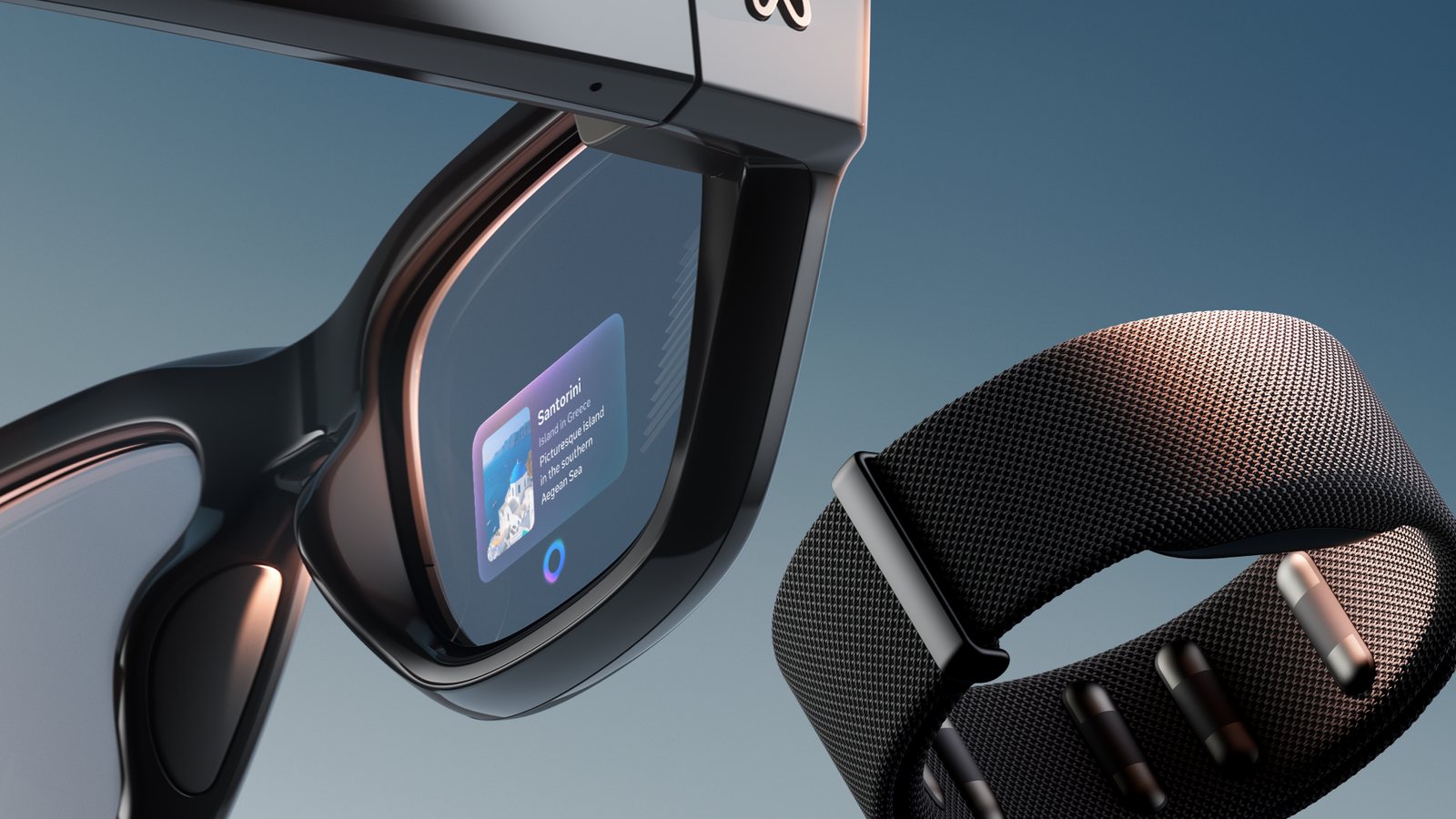
Categories matter here, and this one is not the Augments failure in a different outfit. Meta designed the product, priced it, shipped it on the day it named, and then could not build enough of them, which is the flattering version of a broken commitment. The scale behind it is genuine. EssilorLuxottica told investors in February that the partnership sold more than 7 million AI glasses during 2025, against roughly 2 million across 2023 and 2024 combined, a tripling reported by CNBC. None of that helps a buyer in Manchester or Milan who watched the keynote, read the slide and planned around early 2026. For a corporate buyer the lesson is sharper still: a launch region named at Connect is a marketing statement rather than a procurement date, and the two got treated as the same thing by plenty of people who now hold a budget line and nothing to spend it on.
Shipped, then shrunk
There is a third column, and it is easy to miss because everything in it technically arrived. Hyperscape is the clean example. Meta demoed the Gaussian splat capture system at Connect 2024 as a set of pre-scanned spaces you could walk through, which TechCrunch covered at the time, then shipped Hyperscape Capture as a Quest 3 beta a year later that let people scan their own rooms. UploadVR's hands-on found the results genuinely photorealistic. Then Meta announced in March that the sharing was going away. Invites and co-viewing are gone. A capture is now something you look at by yourself in a standalone app.
The larger removal came in the same announcement. Horizon Worlds, the app that anchored three years of metaverse framing at these keynotes, left Quest headsets on June 15 after Meta reversed a first version of the decision in April, which Road to VR reported in March and which this site covered as it happened. Software can ship, carry an entire keynote narrative, and still not survive to the next Connect.
How to read Wednesday
Two working rules come out of the ledger, and both are usable in real time while the keynote is running.
When a product appears with a price and a ship date attached, the last three years say to treat it as a commitment. Five for five is a real record, and Meta protects it by announcing narrow launches it can fulfill rather than wide ones it cannot.
When something appears with a year attached and no price, apply the Augments discount. The useful skepticism is not about whether Meta is building the thing. It is about the date.
Orion sits between the two categories and is the test worth watching. Meta unveiled it at Connect 2024 as a working prototype that was explicitly not for sale, with a reported build cost near $10,000 a unit. UploadVR reported in January 2025 that the plan was to get Orion into developers' hands during 2026, ahead of a consumer launch in 2027. Two years on there is still no consumer Orion, no price for one and no date for one.
The reporting ahead of this keynote points at glasses rather than headsets: camera-free smart glasses codenamed Luna slated for this fall, and a live demo of hologram-style calling built on eleven years of Codec Avatars research, possibly running on the ultralight Phoenix headset, which is a 2027 device rather than something to order in October. VR.org's Connect 2026 tracker has the schedule and every signal logged so far.
For anyone deciding whether to buy this fall or wait for whatever follows it, the two numbers to listen for are the price and the date. Everything else on that stage is a statement of intent, and Meta's intent currently has a three-year backlog.
Advertisement