
IMAX Corporation put its own name to the Meta VR Glasses on Tuesday morning in a release distributed through Business Wire and posted to its investor site. The agreement makes the glasses "the first-ever IMAX Enhanced certified VR device" and commits IMAX to "bring an updated IMAX app to the device" when the glasses go on sale in spring 2027. Select IMAX Enhanced titles will play in what the release calls "IMAX's exclusive Expanded Aspect Ratios," and the app will offer "an immersive virtual theatre environment for watching IMAX Enhanced content at greater scale and immersion, at home or on the go."
HardwareNovember 10, 2026
IMAX Signs Meta VR Glasses as Its First Certified VR Device, With an App Due in Spring 2027
By Sam Whitfield
Contributing Writer, VR.org
Advertisement
The certification itself is not new. Meta claimed it first, in its September 23 announcement of the glasses, which said they "are the first ever IMAX Enhanced certified VR device and will be one of the only ways to experience select films in IMAX's exclusive expanded aspect ratio at home." VR.org covered that launch the same day. What changed 48 days later is the source. A line in Meta's product post is now a disclosed agreement from the licensor, carried on a newswire to IMAX's shareholders, and it adds two things Meta's post did not contain: an IMAX-branded app on the device, and a start date for the expanded format that matches the hardware.
What the certification covers
IMAX Enhanced is a certification program rather than a film format of its own, and IMAX runs it with audio partner DTS, a relationship spelled out when the program reached its first major streaming service in 2021. It applies to devices and to content. Tuesday's release lists Sony, Hisense, TCL and LG among the makers of certified display and audio devices, and names Disney+ and Sony Pictures Core on Amazon Prime Video as services hosting IMAX Enhanced content. The Meta VR Glasses join that device list as its first VR entry.
The clearest precedent for what the glasses would show is that 2021 launch. On November 12, 2021, Disney+ added IMAX Enhanced versions of 13 Marvel films, and Disney's announcement defined the format precisely: IMAX's Expanded Aspect Ratio "is 1.90:1, which offers up to 26% more picture for select sequences." The qualifier deserves weight. How much of any film gains the taller frame depends on how that film was shot.
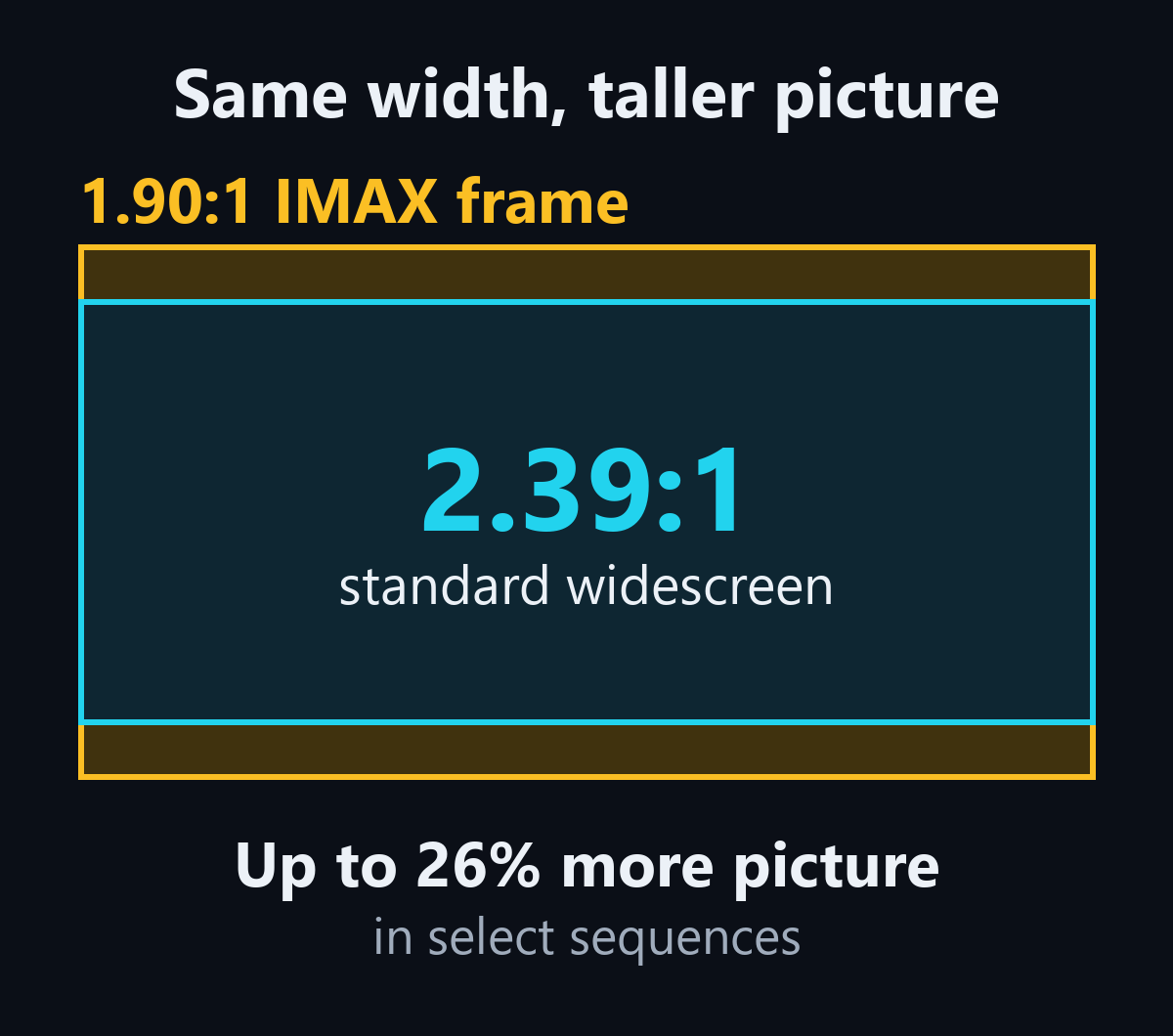
On a television, the benefit appears as thinner black bars. On glasses that draw a virtual screen, there are no physical bars to remove, so the value of the certification on this device is harder to state than the marketing implies. A virtual screen can be rendered at any shape. What a certification can govern is the master the device receives and how faithfully the device presents it. Neither company has said how large the virtual screen in the IMAX app will be, how it handles a film that changes ratio mid-scene, or whether the DTS sound side of the program carries over to the glasses.
Advertisement
What the release leaves out
The release names no films. IMAX's IMAX Enhanced in VR page, published with it, asks readers to "watch for titles coming soon through select streaming and device partners," which also leaves open which services will deliver them on the glasses. Disney+ is the obvious candidate, having carried IMAX Enhanced titles since 2021 and appearing in Meta's launch post for the glasses, but neither company has said so. There is no price for the app, no indication of whether IMAX Enhanced versions will come at extra cost, and no mention of any Meta device other than the glasses. As announced, Quest 3 and Quest 3S owners are not part of this agreement.
Meta's wider film plans are moving on a separate track, and faster. UploadVR reported on Tuesday that a limited set of 3D films, most of them Disney-owned, has started appearing in the TV app on Quest 3 and 3S, available to buy without a Disney+ subscription, ahead of the "hundreds" of rentals and purchases Meta promised US Quest owners this year. A leaked screen suggesting some films may be folded into a renamed Meta VR Plus subscription was covered here on Monday. None of that involves IMAX. The IMAX agreement is tied to the glasses, and to 2027.
Why IMAX wants a headworn screen
Rich Gelfond, IMAX's chief executive, placed the deal inside a growth plan that reaches well past theaters. In the release he listed "live events," "in-vehicle entertainment" and "VR with the forthcoming Meta VR Glasses" as ways IMAX intends to "grow our business through new technologies and experiences." He added: "Meta is taking a bold new step in immersive entertainment, and we believe our brand and technology is a powerful differentiator for new and emerging devices like the Meta VR Glasses."
IMAX's theatrical base gives a sense of the scale involved. IMAX's corporate boilerplate in the 2021 Disney+ announcement counted 1,664 theater systems in 85 countries and territories as of September 30, 2021. Tuesday's release counts 1,887 systems across 91 countries and territories as of September 30, 2026, an increase of 223 systems in five years. A certified consumer device adds no theaters. It does put the brand on a screen that goes wherever its owner does, which is the "at home or on the go" pitch the release makes for the app.

For a buyer weighing $1,299.99 glasses against a television, the agreement is a format commitment with a date attached and no catalog behind it yet. For studios and streamers, it is the clearer signal. IMAX now has a VR device to certify against, and the first titles announced for it will show which services intend to deliver the expanded format to a headworn screen. That list is the item to watch between now and spring 2027.
Advertisement