
Android XR's gap this year was never the platform. Google took the SDK to its fourth developer preview, Samsung shipped a headset, and the glasses tier that was supposed to carry the platform out of demo rooms and onto faces existed as a reservation page with a price ceiling where the price should have been. XREAL closed that on Wednesday, with a number that says more about the next several months of this category than the spec sheet does.
ArOctober 7, 2026
$1,279 and 95 Grams: XREAL Finally Put a Price on AURA
By Jordan Kuo
Staff Writer, VR.org
Advertisement
AURA starts at $1,279 for 12GB of memory and 256GB of storage, with a 16GB and 512GB configuration at $1,499. XREAL's own announcement names the United States, Canada, Japan and South Korea as the opening markets, and says customers in those four who had already paid a reservation deposit can complete their purchase now. The post gives no date beyond "Shipping begins before the holidays." XREAL's press release adds that "Orders will open to the general public in the coming weeks" and that more markets follow in 2027. Android Authority reports a mid-November start, a date that appears in neither the release, the post nor XREAL's shop listing.

The ceiling held by $221
Reservations opened on June 16 with a commitment that the base model would not exceed US$1,500 before tax, which was the number that undercut Snap's AR glasses and gave Android XR its first consumer price point in the category. The cap was written around the base model from the start. The Internet Archive's copy of the reservation page from June 17 carries that wording next to a spec table already listing a second configuration at 16GB and 512GB, so the open question through August's count of 10,000 reservations was how far past the line the larger one would land. It did not go past it. The base model came in $221 below the ceiling and the larger one at $1,499, a dollar under a limit that never applied to it.
XREAL's product page now disagrees with itself. The purchase panel at the top carries both prices and says sales are "Starting with the US, Canada, Japan, and South Korea." The FAQ further down still says the base model "will not exceed US$1,500," still dates the launch to Fall 2026, and still promises that "Final pricing and configurations will be announced closer to launch." Its launch-region list is older than any of that. It runs to 28 entries, the United Kingdom and 24 European Union members among them, and Canada is not one of them, exactly as in the archived June 17 copy. The list matters more than the stale price line. XREAL's June launch release put the UK in the first wave for this fall and said more of Europe was "coming soon after" that wave, and Wednesday's release says only that more markets come in 2027. For anyone who reserved from London or Berlin, that is the line in this announcement that changes something, and the FAQ they reserved against still says otherwise.
The coprocessor is on the frame
Meta announced VR Glasses at Connect last month at $1,299.99, which leaves AURA's base configuration $20.99 cheaper. That gap has done the rounds this week and it is the least interesting number in the story, because nobody picks between two $1,300 devices over twenty dollars. The calendar is the comparison. Meta VR Glasses go on sale in spring 2027. If AURA ships before the holidays as XREAL says, that hands it somewhere between three and seven months as the only Android XR glasses with a Google Play catalog behind them, across a holiday quarter, before Meta's answer reaches a shelf. Samsung's Android XR glasses are reported for November, but those are audio glasses, and Google's distribution page still limits Play to headsets and wired XR glasses.
Advertisement
Both designs move the weight off the face rather than removing it, and this is where they stop resembling each other. AURA's glasses weigh 95 grams and carry Sony micro-OLED panels at 1920 by 1200 per eye, up to 120Hz, 1050 nits and 32 pixels per degree behind a 70 degree optical see-through view, with electrochromic dimming that XREAL rates at blocking up to 99.9 percent of outside light across five levels. They also carry an X1S spatial coprocessor on the frame itself, quoted at 3ms motion to photon. Meta's frame is around 100 grams with a puck near 300, and UploadVR's Connect report noted there is not even a tracking coprocessor in it.
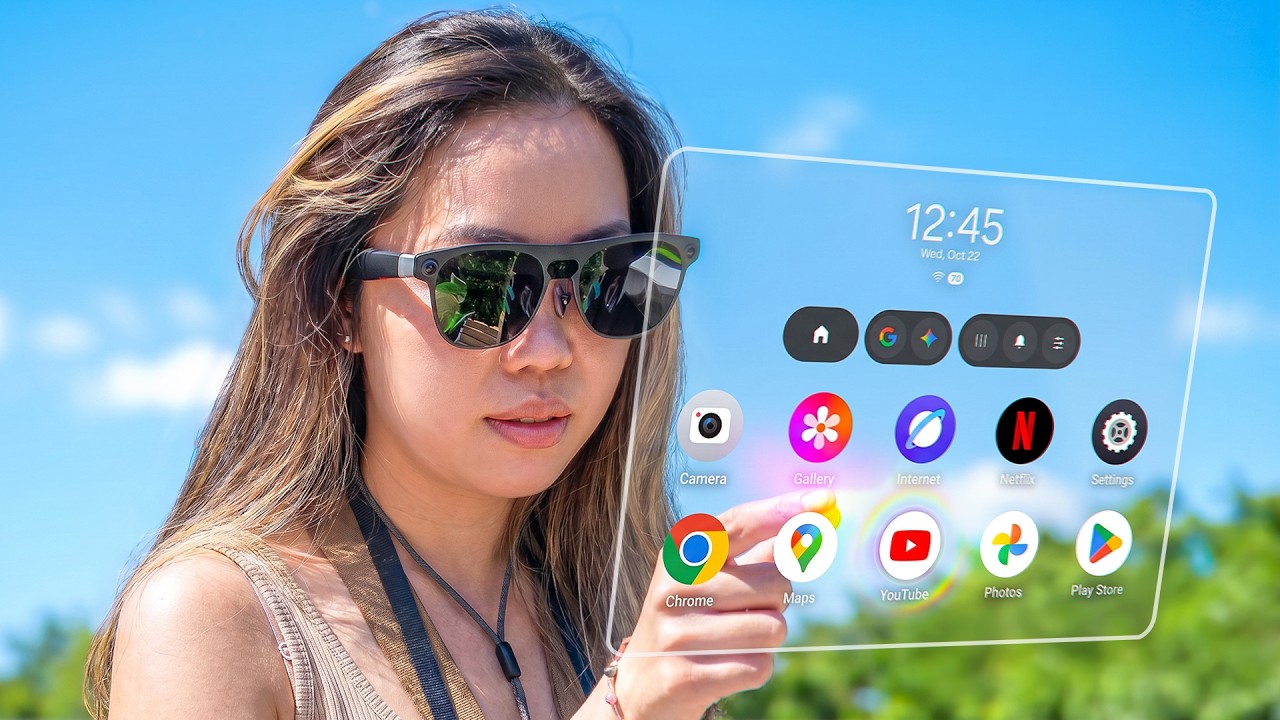
The split shows which company expects the tether to be permanent. A coprocessor on the frame means some of the latency-critical work stays near the sensors, so the link to the puck carries less of the burden. XREAL has one job to protect there, because everything else lives in the pocket: Snapdragon Reality Elite, 48 TOPS of AI processing, UFS 4.0 storage and a 4455 mAh battery. Reality Elite was specified as the part 2027 XR hardware would be built around. AURA was named as the first device to carry it, and a retail unit this year gives developers a measurable performance envelope before the 2027 hardware built on the same part arrives.
Two USB-C ports, one of them interesting
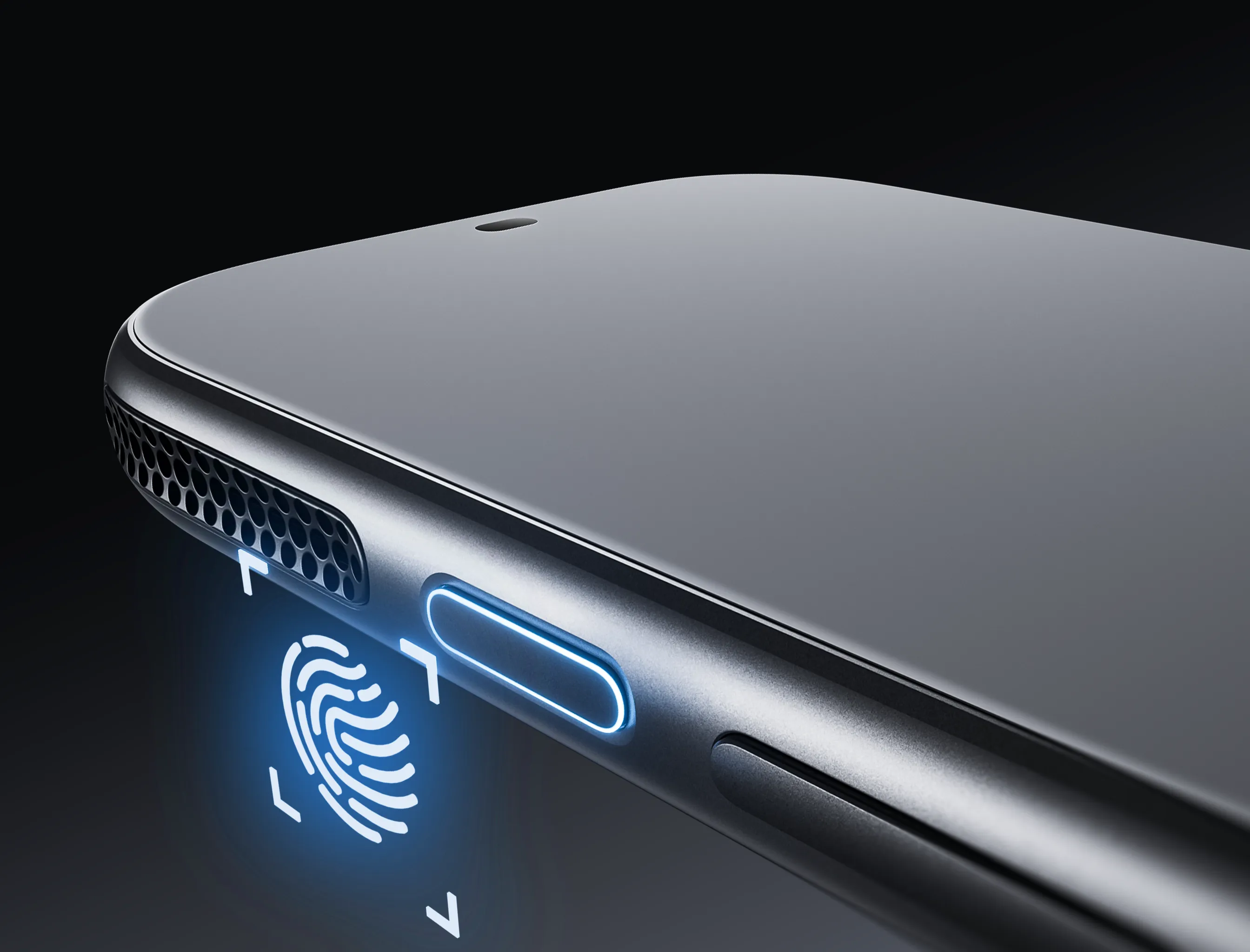
The puck's spec list contains the line developers should read twice. One USB-C port connects the glasses. The other takes charging at up to 57W and accepts DisplayPort over Alt Mode, and XREAL lists the glasses port as USB 3.1 with full ADB support. A device that answers to the Android Debug Bridge over a cable is a device you can profile, log and iterate against the way you would any other Android target, which is not something every pair of glasses in this category has offered. Input runs through hands, voice and a touchpad on the puck, and a fingerprint button handles both unlocking and authorizing purchases inside supported apps. Bluetooth keyboards, mice and controllers pair, which matters to anyone planning to treat the puck as a development target rather than a media player.
What the reservation ladder cannot tell anyone is the part that decides this. The $299 Founder Priority Pass sold its 2,000 units, the $99 Launch Credit tier sold out, and the $199 Priority Deposit stays open and fully refundable until a purchase is confirmed, which is close to the cheapest commitment a company can collect. Brightness, pixel density and motion-to-photon latency are now on the spec sheet. Battery life in hours is not, and the impressions published so far come from demo sessions, not a working week on the tether. For sixteen weeks the reservation count was the closest thing Android XR glasses had to a public demand figure. Once units ship, it converts into something harder to brief around, which is a return rate.
Advertisement