
XREAL has more display glasses on retail shelves than any other company attached to the Android XR story, and not one of the pairs it can ship you today actually runs Android XR. That gap is the thing to hold onto while reading the refresh the company shipped on Thursday, because the interesting part of the 1 Pro+ is not the number that went up. It is the length of the list that did not move at all.
ArOctober 19, 2026
What Did XREAL Change in the 1 Pro+? Nothing a Developer Has to Target.
By Jordan Kuo
Staff Writer, VR.org
Advertisement
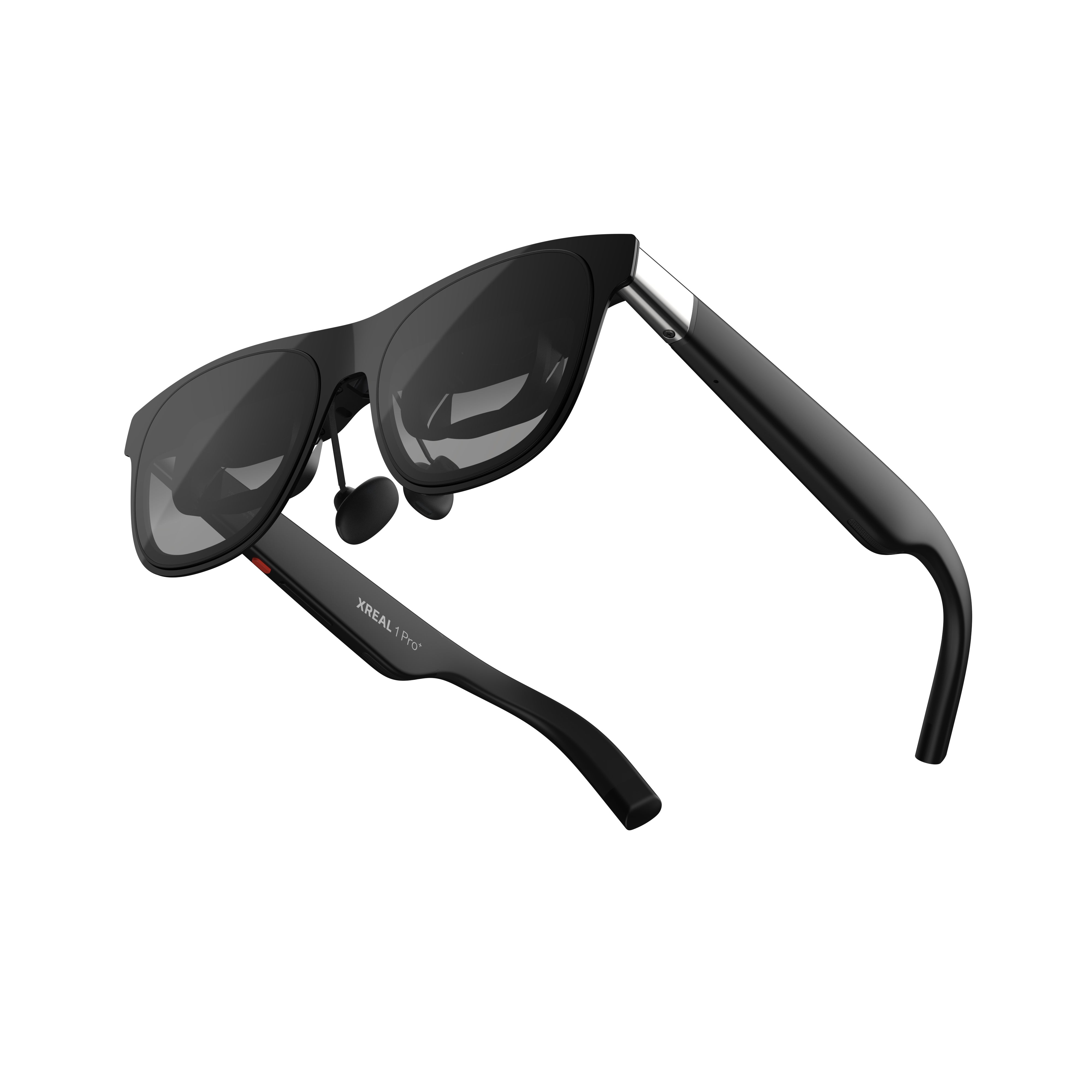
Brightness is the figure that moved. XREAL quotes peak brightness of up to 1,200 nits on the 1 Pro+, against the 700 nits Road to VR lists for the One Pro, which XREAL is still selling alongside it, and anyone who has tried to read a virtual monitor on a train in daylight knows what that difference buys. Three smaller additions sit beside it. There is an AI HDR pass the company says improves perceived image quality across supported content, a set of three viewing modes labeled Standard, Movie and Reading, and 2D to 3D conversion raised from 30 frames per second to 60. The nose pad was redesigned, which XREAL's release frames as improving "wearing stability and comfort while helping users maintain a consistent and complete field of view."
The unchanged list is the real specification
Every part of the device that a piece of software would notice came across untouched. The X1 spatial computing chip carries over, native 3DoF spatial anchoring carries over with six degrees of freedom still gated behind the separate Eye accessory, and the field of view stays at 57 degrees. The Sony micro-OLED panels remain at 1,920 by 1,080 per eye at up to 120Hz, the electrochromic dimming remains, the Bose-tuned audio remains, and the price is the $599 XREAL's own store has been charging for the One Pro under a $649 list price. Somebody who built something around the One Pro has nothing whatsoever to port, for the straightforward reason that there is no runtime here to port anything to. The 1 Pro+ is a display with an anchoring chip in the temple, driven over USB-C by whichever phone, handheld or laptop you plug into it.
XREAL's own language about this is more precise than most of the coverage it generated. The release headline calls the product the company's "flagship wearable display glasses" and the body describes an "updated flagship wearable display," while the boilerplate paragraph underneath introduces XREAL as "a global leader in consumer AR glasses." Both descriptions are defensible and they are doing completely different jobs, and it is the first one that tells you what went on sale.
Advertisement
The release also cannot settle on the day it happened. The PR Newswire version carries a Sunnyvale dateline of October 16 while the body says the product "launches globally today, October 15" and is available "beginning October 15, 2026," which is also when the trade coverage went up. October 15 is the date to use.
Four price rungs, and only one of them is a platform
Set the lineup out in order and the division inside it is unusually clean. The X by XREAL a01+ holds the bottom at $299 as a camera-free screen on your face, which is the product we argued in July was the AR people actually buy, and Viture has been pressing on that floor from underneath with a 63-gram Pro 2 at the same $299. The 1 Pro+ holds $599. The ASUS ROG collaboration, the R1 at $849, runs the same basic idea at 240Hz for players who care about frame pacing. Then there is AURA, priced on October 7 at $1,279 and $1,499, which carries an X1S coprocessor on the frame itself and the one thing none of the others have, which is Android XR and a Google Play catalog sitting behind it.

So the publishing target is the top rung and nothing below it, and that is not a quirk of one company's catalog. Google's distribution rules put Play on headsets and wired XR glasses while the audio and display tiers wait for an answer, a split we walked through at the end of September when Snap had finished publishing plumbing with no glasses in customer hands and Meta had glasses on shelves with no public way to publish to them. AURA qualifies as wired XR glasses. The 1 Pro+ is not in that conversation at all, and was never meant to be.
Which makes the timing of a refresh legible in a way the specification sheet is not. AURA has a price and no ship date beyond a promise to begin before the holidays, with purchases open to reservation holders who paid a deposit and general availability described only as coming weeks. Into that waiting period XREAL shipped the thing it has repeatedly proven it knows how to ship: a brighter version of the device that already sells, at a price it declined to raise, weeks before the platform product reaches anybody who did not put down a deposit.
What it asks of you
If you write software for this ecosystem, the honest answer is nothing. The surface is identical, the chip is identical, and a 1,200 nit panel changes what a reader can see on a sunny platform rather than anything your code addresses. Plan against AURA if you are planning against XREAL at all, and plan knowing the catalog underneath it belongs to Google rather than to XREAL, which is a different kind of dependency than building against the X1 ever was.
The refresh is at least precise about its own scope, which is more than the category usually manages. A brighter panel, three viewing modes and a nose pad that should stay put, on a device whose job description has not changed since last year. The work that decides what Android XR becomes on glasses is happening one rung up, on a frame that has not yet shipped to anyone.
Advertisement