
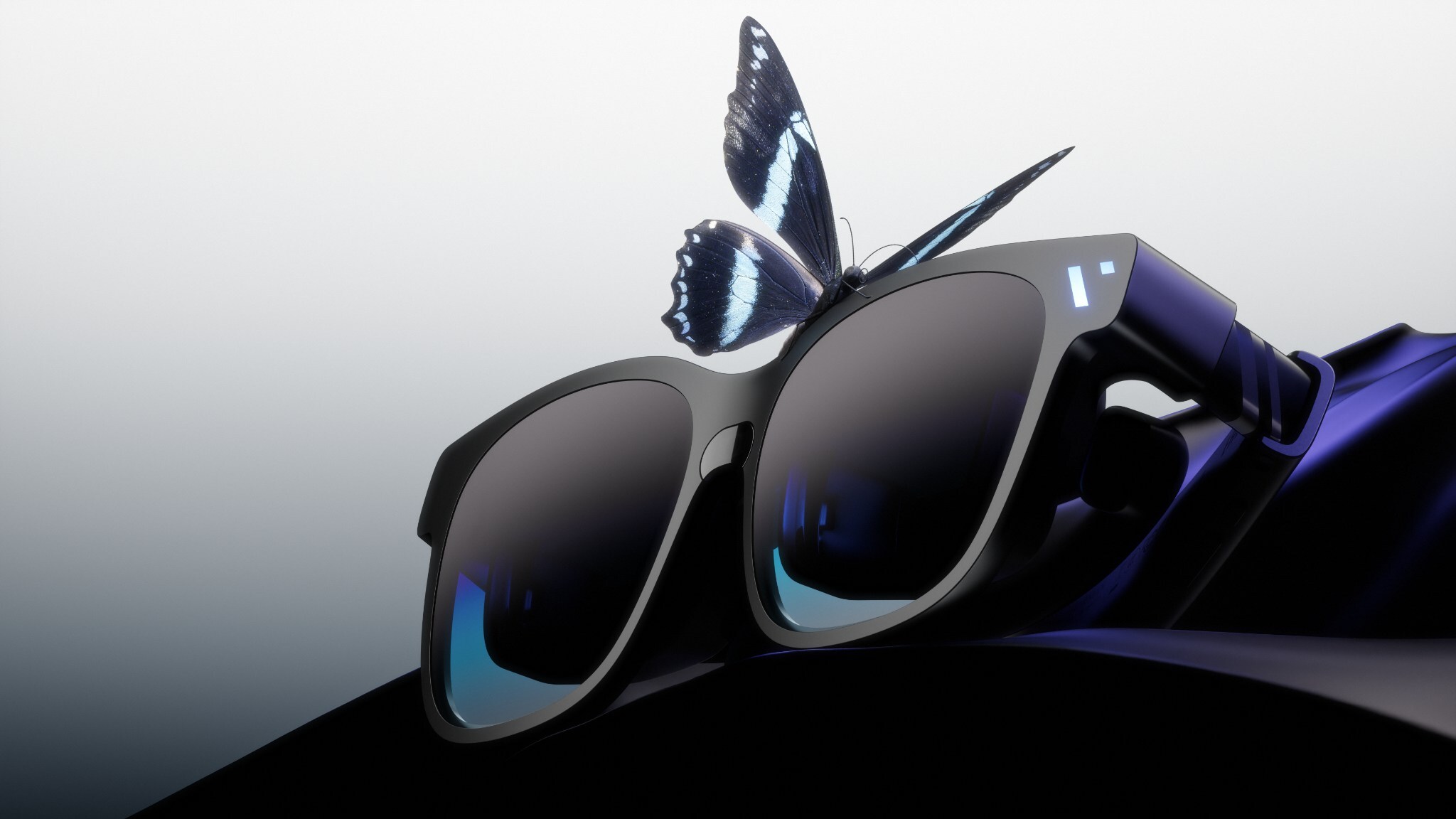
Viture put the Pro 2 on sale this morning at $299. It weighs 63 grams. It has no cameras, no processor, and no tracking of any kind.
HardwareAugust 6, 2026
Viture's Pro 2 Ships Today at $299 With 63 Grams and Zero Cameras
By Alex Reeves
Staff Writer, VR.org
Advertisement
The panels are Sony micro-OLED at 1,920 by 1,080 per eye, running at 120Hz. Peak brightness is 1,600 nits, up from 1,000 on the outgoing Pro. Field of view moves from 46 degrees to 50, which Viture markets as a 146-inch screen. Diopter correction is built in from 0 to -5.00D with independent dials for each eye, so most nearsighted buyers can skip prescription inserts entirely.
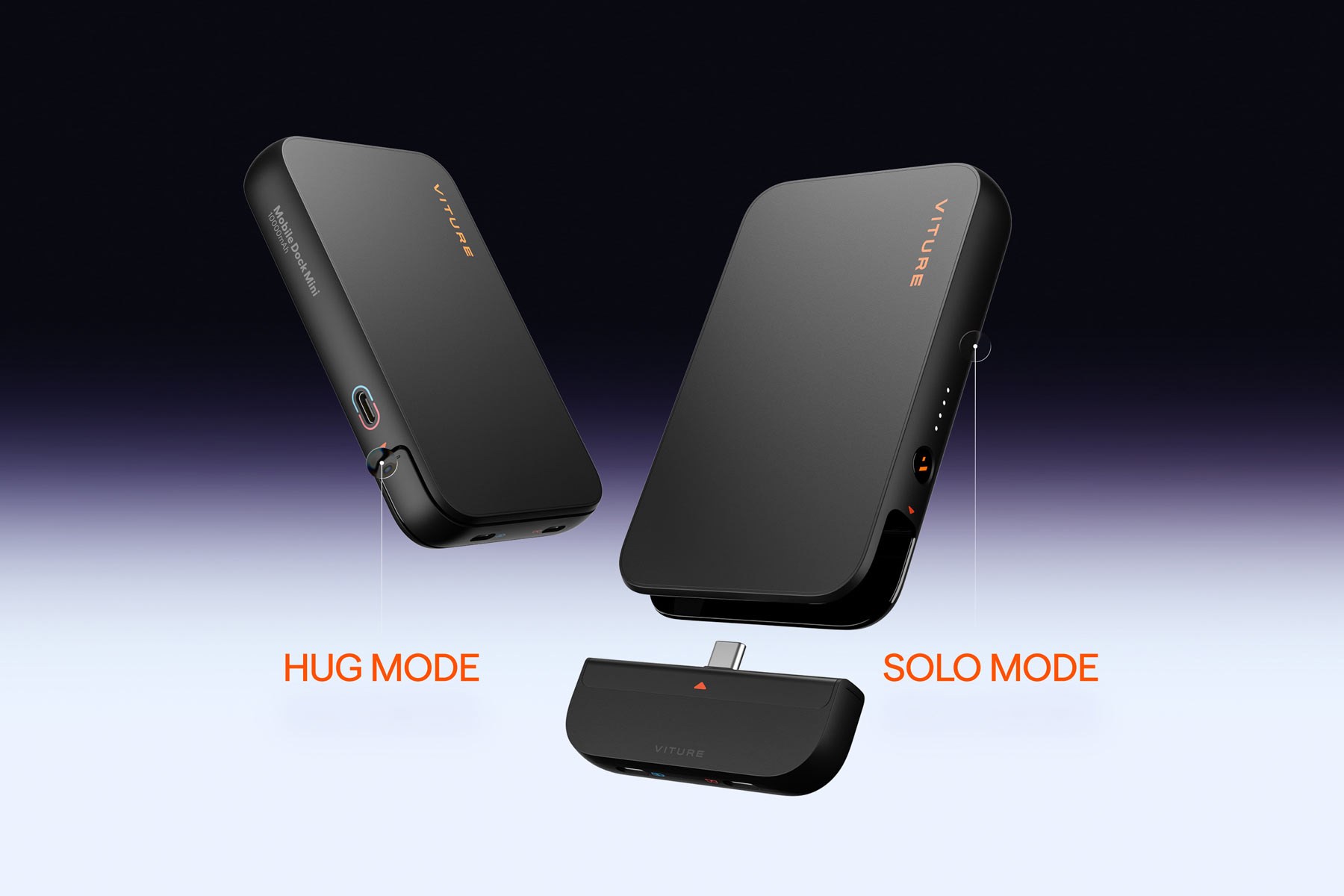
Stock is real. The glasses ship immediately from Viture's site and Amazon. The companion Mobile Dock Mini is preorder only at $99, or $79 bundled, and packs a 10,000mAh battery into a body 34 percent smaller than the dock it replaces. It clamps onto a Switch 2 in what Viture calls Hug Mode.
The price is the story
The first Viture Pro launched at $459. The Pro 2 is brighter, lighter, thinner, and $160 cheaper.
Set that against what VR.org has logged in this category since spring. Acer came back to XR in June with the AR Vision GR0 at $500, running a 60Hz panel. Viture's own Beast shipped in April at $549, an 88-gram frame carrying a 174-inch virtual display. Two months on, the entry price for 120Hz display glasses is $299 and the weight is down to 63 grams.
Co-founder Emily Wang pitched the launch on comfort rather than specs. "Five years ago, we answered the question, 'Can XR glasses work?'" she said in the announcement. "Today, VITURE Pro 2 answers a harder one: 'Can they be a joy to wear, even for three hours straight?'" The engineering behind that claim is unglamorous. Three temple adjustment levels. Seven nose pad positions. A clip-on lens shade in the box.
Nothing here is free. A 50-degree field of view is modest, and the Pro 2 still needs a host device that can push DisplayPort over USB-C, which rules out a lot of phones. Audio comes from open-ear speakers in the temples, so it leaks. Bright sunlight defeats it. Those are the standing compromises of birdbath optics, and Viture has not solved them so much as declined to charge much for them.
Three products, one word
"Glasses" now spans $299 to $2,195, and the distance between those numbers is not build quality.
The Pro 2 is a monitor you wear. It takes a USB-C signal and puts it in front of your eyes. Turn your head and the image turns with you, because nothing in the frame knows where your head is.
URXR One opened on Kickstarter Tuesday at $699 early bird and 93 grams, and cleared $500,000 in its first 24 hours. Those extra 30 grams buy four cameras and a full 6DoF SLAM stack, which is what lets a window stay pinned to one spot in the room while the wearer walks around it. Shipping is promised for mid-October.
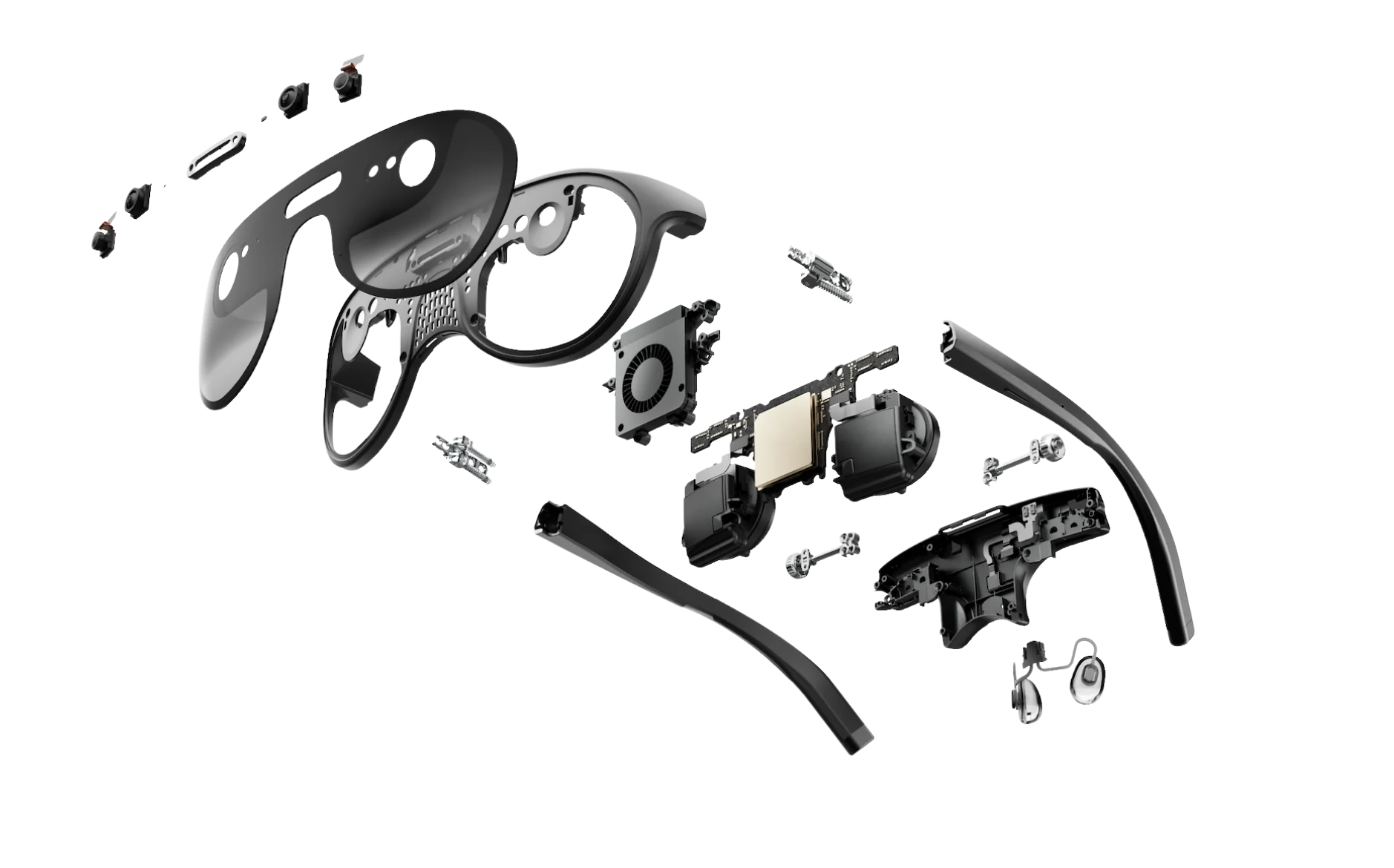
Snap's Specs ask $2,195 and put an entire computer in the frame. XREAL capped AURA under $1,500 by moving that computer out to a puck. Four products, four different problems, and exactly one of them solved well enough to sell from stock on a Thursday morning.
Who should buy it
Anyone shopping for spatial computing should not. There is no room mapping, no hand tracking, no persistent windows, no app layer. There is a cable and a picture.
Anyone who wants a large private screen on a plane, in a hotel room, or on a couch where a television is unwelcome should look closely. Under $300 buys 1080p per eye at 120Hz on Sony panels, with enough diopter range that most buyers can leave their real glasses at home. The failure mode of this product is boredom, not disappointment.
The harder question is what happens when the cameras get cheap too. Viture spent five years getting a wearable display down to 63 grams and $299. Unseen Reality wants $699 for the tracking and Snap wants $2,195 for the computer, and neither of those numbers has any more structural protection than $459 did.
Advertisement